You asked the factory for “ISO/IEC 14443 compliant cards,” the shipment arrived, and then your legacy readers only recognized half of them at the door. The phrase “14443 compliant” hides a fork that quietly decides whether your cards work with every reader in the building — and it is almost never written into the purchase order. This guide explains the ISO 14443 Type A vs Type B split in buyer terms, so you can specify the right one the first time instead of discovering the gap during a rollout.
What ISO/IEC 14443 actually defines — and why “Type A vs Type B” is your decision
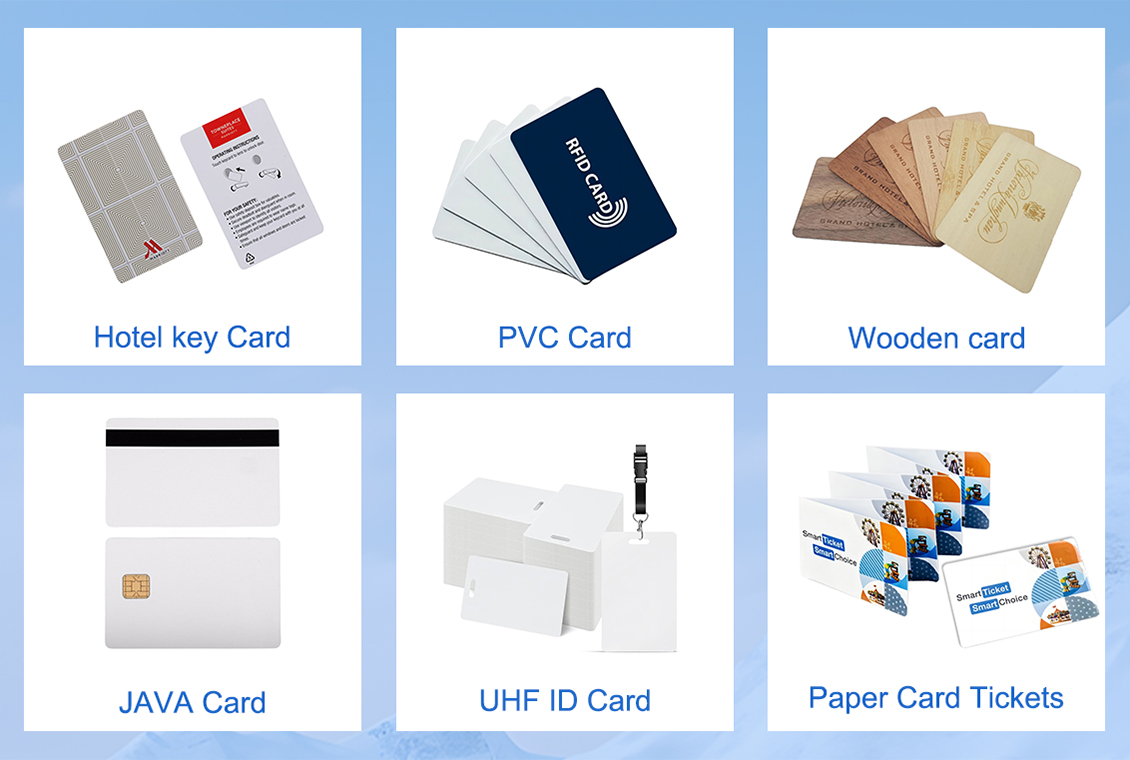
ISO/IEC 14443 is the international standard for proximity cards operating at 13.56 MHz — the band behind contactless ID badges, access credentials, transit cards, and payment cards. It is published in four parts (14443-1 physical characteristics, -2 radio power and signal interface, -3 initialization and anti-collision, -4 transport protocol); the base standard is maintained at ISO/IEC 14443 on iso.org. Parts 2 and 3 are where the two “types” live.
Here is the part most buyers miss: both Type A and Type B are valid ISO/IEC 14443. A supplier can ship you fully “14443 compliant” cards that are 100% Type A, and a reader that only speaks Type B will still reject them. The standard guarantees the two types can sit on the same card and in the same airspace; it does not guarantee a given reader supports both. That interoperability gap is your specification problem, not the standard’s.
The core difference: modulation and coding

At the radio layer the two types use the same 13.56 MHz carrier but different signaling:
- Type A — reader→card uses 100% ASK (on-off keying) with Miller coding on a 848 kHz subcarrier. The card→reader reply also uses the 848 kHz subcarrier. This is the scheme behind the MIFARE family.
- Type B — reader→card uses 10% ASK with NRZ coding (a much smaller modulation depth) on the same 848 kHz subcarrier. The shallower modulation was designed to be friendlier in electrically noisy environments.
In practice the modulation depth rarely changes real-world read range at a door — both stay within the roughly 10 cm “tap” distance of 13.56 MHz. What it does change is robustness and reader design cost: Type B’s lower modulation index can perform better near motors, metal, and dense reader banks, while Type A’s simpler, higher-contrast signal is cheaper to implement in entry-level readers.
Anti-collision and the chip ecosystem behind each type
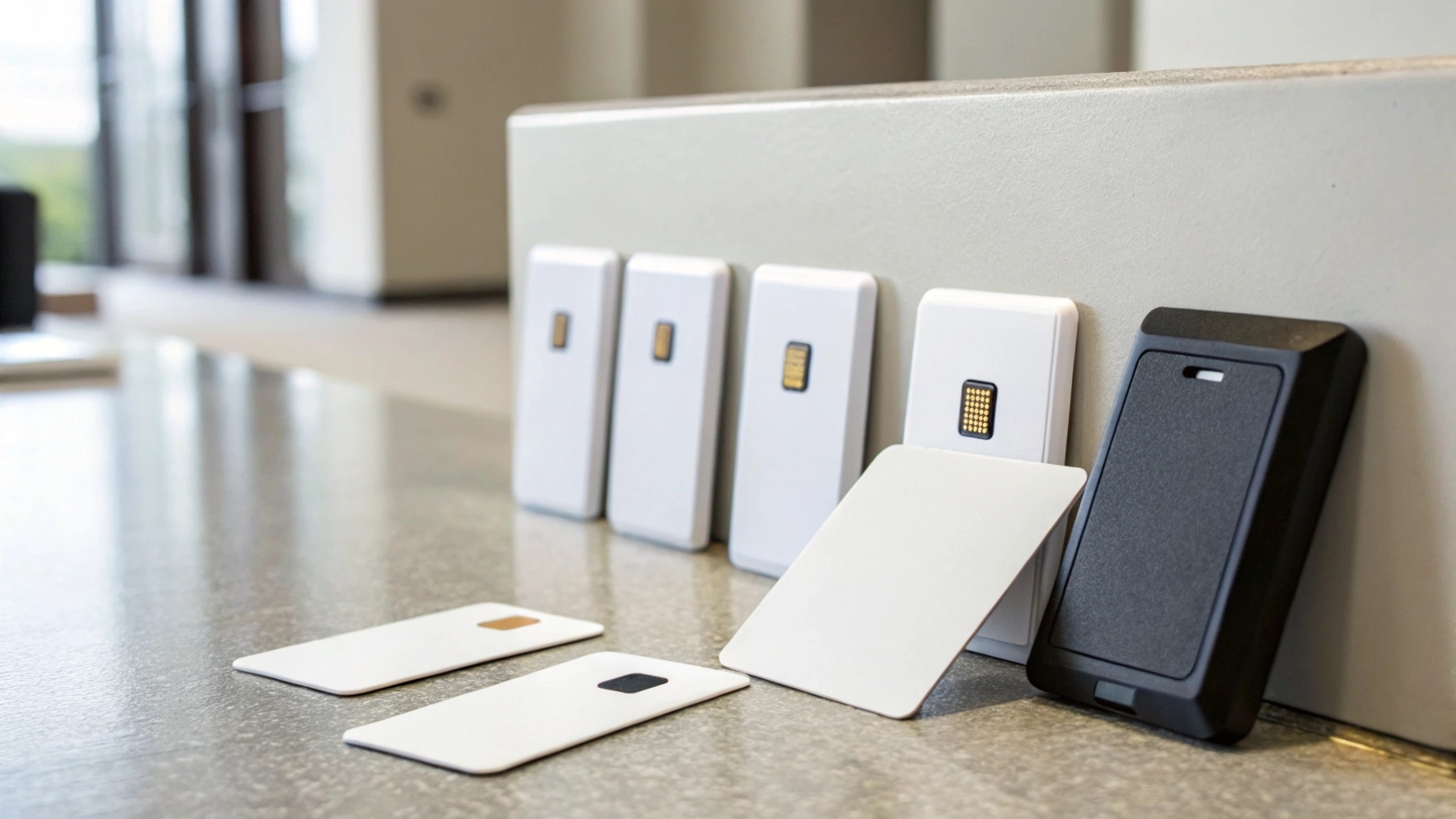
The two types also differ in anti-collision (how multiple cards in range are sorted out) and, more importantly for buyers, in which chips and ecosystems ship as each type:
- Type A is the default for the MIFARE family (Classic, Plus, DESFire EV1/EV2/EV3) and most NFC-Forum-Type-A access and transit cards. If your existing badges say MIFARE, they are Type A.
- Type B is common in government eID and e-passport programs and other “open-standard” credentials. Many national ID and ICAO Doc 9303 e-passport deployments use Type B because the protocol layer is more transparent and less tied to a single vendor’s proprietary crypto.
This is why the choice is rarely “technical trivia”: your installed reader base and your interoperability requirements pick the type for you. See our MIFARE vs NTAG vs ICODE chip comparison for how the Type A chip families stack up on memory and security.
Read range, EMC, and noisy environments

Both types deliver the same short “tap” range at 13.56 MHz, so claims that one reads “farther” are usually about reader antenna design and siting, not the type. The real environmental difference is electromagnetic compatibility:
Type B’s 10% ASK tends to tolerate crowded RF environments (server rooms, factories, banks of readers) marginally better because the reader’s receiver has more dynamic range to work with. Type A’s 100% ASK is simpler and very mature, but in a noisy panel it can be the type that needs a reader firmware tweak. For most office access programs the difference is invisible; for industrial or high-density transit gates it is worth a site test before you commit.
Security posture: it is the chip and OS, not the type
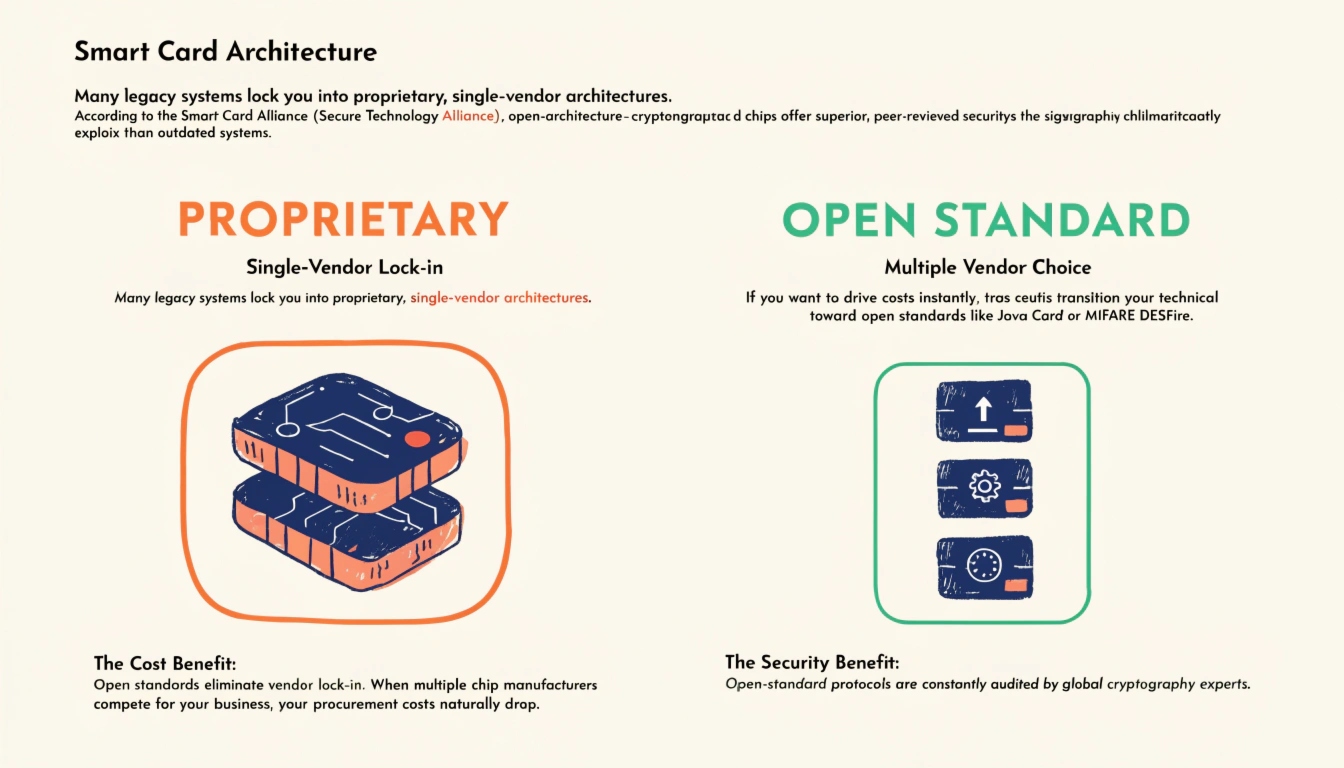
A common myth is that Type B is “more secure.” That is not how the standard works. Security comes from the secure element, the card operating system, key management, and the application protocol — none of which ISO/IEC 14443-2/3 dictates. History shows the nuance: early MIFARE Classic (Type A) had a broken proprietary cipher (CRYPTO1), which is why modern programs specify DESFire EV3 or a Java Card/GlobalPlatform secure element instead.
What Type B does offer is procurement leverage: because the protocol is more open and less encumbered by one vendor’s crypto, government and tender programs often mandate it to avoid lock-in. For a buyer, the practical rule is: choose the type your readers support, then choose a chip with a certified secure element — see our smart card certifications guide for what Common Criteria and EMVCo marks actually tell you.
Interoperability with your readers and existing infrastructure
Both types are NFC Forum-compliant (NFC Type A and Type B), so any NFC phone or modern reader that claims “NFC” should handle both. The catch is legacy access hardware:
- Many installed HF access readers only list “MIFARE” or “13.56 MHz” and in practice mean Type A only.
- Higher-security programs built on OSDP controllers and PIV/IEC 7816 applets may expect Type B for the contactless PIV applet — check against our OSDP vs Wiegand and PACS 101 guides before mixing.
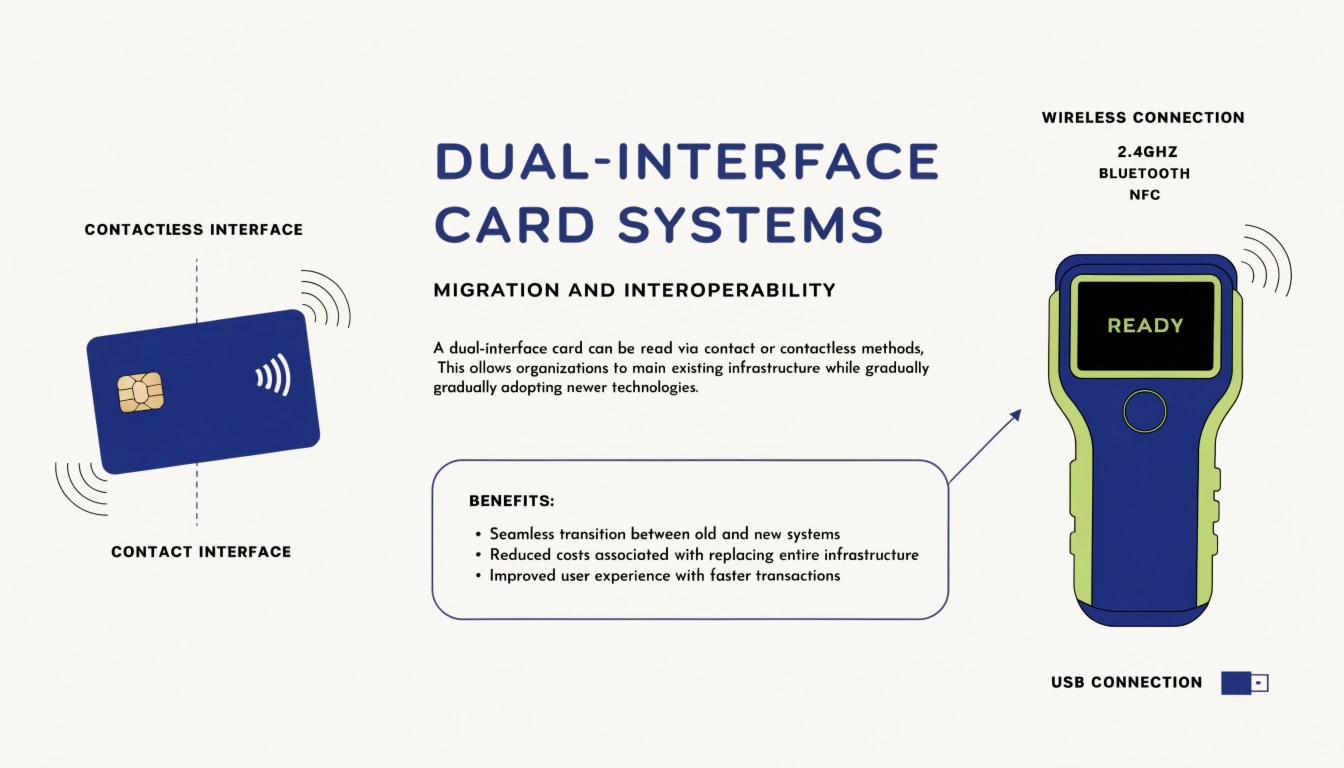
If you must satisfy both worlds, the clean answer is a dual-interface or multi-type card that carries Type A and Type B (and often a contact interface) on one credential. It costs more per card but removes the reader-compatibility gamble.
How to decide: a buyer’s specification checklist
Put the type in the RFQ, not just the standard. Use this table as a starting point:
| Factor | Lean Type A | Lean Type B |
|---|---|---|
| Existing reader base | MIFARE / most legacy 13.56 MHz access | Open-standard / government eID readers |
| Typical chips | MIFARE Classic/Plus/DESFire | Open ISO 14443-4 applets, eID/e-passport |
| EMC in noisy sites | Adequate; verify at site | Slightly better headroom |
| Vendor lock-in | Higher (proprietary crypto history) | Lower (open protocol) |
| Best when | Maximizing reader compatibility & cost | Tenders, interoperability, no lock-in |
Default recommendation: if you are refreshing an existing MIFARE program, stay Type A and just upgrade the chip to DESFire EV3 or a certified secure element. If you are building a new cross-agency or government-linked program, specify Type B (or a dual-type card) and confirm reader support in writing.
Common mistakes when specifying the 14443 type
Most “my cards don’t read” incidents trace back to one of these:
- Writing only “ISO 14443 compliant” in the PO. Always name the type (and chip) explicitly — see our smart card RFQ template.
- Assuming every “13.56 MHz” reader is the same. Confirm Type A/B support per reader model before the bulk order.
- Confusing ISO 14443 with ISO 15693. They share 13.56 MHz but are different standards with different ranges — our 14443 vs 15693 comparison clears it up.
- Choosing a type for “security” alone. Security lives in the secure element and applet, not the physical type. Specify both.
Frequently asked questions
Is Type A or Type B more secure? Neither is inherently more secure. Both are ISO/IEC 14443; security depends on the chip’s secure element, operating system, and key management. Type B’s main advantage is a more open protocol that reduces vendor lock-in in tenders.
Can one card support both types? Yes. Dual-interface and multi-type cards carry Type A and Type B (often plus a contact interface) on a single credential, which is the standard way to satisfy mixed reader fleets.
Do EMV contactless payments use Type A or B? EMV contactless (Visa payWave, Mastercard contactless) is built on Type A. Government eID and many e-passports lean Type B. Knowing this prevents mixing payment and access credentials on the wrong reader.
Ready to put the type in writing? Tell us your reader models and program goals and we will return a specification that names the type, chip, and encoding explicitly — with physical samples to validate on your own doors before the bulk run. Request a quote.