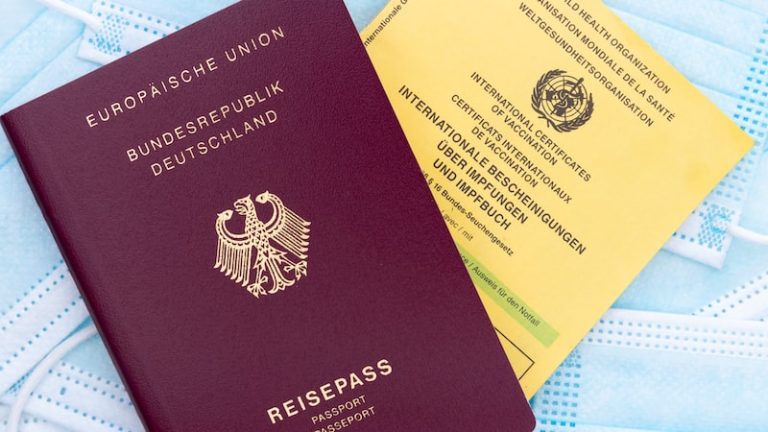
Every passport is a frontline defense against identity fraud — yet the features that make one secure have changed more in the last 40 years than in the century before. For issuing authorities, security printers, and procurement teams, the practical question is not “how far have we come” but “what must we specify today to stay ahead of forgers.” This guide traces how passport security features evolved from hand-written paper to biometric e-passports, and which capabilities actually move the needle.
Why Passport Security Had to Evolve
Passports began as simple paper booklets signed by hand — easy to read, and just as easy to alter. For most of the 20th century, a forger needed little more than a good pen. The pressure to change came from scale: international travel exploded, border officers could no longer verify documents from memory, and organized networks industrialized document fraud.
Each major upgrade in passport security answered a concrete, measurable threat rather than a vague aspiration. Understanding that chain — paper to machine-readable to biometric to tamper-resistant material — is the fastest way for a buyer to separate genuine security from security theater. Specifying the right secure substrate remains the first decision in any programme.

The First Leap — Machine-Readable Zones
The machine-readable zone (MRZ) was the first standardization win. Defined in ISO/IEC 7501-1, the two or three lines of OCR-B characters at the bottom of the data page let machines read the name, document number, and expiry in seconds instead of relying on manual keying.
The payoff for issuers was twofold: faster border processing and far fewer transcription errors. The limitation was equally clear — the MRZ is printed in plain sight, so it protects against human error, not against a determined counterfeiter. It was a speed and accuracy upgrade, not a forgery-proof one. The MRZ is still mandatory on every ICAO document, which is why it anchors the data page even on modern designs.

The Biometric Leap — e-Passports and ICAO Doc 9303
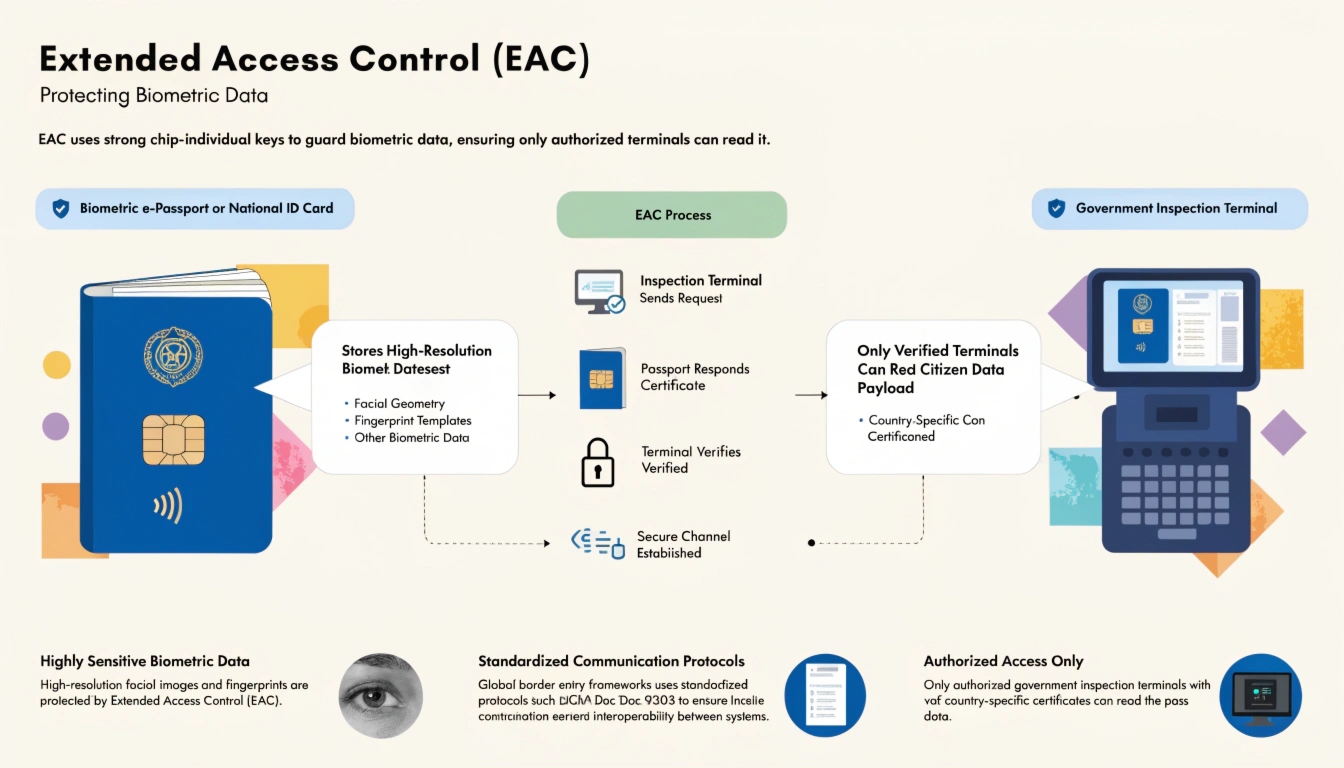
The real inflection point was the contactless chip. An e-passport stores a digital portrait and, in most modern designs, a fingerprint template, signed with a country key that border systems can validate offline. The global rulebook is ICAO Doc 9303 — the specification every issuing authority must follow for the document to be accepted at international borders.
Security shifted from visible features to cryptographic proof. Basic Access Control (BAC) and, later, Password Authenticated Connection Establishment (PACE) protect the wireless link, while Active Authentication defeats chip cloning. More than 150 countries now issue e-passports, making ICAO compliance non-negotiable for any new programme.
Material and Print Security — Polycarbonate Data Pages and OVDs
A secure chip is only as safe as the page it sits in. The strongest modern data pages are laser-engraved into polycarbonate — a fused, multi-layer plastic that resists delamination, heat, and chemical tampering far better than a laminated paper-polyester composite. Personalization (portrait, signature, fingerprints) is burned into the material itself, so it cannot be lifted and replaced. See our polycarbonate vs PVC vs PETG comparison for the trade-offs by programme tier.
On top of the substrate sit Optically Variable Devices (OVDs) — holograms, kinegrams, and colour-shifting inks — plus guilloché patterns, microtext, and UV/IR features visible only under specific light. Physical dimensions follow ISO/IEC 7810 (ID-3 format for passports), ensuring global machine compatibility. The test for buyers: is it hard to copy and easy to verify at the booth?
What an Issuing Authority Should Specify in 2026
If you are writing or reviewing a passport RFQ this year, the non-negotiables are clearer than ever:
- ICAO-compliant chip with SAC/PACE and Active Authentication.
- Polycarbonate data page, laser-engraved, with registered personalization.
- A documented supply-chain register of approved inks, films, and substrates.
- Independent source verification of the printer — look for Intergraf security-printing certification.
Specifying these up front is cheaper than retrofitting them after a fraud incident. Our issuance-program guide goes deeper on the enrollment-to-personalization lifecycle.
Avoiding Common Procurement Pitfalls
The most expensive passport programmes are not the ones with the most features — they are the ones that cut the wrong corner. Three pitfalls recur:
- Substrate downgrades — swapping polycarbonate for cheaper laminates to hit a price point, which quietly removes tamper resistance.
- Unverified suppliers — buying security foils or holographic patches off-the-shelf, where consistency cannot be guaranteed. A well-designed security hologram is not a single static image; it is a registered, repeatable master.
- No lifecycle support — forgetting that a passport programme needs re-personalization, secure logistics, and breach response for a decade.
Treat supplier claims as hypotheses to be tested. Our hologram supplier checklist applies directly to passport components: verify the master, verify the register, verify the audit trail.
The Road Ahead — Digital Travel Credentials
ICAO’s Digital Travel Credential (DTC) moves the passport’s data onto a secure element in the traveler’s own phone, with the physical booklet remaining the root of trust. Early deployments use a hybrid model — phone for convenience, booklet for proof. For buyers, that means choosing chips and keys that can later bind to a DTC, not a separate siloed system.
Frequently Asked Questions
What is ICAO Doc 9303 and why does it matter?
It is the international standard that defines how machine-readable and biometric travel documents are built — chip content, logical security, and optical features. Without it, a passport would not be accepted at foreign borders, so any new programme is effectively required to comply.
What is the difference between a laminated and a polycarbonate data page?
A laminated page glues a printed overlay onto a substrate; the layers can be separated and reassembled. A polycarbonate page is laser-engraved into fused plastic, so personalization is part of the material. Polycarbonate is markedly harder to tamper with and lasts the full passport life.
How long should a passport last?
Most ICAO-aligned passports are designed for a 10-year validity for adults. The data page must survive that entire period without delamination, fading, or chip failure — which is why material choice, not just the chip, drives the specification.
How do I verify a passport security printer’s credentials?
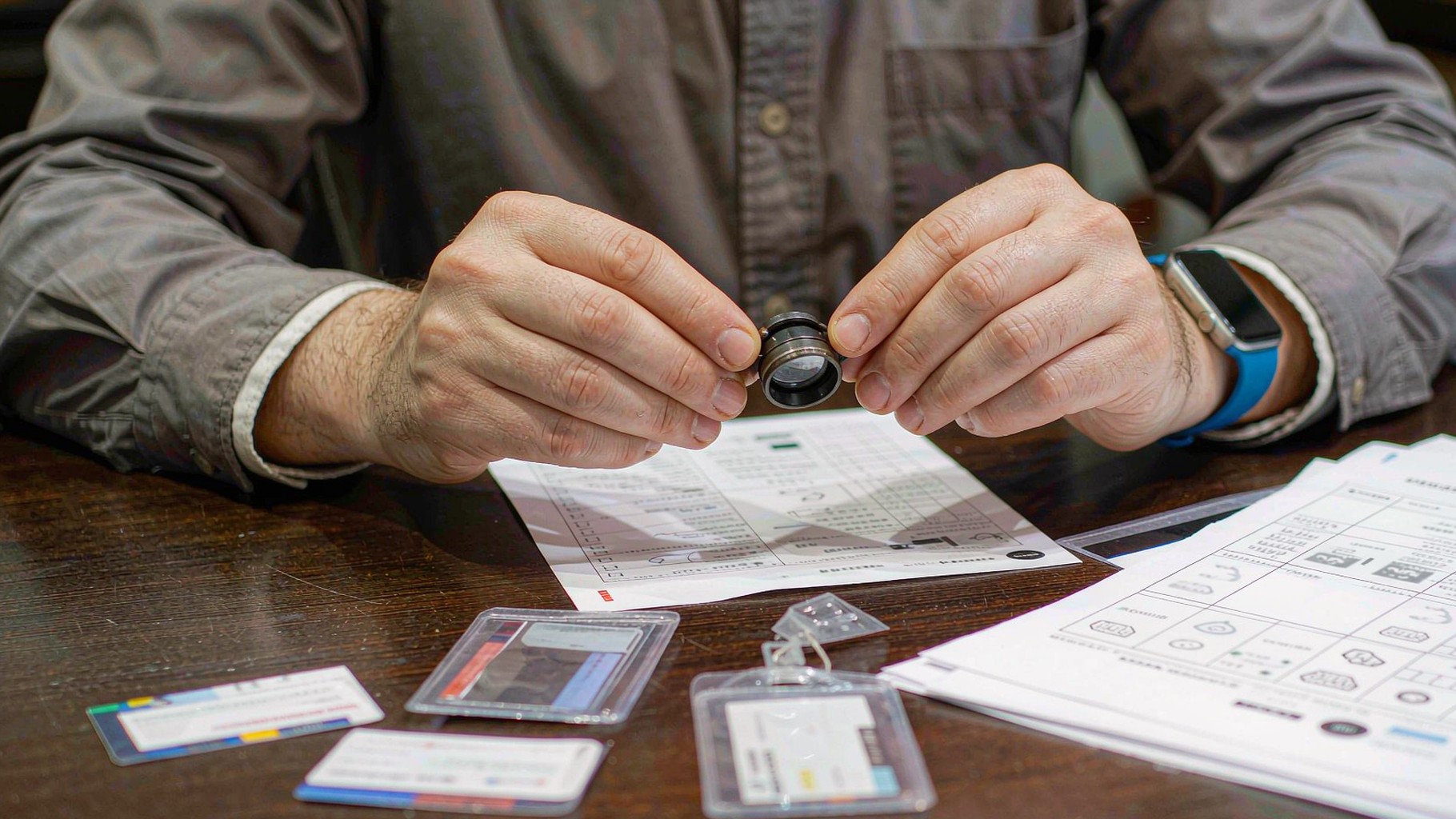
Require independent certification (such as Intergraf for security printing), audit the substrate and foil supply chain, and insist on sample cards you can inspect under magnification. Verification is a procurement step, not a formality.
Take the Next Step
Choosing the right passport security architecture is a decade-long decision. If you are scoping a new programme or re-bidding an existing one, talk to our team about substrate, chip, and personalization options matched to your threat profile — contact us to request reader-matched samples and a specification review.