When a card works on the bench but fails on the warehouse wall, the problem is rarely the chip. It is the envelope around it — the plastic, the adhesive, the seal, and the specification you signed off on. Industrial and outdoor RFID cards live where office badges never go: freezer rooms, foundry floors, washdown bays, and dust-covered yards. This guide gives B2B buyers — integrators, facilities teams, and OEMs — the exact ratings to put in the RFQ so your cards survive the environment instead of quietly dying in it.
Why a standard card quietly fails outdoors
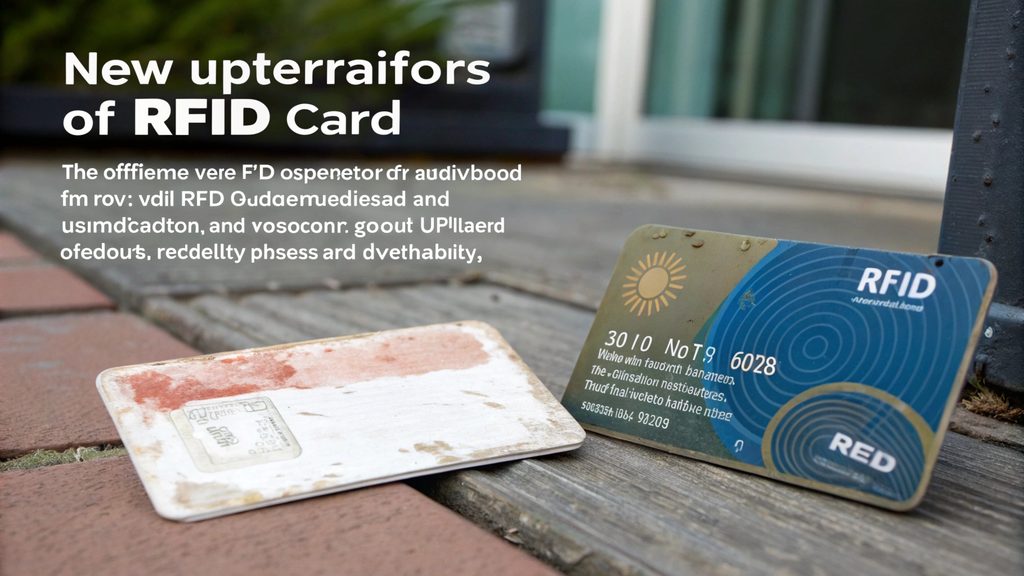
Most off-the-shelf RFID cards are built for interiors. Move them outside and three things happen in sequence. Humidity seeps through the lamination seam and corrodes the antenna. Temperature swings make the layers expand at different rates until they delaminate. UV and impact finish the job — the print fades, the edge chips, and read range drops. A card that read at 5 cm on day one may not read at all by month three.
The fix is not a vaguer “tougher” card; it is a defined set of ratings matched to where the card actually lives. Before you standardize a credential across a site, it is worth reviewing how durability is actually tested to ISO/IEC 10373 rather than trusting a single datasheet line.
IP and IK ratings: reading the numbers that matter
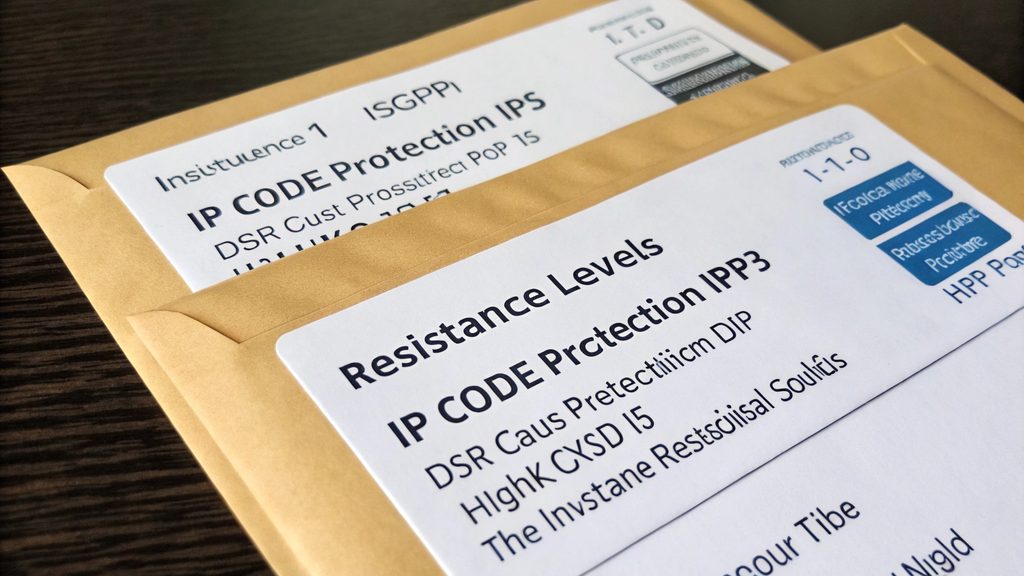
Two codes tell you what the envelope resists. The IP code (defined by IEC 60529) rates ingress protection: the first digit is solids — dust — and the second is liquids — water. For outdoor and washdown use, look for IP65 (dust-tight, low-pressure water) up to IP67 (immersion) or IP69K (high-pressure, high-temperature jetting). The IK code rates mechanical impact resistance — useful where cards are struck or dropped. Don’t accept “weatherproof” as a spec; ask for the literal two-digit IP number and the IK level, because they are the only things your warranty claim can lean on. The full structure of the rating is explained in the IP Code (IEC 60529) reference.
Temperature extremes: cold chain and foundry floors
Standard PVC cards soften above roughly 60 °C and go brittle below freezing. Industrial tags are rated by an operating temperature range, typically -25 °C to +70 °C for general-duty parts and -40 °C to +85 °C for extended-range tags — the kind used in cold-chain logistics, freezers, and hot process areas. Environmental qualification often follows methods such as MIL-STD-810 for temperature, humidity, and vibration.
If your cards sit in a freezer or next to a kiln, the range is the first number to confirm, not the last. A tag qualified at -40 °C keeps reading through defrost cycles that would crack a standard card.

UV, chemicals, and solvents: what the plastic survives
Sunlight and solvents are the quiet killers. PVC yellows and embrittles under prolonged UV; polycarbonate and PET resist far better. In washdown and chemical plants, the wrong plastic swells or cracks on contact with cleaners, oils, or solvents. Specify the actual substances the card will meet — a weekly alcohol wipe is a different spec from a fuel splash — and ask for a chemical-resistance statement, not a generic “chemical resistant” claim. Material choice here overlaps directly with the substrate decision in our polycarbonate vs PVC vs PETG comparison.

Impact, vibration, and how you mount it
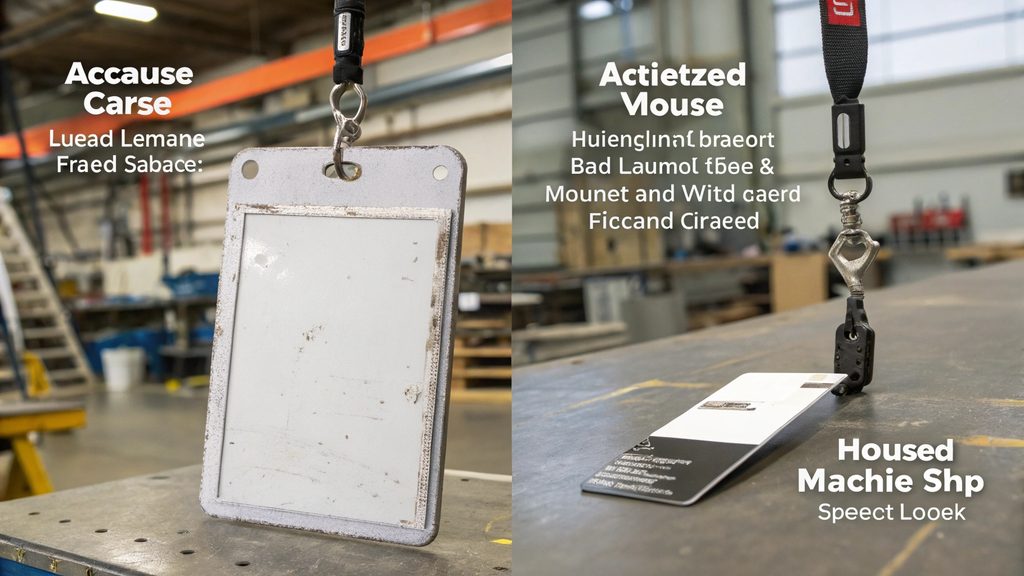
A card glued flat to a panel survives differently from one on a lanyard in a machine shop. Vibration loosens adhesives; impact chips edges; repeated flexing breaks the antenna. Decide the mounting first — adhesive, screw-fix, zip-tie, or encapsulated puck — because it changes the construction you need. Screw-fixed and encapsulated styles shrug off shock that would destroy a thin card.
HF vs UHF when metal and liquid are everywhere
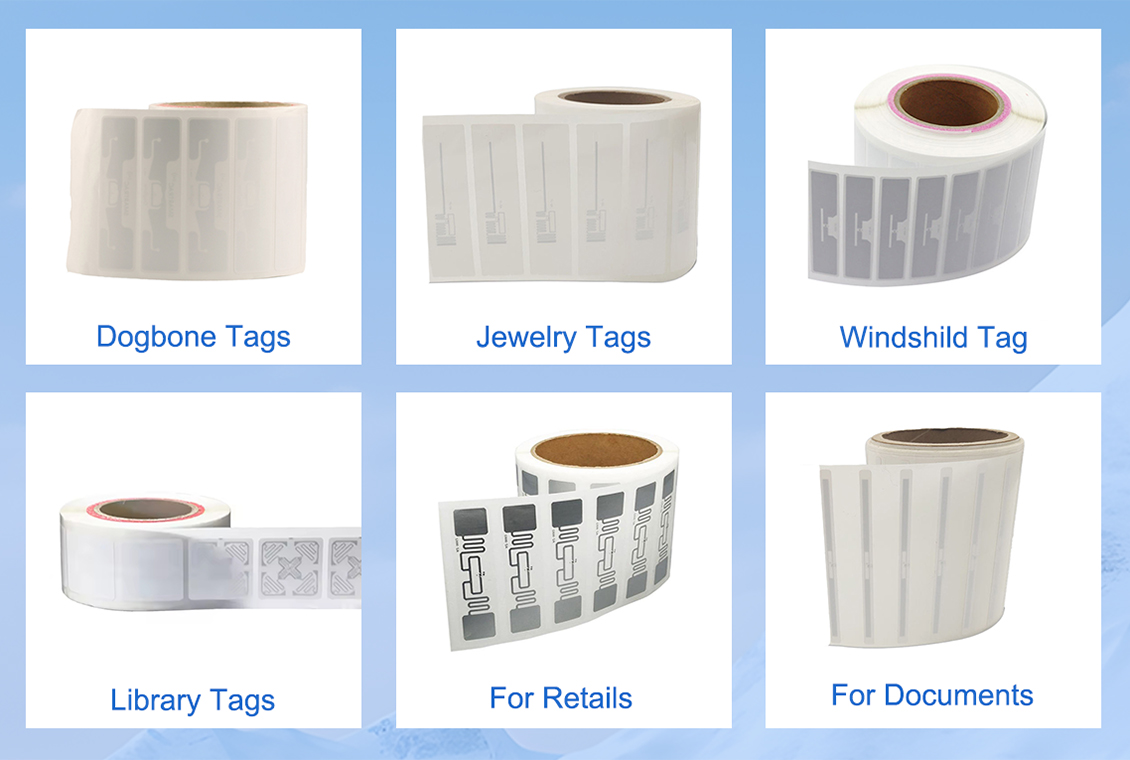
Frequency choice is where the environment bites hardest. UHF (860–960 MHz) reads farthest and cheapest at scale, but metal and water detune the antenna and slash range. HF (13.56 MHz, ISO/IEC 15693 / 14443) is far more tolerant of metal and liquid, which is why it dominates industrial tool tracking and harsh sites. Our LF vs HF vs UHF frequency guide lays out the trade-offs; for on-metal UHF you need a specifically tuned tag, not a standard label. Air-interface standards such as ISO/IEC 18000 define how these tags talk to readers, so confirm your reader and tag share the same profile before you buy — see the ISO/IEC 18000 series for the relevant part.
Card materials: PET, ABS, polycarbonate, epoxy
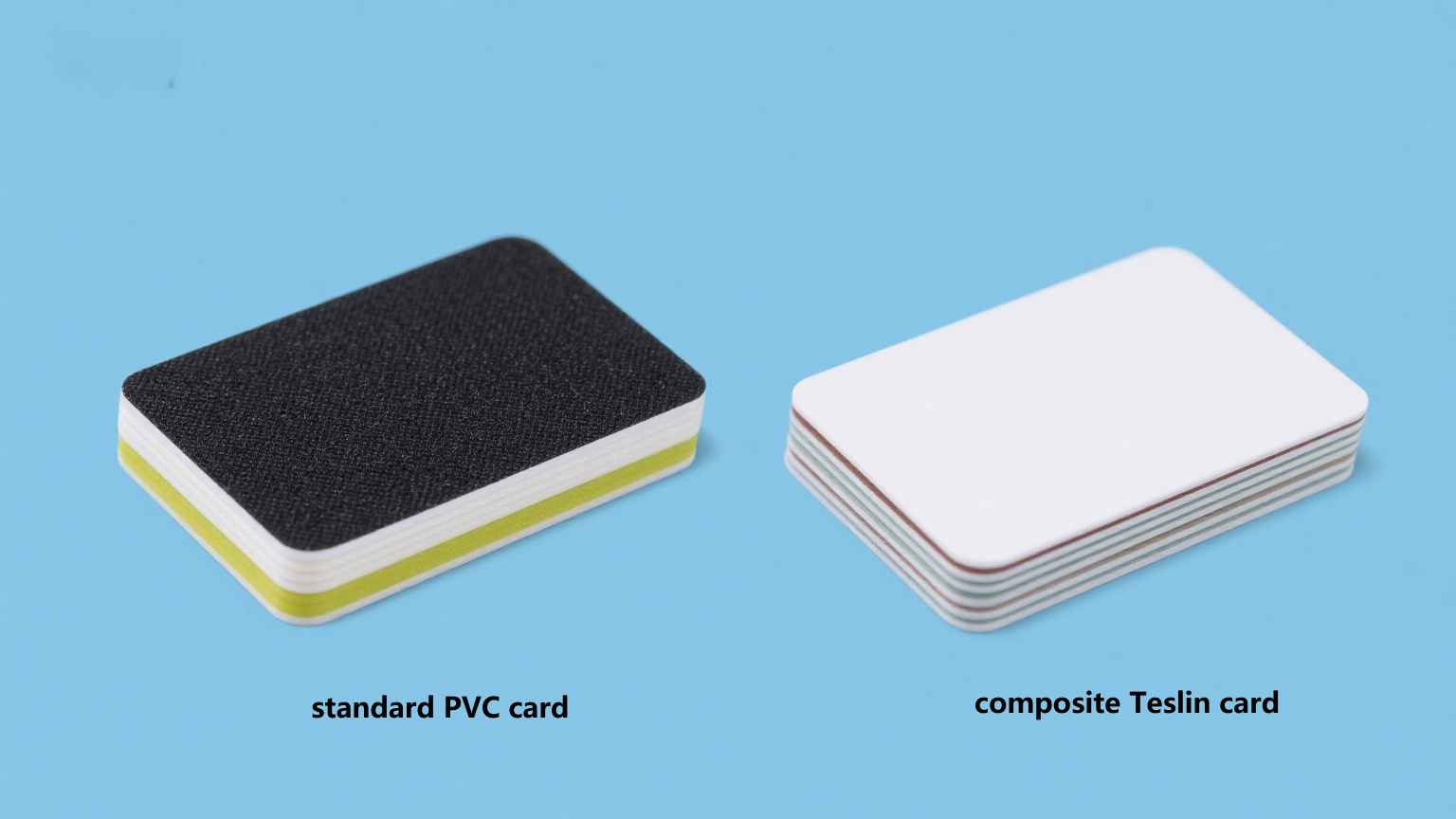
The substrate is most of your durability budget. PET is a good low-cost step up from PVC with better heat and chemical resistance. ABS adds impact strength for mechanical environments. Polycarbonate is the long-lived choice — UV-stable, heat-resistant, used in government IDs. Epoxy encapsulation (the “domed” puck) seals a tag against water and impact for the roughest mounts. There is no single winner; the right pick is the cheapest material that still meets the IP, temperature, and chemical bars you just defined. The same material logic appears in our material comparison for ID cards.
Your specification checklist before you order
Turn the above into a one-page RFQ appendix. State, at minimum:
- Operating temperature range (for example, -40 °C to +85 °C)
- IP and IK ratings required for the site
- Chemical exposure list the card must survive
- Frequency and air-interface standard (HF ISO/IEC 15693 / UHF ISO/IEC 18000)
- Mounting method and expected shock or vibration
- Material and expected service life
- Sample and field-test requirement before volume commit

Genuine Printing has manufactured industrial and outdoor RFID cards since 2005 and can supply samples for your environment, pre-encode to your standard, and document the ratings so your audit trail is clean. Order a small field-test batch before the full rollout — a two-week trial on the actual wall costs less than a mis-specified 10,000-card order. Request sample cards before your order to validate the spec in the real conditions.