Every card tender contains the same sentence: “Cards shall be durable and suitable for the intended service life.” That sentence has never won a single claim. When badges start delaminating in month fourteen, the supplier points at your handling conditions, you point at their laminate, and nobody can prove anything — because nothing measurable was ever agreed. Card durability testing only protects you if the test method, the sample size, and the pass/fail limit are written into the contract before the first pallet ships. This guide shows you exactly how to write them.

Why “Durable Cards” Is Not a Specification
Durability is not a property of a card. It is the relationship between a specific construction, a specific usage pattern, and a specific time horizon. A visitor badge that lives in a lanyard for three days and a national ID that lives in a wallet for ten years fail in completely different ways, and no single word covers both.
In practice, buyers discover this only after deployment. The failure modes that generate the most complaints are predictable and boring:
- Delamination at the card edge — layers separate after repeated flexing or after sitting in a hot vehicle. Usually a lamination-parameter or material-compatibility problem, not “user abuse”.
- Antenna or chip-module breaks — the card still looks perfect but stops reading. This is why a purely visual acceptance test is worthless for contactless credentials.
- Print wear and photo fade — the portrait and the barcode become unreadable long before the plastic fails, which quietly destroys the card’s identity function.
- Warpage — cards bow enough to jam in desktop readers and printers, generating a helpdesk ticket per card.
- Chemical attack — hand sanitiser, sunscreen, and cleaning agents attack unprotected surface print and overlay adhesives.

The commercial consequence is what should concentrate your attention. Replacing a failed credential rarely costs the price of the card — it costs re-enrollment time, re-encoding, courier fees, a temporary access exception, and an audit entry. In large programmes, a 2% annual failure rate can cost more than the entire original card order. That maths is why durability belongs in the commercial section of the contract, not in a technical appendix nobody reads. If you have not modelled it yet, our breakdown of the ROI of high-durability contactless cards gives you a starting framework.
The Standards That Actually Define Card Durability
Three documents do the heavy lifting, and buyers routinely confuse them. Getting the division of labour right is the single most useful thing you can learn about card durability testing.
- ISO/IEC 7810 defines what the card must be — the ID-1 format (nominally 85.60 × 53.98 mm, 0.76 mm thick) plus the physical characteristics a compliant card has to exhibit.
- ISO/IEC 10373-1 defines how you measure it — the test methods for general characteristics: dimensions and warpage, bending stiffness, dynamic bending and torsion, peel strength, resistance to chemicals, light exposure, surface abrasion, static electricity and more. Companion parts cover specific technologies, including ISO/IEC 10373-3 for contact IC cards and ISO/IEC 10373-6 for contactless proximity objects.
- ISO/IEC 24789-1 defines how long it must last — card service life expressed as application profiles and requirements, with ISO/IEC 24789-2 providing the evaluation methods. This is the standard to reach for when your real question is “will this card survive five years of daily use?”
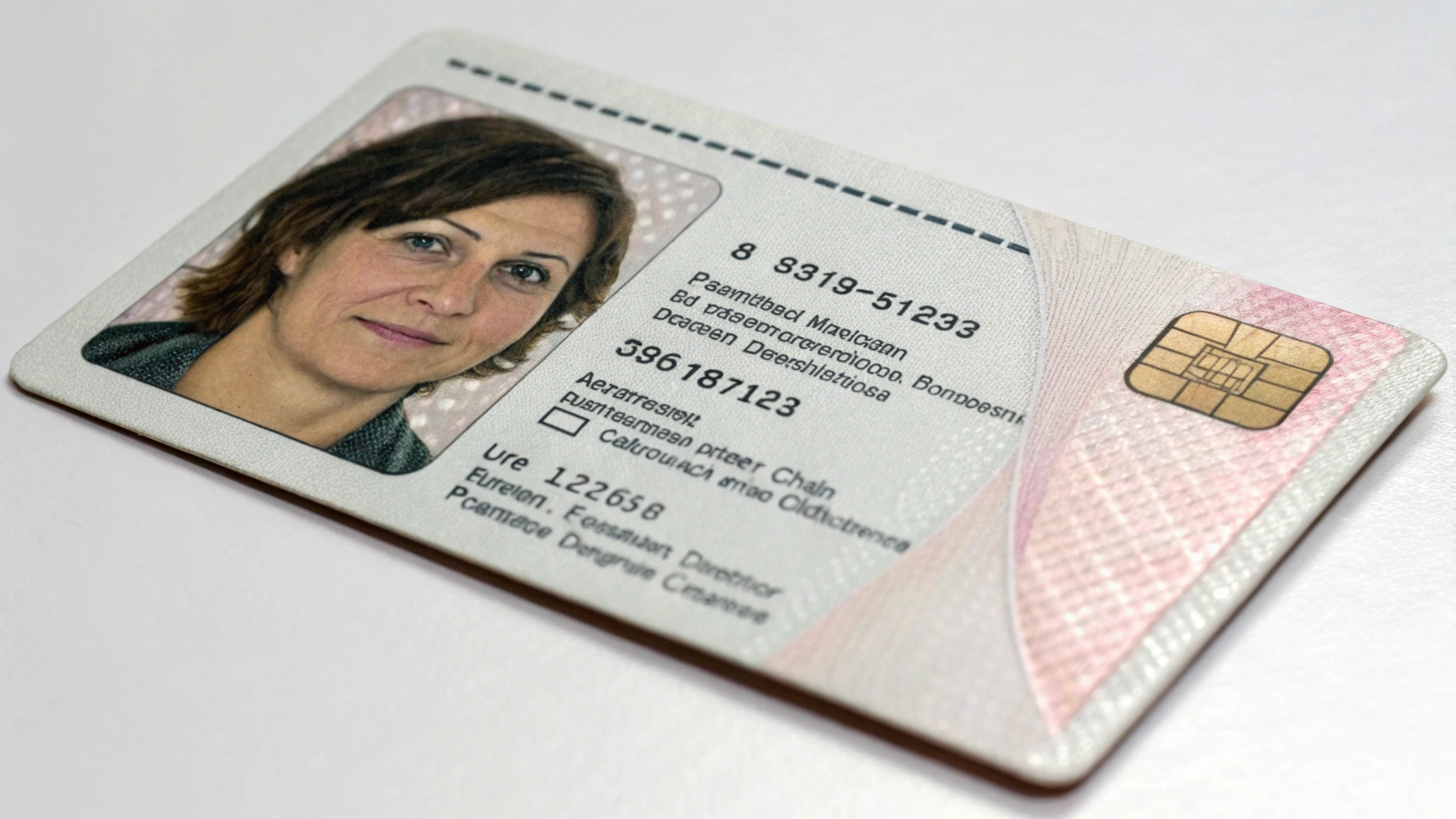
Here is the trap almost every first-time buyer falls into. ISO/IEC 10373 is a method standard, not a pass/fail standard. It tells the laboratory how to bend, twist, abrade and soak the card; it does not, by itself, tell anyone what result is acceptable for your programme. Acceptance limits come from the base standard the card claims conformance to, or from criteria you negotiate. Writing “cards shall comply with ISO/IEC 10373-1” into a tender therefore commits your supplier to almost nothing — a card can be tested to the method and still fail your use case.
The correct construction is always three-part: method + condition + limit. For example: “Dynamic bending per ISO/IEC 10373-1, tested in four orientations, with no delamination, no visible cracking, and full chip functionality retained after the agreed cycle count.” Confirm the exact cycle counts, deflections and conditioning against the current edition of the standard before you publish the tender, because these parameters are revised between editions.
Which Durability Tests Matter for Your Card’s Service Life
You do not need the full ISO/IEC 10373-1 battery on every project. Testing everything is expensive and slows qualification by weeks. The efficient approach is to select tests by expected service life and exposure environment, then leave the rest out of scope explicitly so there is no argument later.
Use this as a starting scope, then adjust for your environment:
| Test focus (ISO/IEC 10373-1) | 3-year visitor / employee badge | 5–7 year corporate or campus credential | 10-year national ID / driving licence |
|---|---|---|---|
| Dimensions & warpage | Required | Required | Required |
| Dynamic bending (flex) | Required | Required | Required, with chip function verified after test |
| Dynamic torsion | Optional | Required | Required |
| Peel strength / delamination | Required | Required | Required |
| Surface abrasion & print wear | Required | Required | Required, with machine-readable zone legibility check |
| Resistance to chemicals | Optional | Required | Required |
| Light / UV exposure (photo fade) | Optional | Required | Required |
| Temperature & humidity cycling | Optional | Required | Required |
| Service-life profile (ISO/IEC 24789) | Not usual | Recommended | Required |
Two environment-driven adjustments are worth calling out. First, if cards will be carried outdoors in strong sunlight — utilities, transport, defence, field services — light-exposure testing is not optional, because portrait fade destroys the card’s identity function long before the plastic degrades. Second, if the card doubles as a payment or transit token, add the technology-specific test parts and verify electrical performance after mechanical stress, not just before.
Material choice sets the ceiling on all of these results. Polycarbonate, PVC and PET-G behave very differently under flex, heat and laser engraving, and no amount of testing turns a low-cost PVC body into a ten-year document. Our comparison of polycarbonate vs PVC vs PET-G for government ID covers the trade-offs, and the personalization method you choose — dye-sublimation, re-transfer or laser engraving — has just as much influence on abrasion and fade results as the substrate does.
Turning Test Methods Into Contract Language: Sample Size, AQL and Pass/Fail
A test clause that cannot be executed is decoration. To be enforceable, each requirement needs five elements, and missing any one of them gives a supplier room to argue.
- Method reference — the standard and part, with edition or “current edition at contract date”.
- Test condition — cycles, load, temperature, duration, conditioning before test.
- Sample definition — how many cards, drawn from which lot, at what stage (blank body, printed, or fully personalized). Insist on fully personalized samples: an unprinted card body passes tests that a laminated, laser-engraved card can fail.
- Acceptance criterion — the observable outcome: no delamination visible at 10× magnification, no crack propagation, chip reads at the specified distance, colour shift within an agreed tolerance.
- Consequence — what happens on failure: re-test protocol, lot rejection, replacement at supplier cost, and who pays for third-party verification.

For routine batch acceptance, separate type testing from lot inspection. Type testing qualifies the construction once (and again whenever the supplier changes material, laminate, chip or plant). Lot inspection is statistical sampling applied to each delivery, and the standard reference for that is ISO 2859-1 — sampling procedures for inspection by attributes.
A widely used starting point for card programmes is general inspection level II with a three-tier defect classification: critical defects at AQL 0 (any occurrence rejects the lot), major defects around AQL 1.0, and minor cosmetic defects around AQL 2.5. Define the tiers explicitly in your specification. A chip that does not read is critical; a portrait printed off-register is major; a faint edge mark inside an agreed tolerance is minor. Suppliers will accept tight limits far more readily when the classification is unambiguous, because ambiguity is what makes them price in risk.
One clause worth adding and frequently omitted: a change-control obligation requiring written notice and re-qualification before any change to substrate supplier, laminate, chip type, antenna design, or production site. Most “sudden” quality collapses in card supply are traceable to a silent substitution that was never re-tested. If you are still shortlisting vendors, our guide to evaluating a secure printing factory for national ID and passport tenders covers the audit questions that surface these risks early.
How to Read a Card Test Report — and Spot a Weak One
Suppliers send test reports to close conversations, not to open them. Most buyers file them unread. Ten minutes of scrutiny tells you whether the document is evidence or decoration.

Check these seven things, in order:
- Sample identity. Does the report describe the card you are actually buying — same substrate, same thickness, same laminate, same chip, same personalization method? A report on a blank white PVC card proves nothing about your laser-engraved polycarbonate credential.
- Method and edition. “ISO 10373” with no part number and no year is a red flag. You want the part, the clause, and the edition.
- Actual conditions. Cycle counts, loads, temperatures and durations should be printed, not implied.
- Measured values, not verdicts. A report that shows only “Pass” in every row is the least useful document in the file. Numbers let you see margin; verdicts hide it. A card that passes at the edge of tolerance will fail in the field.
- Sample size and date. Three cards tested four years ago is a historical curiosity, not current evidence.
- Laboratory identity and accreditation. In-house laboratory results are legitimate and often well run — but they should be labelled as in-house, and your contract should reserve the right to third-party verification at your own cost, refundable if the lot fails.
- Post-stress functional check. For any chip card, the report must confirm that the card still reads after mechanical and environmental stress. Mechanical integrity without electrical function is a coaster.
If a supplier cannot produce reports that survive this checklist, that is useful information in itself — and it usually appears long before you have committed volume.
Incoming Inspection: A Receiving Protocol You Can Run Without a Lab
You do not need testing equipment to catch the majority of lot-level problems. A disciplined receiving routine, applied to every delivery and documented, catches drift early and gives you dated evidence if a claim becomes necessary.
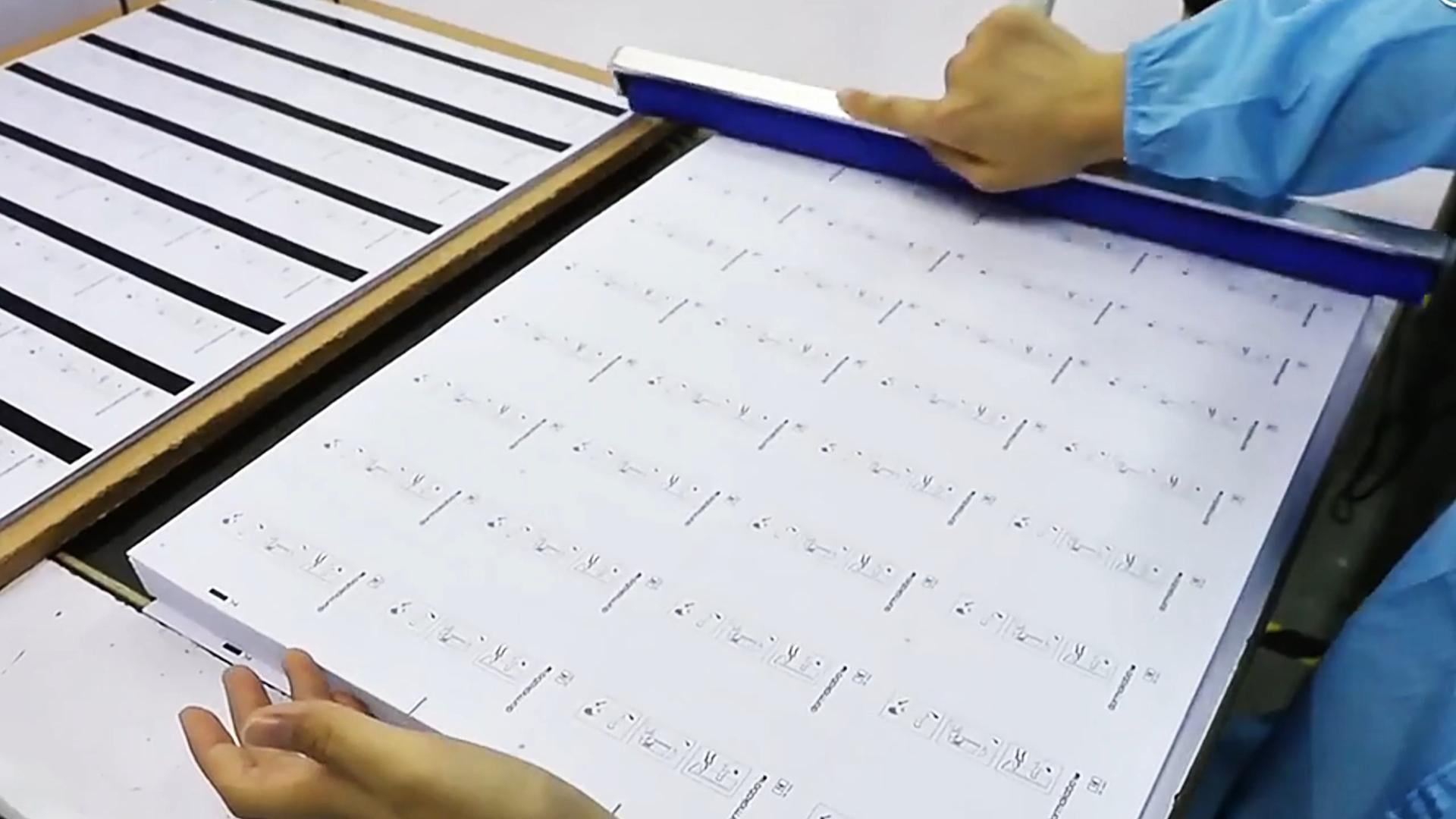
- Draw the sample properly. Pull cards from several cartons and several positions in the stack, not the top of the first box. Record lot number and quantity.
- Measure thickness and flatness. A digital caliper at five points per card and a flat reference surface will expose warpage and thickness drift, the two defects that jam printers and readers.
- Inspect edges under magnification. A 10× loupe or a cheap USB microscope reveals early-stage delamination and poor edge finish that the eye misses.
- Run a manual flex and twist check on a few sample cards, then re-read every one of them. Any card that stops reading after gentle flexing indicates a chip-module or antenna bonding problem across the lot.
- Read 100% of cards before issuance where the programme allows it — for contactless credentials this is the single highest-value check you can perform, and most issuance software can log it automatically.
- Do a wipe test. Isopropyl alcohol on a cloth, ten passes on the printed surface. Ink transfer means the protective layer is inadequate for daily handling.
- Retain a sealed reference sample from every lot, labelled and dated. When a dispute arises in month eighteen, the retained sample is the only thing that settles it.
Fold this routine into your wider issuance process rather than treating it as a warehouse task — the receiving log, the retained samples and the reader-failure statistics all feed the same lifecycle record. Our walkthrough of building an ID card issuance programme shows where incoming inspection sits alongside enrollment, encoding and revocation.
Frequently Asked Questions About Card Durability Testing
Does ISO/IEC 10373 certification exist?
No. ISO/IEC 10373 is a set of test methods, so there is no such thing as a “10373-certified card”. What exists is a test report showing that specific samples were tested using those methods and produced specific results. Treat any supplier claiming “10373 certification” as a prompt for closer questions.
How many cards should be tested for a durability qualification?
Type testing typically uses small, defined sample counts per test method, since each test consumes the card. Lot acceptance is different and should follow a statistical plan such as ISO 2859-1. The important point is that the number is written down and agreed in advance for both activities — an unspecified sample size is where most disputes start.
Can a PVC card meet a ten-year service life?
In practice, standard PVC is specified for shorter-life applications, and long-life identity documents generally use polycarbonate or composite constructions. Rather than argue about materials, specify the service-life profile and evaluation you need under ISO/IEC 24789 and let the supplier propose a construction that can demonstrate it.
Who pays for third-party testing?
The common and workable arrangement: the supplier pays for type-test evidence at qualification; the buyer pays for verification testing they initiate, refundable by the supplier if the lot fails. Write the mechanism into the contract, including the laboratory selection process, so it does not become a negotiation at the moment of a dispute.
What is the difference between ISO/IEC 10373 and ISO/IEC 24789?
ISO/IEC 10373 answers “how do we run this individual test?” ISO/IEC 24789 answers “how do we evaluate whether this card survives its intended service life?” Long-life government and banking programmes usually need both: 10373 methods for individual characteristics, and a 24789 service-life profile to tie them to a real usage horizon.
Your Next Step: Get Testable Samples Before You Commit
The fastest way to move from vague durability language to enforceable criteria is to put real cards through your own hands. Ask any shortlisted supplier for fully personalized samples built to your exact construction — your substrate, your laminate, your chip, your personalization method — together with the corresponding test reports. Then run the receiving protocol above on those samples before the tender closes, not after.
GENUINE has manufactured secure cards and identity documents since 2005, and we supply test documentation and construction-matched samples as part of normal quotation practice. Tell us your service-life target, reader environment and volume, and we will come back with a proposed test scope, the acceptance criteria we would sign up to, and samples you can put through your own checks. Contact our team to start, or review our polycarbonate ID card capabilities if you are specifying a long-life document.