Healthcare facilities buy ID badges the way they buy almost everything else in a clinical environment — under pressure, across shifts, and under regulatory scrutiny. But badge procurement for a hospital or health system is not the same as ordering visitor passes for an office park. You are specifying credentials that open medication rooms, follow staff into operating theatres, sit next to PHI on a lanyard, and get wiped down with disinfectant dozens of times a week. This guide walks facilities, security, and procurement teams through the decisions that actually move the needle: mapping access tiers to roles, specifying for chemical and physical durability, choosing the right chip, integrating with doors and EHR, and keeping patient data off the card itself.
Why Healthcare Badge Procurement Is Its Own Discipline
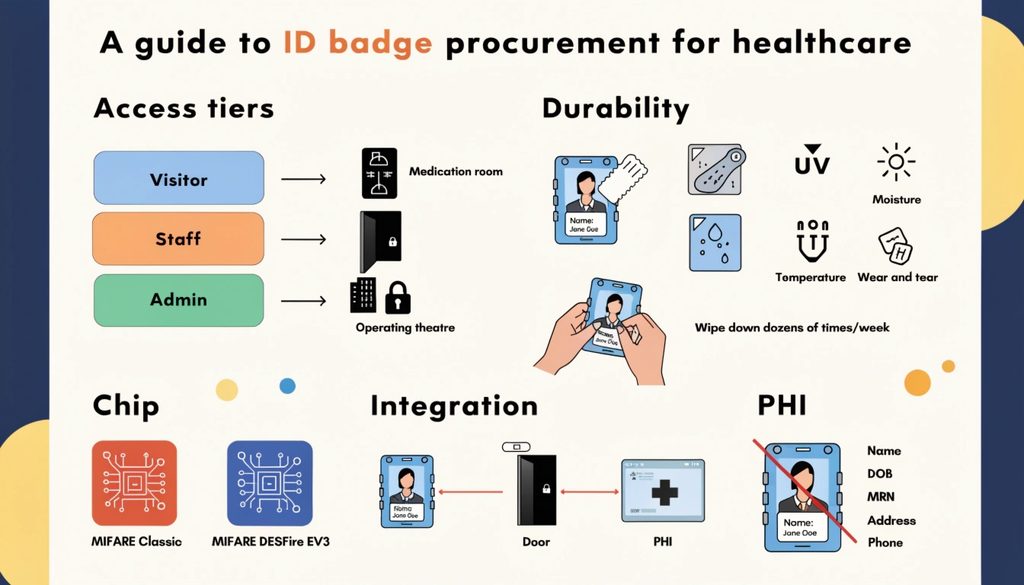
Three things make clinical badge programs harder than standard corporate ones. First, the environment is hostile to plastic: hand sanitizer, quaternary-ammonium wipes, and alcohol-based disinfectants are applied to badges constantly, and many standard PVC cards haze or delaminate within months. Second, the risk surface is larger — a lost badge can unlock a pharmacy, a server room, or a patient-care system, not just a front door. Third, staff churn and shift work mean your issuance, revocation, and re-issuance volume is continuous, not a once-a-year onboarding event. A procurement spec that ignores any of these three will cost more in replacements, help-desk calls, and security incidents than it saves up front.
Build the program on a deliberate issuance and enrollment workflow rather than ad-hoc reprints. Our guide to building an ID card issuance program covers the design, personalization, and enrollment decisions you will need before a single card is ordered.
Map Access Tiers to Roles Before You Buy
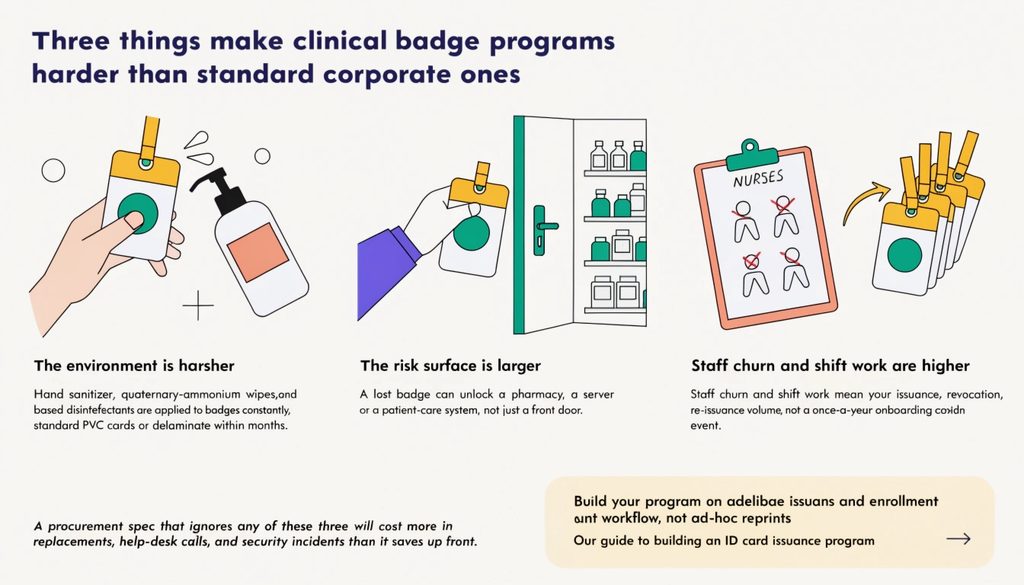
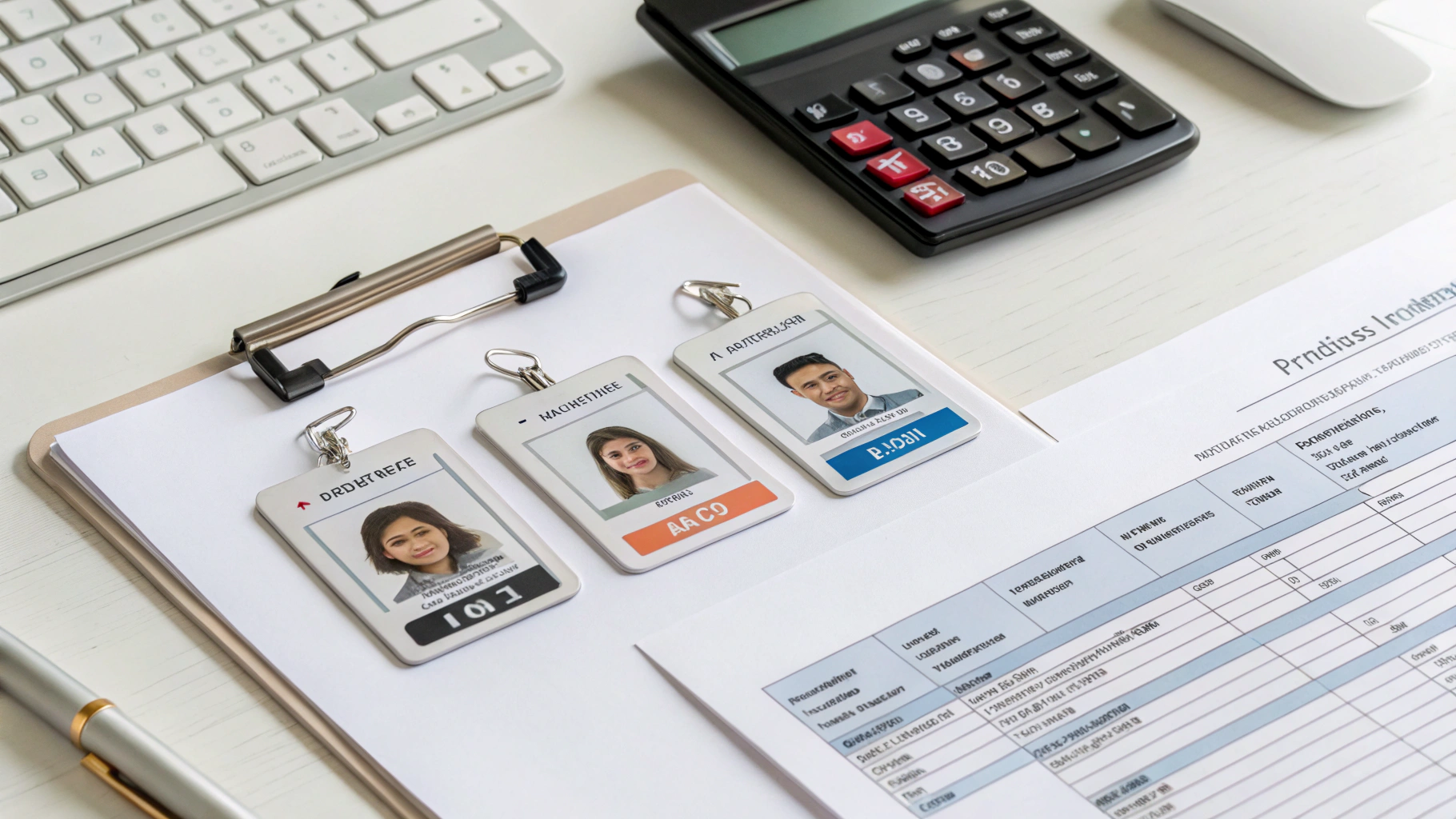
Before comparing card materials or chips, define what each role actually needs to open. Most health systems land on three to five tiers. A practical model:
| Tier | Who | What it opens | Card requirement |
|---|---|---|---|
| Tier 1 | General staff (nursing, allied health, admin) | Perimeter doors, staff entrances, time & attendance | Basic contactless credential, photo + name |
| Tier 2 | Clinical restricted (pharmacy, lab, OR, IT/server) | Adds mediated doors with PIN or biometric step-up | Secure element (DesFire-class), optional dual-interface for login |
| Tier 3 | Contractors & vendors (EVS, food service, reps) | Time-boxed access, managed visitor workflow | Temporary, revocable credential, no persistent privileges |
| Tier 4 | Executive / emergency override | Escorted or high-assurance access | High-assurance secure element, tightly governed issuance |
The mistake we see most often is buying one “premium” card for everyone — you overpay for tiers that only need a basic credential and under-protect the rooms that matter. Tie each tier to a physical zone and an issuance rule, then specify the card to match. The software layer that enforces these rules deserves as much attention as the plastic; review card management systems and middleware before you commit to a credential format.
Specify for Durability: Cleaning Agents, Antimicrobial Surfaces, Daily Wear
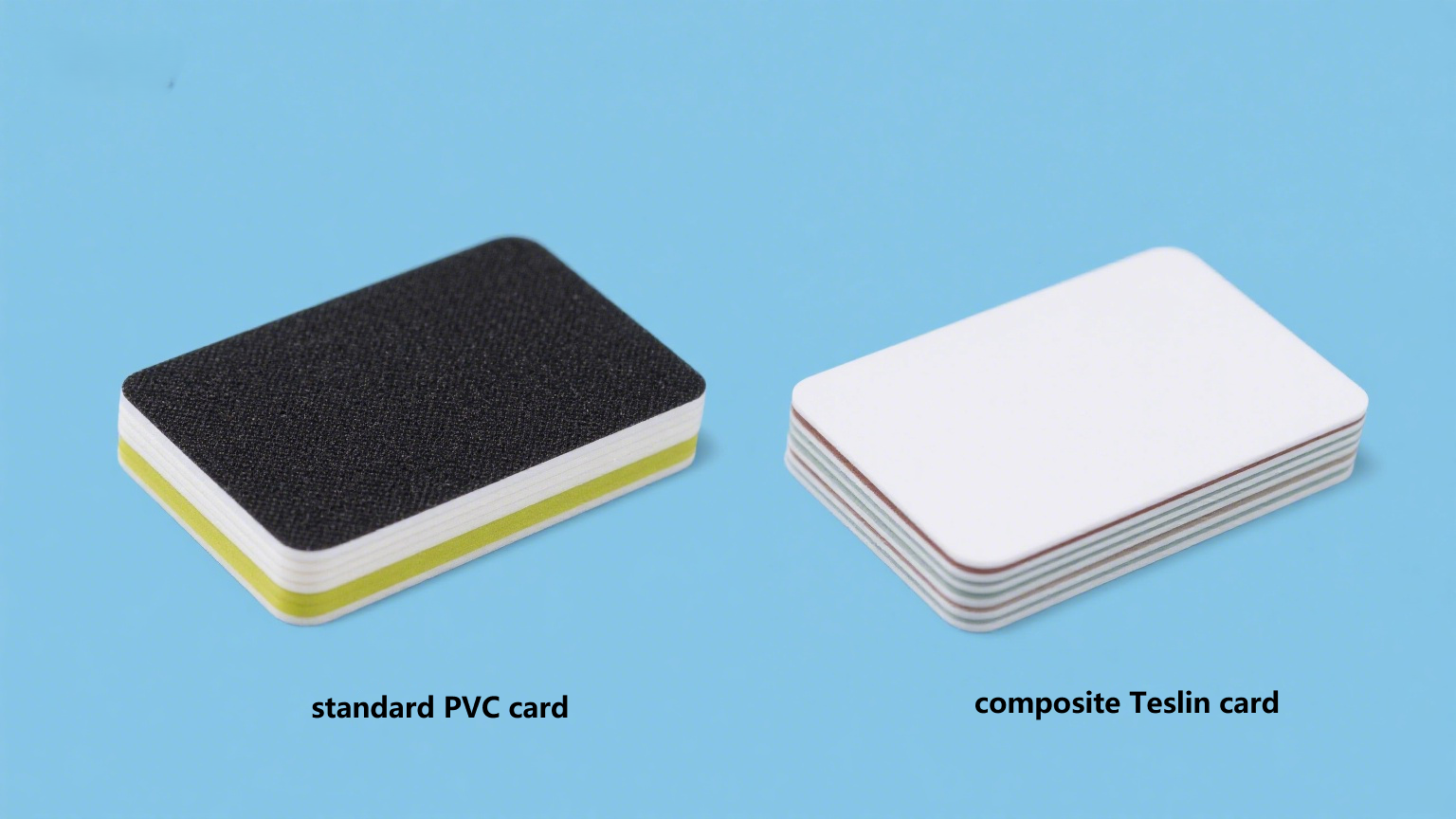
In a hospital, a badge is a high-touch object. The single most common failure mode is chemical attack from disinfectants — standard PVC softens, the overlay lifts, and the printed photo peels. For clinical programs, specify cards rated for repeated wipe-down: composite (PVC/PET) or PETG cores resist alcohol and quat-based cleaners far better than PVC alone, and a laminate or overlay rated for chemical exposure extends service life further. Antimicrobial card bodies (often with silver-ion additives) address surface-hygiene concerns, though they supplement hand hygiene rather than replace it. Expect a realistic clinical lifespan of 2–3 years for a well-specified composite card, versus under 12 months for a bargain PVC card wiped daily. The ISO/IEC 7810 family sets the dimensional and baseline durability expectations buyers should reference when writing a spec.
Material choice is the same decision government and e-passport programs wrestle with; our polycarbonate vs PVC vs PETG comparison breaks down how each core behaves under stress.
Encoding Choices: HF 13.56 MHz, MIFARE DESFire, HID SEOS, and Dual-Interface
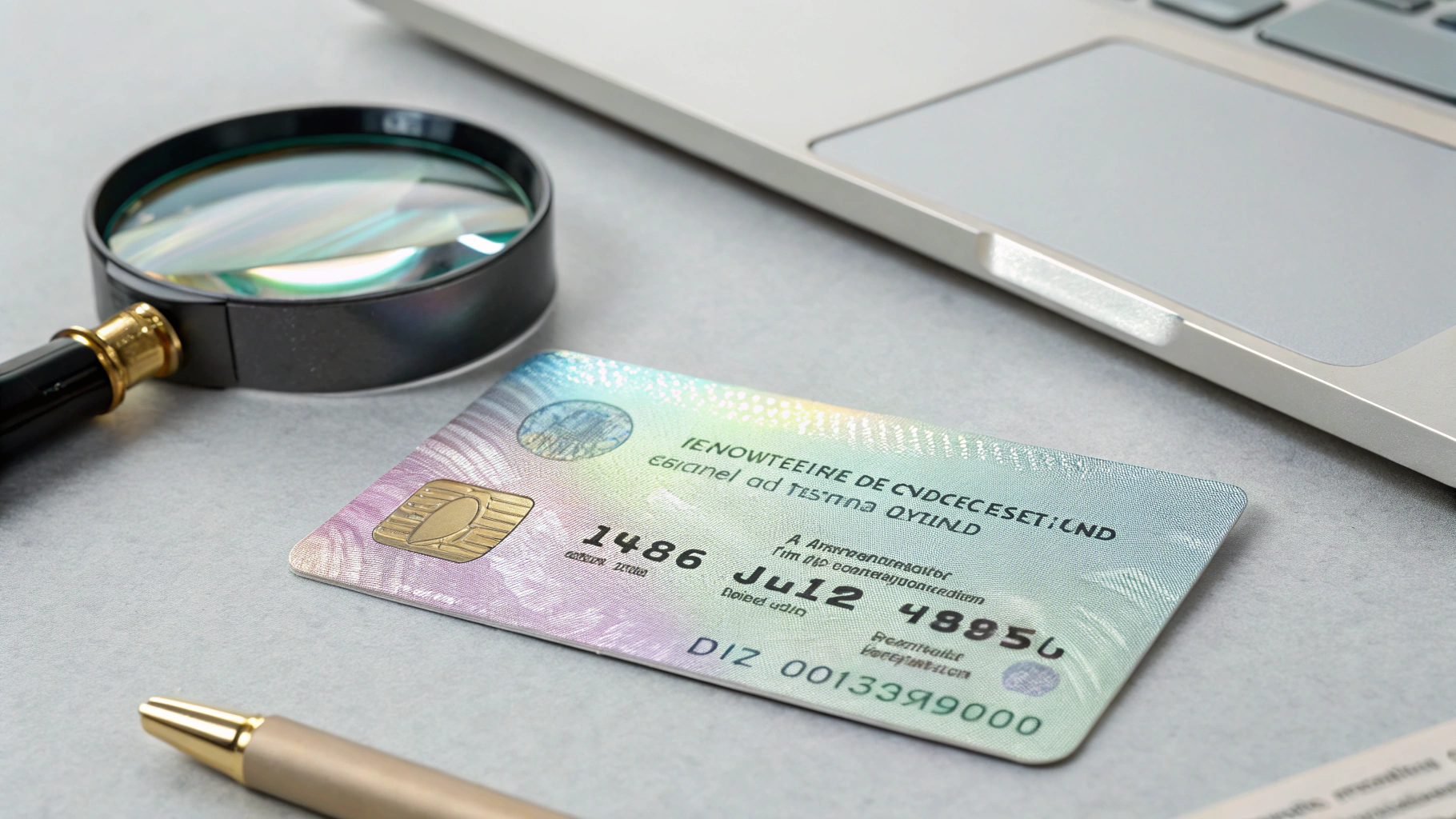
For new healthcare programs, 13.56 MHz contactless (ISO/IEC 14443) is the de facto standard — it is what your readers, doors, and most printers already speak. Within that, the secure credential of choice is typically MIFARE DESFire EV3 (or a comparable Common Criteria–certified secure element) for mutual authentication and key diversification, which stops the clone-and-replay attacks that plague legacy 125 kHz proximity cards. If you are standardizing on a proprietary ecosystem, HID SEOS offers a software-defined credential portable across reader types. Dual-interface cards (contact chip plus contactless) are worth specifying when a workflow still needs a contact reader — for example, a smart-card login terminal at a nursing station. Choose the chip against your reader fleet, not the other way around; our smart card chip selection guide maps memory, interface, and security to real programs.
Integrate Badges With Doors, EHR, and Visitor Management
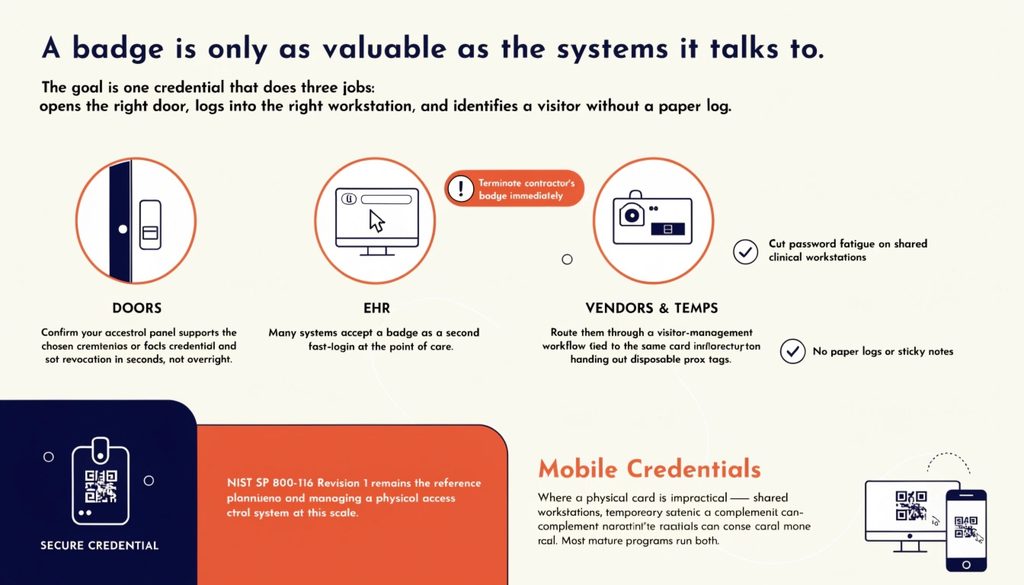
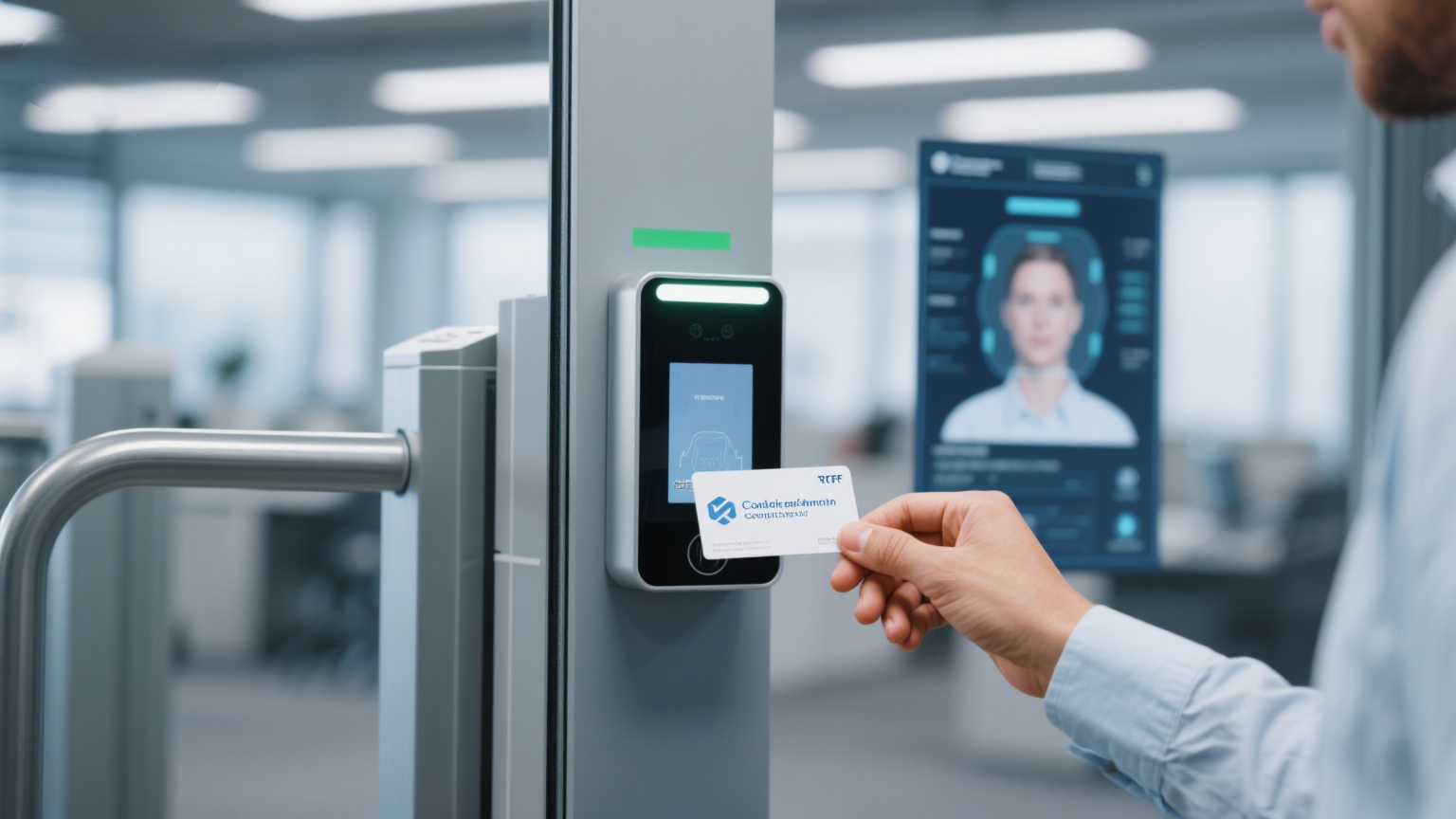
A badge is only as valuable as the systems it talks to. The goal is one credential that does three jobs: opens the right door, logs into the right workstation, and identifies a visitor without a paper log. For doors, confirm your access control panel supports the chosen secure credential and supports revocation in seconds, not overnight — a terminated contractor’s badge should stop working the moment HR flips the flag. For EHR, many systems accept a badge as a second factor or fast-login at the point of care, which cuts password fatigue on shared clinical workstations. For vendors and temps, route them through a visitor-management workflow tied to the same card infrastructure rather than handing out disposable prox tags. NIST SP 800-116 Revision 1 remains the reference for planning and managing a physical access control system at this scale.
Where a physical card is impractical — shared clinical workstations, temporary staff — mobile credentials can complement plastic rather than replace it. Most mature programs run both.
Keep PHI Off the Card: HIPAA-Aware Badge Design
This is where healthcare diverges hardest from generic office badges. Under HIPAA, the badge is not the place for patient information — and in most programs it should not even carry an employee’s full identifying detail beyond what the role requires. A safe design prints only what is needed for visual verification: photo, first name (or initials), role, and an internal staff ID number. Avoid printing dates of birth, MRNs, or any patient-linked data; keep those in the system, not on plastic. Equally important: the personalization workstation that prints badges holds a temporary image of the cardholder — configure the printer and issuance software to purge that data after each job, and treat the badge printer like any other system that touches PHI. The HHS HIPAA Privacy Rule is the authority to cite when justifying a minimal-print design to stakeholders.
Build the Procurement Spec and Run a Pilot
Translate the above into a written specification before you solicit quotes. At minimum it should state: card construction (composite/PETG, chemical-rated overlay), chip and credential (DesFire EV3 / SEOS, with key-management expectations), print method (re-transfer for edge-to-edge, durable imagery), quantities and MOQ/lead time negotiated up front (clinical rollouts rarely tolerate a six-week surprise), and a re-issue/revocation SLA. Then run a pilot: order samples, issue them to one department for 30–60 days, and measure failure modes — fading, de-lamination, read failures at specific doors — before committing to a system-wide order. A sample round costs little and prevents a five-figure mistake.
- Request card samples and evaluate them against your real environment before committing volume — see our card sample evaluation guide.
- Negotiate MOQ and lead time explicitly — our RFID MOQ and lead-time guide lists what buyers should push for.
- Define a receiving and inspection checklist so a bulk shipment can’t hide defects — use the card shipment inspection checklist.
- Decide now how you will handle lost-badge revocation and re-issuance at scale, including after-hours coverage.

Procurement is where clinical, security, and compliance priorities meet on one small piece of plastic. If you are scoping a badge program for a hospital or health system, our team can help you translate these tiers, materials, and encoding choices into a written specification — and supply samples so your pilot proves the design before you commit. Reach out via our contact page to start the conversation.