If your card program is entering a public tender or a corporate ESG review this year, the question is no longer only how secure your cards are — it is what they are made of and what happens to them afterward. Sustainable smart cards made from rPVC, PLA, and bamboo now appear in procurement scoring across the EU, the Gulf, and Southeast Asia, and buyers who cannot document their material choices are losing points to those who can. This guide compares the three practical substrate options for 2026, separates verifiable claims from greenwashing, and gives you a checklist you can drop straight into your next RFQ.
Why ESG and Procurement Rules Are Reshaping Card Specifications
Public procurement is the driver. The European Commission’s circular economy agenda has pushed public buyers to weight durability, recyclability, and recycled content in tenders, and large enterprises mirror the same expectations through supplier codes of conduct. For a card buyer, the practical effect is that sustainability now appears as a weighted scoring criterion, not a marketing footnote — a bid that cannot evidence material origin or end-of-life handling can lose points even when it wins on price and security features.
There is a genuine upside beyond compliance. Programs that specify recyclable substrates and take-back routes cut long-term waste-handling costs and reduce the reputational risk of piles of expired credentials. The real risk runs the other way: specifying a material you cannot source or verify creates a compliance gap at audit time. Treat sustainability like any other technical requirement — defined, evidenced, and tested.

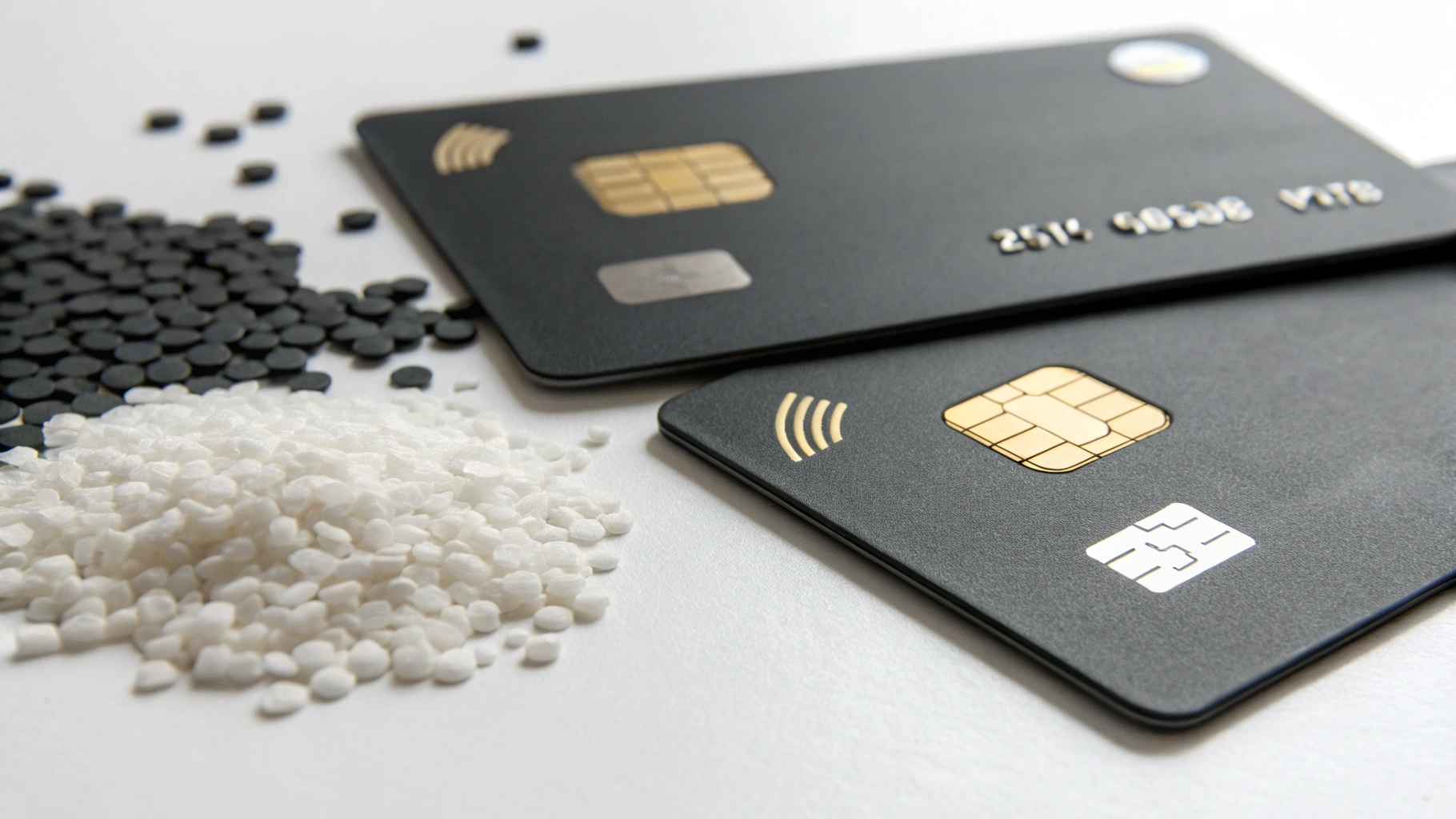
rPVC (Recycled PVC): The Pragmatic Default for High-Volume Programs
Recycled PVC (rPVC) is vinyl recovered from post-industrial or post-consumer waste and re-compounded into card-grade sheet. For most ID, membership, and access programs it is the lowest-friction route to a greener card, because it runs on the same lamination and personalization lines as virgin PVC without requalifying your printers or fulfillment workflow.
- Recycled content percentage: ask what share of the core is recycled; credible suppliers state a figure — commonly 50–100% post-industrial feedstock — and can back it with a batch declaration.
- Surface and colour consistency: recycled stock can shift tone slightly between batches, so request a colour-match sample before a long production run.
- Standards fit: the finished card must still meet ISO/IEC 7810 ID-1 dimensions and your durability test plan; a recycled core does not exempt you from compliance.
rPVC also stays in an established recycling stream at end of life, which simplifies your sustainability reporting. It helps to understand how smart cards are made, because that is where recycled sheet enters the lamination process — and where quality is either protected or lost.
PLA Bio-Based Cards: A Strong Story With Specific Limits
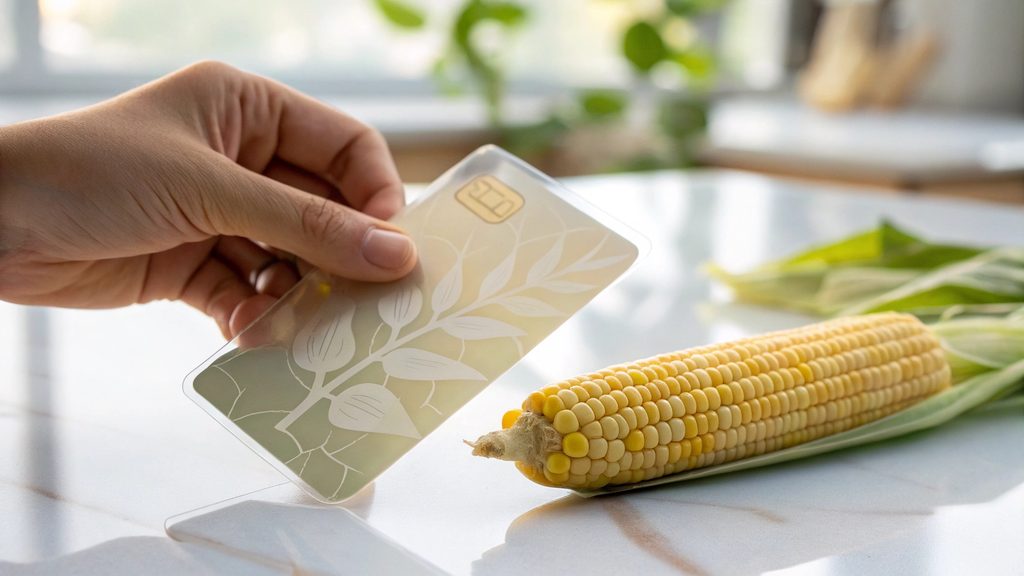
Polylactic acid (PLA) is a bio-based polymer fermented from plant starch such as corn or sugarcane. Its appeal is a renewable feedstock and a lower cradle-to-gate carbon footprint than petroleum-based PVC — a genuine advantage where tender scoring rewards renewable content.
The limits are practical, not cosmetic. PLA has a lower heat-deflection temperature, so cards left on dashboards, laminated at high heat, or carried in hot climates can warp. And PLA only breaks down in industrial composting facilities — it will not degrade in a landfill, and the embedded chip and antenna never biodegrade regardless.
Where PLA fits: short-life credentials — event passes, seasonal membership cards, logistics tags in controlled environments. Where it does not: a 5–10 year national ID or an access card mounted on a heat-soaked gate reader. Specify PLA only where the use environment and the disposal route genuinely favour it, and name the standard you expect — EN 13432 for industrial compostability — in your specification.
Bamboo and Fiber-Based Substrates: Visible Sustainability With Caveats
Bamboo and wood-fiber cards laminate a natural veneer between standard functional layers. They are popular for brand, loyalty, and membership programs where the sustainability story is part of the product experience — recipients see and feel the difference immediately.
Structurally, a bamboo card behaves like a composite: the visible core is renewable fiber, while the outer layers that carry printing, chips, and contactless antennas remain polymer. That means chip embedding and personalization are largely unchanged — but it also means a “bamboo card” is not a fully bio-based card. Ask what percentage of total card mass is renewable and whether the laminate is recyclable in your market. Source the fiber responsibly: a chain-of-custody certificate from FSC gives a tender evaluator something verifiable. Used honestly, bamboo is a strong differentiator; used carelessly, it is the easiest claim in your portfolio to challenge as greenwashing.

rPVC vs PLA vs Bamboo: A Buyer’s Comparison
The three substrates solve different problems. The comparison below summarizes how they behave on the criteria that actually decide tenders.
| Criterion | rPVC | PLA | Bamboo / fiber |
|---|---|---|---|
| Feedstock | Recycled post-industrial/consumer PVC | Renewable plant starch | Renewable fiber core + polymer layers |
| Durability | Comparable to virgin PVC | Lower heat tolerance | Good; composite structure |
| End-of-life route | Established PVC recycling | Industrial composting only | Sorting is complicated |
| Verification burden | Low — recycled-content declaration | Medium — composting standard + infrastructure | Medium-high — fiber % + FSC chain of custody |
| Best fit | High-volume ID and access | Short-life credentials | Brand and membership programs |
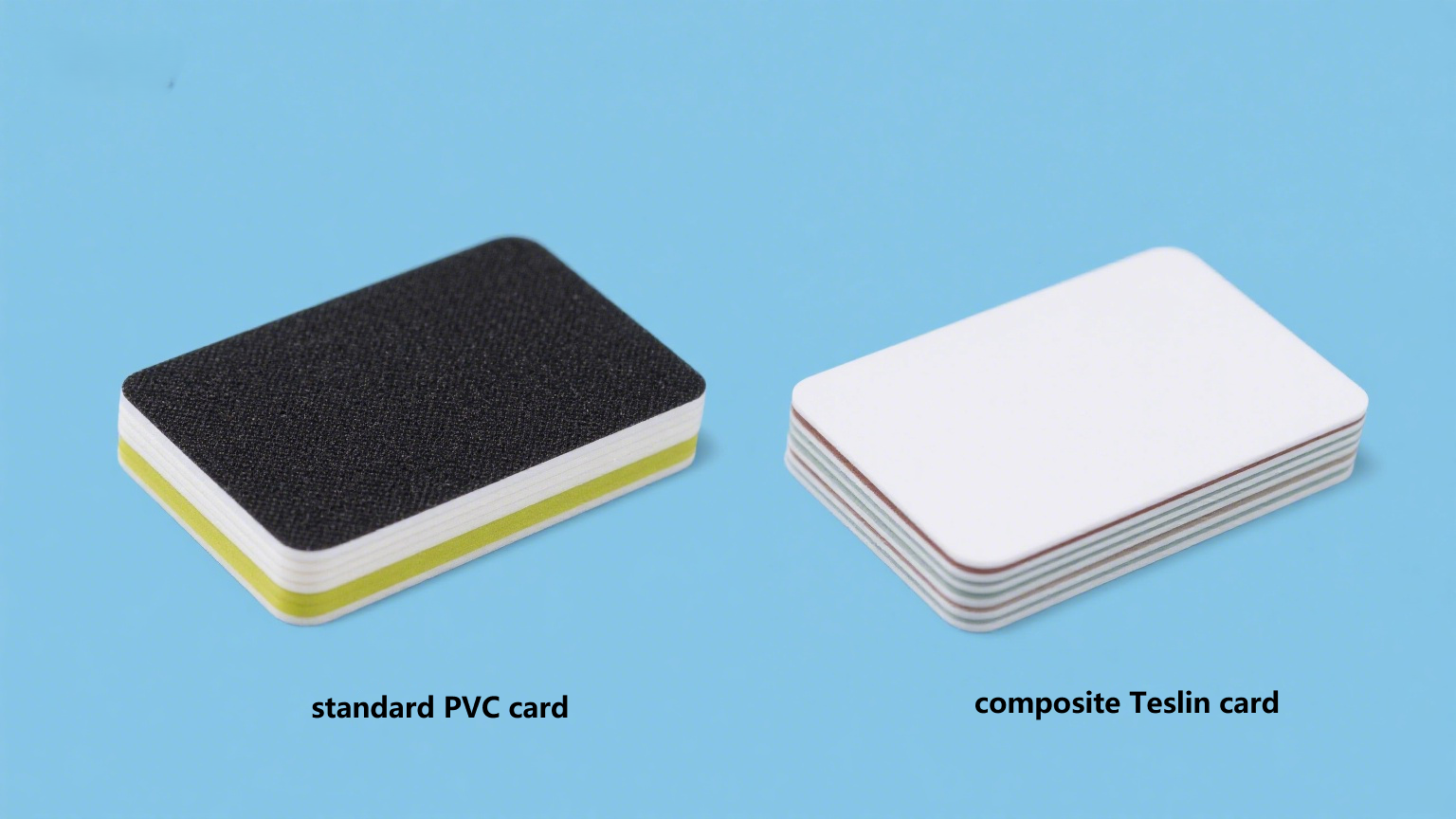
For most government and enterprise programs the decision resolves simply: rPVC for volume, PLA for short life cycles, bamboo where the story earns its premium. If your program is material-agnostic today, compare polycarbonate, PVC, and PETG card materials to see how substrate choice cascades into durability, cost, and personalization method.
How to Tell Real ESG Claims From Greenwashing
Greenwashing in the card industry follows a predictable pattern: vague adjectives with no data — “eco-friendly,” “green,” “planet-friendly plastic” — with nothing behind them. A credible claim is specific, measurable, and third-party verifiable.
-
Is a standard named? Self-declared environmental claims should follow a recognized framework such as ISO 14021; compostability should reference EN 13432 or ASTM D6400.Is there a document, not a brochure? Ask for batch-level declarations, recycled-content certificates, or chain-of-custody numbers.Does the auditor exist? If a supplier cannot tell you who verified the claim, treat it as marketing.
Be especially careful with “biodegradable.” Nearly every smart card contains a chip module and an antenna that will not biodegrade, so the claim is structurally misleading for smart cards — a point the US FTC’s Green Guides have warned about for environmental marketing claims generally.
Durability, Recycling, and End-of-Life Planning
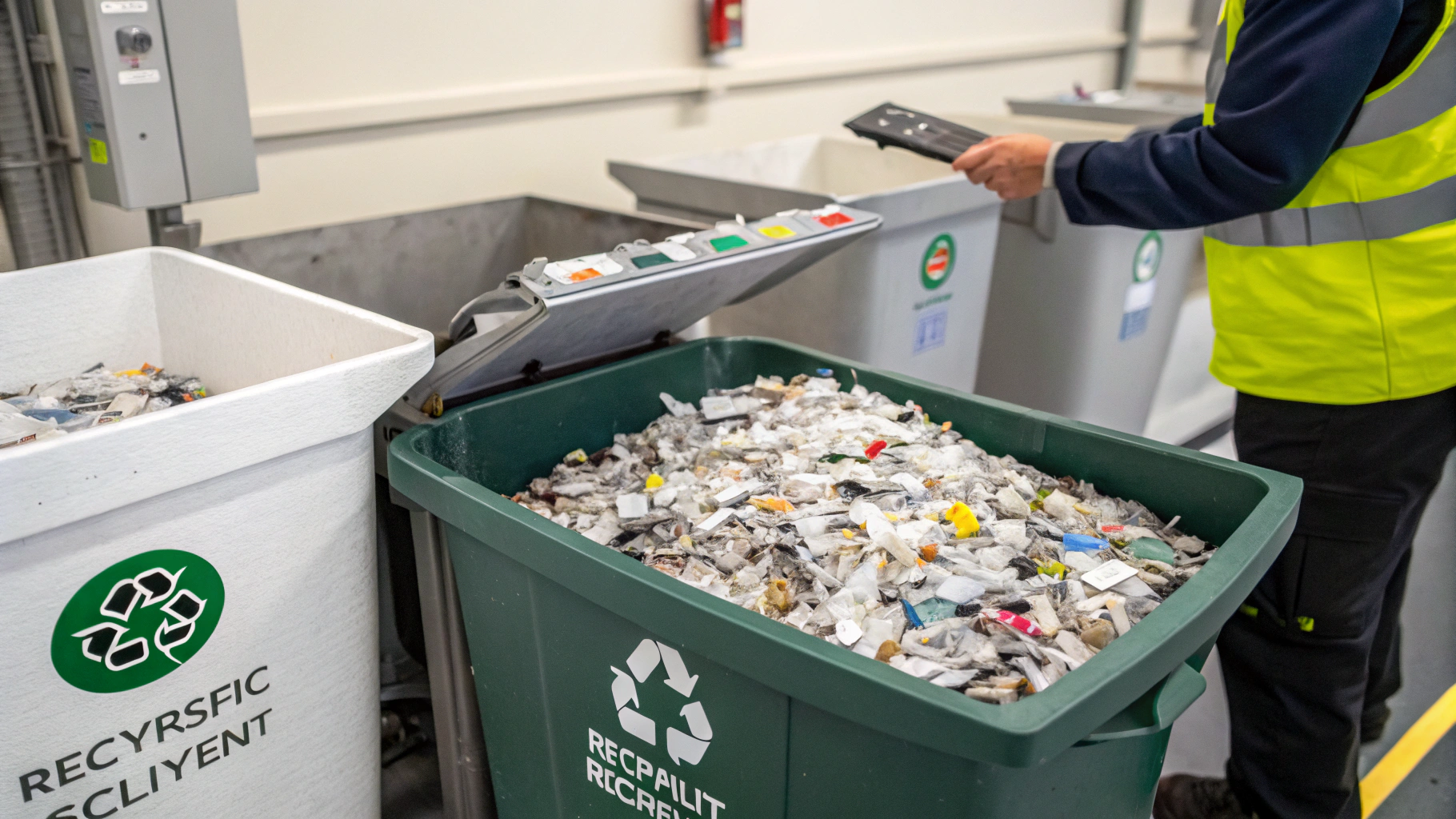
A card’s sustainability is decided as much at end of life as at manufacture. PVC and rPVC belong to established, industrial-scale recycling streams — the practical blocker is collection, not material science. PLA requires industrial composting that most municipal systems do not offer, and bamboo-fiber cores complicate automated sorting.
-
Specify a take-back or shred-and-recycle service in the supply agreement, especially for reissued credentials.Require the supplier to state which waste stream each material joins, aligning your program with the EU waste framework hierarchy.Design for separation where possible: minimize mixed materials that make recycling uneconomical.
Responsible destruction matters as much as responsible sourcing. See our guide to secure card destruction and end-of-life disposal for how to retire credentials without leaking data while still recovering material value.
A Tender-Ready Specification Checklist
Sustainability only counts if a supplier can quote against it and an auditor can verify it. The checklist below turns “we want sustainable cards” into a specification line.
-
State the required recycled or renewable content percentage and the certifying standard (for example, rPVC ≥ 50% with a batch declaration).Require batch-level documentation, not brochure-level claims.Name the expected end-of-life route — take-back, WEEE-aligned recycling, or industrial composting — in the supply agreement.Confirm the card still meets ISO/IEC 7810 ID-1 dimensions and your durability test plan.Request a colour-match and finish sample before full production.For any fiber content, require a chain-of-custody certificate such as FSC.Verify incoming quality on delivery with a card shipment inspection checklist.
Working through this list before the RFQ goes out is the difference between a program that scores well on ESG criteria because it deserves to, and one that loses points during clarification questions. When you are ready to specify materials for your next card program, request material samples and a substrate consultation so the decision is made on evidence, not adjectives.