Your brand-protection budget is finite, but the technology menu keeps growing: hologram stickers, serialized QR codes, blockchain traceability platforms — and every vendor insists theirs is essential. If you are responsible for anti-counterfeit packaging in 2026, the real question is not “which technology is best?” but “which combination fits my product’s risk level, my regulatory obligations, and my unit economics?” This guide compares holograms, QR codes, and blockchain the way a procurement team should: by what each one actually stops, what it costs per unit, and where it fails.
Why Counterfeiters Target Your Packaging First
Counterfeiters rarely reverse-engineer your product. They copy your packaging, because packaging is what distributors, customs officers, and end customers use to judge authenticity. According to the joint OECD/EUIPO study Global Trade in Fakes, counterfeit and pirated goods account for roughly 2.5% of world trade — hundreds of billions of dollars every year, with packaging and labels themselves among the seized categories, because fake boxes, seals, and labels are shipped separately and assembled near the destination market.
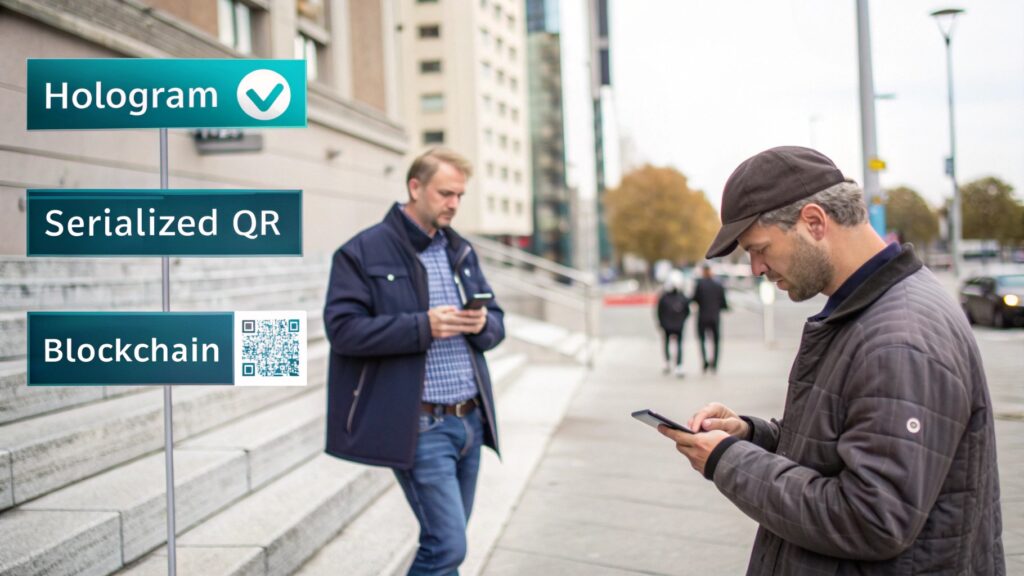
For a B2B buyer, this has a practical implication: if your packaging can be photocopied, scanned, or reordered from a generic label printer, it will be. The goal of an anti-counterfeit packaging program is to raise the counterfeiter’s cost and risk above their expected profit — and to give every inspector in your channel a fast, reliable way to tell real from fake. The three dominant tool families in 2026 do this in fundamentally different ways:
- Holograms — overt, physical, instant visual check, hard to replicate without origination equipment.
- Serialized QR codes — digital, unit-level identity, verifiable by anyone with a smartphone.
- Blockchain — a shared, tamper-resistant record of custody events across a multi-party supply chain.
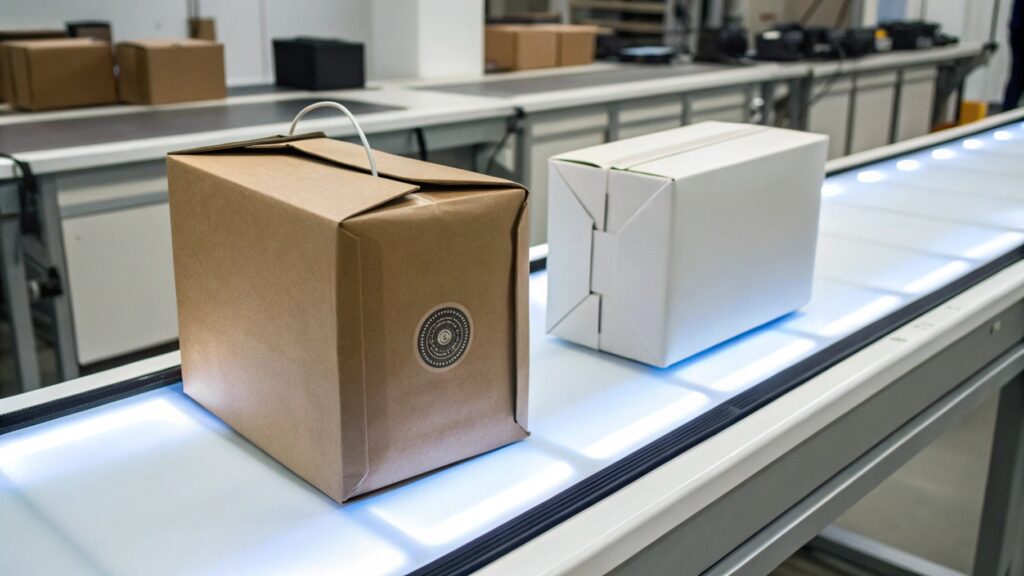
Holograms: Instant Authentication at the Point of Inspection
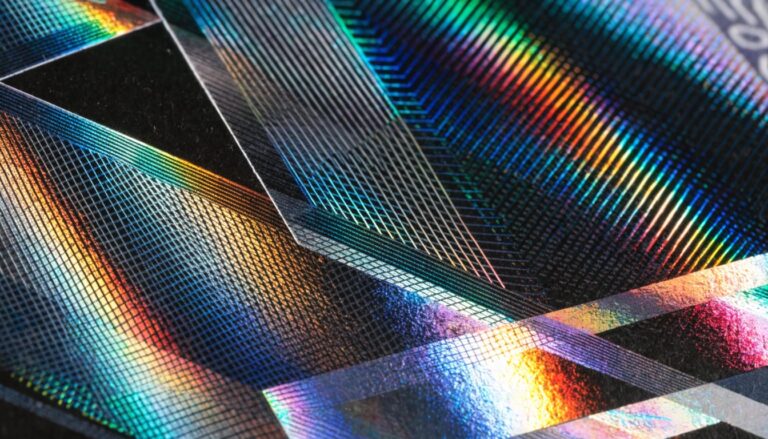
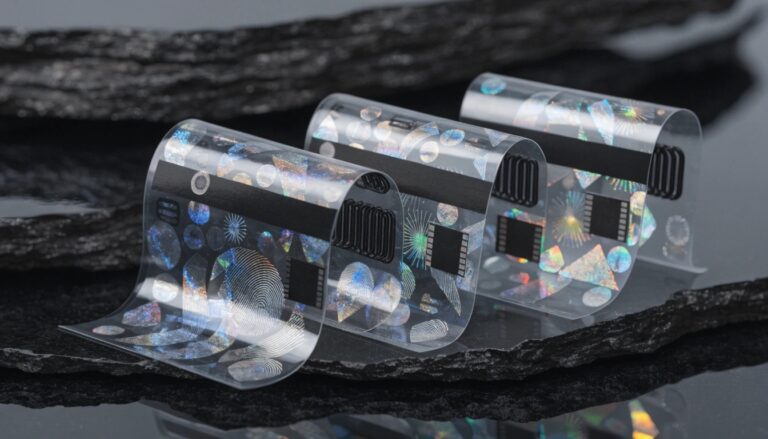
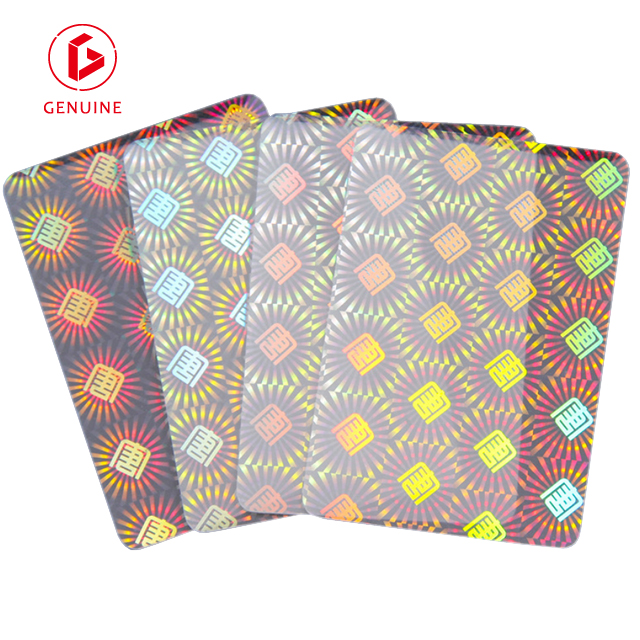
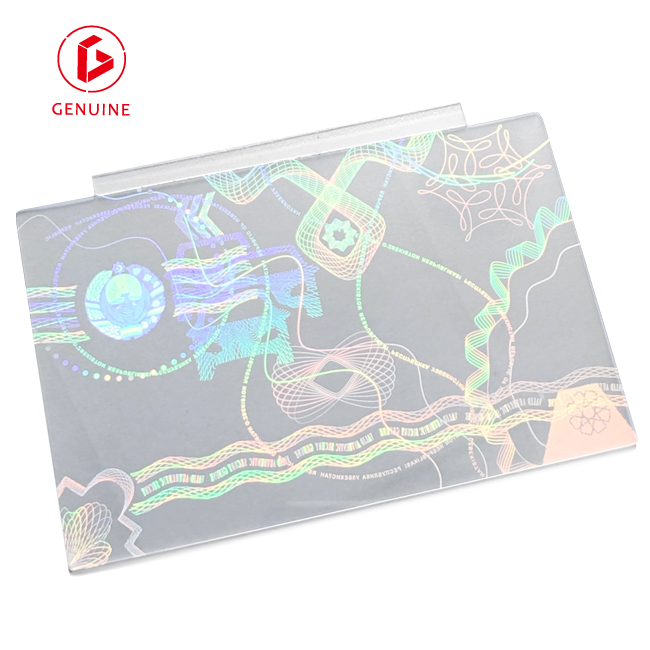
A security hologram answers one question in under two seconds, with no phone, app, or network: does this package look and behave like the genuine article? That is why holograms remain the workhorse of anti-counterfeit packaging for pharmaceuticals, electronics, automotive parts, and government excise stamps. In the vocabulary of ISO 22383:2020 — the international guideline for selecting authentication solutions — holograms are an overt authentication element: verifiable by the human eye, without tools, at every step of the chain.
What makes a hologram effective is not the rainbow shine — cheap decorative foil has that too. Protection comes from features that require dedicated origination equipment to reproduce:
- Custom origination (master shim) — a bespoke optical design registered to your brand, not a stock pattern any label shop can buy.
- Covert layers — microtext, nano-text, or laser-readable marks that only trained inspectors or field devices can check.
- Tamper evidence — void-release or fragile substrates that self-destruct on removal, so a genuine sticker cannot be transplanted onto a fake box.
- Serialization on the hologram itself — sequential or random numbering that ties each label to a production batch.
Typical costs run from under one US cent per label for high-volume stock designs to a few cents for custom-originated, serialized tamper-evident labels — usually the cheapest line item in a brand-protection stack. If you want to see how these optical features work at the microscopic level, our article on holographic overlays and microtext in smart card security shows the same physics applied to ID credentials.
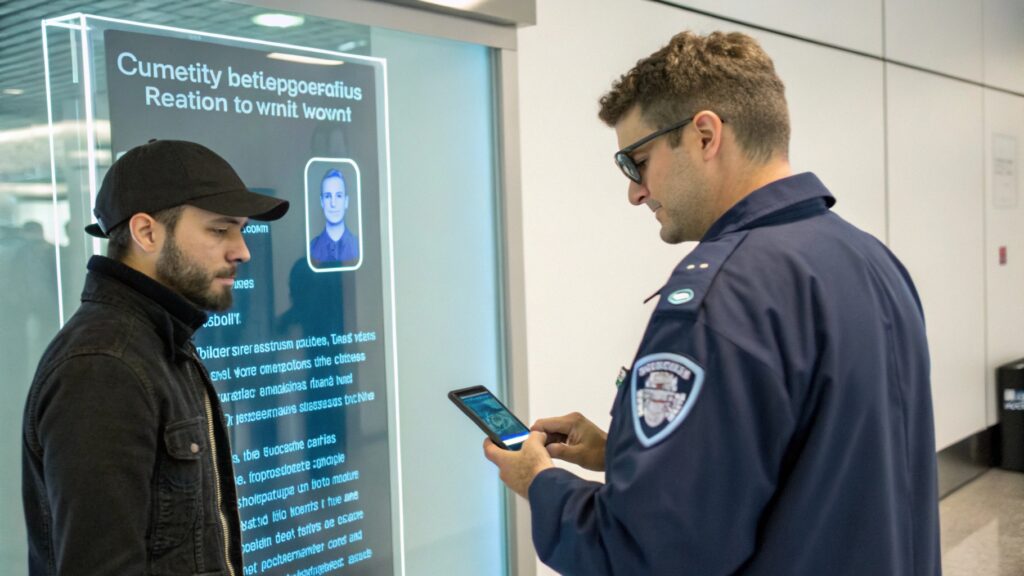
QR Codes and Serialization: Unit-Level Traceability That Scales
A hologram proves the label is genuine; a serialized QR code proves this specific unit is genuine — and tells you where it is supposed to be. Each package carries a unique, non-sequential code linked to a verification database. Scanning it reveals whether the code exists, whether it has been scanned suspiciously often (a cloning signal), and whether the product turned up in the right market (a diversion signal).
Serialization is also where regulation is heading. The EU Falsified Medicines Directive already requires a unique identifier plus an anti-tampering device on virtually every prescription medicine pack sold in Europe — a template other sectors increasingly copy. Meanwhile the GS1 Digital Link standard lets one QR code serve point-of-sale scanning, consumer engagement, and authentication at once, which is driving the global migration from linear barcodes to 2D codes on retail packaging.
The honest limitation: a printed QR code can be photographed and copied in seconds. Serialization catches copies through duplicate-scan analytics — but only after scans happen. That is why serious programs never rely on a bare QR code alone: they either print it on a security substrate, cover it with a scratch layer, or pair it with a hologram. For products that need a stronger digital anchor, an NFC or RFID inlay embeds the identity in a chip instead of ink; our RFID tag buyer’s guide covers when that upgrade is worth it.
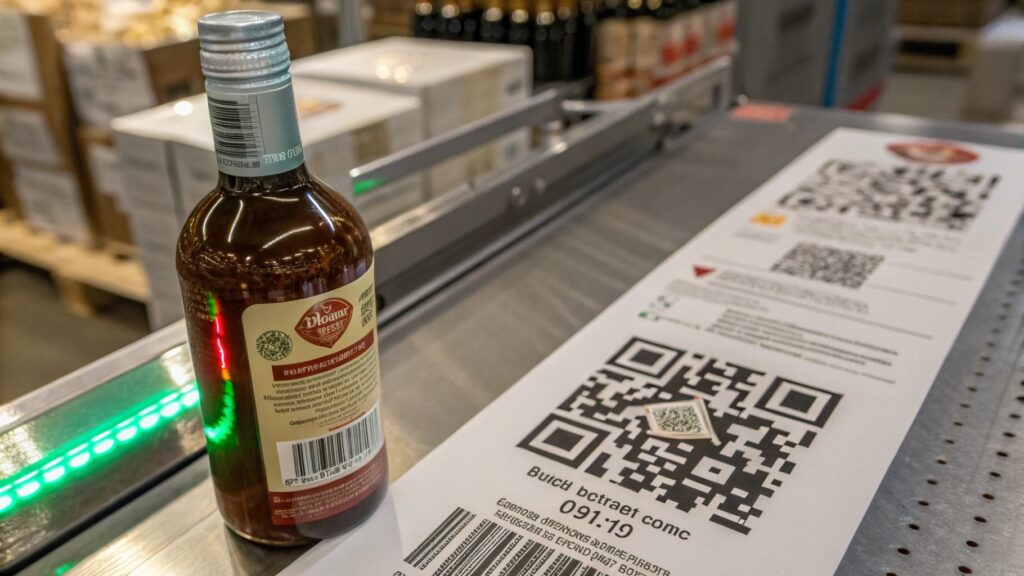
Blockchain: When an Immutable Record Actually Pays Off
Blockchain is the most oversold — and most misunderstood — layer of the stack. It does not authenticate a physical package; it secures the record of that package’s journey. Once a custody event (produced, shipped, received, inspected) is written to a distributed ledger, no single party — not your distributor, not your co-packer, not even you — can quietly rewrite the history. That property matters in exactly one situation: multi-party supply chains where participants do not fully trust each other’s databases.
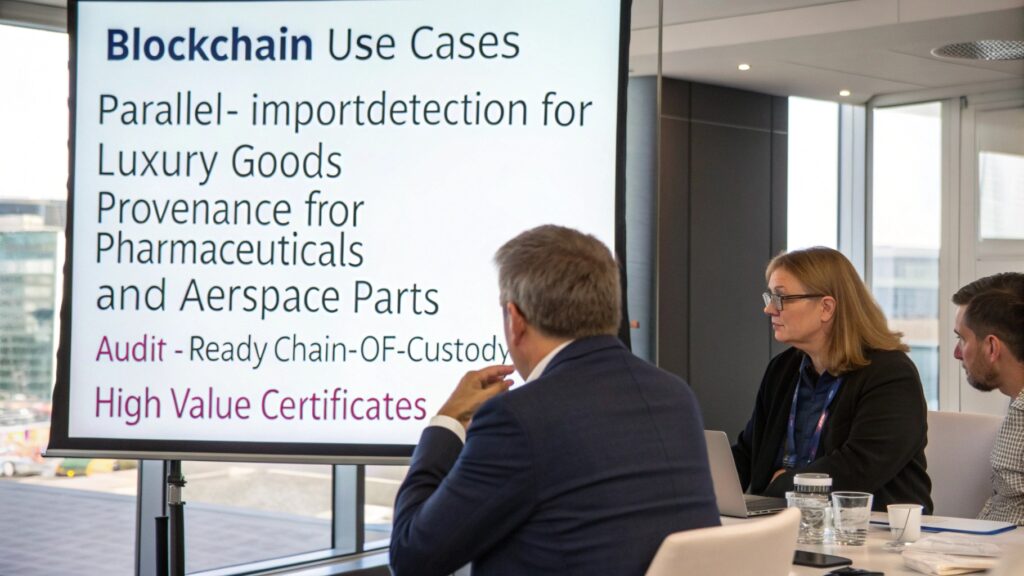
Use cases where buyers report real return on investment include parallel-import detection for luxury goods and wine, provenance for pharmaceuticals and aerospace parts, and audit-ready chain-of-custody for high-value certificates. Note that most of the operational benefit comes from structured event capture — the model standardized by GS1 EPCIS — rather than from the ledger itself; several successful programs run EPCIS event tracking on conventional databases first and add a ledger only when partners demand shared governance.
When to say no: if your supply chain has three trusted parties, a well-run serialization database delivers the same anti-counterfeit outcome at a fraction of the integration cost. Blockchain without unit-level serialization on the physical package is theater — the chain is only as honest as the moment goods are first tagged.
Decision Matrix: Matching Technology to Budget, Risk, and Regulation
Here is the comparison we walk buyers through when they ask “which one do I need?” Indicative figures are for planning, not quotation — request a formal quote for your volumes.
| Criterion | Hologram label | Serialized QR | Blockchain layer |
|---|---|---|---|
| What it proves | Label/pack is genuine | This unit is genuine & in the right market | Custody record is untampered |
| Verification | Naked eye, instant, offline | Smartphone scan + database | Platform / API access |
| Indicative cost per unit | < $0.01–0.05 | $0.005–0.02 + platform fee | Platform & integration, usually $10k+ per year |
| Copy resistance | High (origination barrier) | Low alone; high with analytics + tamper layer | N/A (digital record only) |
| Consumer engagement | None | Strong (scan-to-verify, marketing) | Indirect |
| Best first fit | Excise stamps, seals, electronics, certificates | Pharma, cosmetics, FMCG, warranties | Luxury, wine, aerospace, multi-party chains |
Three quick rules of thumb: if inspectors must verify without connectivity, you need an overt physical feature — start with a hologram. If diversion or gray-market flows are the pain, you need serialization. If partners dispute each other’s records, only then consider blockchain. Regulated categories (medicines, tobacco, some spirits) often have the choice made for them: unique identifiers plus tamper evidence are mandated, and holograms frequently serve as the tamper-evident device.
Layered Protection: Why Effective Programs Combine All Three
ISO 22383 makes a point experienced brand-protection managers repeat constantly: select authentication elements after a risk assessment, and assume any single element will eventually be attacked. In practice, the strongest anti-counterfeit packaging in 2026 is a layer cake, and it is cheaper than it sounds because each layer covers a different attacker:
- Layer 1 — overt hologram with tamper evidence: stops casual copying and label transplantation; empowers distributors and customs at a glance.
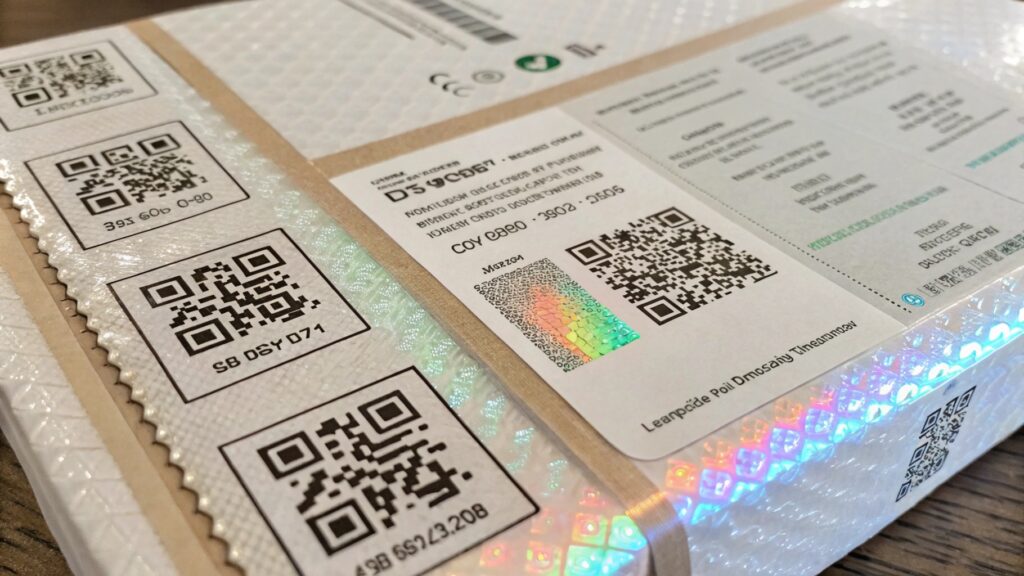
- Layer 2 — serialized QR (ideally printed into the hologram or under a scratch layer): gives every unit a checkable identity and feeds diversion analytics.
- Layer 3 — covert feature (microtext, UV ink, taggant): your legal team’s evidence layer for enforcement actions and court proceedings.
- Layer 4 (optional) — shared event ledger: for chains where governance, not printing, is the weak point.
A combined hologram-plus-serialized-QR label typically lands well under five US cents per unit at volume — negligible against the margin loss, recall risk, and brand damage of one counterfeit incident. The same layered thinking applies to documents and certificates; see how institutions structure it in our overview of professional security printing for institutions, and how upstream material choices contribute in supply chain security with security paper.
FAQ: Anti-Counterfeit Packaging Questions Buyers Ask
Can a counterfeiter just copy my hologram? A stock rainbow foil, yes. A custom-originated hologram with microtext and tamper evidence requires origination equipment and the master design — a barrier high enough that most counterfeiters imitate the general look, which trained inspectors catch quickly. Keep your master shim under contractual custody with your supplier.
Do I need a mobile app for QR verification? No — and buyers increasingly avoid proprietary apps. A GS1 Digital Link QR resolves in any camera app to a verification page. App-free verification dramatically raises actual scan rates in the field.
What is the minimum order for custom hologram stickers? Custom origination is a one-time tooling cost; label MOQs are then driven by press runs. [Typical industry MOQs start around 10,000–50,000 pieces for custom designs; confirm current MOQ and tooling fees with your supplier before budgeting.]
Where should we start if the budget only covers one measure this year? For most physical-product brands: a custom tamper-evident hologram label with printed serial numbers. It delivers overt authentication, transplant resistance, and basic traceability in a single label — and it can carry a serialized QR later without redesigning your packaging.
Ready to compare options against a real specification? Send us your product category, annual volume, and the markets where fakes are surfacing — as a security printing factory producing hologram overlays, stickers, and serialized labels since 2005, we will return a layered recommendation with samples you can put in front of your inspection team.