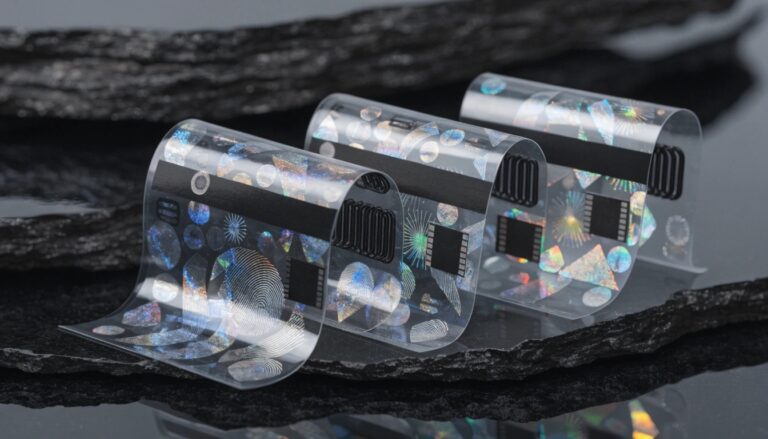
A hologram overlay turns a plain PVC or PET card, certificate, or license into a tamper-evident, instantly verifiable credential. If you specify cards, documents, or high-value packaging, knowing how cold laminate holographic film works — and how to specify it — is the difference between a security feature your holders trust and one they cannot read at a glance.
What Is a Hologram Cold Laminate Overlay?
A hologram cold laminate overlay is a thin, pre-encoded holographic film applied over a printed surface using pressure rather than heat. The hologram is embossed directly into the film at the master-plate stage, so the optical effect is permanent — it cannot be photocopied, inkjet-printed, or peeled off and reused. Once laminated, the overlay fuses to the card or document and becomes part of its physical structure.
For procurement teams the practical value is straightforward: the overlay adds a security and brand layer at the finishing stage without changing your existing card or document artwork. It bonds to PVC, PET, and many paper substrates used for certificates and warrants, which means you can upgrade protection on a line you already run. For the fundamentals, our guide to holographic overlays covers what they are and how they are built.

Why Procurement Teams Specify Hologram Overlays
Three outcomes drive most buying decisions, and all three reduce risk without adding hardware:
- Instant visual authentication. Frontline staff and customers verify a card or product by tilting it — the hologram’s color shift confirms authenticity in under a second, with no reader required.
- Tamper evidence. Quality cold laminate overlays are engineered as void or transfer films: any attempt to lift or reposition them leaves a visible “VOID” pattern, so reused or swapped cards are caught immediately.
- Brand and track-and-trace. Because the master plate is custom, you can embed your logo, a serialized number, or a QR code into the hologram itself for lot-level traceability.
Counterfeiting is not a petty-theft problem — INTERPOL links it directly to organized IP crime. That is why layered, hard-to-replicate features such as holography remain a baseline control for both brand and document protection.
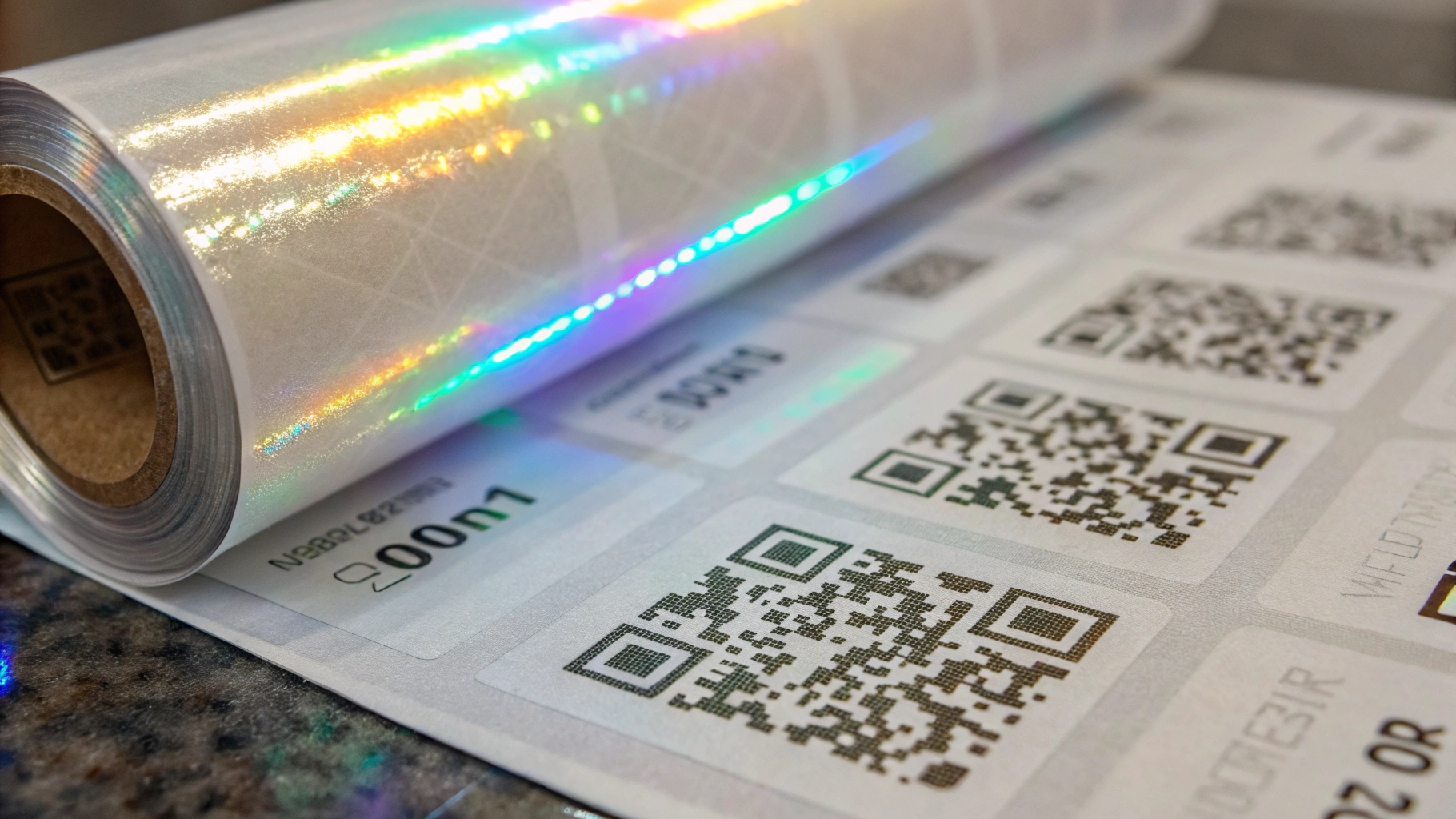
Where Hologram Overlays Deliver the Fastest ROI
The widest adoptions are in identity and document programs where verification happens at scale:
- Employee and student ID cards
- Membership, loyalty, and access cards
- Certificates, licenses, and warrants
- Warranty and authentication cards for spare parts
- Security seals on high-value packaging
In each case the overlay converts a reprint-prone document into a credential your holders and inspectors can validate by eye. A custom hologram sticker delivers the same logic on products and cartons. A holographic ID card with a color-shifting stripe is far harder to clone than a flat-printed card and costs only cents more per unit.
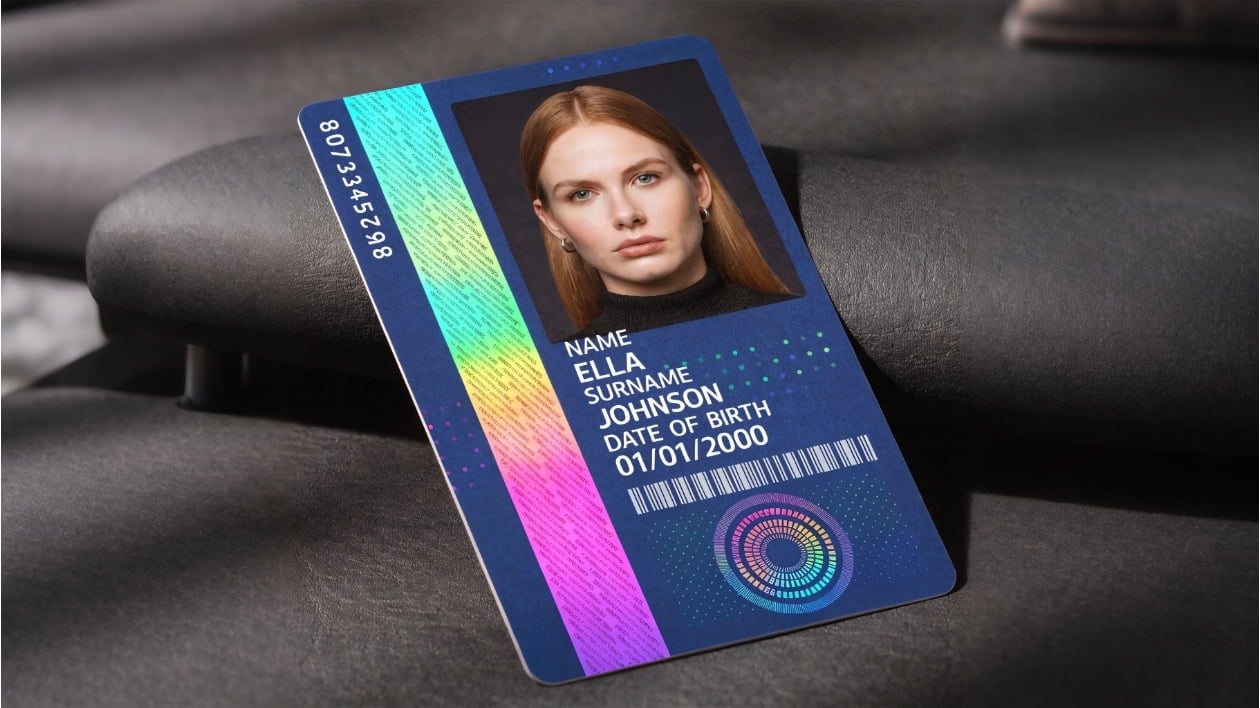
Types of Hologram Overlays — and How to Specify Them
Not all overlays are equal. Match the type to your risk profile:
- Generic vs. custom. Generic stock holograms deter casual copying but are available to anyone. A custom master plate carrying your logo and serial is the real differentiator.
- Overt, covert, and forensic. Overt effects are visible to the eye; covert features (UV, microtext) need a tool; forensic markers are lab-verified. Layering all three raises the bar for forgers and pairs well with other controls such as a security thread.
- Full-cover vs. registered patch. Full-cover laminates protect the whole surface; a registered patch places the hologram at a fixed position for a premium look.
- Transparent vs. graphic. Transparent film preserves the print underneath; graphic film adds a branded visual.
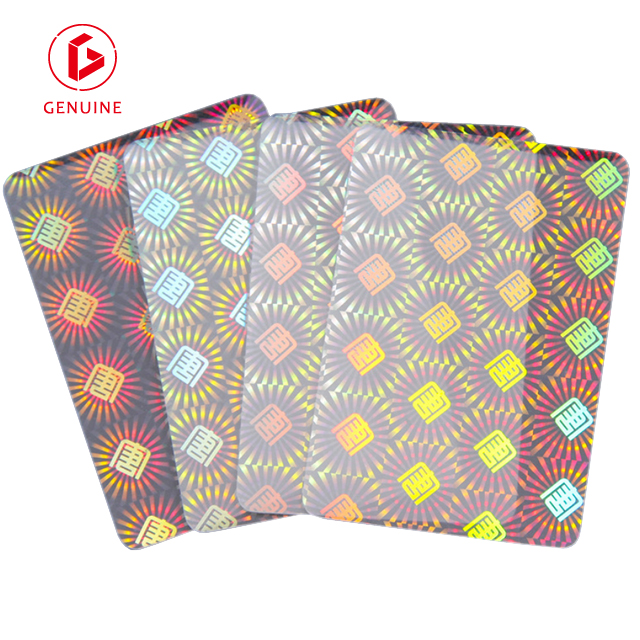
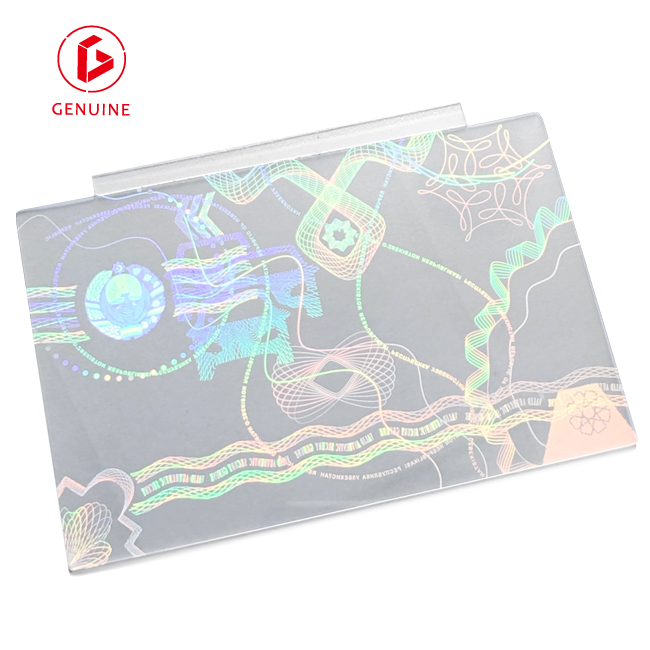
Specify by substrate (PVC/PET/paper), card size against ISO/IEC 7810 physical card dimensions, overlay thickness, and registration mark. The range of standard films and layout options is shown below.
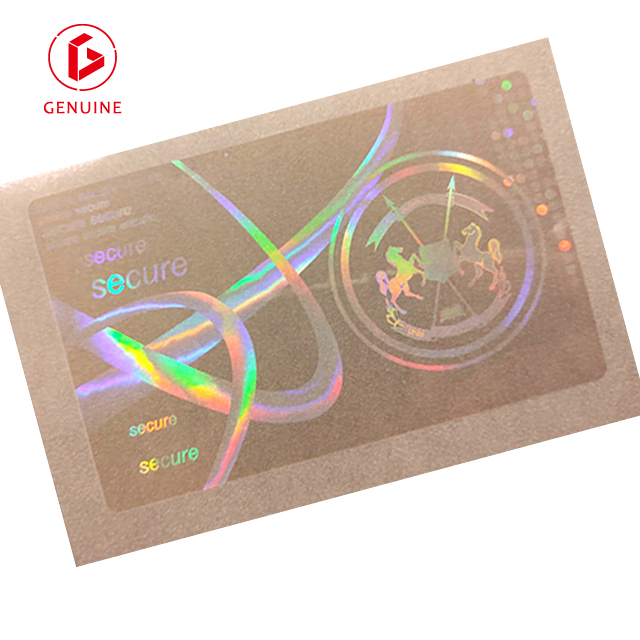
How to Choose a Holographic Overlay Film Supplier
Choosing a supplier is as much about security governance as price. Vet against this checklist:
- Custom design and plate-making — can they originate your artwork and hold the master securely? Our guide to choosing a holographic overlay film supplier walks through the questions to ask.
- Security tiers offered — overt, covert (UV/microtext), and forensic options.
- Plate and data security — how is the master stored and who can access it?
- Lead time and MOQ — sample turnaround, production minimums, and on-time delivery track record.
- Certifications and references — ISO-aligned quality and a documented anti-counterfeit process.
A supplier that treats the master plate as a controlled asset protects your brand long after the order ships — which is exactly where generic marketplace listings fall short.

Frequently Asked Questions
Can a hologram overlay be applied to existing printed cards?
Yes. Cold laminate overlays are designed for the finishing stage. They bond to already-printed PVC, PET, or paper surfaces using pressure lamination, so you can add security without redesigning your artwork or interrupting an existing program.
Will the hologram survive daily card use?
A properly laminated overlay is part of the card structure, not a sticker on top. It resists scratching, folding, and the abrasion of daily carry better than a surface print — which is why it is standard on long-life ID and access cards.
How is a custom hologram different from a stock one?
A stock hologram is a generic pattern anyone can buy; a custom master is originated from your logo, serial, or QR and held under access control. That uniqueness is what makes your credential traceable and difficult to replicate.
Is a hologram overlay enough on its own?
For many documents it is a strong primary control, but the strongest programs combine overt holography with a covert feature and a serialized code. Standards such as ISO 12931 set performance criteria for authentication solutions and make a useful benchmark when you specify layered protection.
Next Steps
Ready to specify? Start with a sample pack: send us your card size, substrate, and whether you need a custom master or a registered patch. Our team originates the artwork, manufactures the plate under controlled conditions, and ships matched overlays with your serialization. For a tailored quote and sample, contact our team.