To beat counterfeiters, you have to outsmart them with physics and precision. Let’s look at the two most critical visual security layers that keep your smart cards safe.
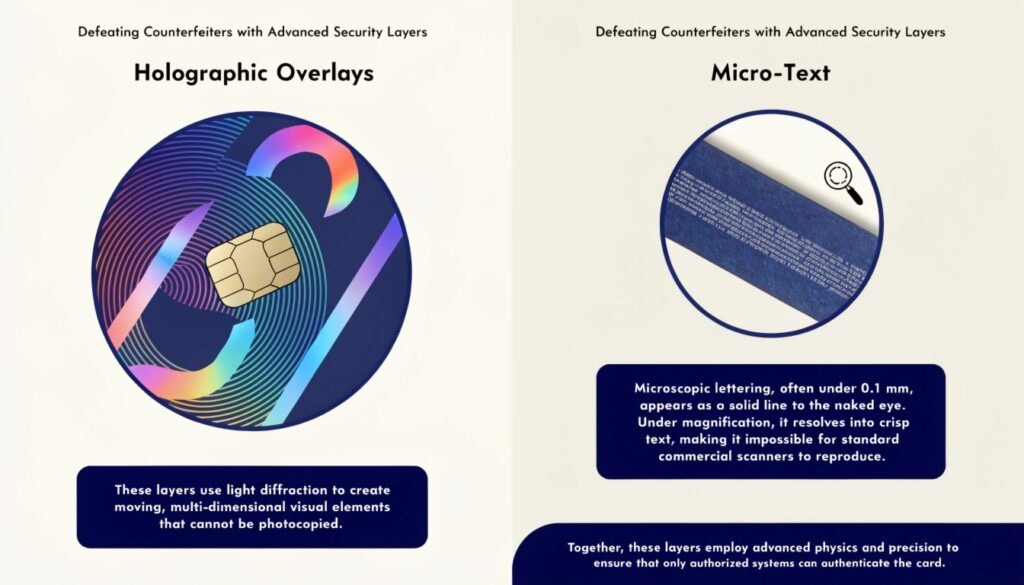
Holographic overlays protect smart cards using light diffraction to create moving, multi-dimensional visual elements that cannot be photocopied. Micro-text adds microscopic lettering (often under 0.1 mm) that appears as a solid line to the naked eye but resolves into crisp text under magnification, rendering standard commercial scanners useless. Together, they form a multi-layered defense against card forgery.
Ready to see how this translates into absolute security for your organization? Let’s dive deeper.
What Exactly is a Holographic Overlay?
Think of a holographic overlay as a high-tech shield. It’s a thin, transparent plastic film applied over the card surface during the final lamination stage.
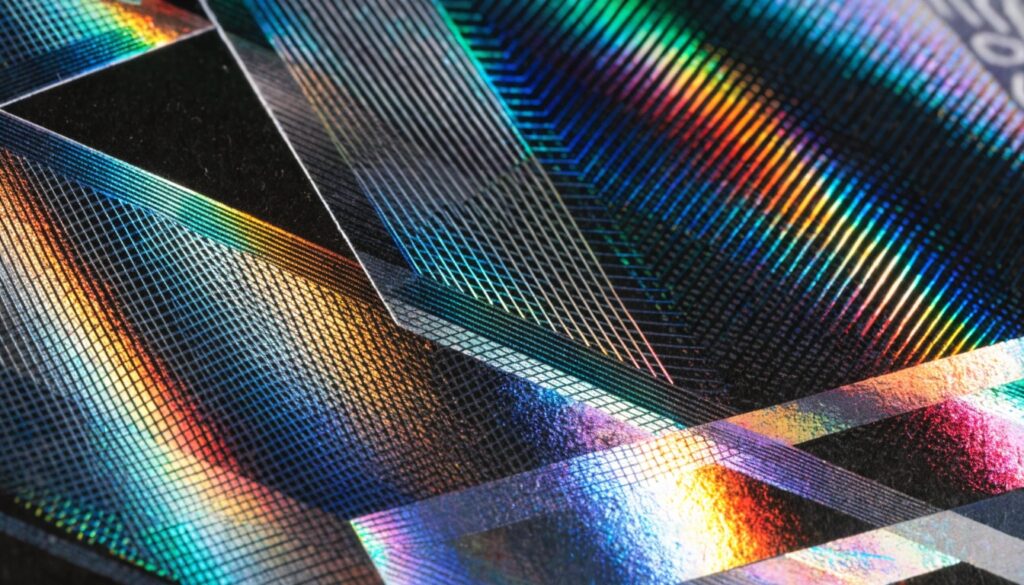
Instead of using standard inks, custom holographic overlays use light diffraction gratings etched directly into the material. When light hits the card, it splits, creating vibrant, shifting colors and 3D effects.
Why Counterfeiters Hate It
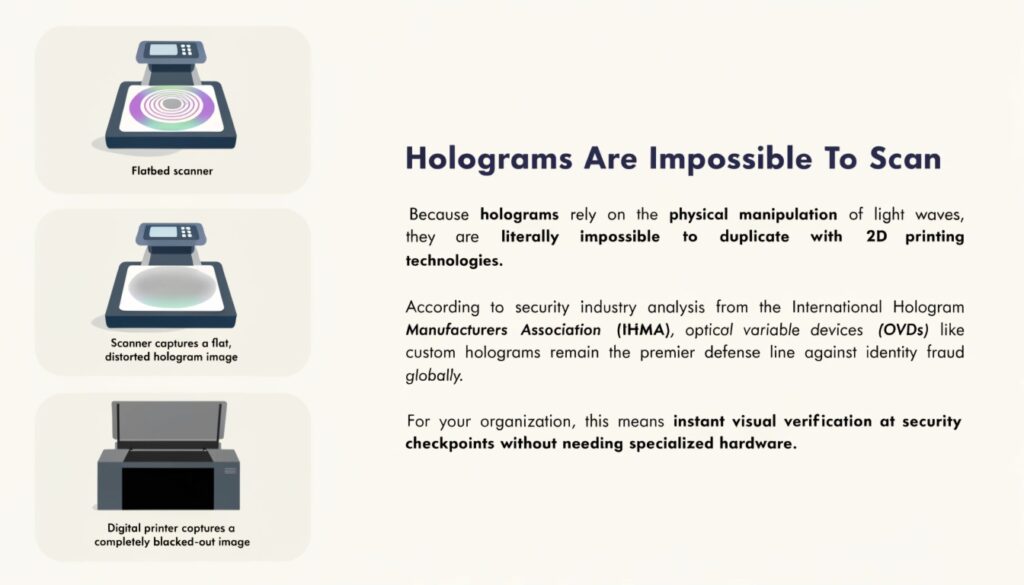
If a bad actor tries to replicate your card using a high-end commercial scanner or a digital printer, the machine will only capture a flat, distorted, or completely blacked-out image of the hologram. Because holograms rely on the physical manipulation of light waves, they are literally impossible to duplicate with 2D printing technologies. According to security industry analysis from the International Hologram Manufacturers Association (IHMA), optical variable devices (OVDs) like custom holograms remain the premier defense line against identity fraud globally. For your organization, this means instant visual verification at security checkpoints without needing specialized hardware.
Micro-Text: The Hidden-in-Plain-Sight Security Feature
If holograms are the loud, visible deterrent, micro-text is the silent alarm.
Micro-text involves printing extremely tiny characters—usually less than 0.2 mm (or under 1 point font)—in critical areas of the smart card, such as borderlines or under portrait photos. To the unaided human eye, these tiny words look like nothing more than a standard thin line. However, stick it under a $10\times$ magnifying glass, and a crisp, clean sentence emerges (e.g., your company name or a hidden security phrase).
| Feature Element | Standard Commercial Printing | Genuine High-Security Printing |
| Line Presentation | Pixels blur or break into jagged dots (halftone patterns). | Razor-sharp, legible microscopic characters. |
| Equipment Required | Standard office/commercial desktop printers. | Specialized high-resolution plate setters and precision presses. |
Because commercial counterfeiters use standard digital printing, their machines simply do not have the resolution to resolve these tiny fonts. Their “micro-text” will turn into a blurry, broken, dotted line under inspection.
What You Can Gain by Combining These Technologies
When you partner with an advanced card manufacturer, you shouldn’t have to choose between aesthetic appeal and security. By integrating both custom holographic patterns and micro-text layout into your smart cards, you gain:
- Multi-Layered Authentication: Security guards can spot the hologram in 2 seconds (First-level inspection), while forensic auditors can verify the micro-text under a magnifying lens (Second-level inspection).
- Tamper Evidence: If someone attempts to scratch off or alter the cardholder’s photo, the holographic overlay tears, destroying the underlying print and instantly voiding the card.
- Uncompromised Brand Authority: High-security features don’t just protect data—they signal to your clients, employees, and stakeholders that your organization operates at the highest global standards.
When you are sourcing smart cards for corporate ecosystems, government projects, or high-security access, don’t settle for basic PVC printing. Insist on the science of security.