ZARA’s parent company Inditex reported cutting $400 million in excess inventory after a company-wide RFID rollout, while the wider fashion industry still writes off roughly $210 billion a year in unsold clothing. The gap is not luck. It is a repeatable operating model any retailer or brand owner can study and afford. This breakdown shows what drove the savings and what a mid-size operator can copy in 2026.
Why ZARA’s Inventory Turnaround Matters to Your Business
Most retailers treat inventory accuracy as a back-office metric. ZARA treats it as the system that decides what gets made, shipped, marked down, or never produced. The result: 19% less overstock and a 7.5% lift in annual profit once RFID tracks every garment from factory to checkout.
The lesson is not “be ZARA.” It is that real-time item-level visibility converts guesswork into decisions. See our RFID tag buyer’s guide for the tag types that make this possible.
The Crisis That Forced the Rethink
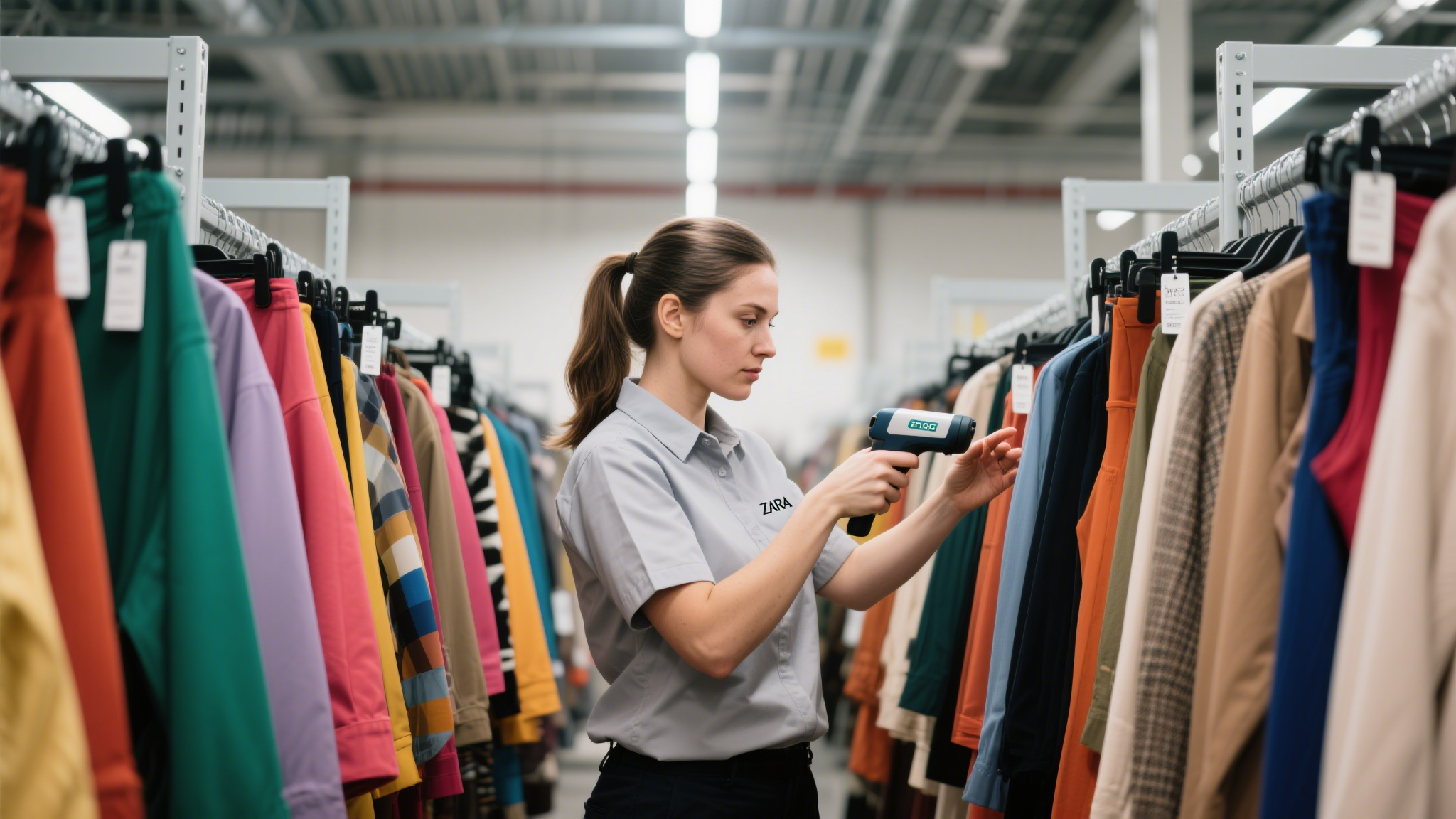
In 2020 the pandemic closed 88% of ZARA’s stores and pushed Inditex to a €409 million quarterly loss. Mountains of unsold stock exposed a structural weakness: traditional barcodes could not keep pace with demand swings. A store might believe it held 100 units when 15 were missing, misplaced, or stolen, so plans were built on false signals.
Inditex piloted RFID from 2016, then made full RFID deployment across every brand by 2024 a mandate, the decision that separates a cost-cutting project from a competitive moat.
How RFID Rewired ZARA’s Supply Chain
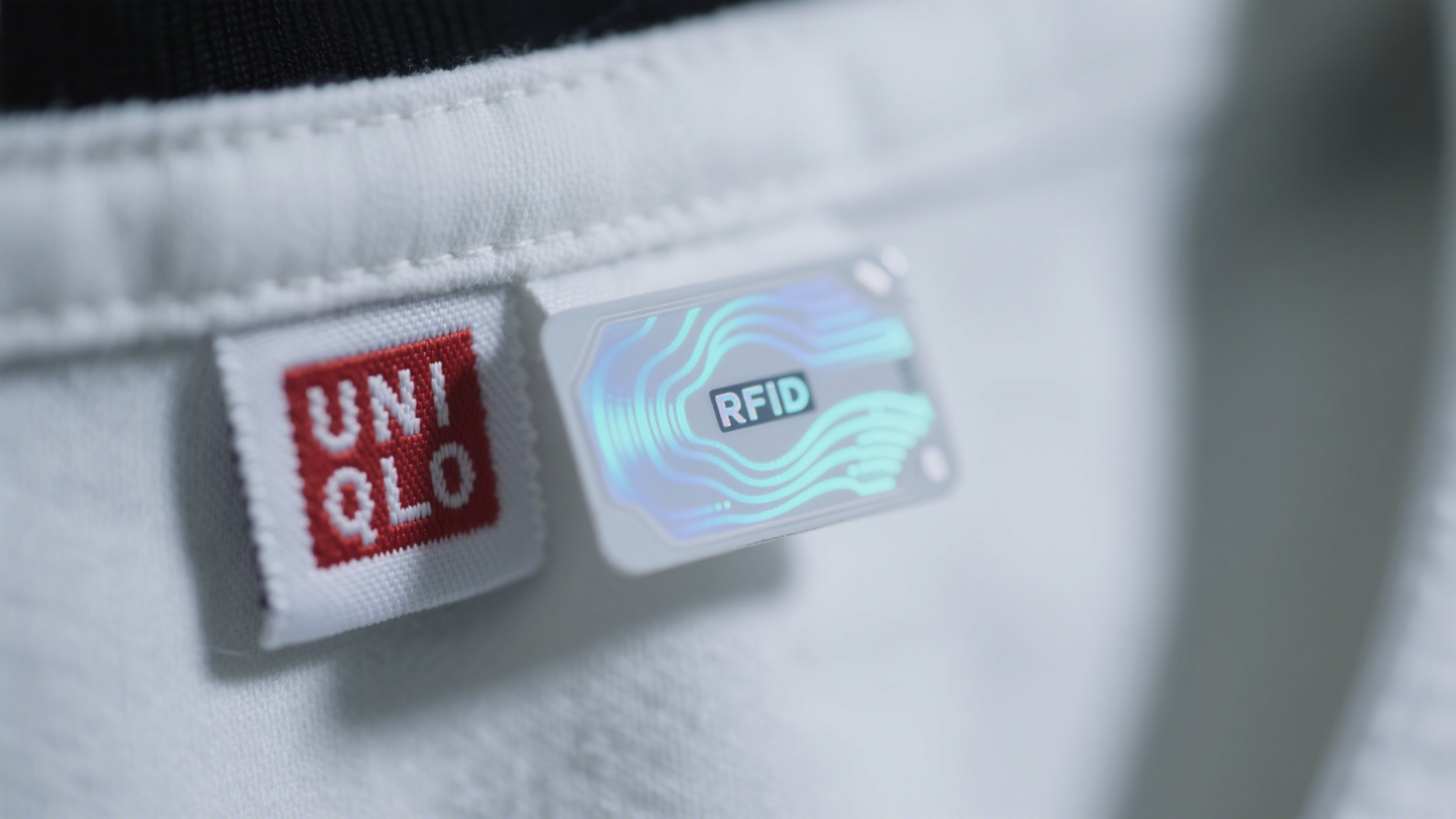
Every ZARA item carries a rice-sized RFID inlay that streams data into Inditex’s platform, exposing which products sell through and which stall. The technology rests on open standards, GS1’s RFID standards and the RAIN RFID air-interface specification (standardized as ISO/IEC 18000), so tags from different suppliers stay interoperable. Relative to barcodes, the difference is decisive:
| Capability | Barcode | RFID |
|---|---|---|
| Reading speed | One label at a time, line-of-sight, several seconds each | Hundreds of tags in bulk, under 100 ms per tag, no line-of-sight |
| Reading method | Optical scan, manual alignment required | Radio waves, batch reads, no direct sight needed |
| Data capacity | Limited to roughly 20 characters | Up to about 1,100 bytes of rewritable data |
| Environmental tolerance | Damaged by dirt, tears, and glare | Resists harsh environments, cold chains, and handling |
| Data modifiability | Read-only | Rewritable and updatable in the field |
From Blind Production to Live Pulse Monitoring
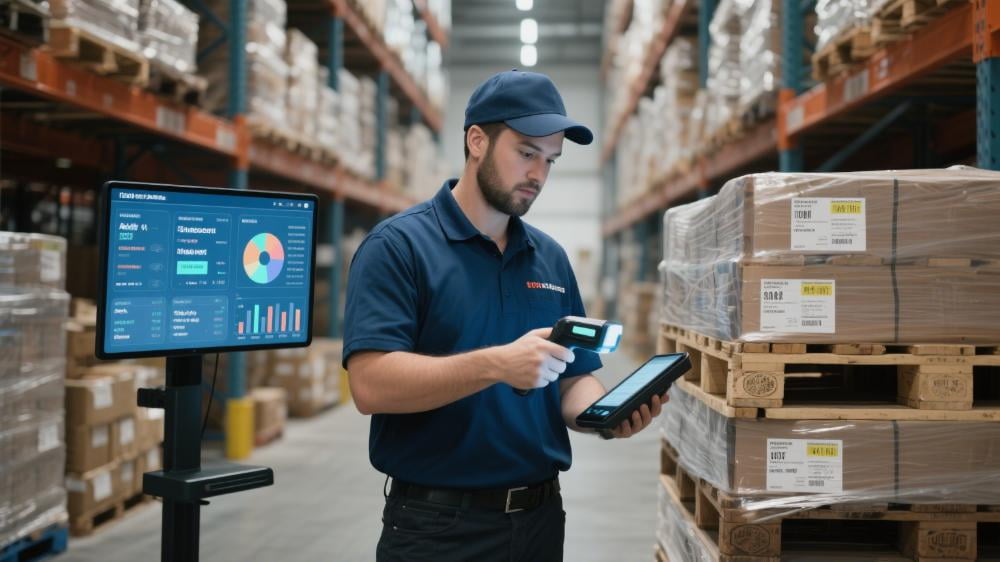
Before RFID, ZARA’s production rhythm was largely blind to the shelf. After deployment, the same item-level signal tightened design-to-delivery from three weeks to ten days, with 70% of designs adjusted weekly, so planners read a live pulse of what customers take home.
For a smaller operator, the win is fewer wrong bets: knowing true sell-through by store and week ends the cycle of over-ordering bestsellers and under-ordering quiet winners.
The Death of Stockouts and Overstock

Manual stocktakes once consumed 40 hours per store and still left 15% inventory inaccuracy. RFID changed that math:
- 5-second bulk scans replaced item-by-item checks.
- Store restock accuracy reached 98.9%.
- Phantom inventory, the “we show it in stock but it isn’t” problem, largely disappeared.
That accuracy lets a retailer stop shipping product a store does not need and move it where demand actually is. The LF vs HF vs UHF frequency guide explains why UHF is the default for item-level retail tracking.
The Omnichannel Game-Changer
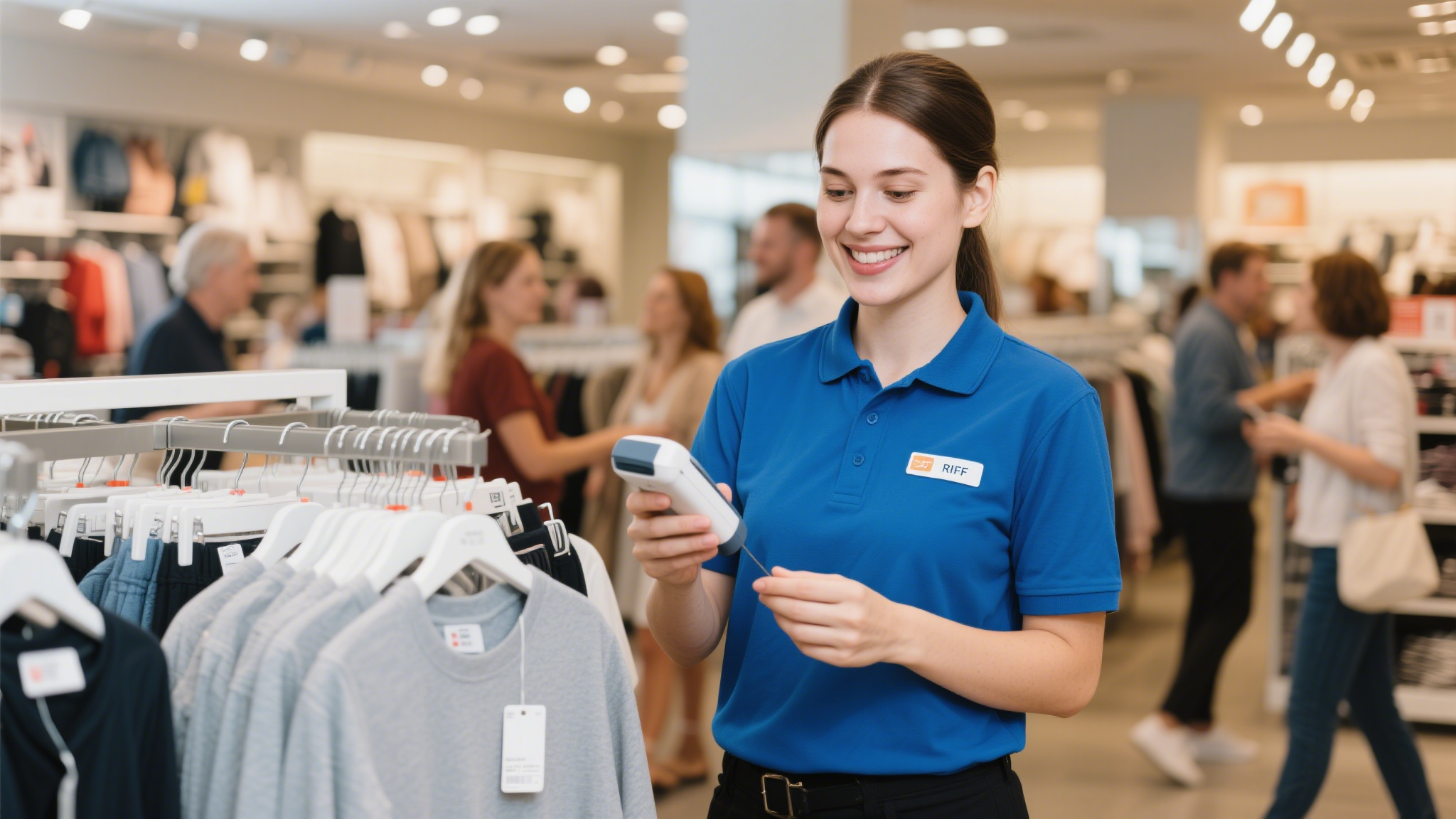
RFID unlocked ZARA’s “Endless Aisle”: customers check real-time stock on the app, associates locate items in under 30 seconds, and online returns clear 60% faster via in-store kiosks. Inventory becomes one shared, accurate number across every channel.
The $400 Million Breakdown
Inditex’s reported savings concentrate in four cost centers. The pattern matters more than any figure: RFID pays back wherever labor or markdowns are driven by poor visibility.
| Cost center | Pre-RFID | Post-RFID | Driver |
|---|---|---|---|
| Warehouse labor | $120M | $36M | About 5x faster scans |
| Markdown losses | $210M | $89M | 19% less overstock |
| Theft & loss | $47M | $32M | RFID anti-theft gates |
| Global shipping | $86M | $61M | Optimized replenishment |
Note the split: roughly half is labor efficiency, the other half is protecting margin by selling at full price instead of marking down. For most retailers, the markdown line moves the P&L.
Why Competitors Struggle to Keep Up

H&M and UNIQLO also use RFID, so the technology alone is not the moat. ZARA’s vertical integration is the differentiator: 52% of production sits in Spain and Portugal, with twice-weekly global deliveries from RFID-optimized hubs and a 7-day design-to-rack speed versus an industry average near 21 days.
The takeaway for smaller brands: you may not match the speed, but you can still capture the visibility. A focused rollout on top-moving SKUs often returns most of the benefit, see our RFID procurement guide.
The Human Side of the Tech Revolution
This is not about replacing people, it is about better tools:
- Staff spend 40% more time assisting customers and less time in the stockroom.
- RFID-powered apps surface personalized styling suggestions on the floor.
- 95% of employees adopted the RFID tools, a sign the workflow improved their day rather than adding friction.
Frequently Asked Questions
What RFID frequency does ZARA use for garments?
ZARA uses UHF (Ultra-High Frequency) RFID, the EPC Gen2 / RAIN RFID standard, because it reads many tags at once at range, which suits item-level apparel tracking. Our LF vs HF vs UHF guide explains where each band fits.
How much does RFID tagging cost per garment?
At retail scale, a passive UHF inlay now costs well under $0.10 per unit, and the price falls with volume. See the 2026 RFID pricing breakdown for total program cost.
Can a small or mid-size retailer replicate ZARA’s results?
Yes, by phasing the rollout. Start with highest-turn SKUs and one warehouse, prove the accuracy and markdown gains, then extend. You trade ZARA’s speed for a lower-risk path that still captures most of the benefit, see our procurement guide.
Does RFID replace barcodes in retail?
Not entirely. RFID excels at bulk, back-of-house, and omnichannel accuracy, while barcodes remain at the point of sale. GS1’s RFID standards are designed to coexist with existing barcode systems, so most retailers run a hybrid.
Conclusion: Is Your Business Ready for the RFID Tipping Point?
ZARA turned $400 million in savings from a chip smaller than a sesame seed. With tag costs below $0.10, the technology is no longer a luxury reserved for giants. The real question is whether you use RFID to cut cost or to reinvent the customer experience.
Ready to scope your own rollout? Talk to our RFID specialists about tag selection, UHF frequency planning, and a phased deployment.