If you have ever asked three RFID factories for a price and received three wildly different numbers, you are not doing anything wrong — you are running into an industry where a single “RFID tag” can range from a few cents to several dollars depending on the chip, the material, and the quantity. For sourcing managers and distributors, that opacity is the real problem: it makes budgeting hard, invites inflated quotes, and slows down projects. This 2026 RFID pricing guide breaks down exactly what you are paying for, gives indicative price ranges by chip and form factor, and shows you how to read a quote so you can negotiate from a position of knowledge rather than guesswork.
The goal here is practical: give you a defensible cost model before you send an RFP, and a checklist to sanity-check whatever quote lands in your inbox. Prices in this guide are indicative 2026 ranges for reference only — your actual unit price depends on specification and volume, so always confirm with a formal quotation. If you want a project-specific number, you can request a factory quote and free samples at any point.
What Actually Drives RFID Tag and Card Prices in 2026
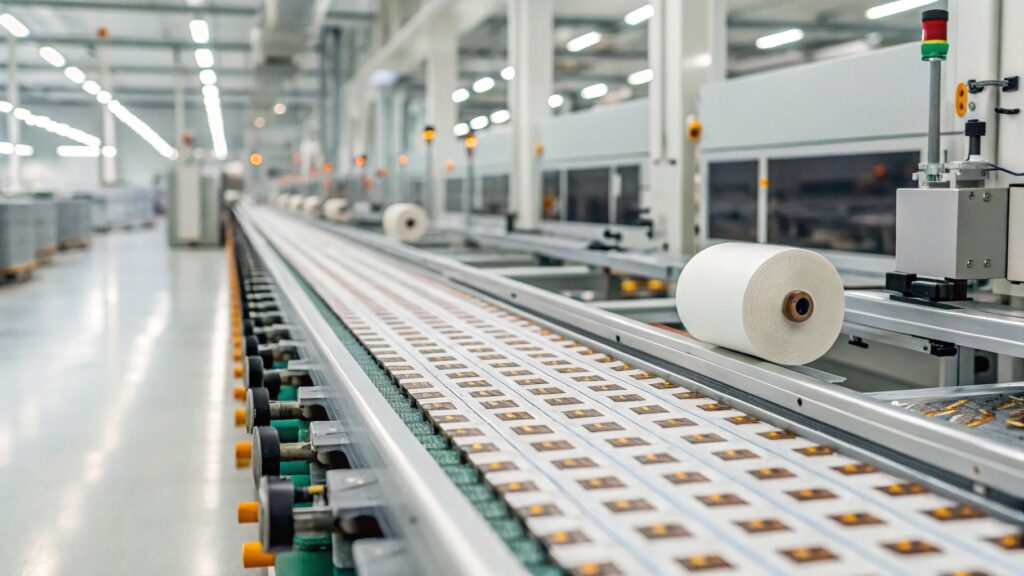
An RFID unit price is a stack of line items, not a single figure. Understanding the stack is the fastest way to see where a quote is fair and where it is padded. In most projects, the IC (chip) and the form factor are the two largest cost drivers, followed by antenna/inlay construction, converting, and any printing or encoding you add on top.
- The IC (chip) — memory size, security features (e.g., cryptographic authentication), and whether it is a commodity UHF chip or a secured HF chip. This is often the single biggest variable.
- Antenna and inlay — etched aluminium, printed silver, or copper; inlay layout affects read range and yield.
- Substrate and material — paper face stock is cheap; PVC, PET, PC (polycarbonate), and on-metal/industrial housings cost progressively more.
- Converting and lamination — die-cutting, lamination, adhesive class, and finishing.
- Printing and personalization — CMYK/offset printing, variable data, serialized QR/barcodes, laser engraving, and magstripe or signature panels for cards.
- Encoding and testing — writing EPC/UID data, locking memory, and 100% read verification (a legitimate, chargeable QC step).
- Volume and tooling — setup, plates, and die amortized across the run; this is why small orders feel disproportionately expensive.
- Compliance and logistics — certifications, packaging, and shipping/tariffs to your market.
Frequency choice sits underneath several of these items, because it dictates which chips and antennas are even possible. If you are not yet locked into LF, HF, or UHF, settle that first — our RFID tag buyer’s guide walks through the trade-offs, and the global UHF ecosystem is governed by the RAIN RFID Alliance and GS1 EPC/Gen2 standards, which is why compliant UHF inlays are the most competitively priced tags on the market.

RFID Price Ranges by Chip and Frequency (Indicative 2026)
The table below gives indicative unit prices at moderate production volumes (roughly tens of thousands of pieces) for a standard specification — before custom printing, personalization, or specialty housings. Use it to build a budget and to spot quotes that are far outside the norm. These are reference ranges only; a formal quotation against your exact spec and quantity is the only accurate number.
| Type / Chip family | Frequency | Indicative unit price | Best-fit use |
|---|---|---|---|
| UHF paper/wet inlay label (e.g., NXP UCODE, Impinj M-series) | UHF 860–960 MHz | ~US$0.05–0.20 | Supply chain, retail apparel, logistics, inventory |
| HF/NFC label (NTAG 213/215) | HF 13.56 MHz | ~US$0.10–0.35 | Product authentication, tap-to-verify, smart packaging |
| LF tag/disc/token (EM4100, T5577) | LF 125 kHz | ~US$0.15–0.50 | Access control, animal ID, short-range/harsh environments |
| MIFARE Classic 1K PVC card | HF 13.56 MHz | ~US$0.30–0.90 | Access, transit, closed-loop payment, membership |
| MIFARE DESFire EV3 card | HF 13.56 MHz | ~US$1.20–3.50+ | Secure ID, transit, high-security access |
| On-metal / hard UHF tag (ABS/PC housing) | UHF 860–960 MHz | ~US$0.40–5.00+ | Asset tracking on metal, industrial, outdoor, tools |
Two patterns explain most of the spread. First, security drives HF card prices: a commodity MIFARE Classic card and a secured DESFire EV3 card look identical but differ by several times in cost because of the chip’s cryptography — a point worth understanding through the NFC Forum standards if you are deploying NFC authentication. Second, housing drives UHF tag prices: the same UHF chip costs cents in a paper label but dollars in a ruggedized on-metal enclosure. If durability is your concern, weigh the total cost of ownership rather than the sticker price — see our analysis of high-durability contactless cards and ROI.
How Order Volume and MOQ Move Your Unit Price
Volume is the lever with the largest effect on unit price, because fixed costs — printing plates, die-cutting tools, artwork setup, and machine changeover — are spread across the whole run. Below the minimum order quantity (MOQ), setup costs dominate and the per-unit price can be several times higher than at volume. As quantity rises, unit price falls steeply, then flattens once fixed costs are fully amortized and only material and IC costs remain.
- Sample/prototype run: highest per-unit cost; you are paying for setup, not scale.
- At or just above MOQ: setup is amortized enough to reach a “real” commercial price.
- Mid-volume (tens of thousands): the sweet spot where most catalog prices are quoted.
- High volume (hundreds of thousands+): price approaches the material + chip floor; further discounts shrink.
Two practical levers help buyers who cannot hit high volumes: standardize your specification (stock inlay, stock card body, common chip) to avoid custom tooling, and consolidate orders across projects or SKUs into one run. Working factory-direct rather than through a reseller also removes a margin layer, which matters most at mid volumes where that markup is a meaningful share of the price.

Form Factor and Material: Why a Card Costs More Than a Label
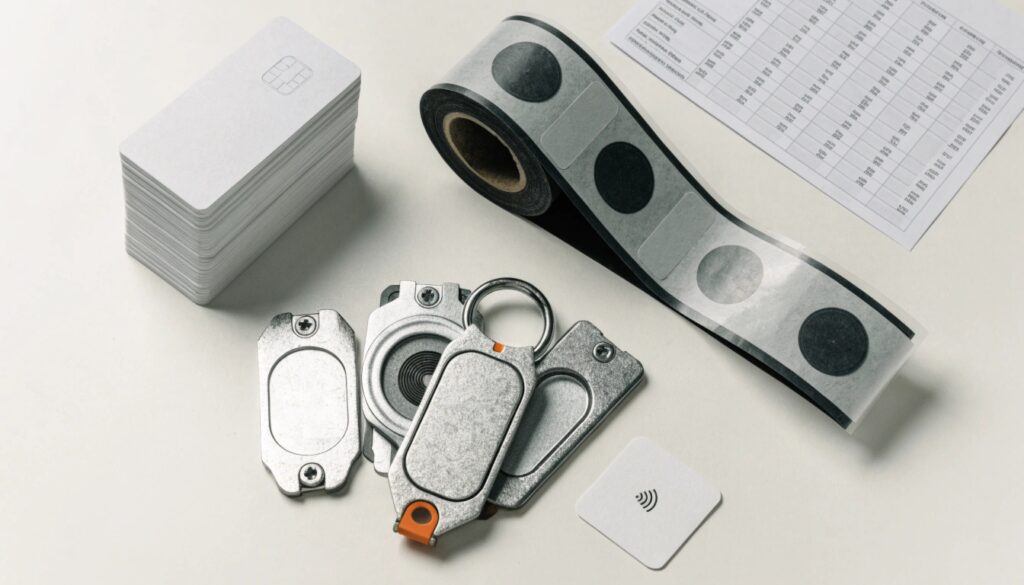
Two products with the same chip can differ several times in price purely because of form factor and material. A paper or PET label is a thin, single-layer, high-yield product; a laminated PVC or PC card is a multi-layer, printed, personalized item; and a hard/on-metal tag adds a molded housing and specialty antenna tuned to work near metal. The more layers, materials, and finishing steps, the higher the cost.
- Labels/inlays (paper, PET): lowest cost; ideal for high-volume, single-use, or disposable tracking.
- PVC cards: mid-range; the default for access, membership, and transit where print quality and durability matter.
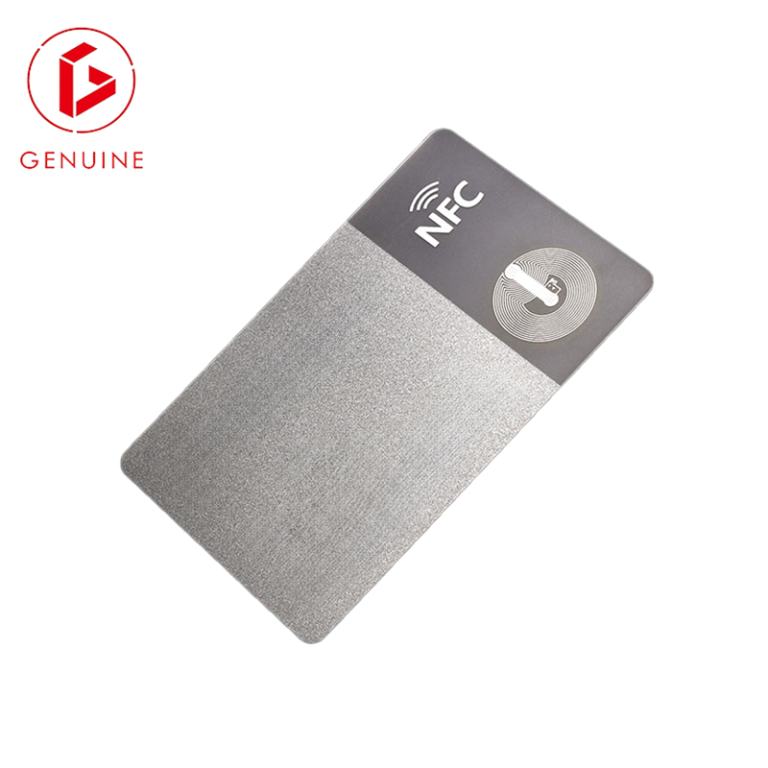
- PC (polycarbonate) cards: premium; laser-engravable, 10-year lifespan, used for government ID and high-security credentials.
- On-metal / industrial tags: premium; ruggedized housing and specialized antenna for asset tracking in harsh conditions.
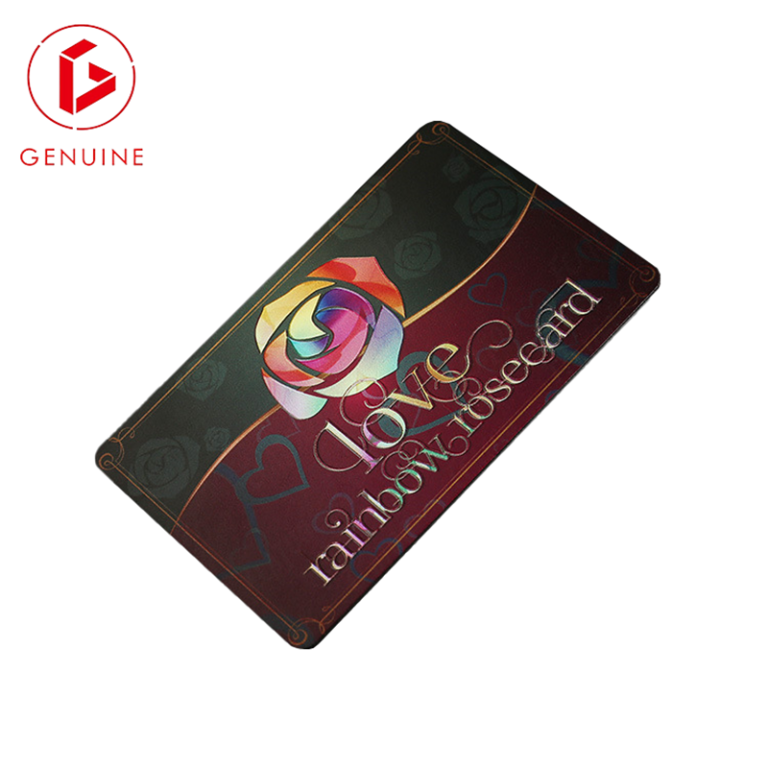
Printing and personalization then layer on top: full-color offset, variable serialization, UV/security inks, holographic overlays, magstripe, or contact chip modules for dual-interface cards. Each finishing option is a separate line item, so specify only what your application genuinely needs — over-specifying is one of the most common ways buyers inflate their own cost.
How to Read an RFID Quote and Spot Inflated Line Items
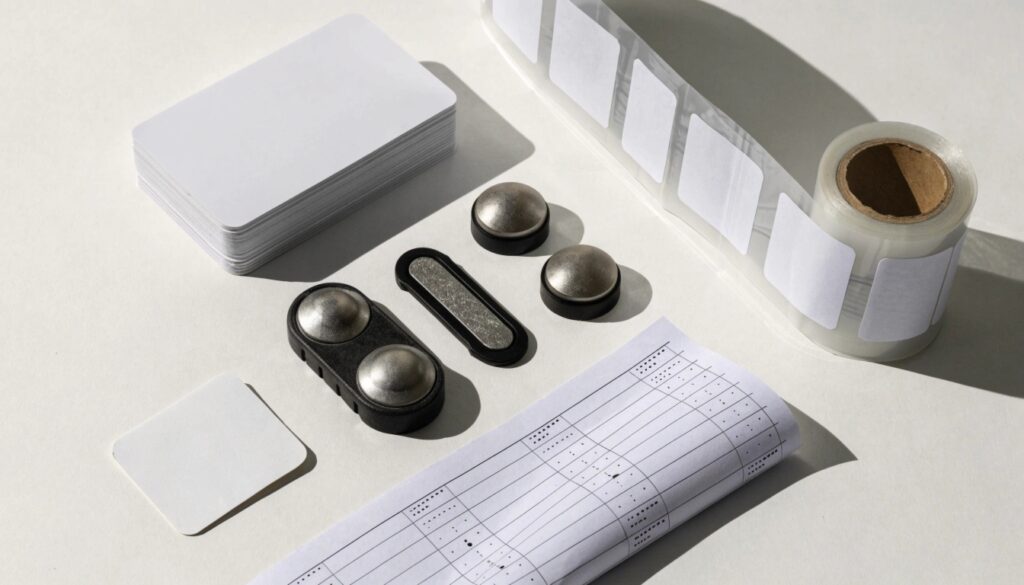
A trustworthy quote is itemized, not a single lump sum. When each cost element is visible, you can compare suppliers fairly and negotiate the items that actually matter. Insist on a breakdown that separates chip, inlay/card body, printing, encoding, testing, tooling, and packaging. If a supplier refuses to itemize, that is itself a signal.
- Confirm the exact chip. “Compatible chip” or “equivalent IC” is a red flag — ask for the specific IC name and datasheet, because performance and price hinge on it.
- Check the MOQ and price breaks. A quote without volume tiers hides where your real price lands.
- Watch for stacked encoding fees. Per-unit encoding on top of setup, plus a separate “programming” charge, can double-bill the same work.
- Look for a QC/testing line. 100% read verification is legitimate and worth paying for; its absence can mean higher field failure rates.
- Separate one-time tooling from unit price. Plates and dies are one-off; they should not be buried in every unit forever.
- Clarify Incoterms and lead time. An “ex-works” price plus surprise freight and duties can erase an apparent discount.
The cheapest quote is not automatically the best value. A suspiciously low price often signals a downgraded chip, thinner material, or skipped QC — costs that resurface as read failures, short card life, or reprints. Judge a quote on itemized transparency and verifiable specification, not headline price alone.
How to Get an Accurate RFID Quote Fast
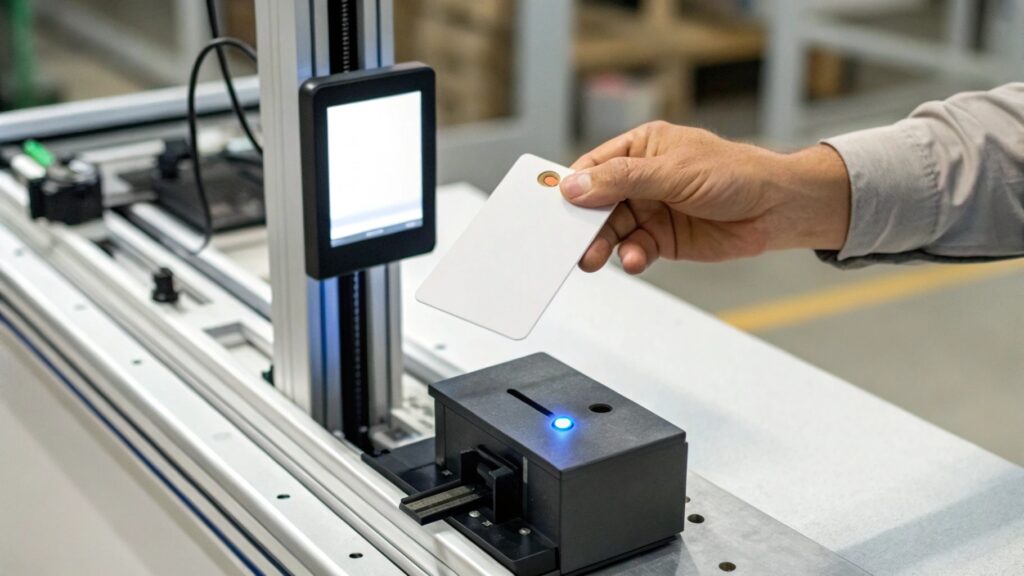
The quickest route to a firm, comparable price is to give every supplier the same complete brief. Vague requests produce vague quotes and slow back-and-forth; a precise brief gets you an accurate number — often within a day. Send the following details and you will remove most of the guesswork from the quotation.
- Application and environment — what you are tracking or authenticating, and whether tags sit on metal, near liquid, outdoors, or indoors.
- Required read range and frequency — or describe the use case and let the factory recommend LF/HF/UHF.
- Preferred chip (if any) — e.g., NTAG 215, MIFARE DESFire EV3, UCODE 9 — or leave open for a recommendation.
- Form factor and material — label, PVC card, PC card, wristband, or hard tag.
- Printing and personalization — artwork, colors, serialization, QR, magstripe, or laser engraving.
- Encoding needs — what data to write, and whether memory should be locked.
- Quantity and delivery — target volume (and possible future volumes for tiered pricing), destination, and deadline.
As a manufacturer operating since 2005, GENUINE quotes factory-direct with itemized pricing, provides free samples for evaluation, and verifies 100% read performance before shipment — so the number you approve is the number you get. Request a factory-direct RFID quote and free samples with the brief above, and you will receive a transparent, tiered price you can budget and defend.

RFID Pricing FAQ
How much does one RFID tag cost in 2026? For a standard UHF paper label at volume, roughly US$0.05–0.20; NFC/HF labels run about US$0.10–0.35; PVC RFID cards start around US$0.30 and secure DESFire cards can exceed US$3. Custom printing, encoding, and rugged housings add to these figures. Treat all numbers as indicative until you have a quote against your spec.
Why is my quote so much higher than the “cents per tag” I read online? Those headline prices assume a plain, high-volume UHF label with no printing or encoding. Add custom artwork, serialization, a card body, encoding, testing, and a lower quantity, and the real price rises accordingly.
Does a higher price mean better quality? Not always — but a price far below market usually means a compromise somewhere (chip grade, material thickness, or skipped QC). Compare itemized quotes and request samples to verify.
How can I lower my RFID unit cost without cutting quality? Standardize on stock inlays and chips, consolidate volume, buy factory-direct, and specify only the finishing your application needs. These reduce tooling and margin layers without downgrading performance.