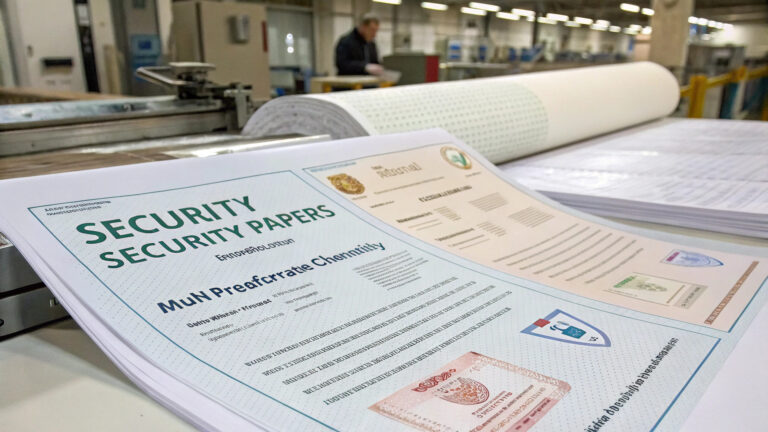
You already know your packaging can be copied. What you probably do not know is which of the ten or so available anti-counterfeit technologies will actually stop the people copying it — and which will simply add cost to a carton that fraudsters clone anyway. That gap between “we added a hologram” and “we made counterfeiting uneconomic” is where most packaging security budgets quietly disappear. This guide walks through the ten solutions worth shortlisting in 2025, how to match them to your real risk exposure, and how to separate a genuine secure-paper or holographic film manufacturer from a trading company with a good brochure.
Why Most Anti-Counterfeit Packaging Budgets Get Spent in the Wrong Place
The scale of the problem is not in dispute. Global trade in counterfeit goods reached an estimated USD 467 billion in 2021 — roughly 2.3% of all world trade, according to the joint OECD–EUIPO Mapping Global Trade in Fakes 2025 study. The same research found that about 65% of counterfeit seizures now arrive as small parcels and postal shipments, which fragments enforcement and pushes the burden of proof back onto brand owners.
The practical consequence for a procurement team is this: your packaging is no longer just protecting a product on a shelf. It is the evidence your legal team, your customs authority, and your distributor will use to prove a unit is yours. Budgets fail when buyers purchase a feature — a generic hologram, a shiny film — instead of a verification workflow that a customs officer, a distributor, or a consumer can actually execute in seconds. A security feature nobody checks is decoration.
The 10 Anti-Counterfeit Packaging Solutions Worth Shortlisting in 2025
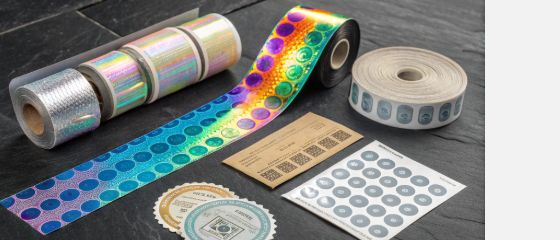
Security professionals group features into three layers, and a credible programme uses at least two. The layered logic is formalised in ISO 22383, the international standard for selecting and evaluating authentication solutions for material goods — a useful reference to cite when you need to justify spend internally.
Overt features (anyone can verify, no tools)
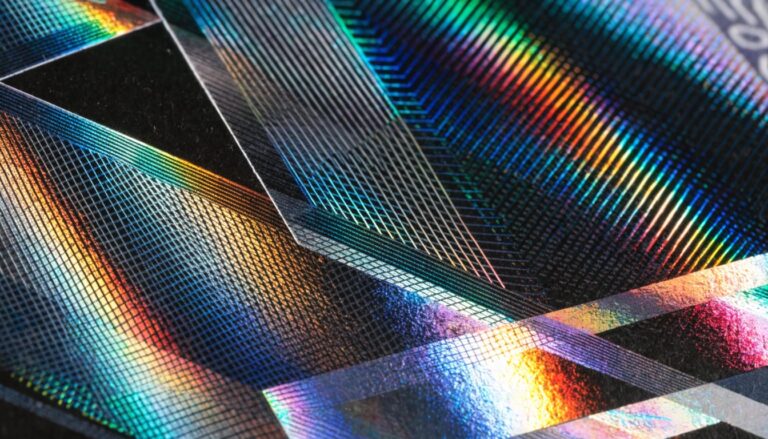
- Holographic lamination film and OVD stripes — colour-shifting optical devices that cannot be reproduced by scanning or photocopying. Depth of effect matters far more than brightness; see our primer on how holographic overlays actually work.
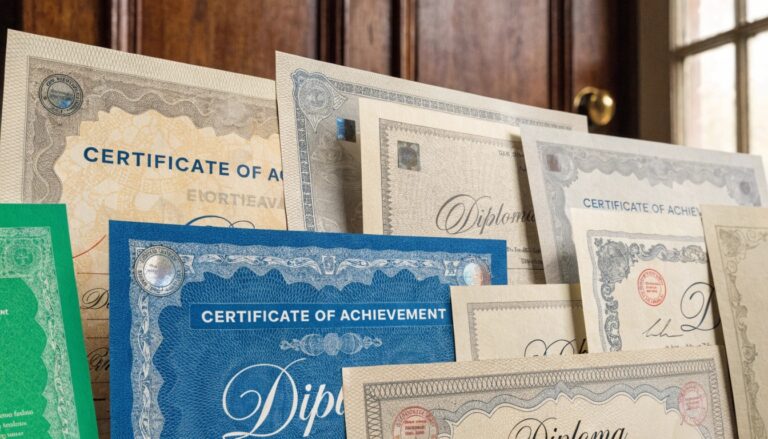
- Watermarked security paper — true mould-made watermarks are formed in the wet stage of papermaking and are effectively impossible to imitate with printing.
- Tamper-evident VOID seals — leave an irreversible message in the adhesive layer when peeled, proving whether a carton was opened in transit.
- Colour-shifting (OVI) inks — shift hue with viewing angle; the same family of ink used on banknotes.
Covert features (verified by trained staff or a simple tool)
- UV-fluorescent fibres and planchettes — embedded in the substrate rather than printed on it, so they survive relabelling attempts.
- Microtext and guilloche patterns — sub-millimetre line work that blurs into a smudge on any copy, checkable with a $5 loupe.
- Taggants and security threads — chemical or magnetic markers read by a handheld detector, giving a yes/no field answer.
Digital and track-and-trace layers
- Serialised 2D codes (GS1 DataMatrix / QR) — a unique identity per pack. GS1 standards underpin the industry migration to 2D carriers, so specifying GS1-compliant syntax now avoids a costly re-artwork cycle later.
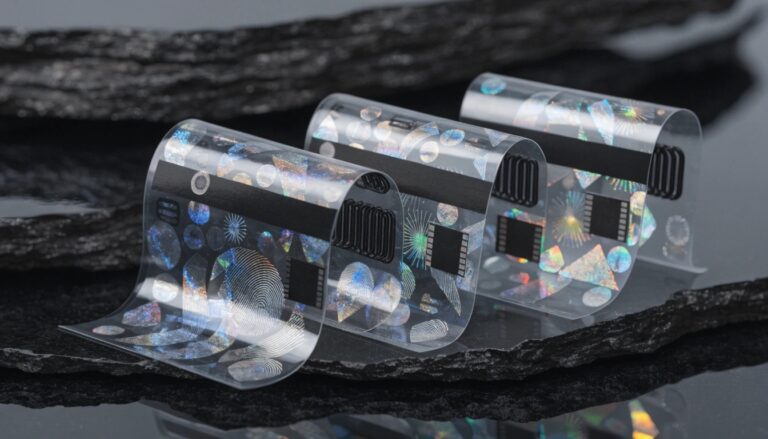
- RFID and NFC inlays — enable pack-level authentication plus inventory visibility from the same tag.
- Copy-detection patterns — printed noise fields that degrade measurably when scanned and reprinted, allowing a smartphone to distinguish an original from a copy of an original.
Match the Security Layer to Your Actual Counterfeit Risk
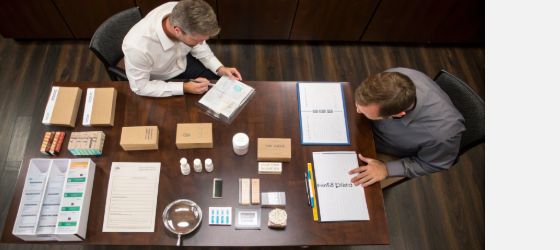
Buying every feature on the list is the second most expensive mistake available. The right specification depends on who is attacking you and who needs to verify. Use the risk profile below as a starting shortlist, then pressure-test it against your own recall and grey-market history.
| Risk profile | Primary threat | Recommended layers |
|---|---|---|
| Pharmaceutical / medical | Regulatory exposure, patient harm | Serialised 2D code + tamper-evident seal + UV substrate |
| Luxury & cosmetics | High-quality visual clones | Custom OVD hologram + covert microtext + NFC |
| Industrial & automotive parts | Safety-critical fakes, warranty fraud | RFID inlay + taggant + VOID label |
| Certificates & documents | Alteration and forgery | Watermarked security paper + security thread + guilloche |
| FMCG / food | Refill and grey-market diversion | Tamper-evident closure + serialised QR |
Two rules keep this honest. First, always pair one overt feature with one covert or digital feature — overt alone teaches counterfeiters exactly what to imitate. Second, if you operate in a regulated supply chain, the compliance layer is not optional: US prescription drug packaging must meet serialisation and traceability rules under the FDA Drug Supply Chain Security Act, and specifying a supplier who cannot produce compliant serialised output will stall your launch regardless of how good the hologram looks. If you are still choosing substrate and print method, our anti-counterfeit paper design guide covers the material trade-offs in detail.
How to Vet Secure Paper and Holographic Film Suppliers
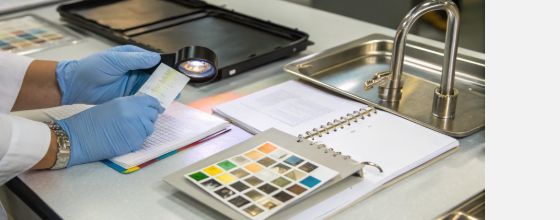
Most sourcing failures in this category are supplier failures, not technology failures. The single most useful filter is certification, because security printing is one of the few areas where an audited management standard maps directly onto real-world control. Ask for a current ISO 14298 certificate — the standard for management of security printing processes — and verify the certificate number with the issuing body, not the supplier. Membership of the International Hologram Manufacturers Association is a further signal for optical-security vendors.
Beyond paperwork, five checks separate a manufacturer from a broker:
- Origination capability. Ask who cuts the hologram master. A real film manufacturer owns or directly controls e-beam or dot-matrix origination; a broker will deflect to “our partner factory”.
- Secure waste destruction. Request the destruction log for spoiled security stock. No log means your rejected sheets can reappear on the grey market.
- Design exclusivity in writing. Confirm the origination is yours and will not be resold as a stock design — this must be a contract clause, not a verbal assurance.
- Sample-to-production consistency. Insist that pre-production samples come off the same line and substrate as the bulk run, not a showcase press.
- Realistic MOQ and lead time. Custom holographic origination typically carries a 4–6 week lead time. A supplier promising custom OVD film in ten days is selling you stock film.
If a prospective vendor fails two or more of these, walk away early — our field notes on identifying fake anti-counterfeit paper suppliers document how these patterns repeat.
What It Costs — and Where Buyers Routinely Overpay

Unit price is the wrong number to optimise. The costs that actually move your total spend are origination tooling (a one-off, amortised across every subsequent run), changeover waste, and the internal labour of verifying and reconciling serialised data. Three patterns cause most overspend:
- Paying custom-origination prices for stock designs. Generic “rainbow” holographic film costs a fraction of bespoke OVD work. If your artwork is not uniquely originated, you should not be paying bespoke rates — and you are not getting bespoke protection.
- Over-specifying the substrate. Full cotton-content security paper is the right call for certificates and documents; for a secondary carton that will be recycled in 30 days, it is money spent where no attacker is looking.
- Fragmented ordering. Splitting security stock across several small purchase orders multiplies setup and origination charges. Consolidating annual volume against a single specification is the most reliable saving available — the mechanics are broken down in our guide to reducing total cost of ownership on bulk security paper.
A workable budgeting rule: expect packaging security to land between 0.5% and 3% of unit cost for most consumer categories. Below that band you are usually buying decoration; well above it, you are usually buying features no one in your chain will ever verify.
Frequently Asked Questions
How do I know a holographic film cannot simply be copied?
Reproducing a genuine optically variable device requires e-beam or dot-matrix origination equipment and the mastering expertise to run it — a capital and skills barrier well beyond casual counterfeiters. What is easy to copy is a generic stock hologram bought off the shelf. Protection comes from unique origination plus a contractual guarantee of design exclusivity, not from the hologram itself.
What is a realistic lead time and MOQ for custom anti-counterfeit packaging?
Budget 4–6 weeks for custom holographic origination and first article approval, and 2–3 weeks for repeat runs once tooling exists. Serious manufacturers can accommodate pilot quantities around 1,000 rolls or sheets; a rigid 10,000-unit floor usually indicates you are talking to a trader passing on a factory’s minimum rather than setting their own.
Do I need both a hologram and a serialised QR code?
In most cases, yes — they solve different problems. The hologram gives an instant human check at the point of sale or border; the serialised code gives an auditable digital record and detects duplicate or diverted units. Overt and digital layers together also make cloning economically unattractive, which is the actual goal.
Can I test security features before committing to a production order?
You should, and any credible supplier will support it. Request physical samples on your intended substrate, then run them through your own workflow: does your labelling line handle the film, do your distributors recognise the feature, does your scanner read the code at line speed? Testing at sample stage costs days; discovering an incompatibility mid-production costs a launch window.
Your Next Step: Specify, Sample, Then Scale
Write down which of the three layers your product genuinely needs, who will verify each one in the field, and what evidence you would need in a dispute. Take that one-page specification to two or three suppliers and compare their answers on origination, certification, and destruction logs — the differences will be immediate and revealing.
As an ISO 14298-certified security paper and holographic film manufacturer, GENUINE supplies watermarked substrates, custom OVD lamination film, tamper-evident seals, and RFID-integrated packaging with flexible pilot quantities and DDP delivery to the US and EU. Request free samples and a specification review — tell us your product category and risk profile, and we will send physical samples of the layers that fit, along with an honest note on the ones you can skip.