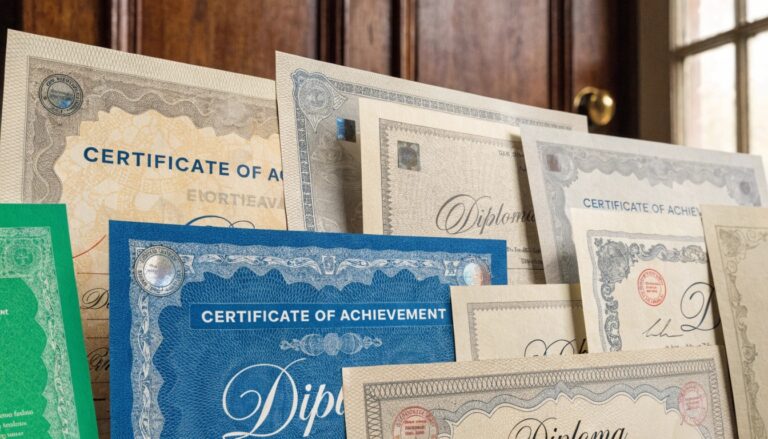
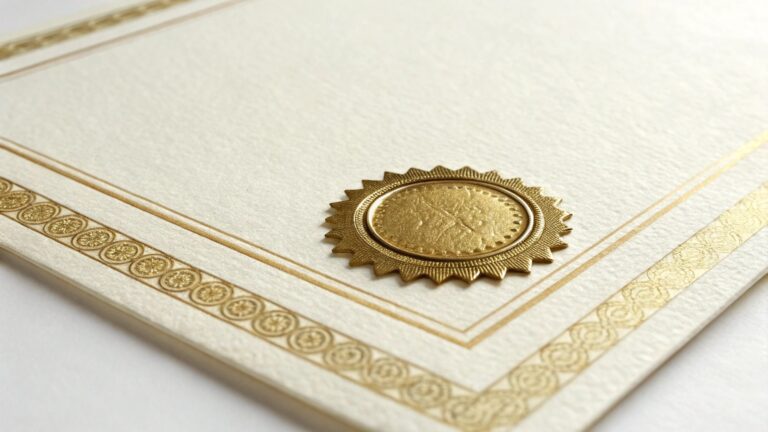
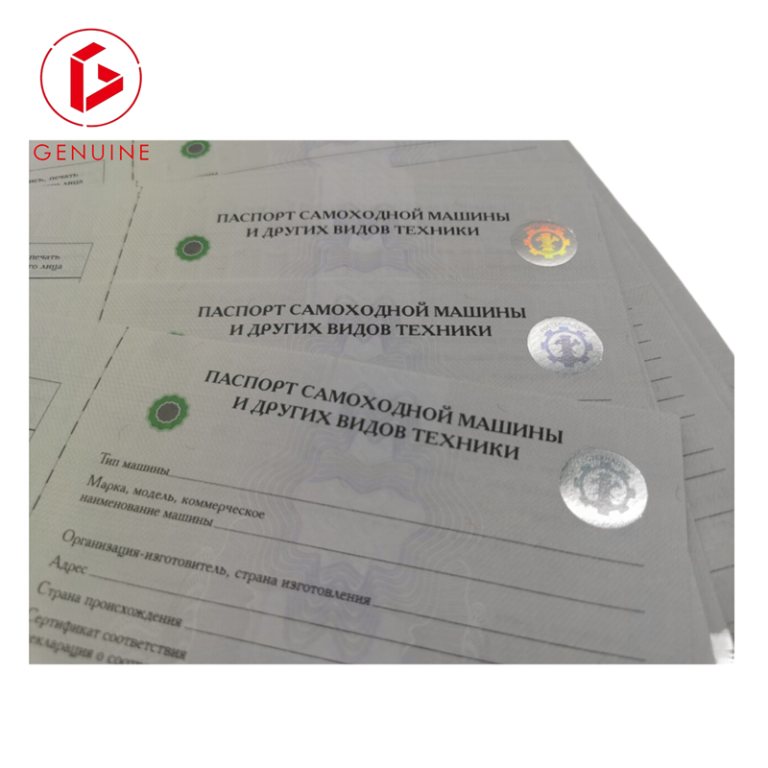
Counterfeit certificates, fake lottery strips, and knock-off product labels quietly drain revenue and erode the trust your brand spent years building. For procurement and brand-protection teams, the cheapest line of defense is not a later-stage sticker — it is the paper itself. Security paper embeds anti-counterfeit features directly into the substrate, so forgery means recreating the mill, not just reprinting a design.
What Is Security Paper?
Security paper is a controlled substrate manufactured with one or more built-in anti-counterfeit features. The four features most B2B buyers specify are watermarks, embedded security threads, fluorescent (UV) fibers, and hologram hot-stamping. Unlike a printed logo, these elements are physically part of the sheet, which means a copier or scanner cannot reproduce them.
The business value is straightforward: a document or label printed on security paper lets anyone — a clerk, a customer, an inspector — distinguish genuine from fake in seconds, often with nothing more than a light source. That turns authentication from a lab test into a front-line check your own staff can perform.

Where Counterfeiting Costs You the Most
Security paper is not a niche product. It protects documents and products across industries where trust is the product:
- Certificates & diplomas — academic and professional credentials are among the most counterfeited documents in circulation.
- Lottery, bills & vouchers — high-volume, low-unit-value instruments that scale fraud fast.
- Real estate & legal contracts — a forged deed or agreement creates liability that outlasts the transaction.
- Brand protection — genuine wine, cosmetics, medicine, tobacco, tea, and apparel all face label counterfeiting that diverts sales and triggers safety recalls.
According to INTERPOL, counterfeiting is a multi-billion-dollar organized-crime segment that funds further illegality — which is why document and brand owners treat substrate security as a compliance issue, not a cosmetic one.
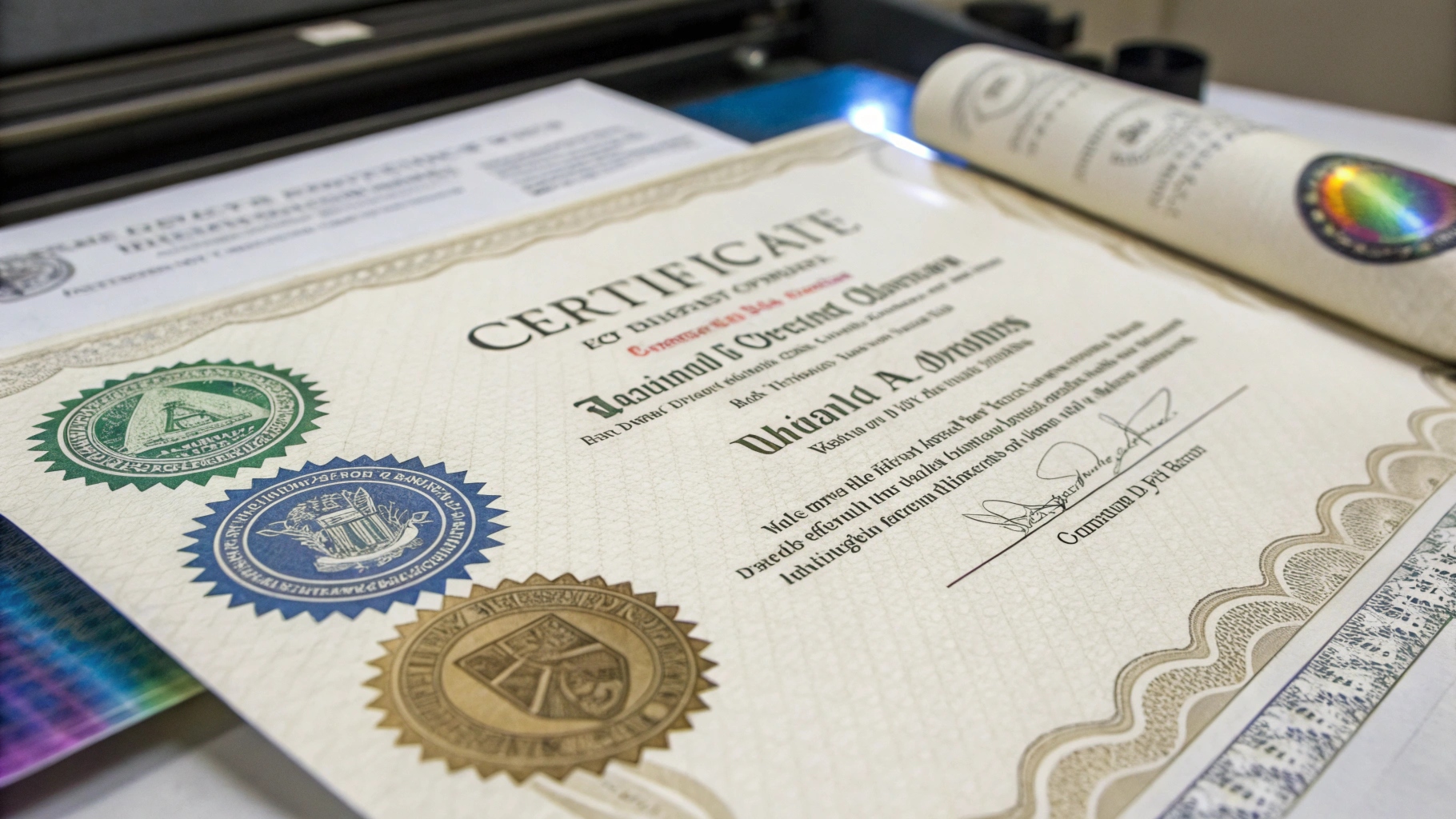
Core Security Features You Can Specify
Each feature deters a different attack and carries a different cost, so specify to the risk your document actually faces:
- Watermark — a tonal design embedded during sheet forming; visible against light, impossible to photocopy faithfully. Best for certificates and legal documents.
- Security thread — a thin embedded strip, often metallic or UV-reactive. Harder to simulate than a printed line; ideal for high-value instruments. See our guide to what a security thread is.
- Fluorescent fiber — colored fibers that glow only under UV. A fast, low-cost field check for staff and customers.
- Hologram hot-stamping — a registered hologram foil pressed onto the sheet, offering both eye- and machine-verifiable authenticity. For the overlay technology behind it, see understanding holographic overlays.
ISO 12931 sets the performance criteria for authentication solutions used against material-goods counterfeiting, giving buyers an objective benchmark to write directly into a specification rather than relying on a supplier’s marketing claims.

How to Match Features to Your Document
You do not need every feature on every job — over-specifying just raises unit cost. A practical starting point:
- Certificates & diplomas → watermark + security thread, optionally fluorescent fiber. See customizing certificate paper.
- Brand labels & seals → hologram hot-stamping for shelf-visible verification.
- High-value instruments (lottery, bonds) → combine thread + fluorescent fiber + watermark for layered defense.
The goal is layered, asymmetric cost: make faking more expensive than the item is worth. Our security paper procurement guide walks through a full feature-to-risk matrix you can adapt to your own documents.

How to Vet a Security Paper Supplier
Substrate security is only as strong as the mill that makes it. Before you release a purchase order:
- Audit the factory — confirm dedicated security-paper lines, access control, and chain-of-custody.
- Check certification — ask for ISO 14298 (management of security printing processes), the recognized standard for secure substrate production.
- Control the master — for hologram features, the supplier should hold and protect the master, never outsource it blindly.
- Review samples — request physical sheets and test them under light and UV before committing to volume.
- Confirm MOQ & lead time — security grades often carry higher minimums; align early to avoid rushed, weaker substitutions.
Frequently Asked Questions
What security features can I specify on custom security paper?
Most mills offer watermark, embedded security thread, fluorescent (UV) fiber, and hologram hot-stamping, alone or combined. Choose based on the risk and the verification method your users actually have on hand — light, UV, or the naked eye.
Is security paper suitable for certificates and diplomas?
Yes. Watermark plus security thread is the standard combination for academic and professional credentials because it survives laminating poorly and photocopies poorly — which is exactly the point. It makes mass forgery economically unattractive.
How do I verify a security paper supplier is trustworthy?
Require a factory audit, ISO 14298 certification, proof of master-hologram control, and physical samples tested under light and UV. A supplier that cannot show chain-of-custody should not handle your security grade.
Can security paper be combined with hologram labels or RFID?
It can. Many programs pair a security-paper substrate with a hologram label or an RFID tag for both visible and machine-readable authentication — useful where documents also need to be tracked inside a system.

Next Steps
Choosing security paper is less about paper and more about matching deterrence to risk. If you have a document or product line exposed to counterfeiting, request a sample pack and a feature quote so you can test watermark, thread, and UV response before you specify. Talk to our team about a substrate built to your risk profile and MOQ.