A badge reported “lost” at 5 p.m. on Friday is usually forgotten by Monday morning. To an attacker, it is an open door with your company logo printed on it. This guide shows enterprise security and facilities teams how to spot a cloned or leaked card early, revoke it in a way your physical access control system (PACS) actually honors, and keep the audit evidence your insurer and regulators will demand—before a single unrevoked credential turns into a six-figure incident.
Why a “Lost Card” Is a Security Incident, Not an Errand

The most expensive mistake security teams make is treating a missing credential as a procurement problem—”I’ll order a replacement.” A card is not a trinket; it is a key with your building’s layout, data rooms, and server cages attached to it. Every missing card should be treated as a potential compromise until proven otherwise, because the cost of one unrevoked credential—tailgating into a clean room, copying a badge at a lobby printer, walking out with a prototype—routinely exceeds the entire annual card-program budget.
The hard part is that you usually cannot tell “lost” from “compromised” at the moment of report. That uncertainty is exactly why a detection-and-revocation process matters more than a replacement order. The goal is to shrink the window between compromise and revocation to minutes, not days.
Six Signals Your Card Has Been Cloned or Leaked
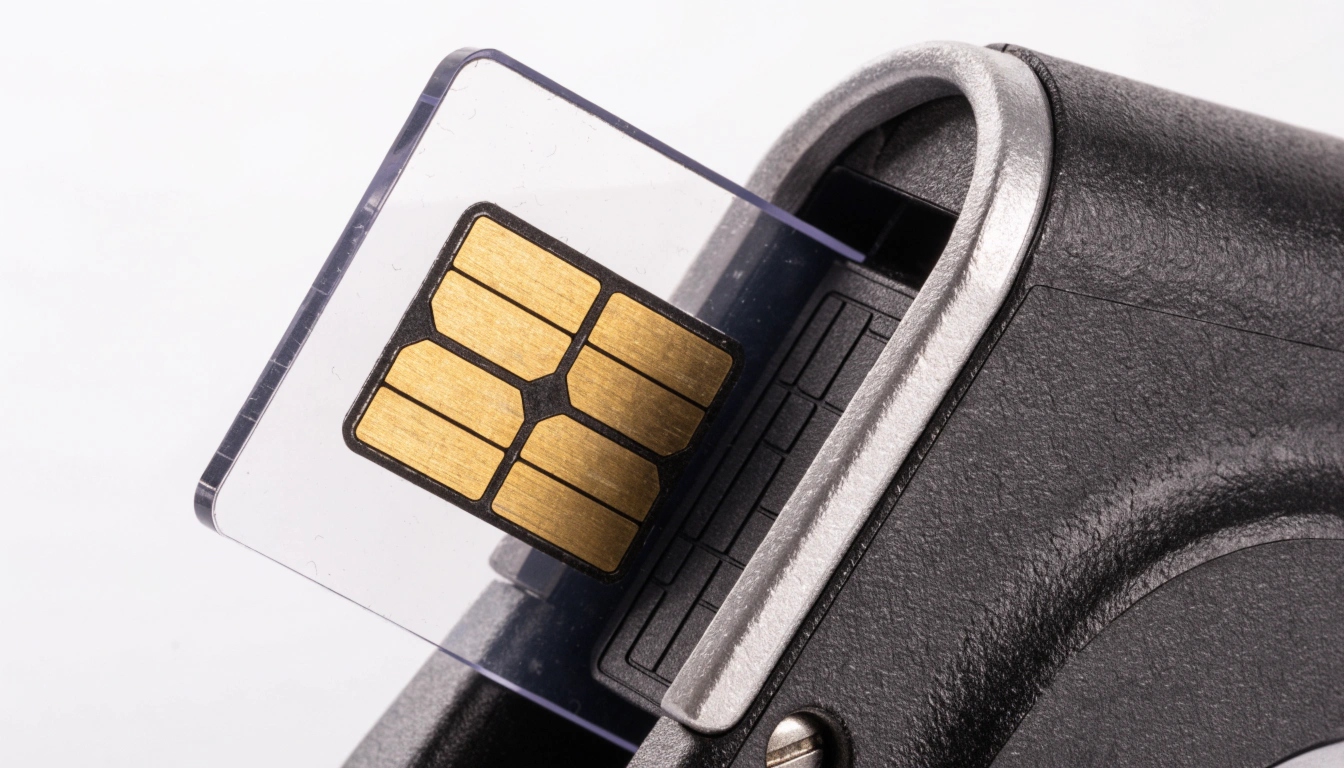
Cloning rarely announces itself. The teams that catch it early watch for patterns rather than waiting for a door alarm. The six most reliable signals:
- Impossible travel: the same credential ID records an entry at two sites (or two floors) within a time window no person could physically cross.
- Reader errors spike on one door: a cloned card often fails mutual authentication, producing repeated reject-then-accept cycles.
- Printed and encoded serials mismatch: a card showing serial A but presenting serial B to the reader is a textbook clone.
- Use before activation: a credential authenticating before its issue date means the data leaked from your supplier or encoder.
- Anomalous after-hours entries at sensitive zones (server rooms, labs, loading docks) tied to otherwise low-activity cards.
- Bulk mutual-auth failures: many cards suddenly failing secure handshake on the same reader points to a skimming device, not bad plastic.
If your program still issues 125 kHz proximity cards with no mutual authentication, assume any “lost” card is cloneable in seconds and revoke on report by default. Stronger credentials—properly managed smart-card keys—make these signals detectable instead of invisible.
Building a Revocation Workflow Your PACS Will Honor

A revocation only works if the door actually rejects the card. The workflow that delivers that has five steps:
- Detect — confirm the anomaly through logs, not a phone call.
- Confirm — validate the credential ID and last-known holder.
- Revoke at the authority — disable the credential in your credential management system or certificate authority.
- Propagate — push the revocation to every reader, panel, and offline cache.
- Verify — test the card against a live reader and confirm rejection before closing the ticket.
The most common failure is revoking in only one place. Deleting a card from a single door controller does nothing if the next reader still trusts it—the revocation has to originate at the credential management middleware that every panel consults. For PKI/PIV programs, that authority is your certificate infrastructure.
OCSP, CRL, and Certificate Revocation for PKI/PIV Cards

If your program issues PIV or PKI smart cards, the credential carries an X.509 certificate, and revocation follows the public-key playbook: either a Certificate Revocation List (CRL) the reader downloads periodically, or Online Certificate Status Protocol (OCSP) queries answered in real time. Both are referenced in NIST FIPS 201-3 for PIV and NIST SP 800-78-4 for the underlying PKI.
The trap is offline trust. A revoked certificate only stops a clone if the reader checks it online (OCSP) at every authentication—a reader running on a cached CRL from last week will still admit a card you revoked on Monday. If your PACS cannot reach the status service, design for short CRL refresh intervals and fail-closed doors. Our PIV/PKI buyer’s guide covers the certification and lifecycle implications in depth.
Audit Evidence: What a Breach Investigation Will Demand

When an incident is suspected, your insurer, your legal team, and possibly a regulator will ask the same question: can you prove what happened? The evidence lives in your access logs, and the bar is higher than most teams expect.
You need an immutable, time-synced access log that ties a credential ID to a specific person and a specific door—not just “a card was used.” That mapping depends on disciplined card serialization and numbering at the point of issuance, so the serial printed on the plastic matches the ID encoded in the chip and the name in HR’s system. NIST SP 800-116r1 lays out the PACS credential-management controls that make this audit trail defensible.
Two practical rules: retain logs long enough to cover your investigation window (and any contractual requirement), and protect them from editing—an access log an administrator can silently rewrite is worthless in a dispute.
Tying Revocation Into Your Credential Renewal Lifecycle

Revocation should not be a fire drill bolted onto the side of your program—it is one stage of a continuous lifecycle: issue → renew → revoke → destroy. The closer those stages are integrated, the smaller the blast radius when something goes wrong. Short-lived credentials and scheduled reissue mean a cloned card expires on a calendar, not on your luck. Our credential lifecycle guide walks through the renewal cadence and the handoffs between HR, security, and your card supplier.
Design tip: make revocation a default state for leavers, not a manual afterthought. Any credential tied to a terminated role should flip to “revoked” the moment HR closes the account, regardless of whether the plastic has been returned.
Physical Card Safeguards That Slow Down Abuse
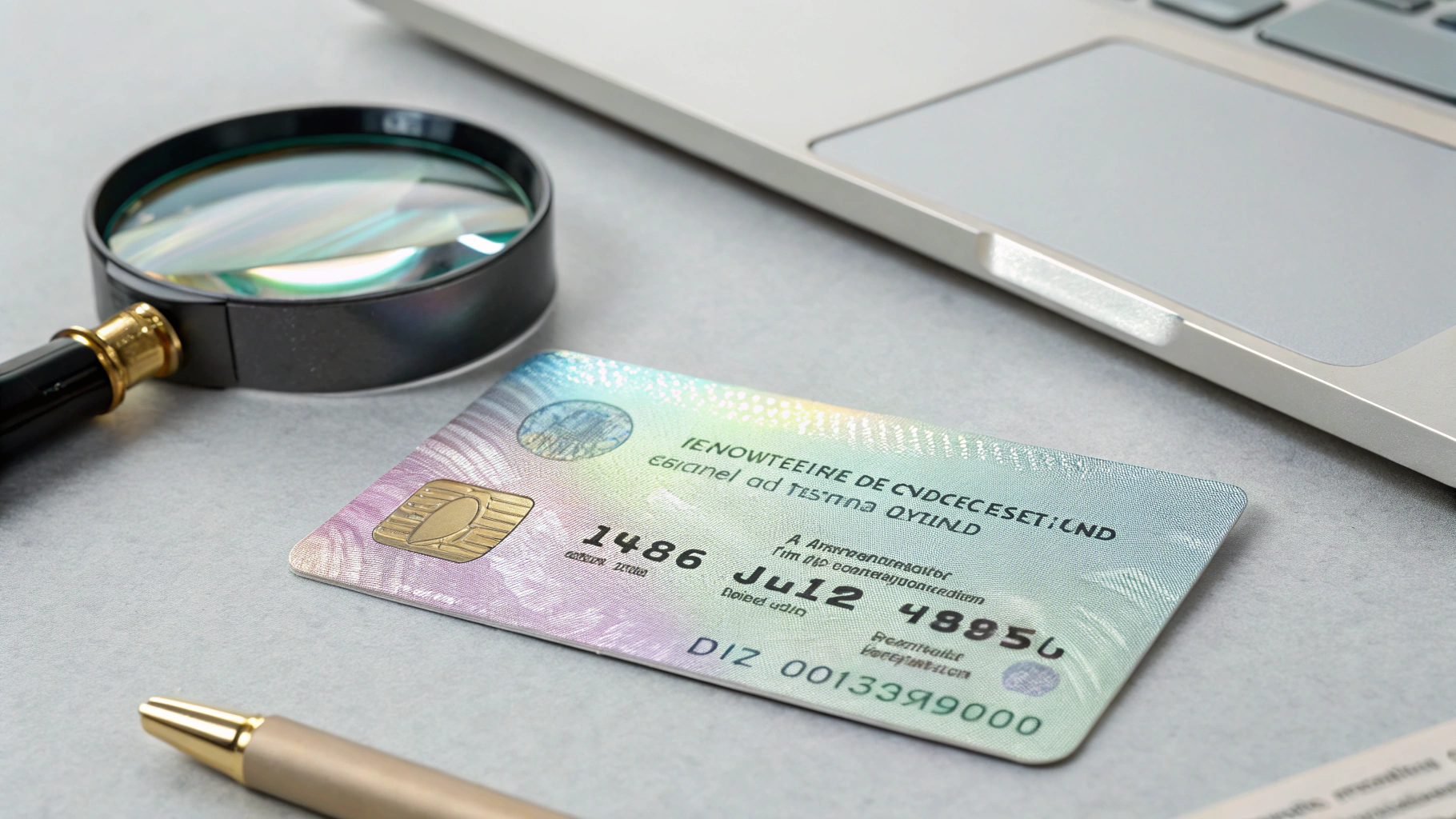
Even the best revocation process runs after a card is already in the wild. Physical security features buy you detective control before the clone is ever used. Holographic overlays, microtext, UV fluorescents, and tamper-evident laminates turn a silent clone into a card a guard can flag at a glance—because the fake lacks the feature, or carries a smudged copy of it.
Pair those features with unique pre-printed serials and you make both detection and revocation faster: a guard who spots serial B on a card that should read A has already done half the forensic work. Where a physical card is too easy to clone, consider whether a mobile credential with server-side revocation reduces your exposure.
Pre-Production Checklist: Brief Your Factory for Revocable Cards

The cheapest place to make a card revocable is the factory, not the incident response plan. When you brief your supplier, specify:
- Unique pre-printed serials on every card, visually and in the chip, matching your numbering scheme.
- Encoded serial equals printed serial—no mismatches that later hide a clone.
- Security features (hologram, UV, microtext) appropriate to your risk tier.
- PACS-compatible encoding (format, facility code, or PKI certificate) validated against your readers.
- Sample and test cards shipped before the bulk run so you can verify encoding and features—our shipment inspection checklist tells you what to check on arrival.
Frequently Asked Questions
How fast can I revoke a smart card? With a centralized credential authority and online status checking, effectively in seconds across the whole estate. With standalone controllers and no propagation, it is as slow as the person walking to each panel—hours or never.
Can a cloned card be stopped if the reader is offline? Only if the reader was last synced after the revocation and fails closed. Design offline readers to reject unknown or expired credentials rather than admit them on stale trust.
The bottom line for buyers: revocability is a design decision, not a setting you flip after a breach. Specify serialization, encoding, and security features with your factory, run credential management as a lifecycle rather than a replacement queue, and keep the logs that prove you did it. Talk to our team about building revocation-ready card programs for government, enterprise, and integrator deployments.