You planned to retire the magnetic stripe years ago. Yet every quarter a fresh shipment of cards still leaves the factory with that dark band across the back — because the ATM at the rural branch, the legacy POS terminal at the franchise, and a good share of transit and hotel locks in your network were never upgraded. If you are a buyer, specifier, or distributor, the real question in 2026 is no longer “is magstripe dead?” but “when is it actually safe to drop the stripe from my card order, and what do I lose if I drop it too soon?” This guide walks through the decision that matters to your program: where magnetic stripe still earns its place, the coercivity and encoding choices that decide security and readability, how it stacks up against chip and contactless, and exactly what to write into your RFQ so you never pay for a card that cannot be read where it needs to be.
Why Magnetic Stripe Refuses to Disappear in 2026
The magnetic stripe survives on installed-base inertia, not on technical merit. Two decades of EMV and NFC rollout have not removed the readers already bolted to walls and counters worldwide. In many markets a meaningful slice of card acceptance still touches the stripe somewhere in the transaction path — rural ATMs, older retail POS, hotel door locks, parking barriers, and metro fare gates that were specified long before contactless became default. Dropping the stripe prematurely does not make your program “modern”; it makes a segment of your users unable to use the card at all.
That is why even pure EMV programs keep a magstripe fallback: EMVCo governs the chip, but issuers retain the stripe so a card still works at a non-upgraded reader. For transit and access programs the same logic applies — see our breakdown of specifying transit and fare-collection cards, where legacy gates often dictate the stripe for years after the front-end goes contactless.
LoCo vs HiCo: The Coercivity Decision That Affects Everything
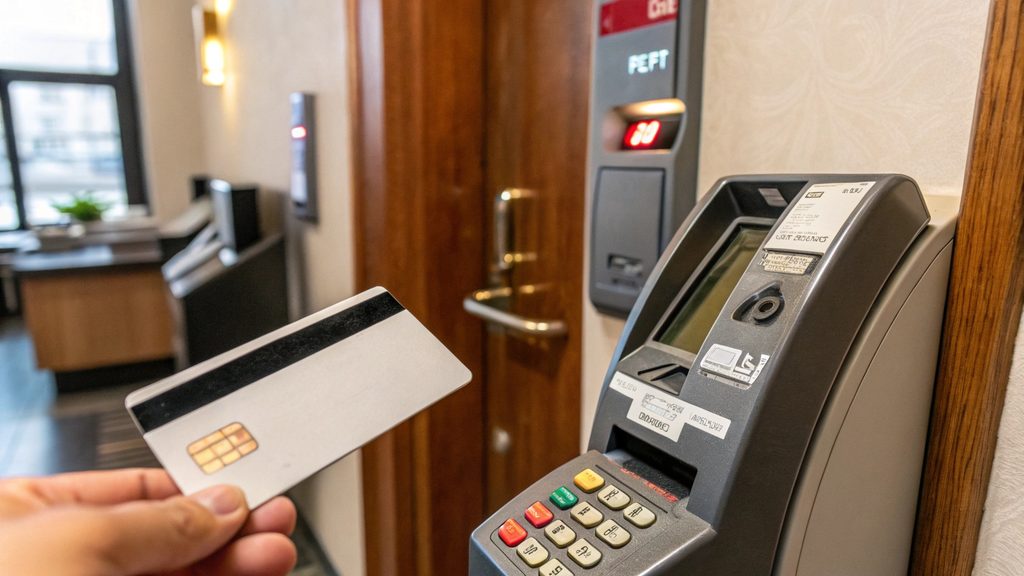
Coercivity is the magnetic field strength needed to write and (accidentally) erase the stripe, measured in Oersted (Oe). It is the single spec most buyers overlook and then regret. LoCo (low coercivity, ~300 Oe) is cheap and easy to encode on-site, but it erases near magnets, speakers, and even some phones — a known failure mode for access and membership cards carried in the same wallet as a phone case magnet. HiCo (high coercivity, ~2750–4000 Oe) resists accidental erasure and is the default for secure, long-life, and high-value programs.
The buyer rule is simple: specify HiCo unless a legacy reader in your estate only accepts LoCo. Mixing the two in one program invites unreadable or silently erased cards. Both are defined under the ISO/IEC 7811 family of standards (developed by ISO/IEC JTC 1/SC 17), which also governs stripe location, encoding, and character sets.
Track Formats and Data Encoding (ISO/IEC 7811)
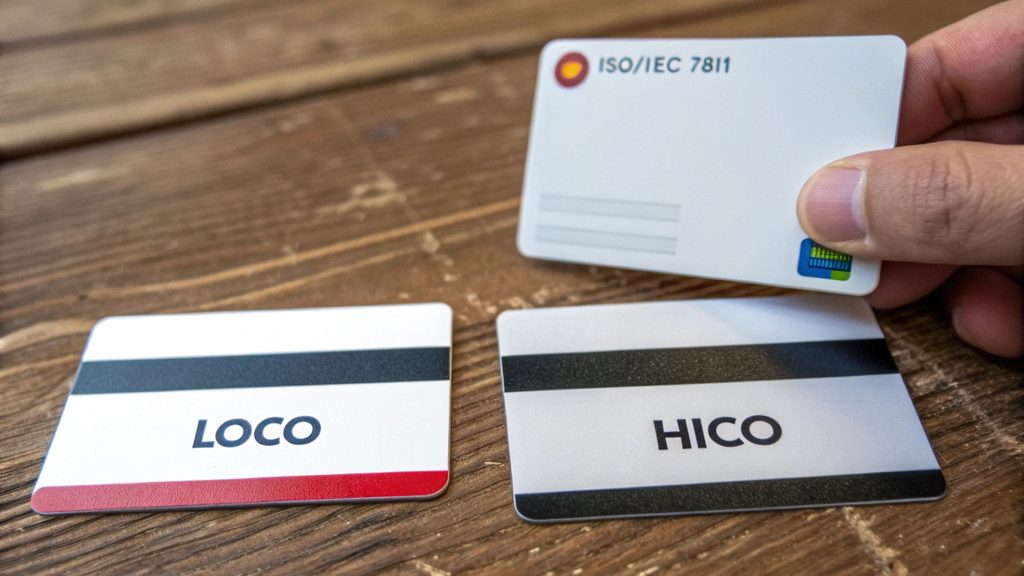
A magnetic stripe can carry up to three tracks. Track 1 (IATA) is alphanumeric and historically used by airline and some ID systems; Track 2 (ABA) is numeric and is what most payment and identity systems actually read; Track 3 is rarely used today. What data lives on which track, and who encodes it, is your decision — not the factory’s. You must state in the spec whether encoding is done at the factory (pre-encoded, verified before shipment) or on-site with a desktop encoder, and in what format.
Our card-encoding specification guide lays out the full ISO 7811 / ISO 7816 / contactless matrix so you can hand your supplier one unambiguous table instead of a vague “make it work.” Getting this wrong means cards that encode cleanly in the lab but fail at the reader.

Magnetic Stripe vs Chip vs Contactless: A Buyer’s Comparison
The honest comparison is about risk and reach, not novelty:
- Magnetic stripe: cheapest to produce and accepted by the widest legacy base, but it is skimmable, cloneable, and wears out with use.
- Contact chip (EMV): dynamic, cryptographically secure authentication; needs a chip-reading terminal but is now the global payment baseline (EMVCo).
- Contactless (NFC): fast and secure, growing fast across transit and enterprise ID; needs NFC infrastructure.
For most B2B programs in 2026 the answer is not “stripe or chip” but hybrid: keep the stripe as a fallback while chip and contactless carry the primary transaction. The interface question is broader than one card — our RFID vs NFC vs BLE guide helps you decide which wireless layer belongs on your credential, and our EMV personalization guide covers what to specify when chip is in scope.
Durability, Wear, and Where Magstripe Fails
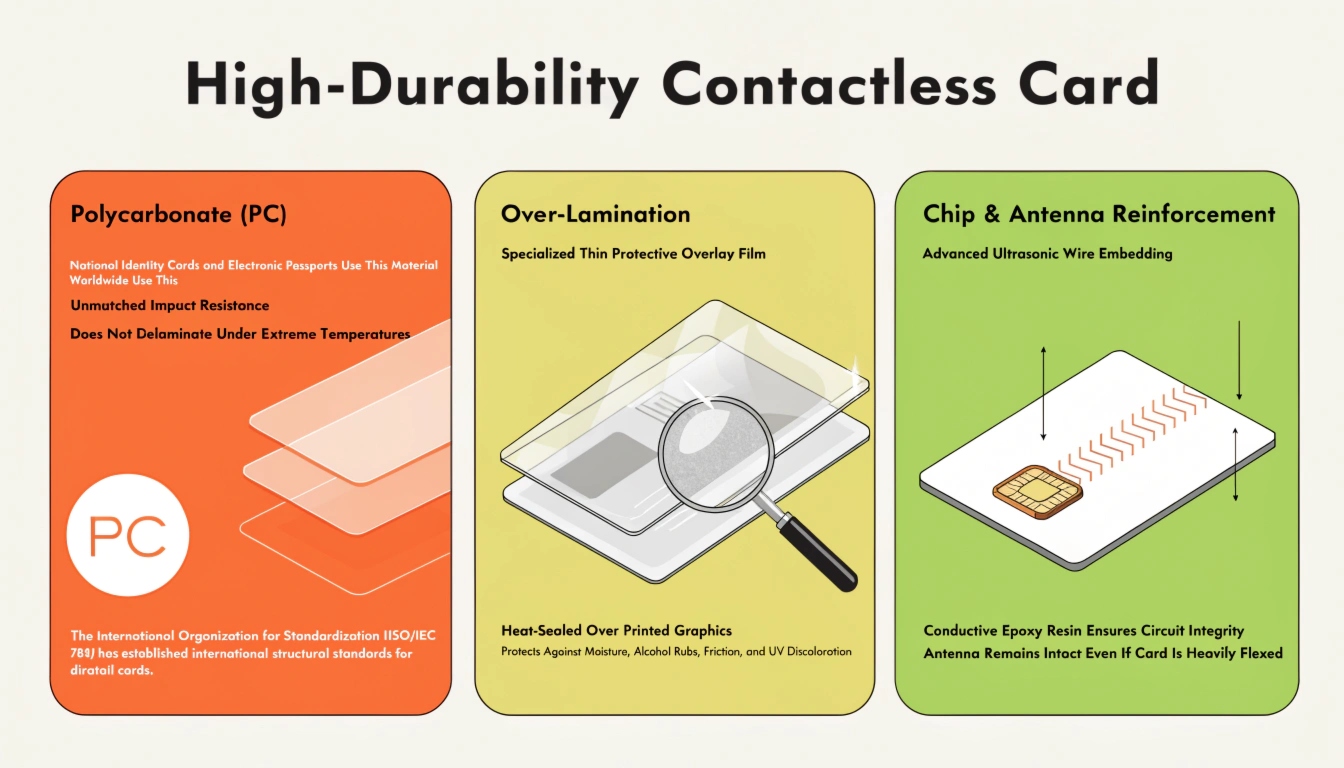
The magnetic stripe is the least durable interface on a card. Repeated swiping abrades the stripe; proximity to magnets, portable speakers, and some phone accessories demagnetizes it; and its typical service life is shorter than that of a contact chip. For high-cycle use — transit, daily access, loyalty swipes — contact or contactless outlasts the stripe by a wide margin, and the replacement rate should be built into your total cost of ownership, not ignored.
This is exactly why programs that survive daily use plan the interface mix deliberately; the same logic we apply to loyalty and membership cards holds for any stripe-bearing credential.
Hybrid Card Design: Combining Magstripe with Chip and Contactless
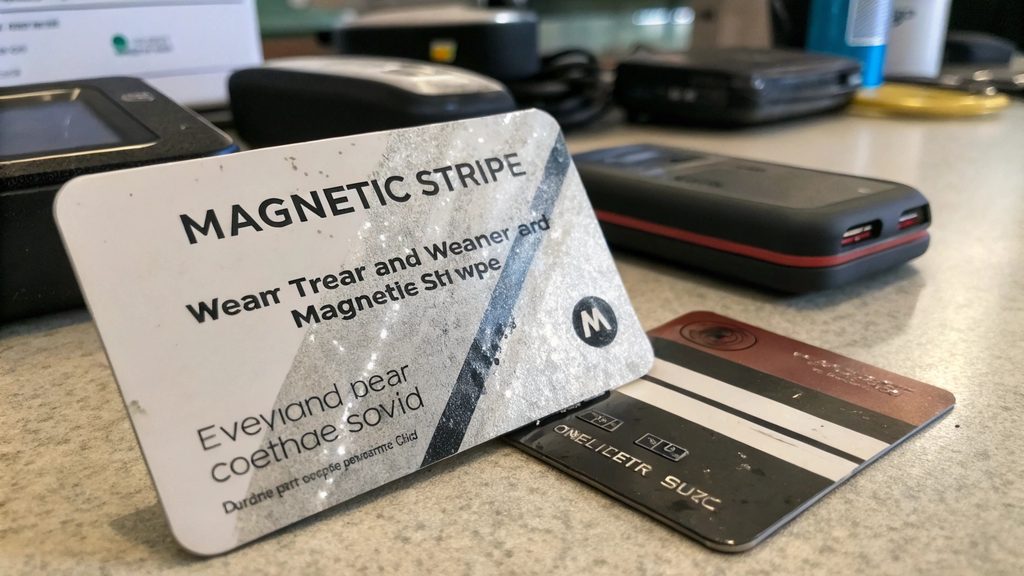
A hybrid card is not exotic — it is the default for serious programs. The stripe sits on the back, the contact chip in its front module, and the contactless antenna as an embedded coil, with no functional conflict if laid out correctly. Key buyer rules: keep the stripe clear of the chip module and antenna to avoid interference, specify an overlay or lamination that protects the stripe, and require independent verification of each interface in QA. Most capable factories treat this as standard, but only if your spec says so — a vague “make it a hybrid” ships surprises.
The Secure Technology Alliance publishes migration and coexistence guidance worth handing to your engineering team when you phase interfaces in or out.
How to Specify Magnetic Stripe Cards in Your RFQ
Turn the above into a one-page spec. Minimum items to put in writing:
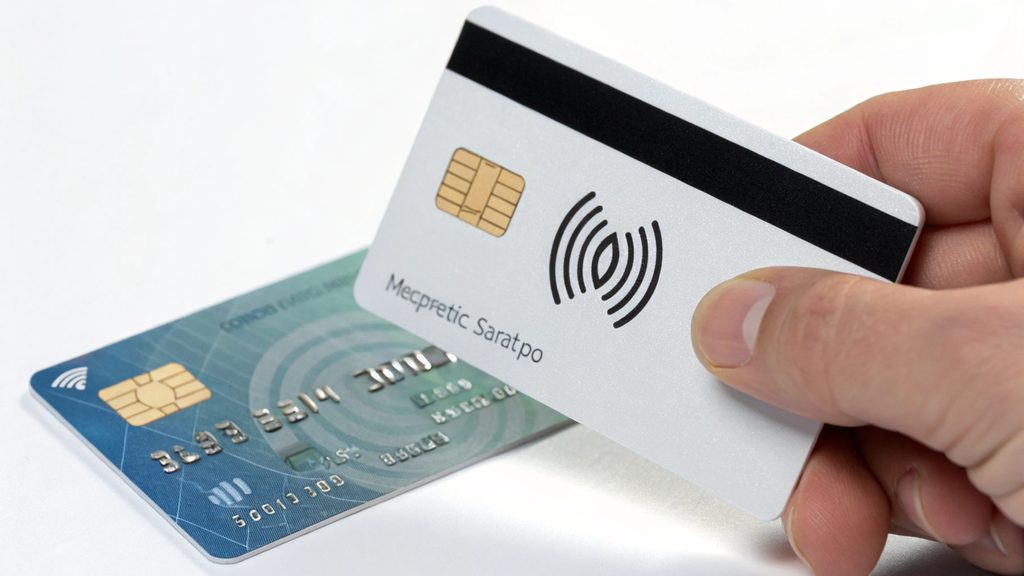
- Coercivity: HiCo (2750–4000 Oe) unless a legacy reader forces LoCo — never leave it unspecified.
- Track allocation: which tracks are encoded, by whom (factory pre-encode vs on-site), and the exact data format.
- Stripe quality: Oersted rating, overlay/lamination, and print method (see our ISO/IEC 7810 dimensions and thickness guide for the card substrate choices that affect stripe life).
- Hybrid coexistence: chip/contactless present, with clearance rules between stripe, module, and antenna.
- QA: encode verification, a real swipe test on your legacy readers, and a demagnetization-resistance sample check.
Before you release a full run, request a physical sample and swipe it on the exact readers your users will touch — the lab passes, the field is what pays. If you would like a sample set built to this spec, or a second opinion on whether your program can safely drop the stripe, reach out and we will spec it with you.