A hospital is one of the few places where the same rectangular badge can mean four completely different things: a clinician with drug-cabinet access, a patient whose identity must be matched to the right chart, a contractor who should never reach the ward, and a visitor who belongs in the lobby only. Get the credential design wrong and the risk is not a failed swipe — it is a wrong-patient medication, a records breach, or an unescorted stranger at the bedside. This guide walks security, facilities and procurement teams through designing healthcare staff and patient ID cards that actually reduce clinical risk: tiering, colour-coding, the right encoding, and a pre-procurement checklist you can hand straight to a supplier.

Why a single “ID card” is not enough in healthcare
The instinct of many first-time buyers is to order “employee ID cards” and hand a variant to everyone. That collapses four very different risk profiles into one token. A nurse’s badge opens the medication fridge and the electronic health record; a patient’s card exists only to be matched to the right chart at the point of care; a contractor needs the boiler room, not the ward; a visitor belongs at reception. The single most common — and most dangerous — credential mistake in healthcare is giving every population a card that looks the same. When roles are not visually separable, “wrong person” errors migrate from the car park into clinical decisions.
This is not a theoretical worry. Patient identification is a long-standing patient-safety priority: the Joint Commission’s National Patient Safety Goals require using at least two patient identifiers before any treatment, and a credential that blurs staff from patient actively works against that rule. Designing the card is therefore a clinical-safety task, not just a branding one. If your wider access program still runs on one generic badge, start by reading our visitor and contractor badge design guide before you standardise.
Define your credential tiers before you order a single card
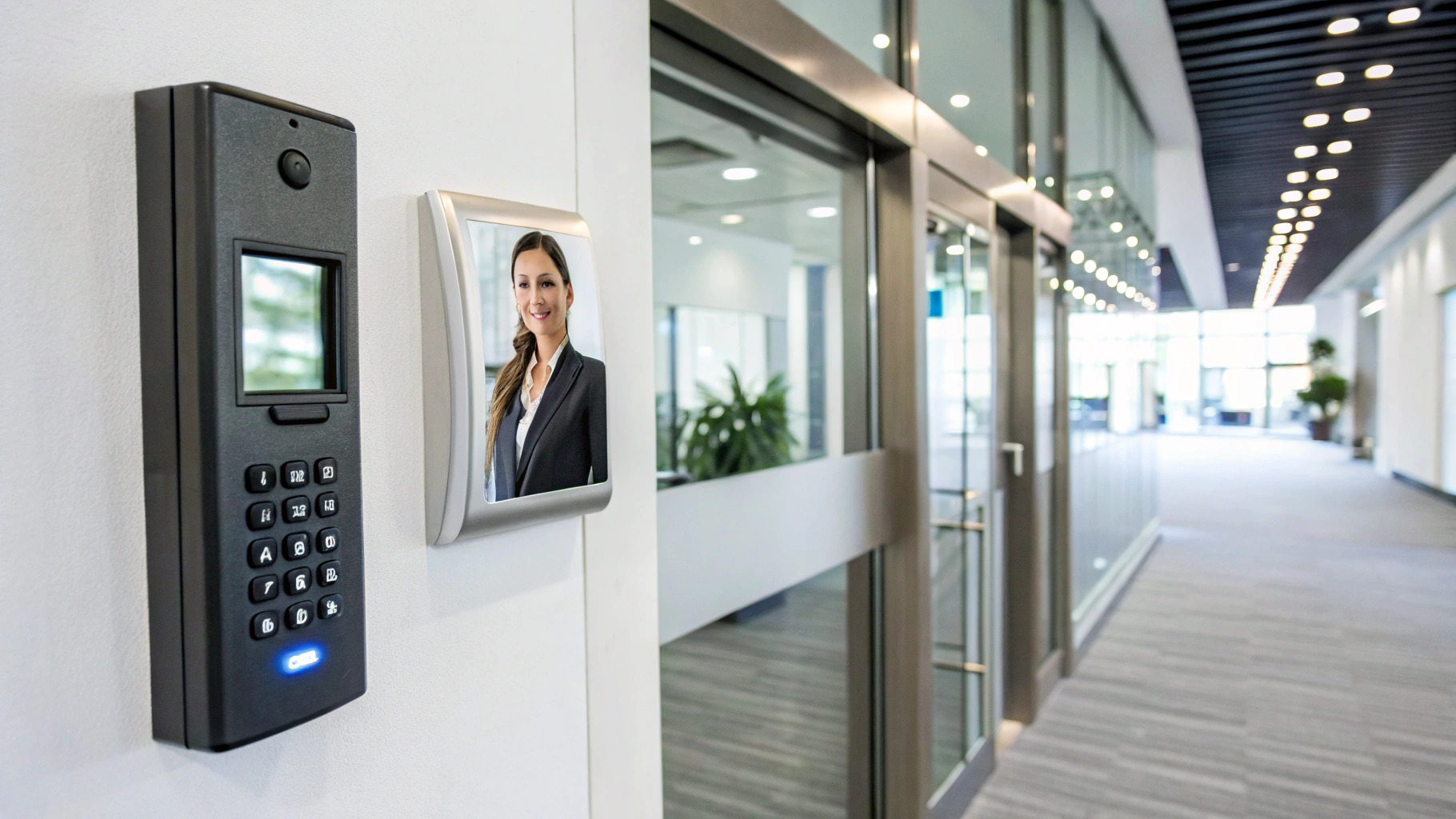
Map the populations first, then decide what each tier is allowed to do. A practical four-tier model for most hospitals and clinics looks like this:
- Staff (clinical): wards, theatres, drug cabinets, EHR workstations, and sometimes PC logon. Highest privilege tier.
- Staff (non-clinical): admin, catering, estates — building access only, no clinical zones.
- Patient: identification at point of care, not physical access control. Often a wristband rather than a card, but the same identity logic applies.
- Contractor / visitor: time-bound, zone-limited, and — for contractors — frequently escorted. Self-expiring stock is worth considering for true temporary passes.
Write the access matrix first; the card is just the token that carries it. The matrix also becomes your acceptance test later: if a produced sample can open something its tier should not, the supplier — not the ward — owns the failure. Tying the tiers into a full rollout is covered in our ID card issuance program guide.
Colour-coding and visual hierarchy stop a contractor looking like a clinician
At three metres down a busy corridor, nobody reads small print. The fastest, cheapest safety control on a healthcare card is visual hierarchy: a bold colour band per tier (green for clinical staff, red for contractor, blue for visitor, yellow for patient transport, for example), a clear role line, a photo, and an expiry date. A badge that cannot be read across a busy corridor fails its only job. Colour-coding is not decoration — it is the split-second check a charge nurse uses to challenge someone who should not be at the bedside.
Pair the colour with a tamper-evident element (a security laminate or hologram overlay) so a swapped photo is visible, and keep the role text large enough to read without glasses. The goal is the same as the two-identifier rule for patients: make the wrong person obvious before they get close.

What to encode on a clinical card: barcode, magstripe, and contactless 13.56 MHz
Three encoding options come up on every healthcare RFQ, and they are not interchangeable:
- 1D/2D barcode: cheapest, but needs line-of-sight and a handheld scanner — awkward with gloved hands and at a distance.
- Magstripe (ISO 7811): legacy, cheap, but contact-based, easy to demagnetise, and trivially cloneable.
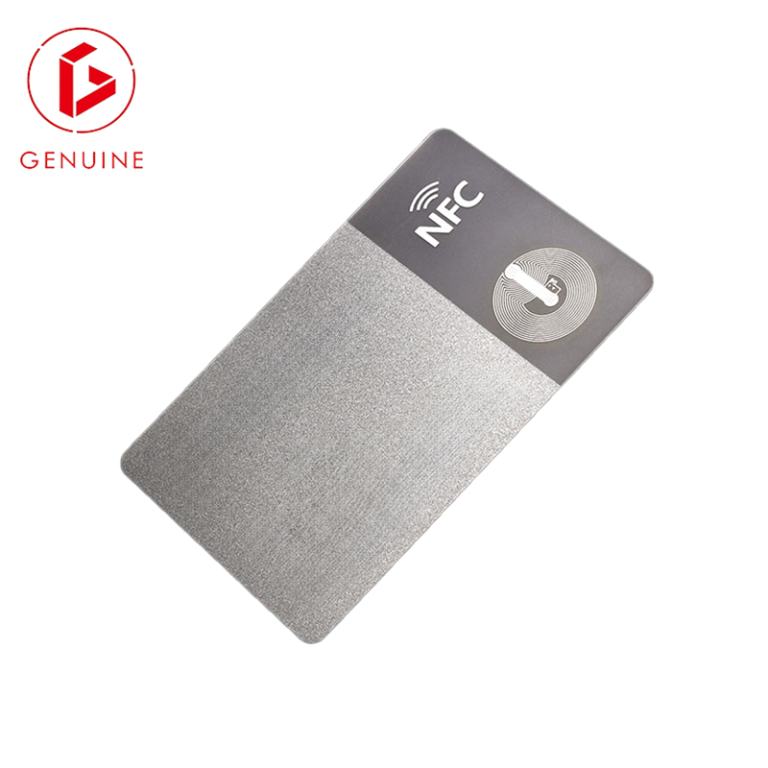
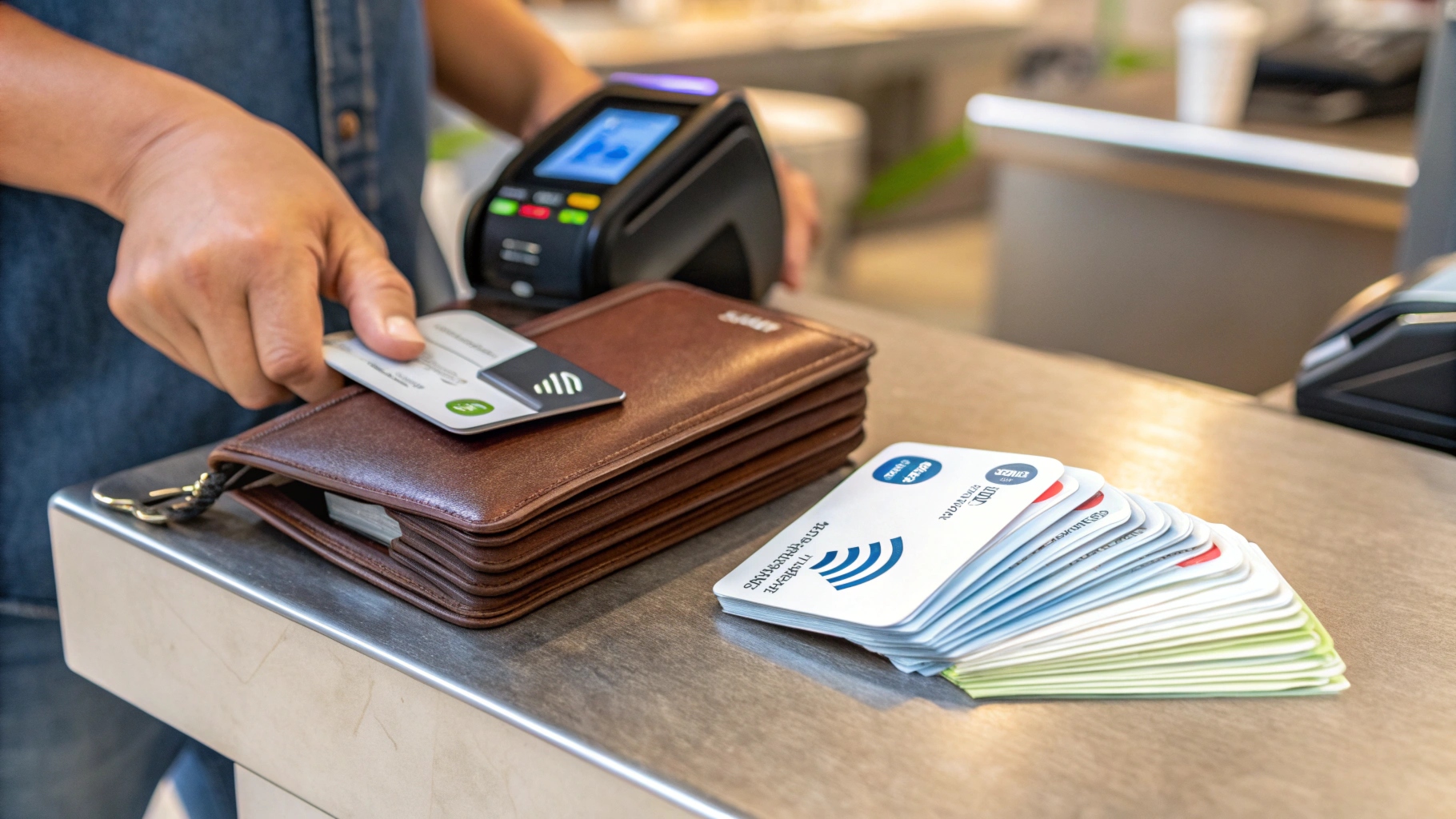
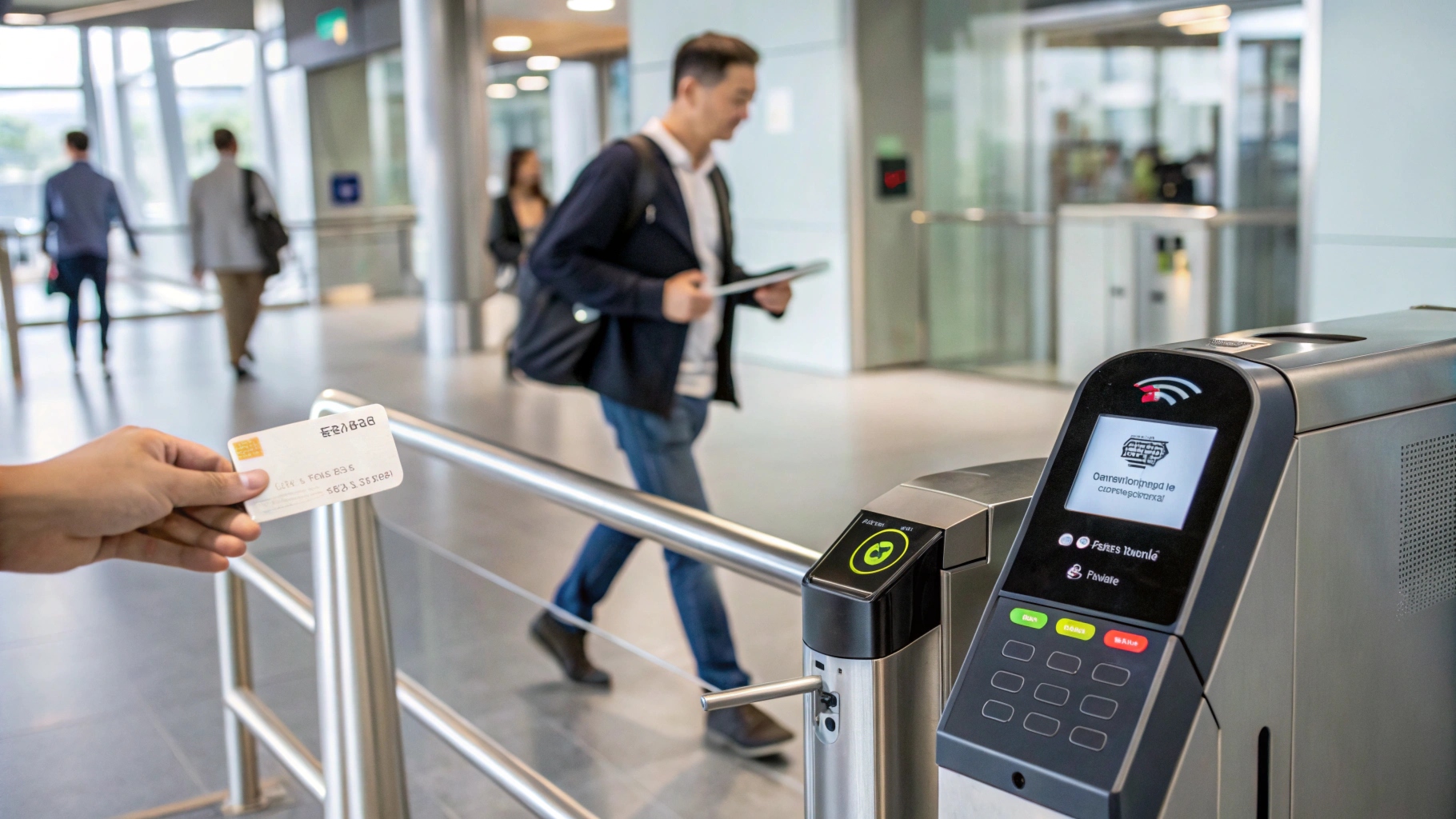
- Contactless 13.56 MHz (ISO/IEC 14443): reads through gloves, at arm’s length, and supports mutual authentication and encryption on a secure element.
For clinical use, contactless 13.56 MHz (ISO/IEC 14443) is the default — it reads through gloves and at arm’s length, exactly when hands are full or contaminated. Where an estate still mixes older readers, a dual-interface card (one chip, both contact and contactless) carries you across the transition without a re-issue. The chip itself matters: match EEPROM, interface and secure-element credentials to the application, as we set out in the smart card chip selection guide. Spec the standard explicitly in the RFQ — see ISO/IEC 14443 for the contactless baseline.
Built for the clinical environment: durability and cleaning
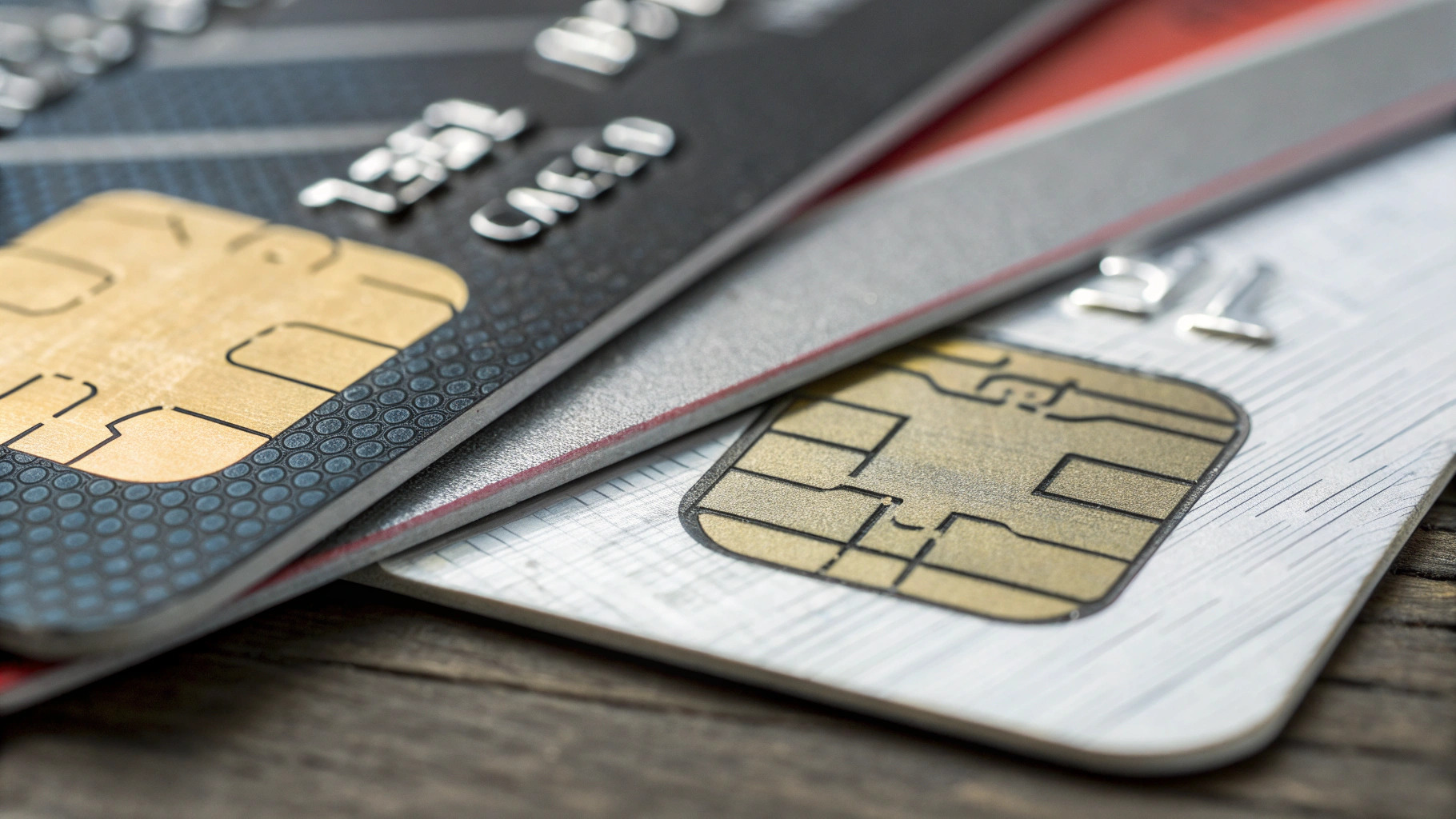
Hospital cards live a harder life than office badges. They are wiped with alcohol gel, dropped in sinks, clipped to lanyards that snap, and re-scanned dozens of times a shift. A card that delaminates after a week of ward cleaning is both a re-issuance cost and a security gap — the chip or antenna can fail exactly when access is needed. A card that delaminates after a week of ward cleaning is a re-issuance cost and a security gap. Specify composite bodies (PVC/PET-G, or polycarbonate for long-life credentials) and edge-to-edge personalisation so the printed layer cannot peel.
Turn “durable” into a number: write the relevant ISO/IEC 10373 durability tests (flex, temperature, chemicals, abrasion) into the contract with sample sizes and an acceptable failure rate, and run incoming inspection against the approved sample. Our card durability testing guide shows the exact clauses to copy into an RFQ, and ISO/IEC 7810 defines the ID-1 dimensions and tolerances your cards must hold to keep fitting readers and holders.
Privacy by design: HIPAA and the minimum necessary on a badge
A healthcare card sits in public view, so privacy is a design constraint, not a footnote. HIPAA does not forbid a name on a badge — but it does require that the minimum necessary information travels with the card. Keep staff badges to name, role and photo; do not print dates of birth, medical record numbers or specialties that reveal a clinician’s patient panel. For patient identifiers, carry only what point-of-care matching needs — often a non-sensitive barcode or a contactless UID linked to the record server-side, never the diagnosis on the card itself. The privacy review should be signed off by the same person who signs the access matrix.
For the regulatory baseline, the US HHS HIPAA pages remain the reference for the minimum-necessary standard; outside the US, apply the equivalent health-privacy statute. Whatever the jurisdiction, the test is the same: if a lost badge leaked its printed data, would it expose protected health information? If yes, the design is wrong.
A pre-procurement checklist for your healthcare card program
Before you release a purchase order, confirm these eight points with the supplier. They convert “we want safe cards” into a bid you can actually compare:
- Access matrix signed off by security and clinical leads, with one tier per population.
- Colour scheme and role text approved and reproducible across re-orders.
- Encoding standard named in the RFQ — default to ISO/IEC 14443 contactless, dual-interface if the estate is mixed.
- Durability spec citing ISO/IEC 10373 tests, sample sizes and an acceptable failure rate.
- Privacy review completed — minimum-necessary data only, no PHI on patient-facing staff badges.
- Tamper-evidence (security laminate / hologram overlay) specified, not optional.
- Approved golden sample locked into the contract before volume production.
- Re-issue SLA and supplier certifications (ISO 9001 / relevant security certifications) stated.
Lock the approved sample into the contract before PO release — without it, every later dispute about colour, durability or encoding is your word against the supplier’s. The personalisation method (dye-sublimation, re-transfer or laser engraving) also affects how well the colour band and photo survive cleaning; our card personalization methods guide helps you specify the right one, and the issuance program guide shows how sampling and enrolment fit together.
Frequently asked questions
Should patients get a card or a wristband? For in-patient identification, a wristband is usually safer and harder to lose; a card format makes sense for outpatient or repeat-visit programs where the same identity logic (match at point of care, minimum data on the token) applies.
Is magstripe still acceptable in healthcare? Only as a backward-compatible fallback alongside contactless. On its own it is cloneable and contact-dependent, so it should not be the primary credential for clinical access.
Do we need polycarbonate cards? Not for every tier. Polycarbonate earns its cost for long-life, high-security credentials (clinical staff, multi-year programs); composite PVC/PET-G is often enough for shorter-cycle or temporary passes.
Ready to specify? Request a quote and pre-production samples from a supplier who can show the ISO 10373 test report and lock a golden sample before volume runs — it is the cheapest insurance against a credential program that quietly stops protecting the ward. Talk to our team about a healthcare-specific card spec.