A visitor walks out with a badge on a lanyard and forgets to hand it back. A contractor’s card stays active for six months after the fit-out finished. In most corporate security programs, the temporary credential — the one nobody formally owns — is the quietest, most exploitable gap in the entire perimeter. This guide walks enterprise security buyers through designing visitor and contractor badges that expire on schedule, announce themselves visually, and leave the audit trail your ISO 27001 or SOC 2 reviewer will ask for.

Why temporary credentials are the weakest link in your access program
Permanent staff cards usually sit inside a managed lifecycle: issued from a system of record, tied to HR status, and revoked automatically on termination. Temporary credentials rarely get that treatment. A visitor is waved through with a sticky note saying “return by 5pm.” A contractor badge is printed from a spreadsheet and forgotten the moment the project wraps. The result is a class of credentials that live far longer than their justification — and that nobody is watching.
The risk is not theoretical. An active contractor card left in the wild is a valid key to your building, often with the same reader permissions as the day it was issued. In the worst cases it is also a cloning target: a 125 kHz proximity badge can be skimmed and duplicated in seconds, turning a “temporary” pass into a permanent, deniable back door. A credential that is valid for one day but stays active for one year is not a temporary credential — it is an unmonitored entrance. Before you spec a single card, accept the first principle of temporary-credential design: the expiry is a control, not a courtesy.

Self-expiring badge stock: when a card that dies on schedule earns its keep
The most elegant answer to “will this badge outlive its welcome” is a badge that destroys itself. Self-expiring stock comes in a few forms: time-temperature ink that shifts colour after a set window, thermochromic patches that fade on a calendar date, and dissolvable paper substrates for very short engagements. None of these replace electronic revocation — but they add a physical failsafe that works even if your access software is asleep.
Use it where the consequence of a missed revocation is high and the population is high-turnover: data-centre aisles, R&D labs, sites with many one-day vendors. For a low-risk reception visit, the added cost rarely justifies itself. Treat self-expiring stock as insurance, not a default — it pays for itself the first time a badge quietly dies instead of quietly surviving. Whatever you choose, keep the physical card to a recognised baseline for size and durability so it survives a full shift in a pocket; the dimensional and material expectations are set out in ISO/IEC 7810:2019.

Colour-coded visual hierarchy: make “temporary” obvious at ten metres
A temporary badge only works if every employee, guard, and colleague can recognise it instantly. That means a visual system built for distance and stress, not for the fine print on the card. The proven pattern is a colour assignment everyone memorises: red for visitor, yellow for contractor, blue for staff, with a bold “VISITOR” or “CONTRACTOR” banner and no attempt at subtle. Photographs help for escorted visitors; for high-volume sites, a clear colour block outperforms a tiny headshot nobody can see across a lobby.
Avoid the two classic failures: colour schemes that only make sense up close, and “temporary” badges that look almost identical to staff cards. If a guard cannot tell a visitor from an employee at ten metres, your colour system has failed — and a failed visual control is worse than none, because it creates false confidence. Test the scheme on the actual floor at the actual light levels before you print ten thousand.

Escort rules and zone logic: policy that actually contains contractors
A badge is only half the control. The other half is where the person may go, and with whom. Build a simple zone model — public, semi-restricted, restricted — and attach an escort rule to each. Visitors stay in public and semi-restricted zones with a named host. Contractors in restricted zones are escorted by a vetted owner for the duration of the task. One-day and multi-day contractors get different treatment: the former are signed in and out per visit, the latter carry a dated, scoped approval that is reviewed on a fixed cadence.
Write the rule so movement is the exception you grant, not the right you assume. The safest default is “always escorted” — freedom of movement is the privilege you award case by case, never the starting position. Pair the policy with a signed acknowledgement at issuance so there is no ambiguity later about what the contractor agreed to. How this fits into the wider credential lifecycle — enrollment, personalisation, and revocation SLAs — is covered in our guide to building an ID card issuance program.
Technology choice: barcode, magstripe, LF/HF RFID or NFC for visitor and contractor cards
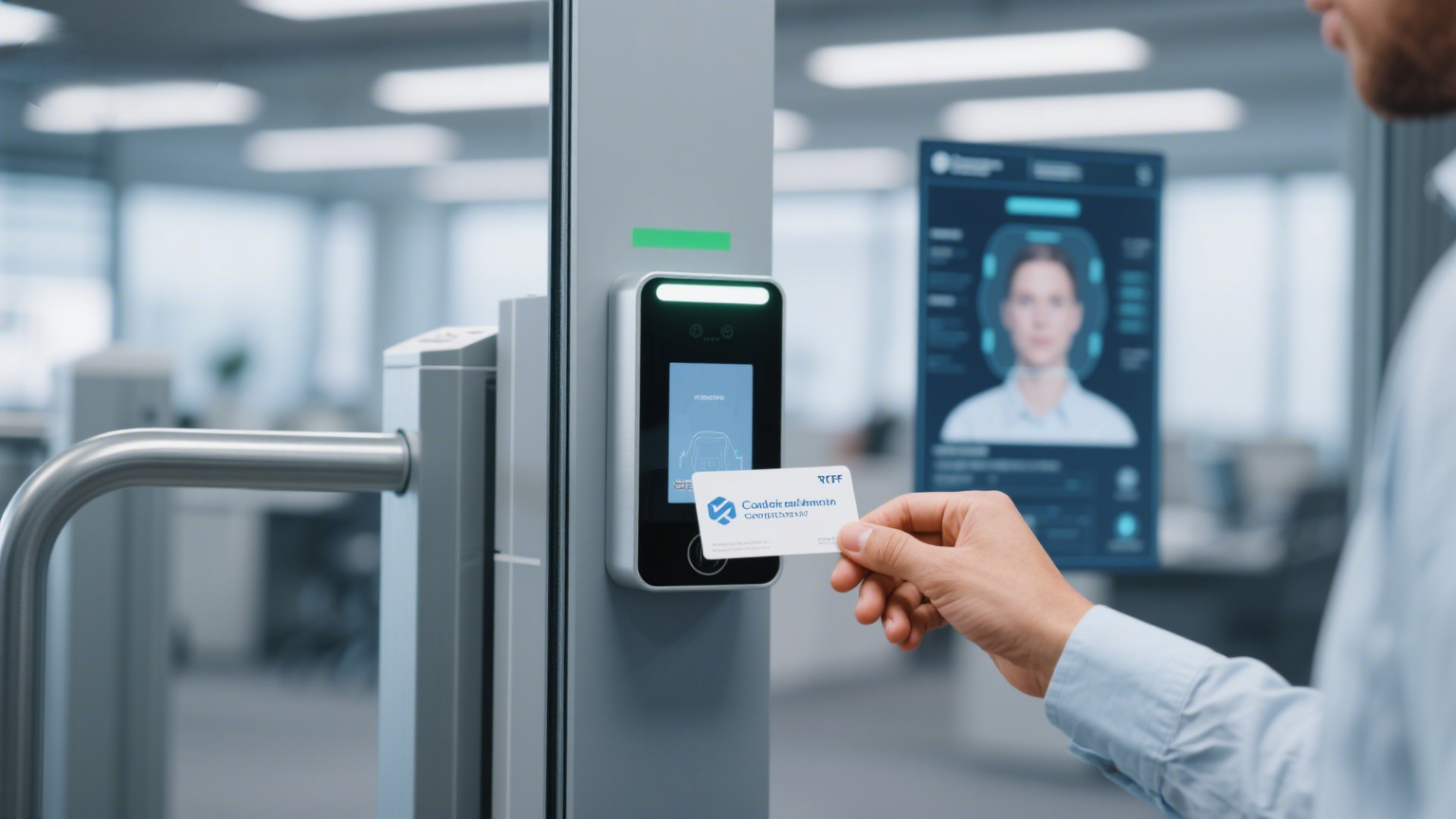
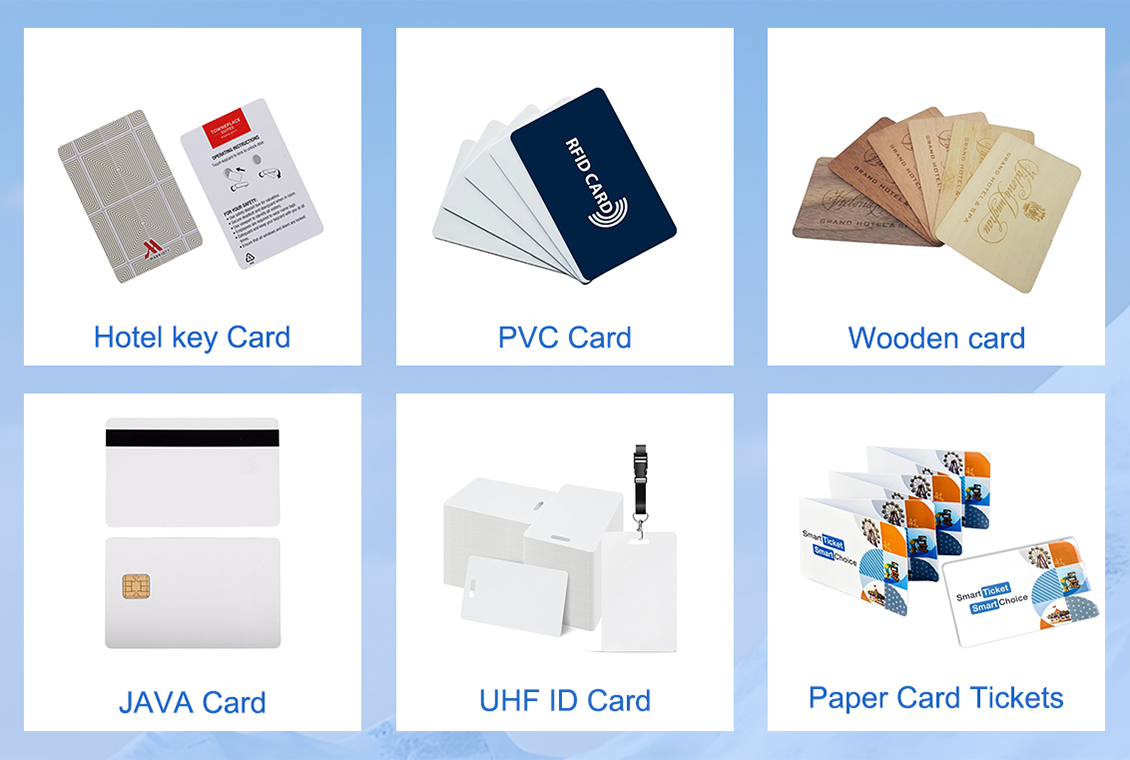
The technology under the surface decides how enforceable your expiry really is. A barcode is cheap and needs line of sight, but anyone can photocopy it. A magstripe is legacy and easily read or cloned. Low-frequency 125 kHz proximity is still widespread and dangerously simple to duplicate. High-frequency 13.56 MHz and NFC — built on ISO/IEC 14443 — let you issue encrypted, mutating credentials (such as MIFARE DESFire) where the serial number alone cannot be replayed, and where an expiry can be enforced at the reader rather than hoped for on the card.
For most visitor desks, a barcode or NFC tap is plenty and keeps cost down. For any contractor touching restricted zones, a plain 125 kHz prox badge is the wrong tool — it is trivially cloned and cannot carry an expiry you can actually enforce. Match the technology to the risk, not to the cheapest reader you already own. The full trade-off between RFID, NFC and BLE on a card is broken down in our smart card wireless interface guide, and reader-compatibility traps are covered in the employee ID card buyer’s guide.
Reclaim rates and audit evidence: proving the control to ISO 27001 and SOC 2 auditors
A temporary-credential program is only as good as your ability to prove it ran. The single metric that matters most is the reclaim rate — badges returned divided by badges issued. A program that cannot tell you it recovered 95% of yesterday’s visitors cannot claim control of the building. Track it daily, publish exceptions, and treat a missing badge as an incident, not a nuisance. Sign-in and sign-out logs, escalation on non-return, and a defined records-retention period turn an informal process into evidence.
This is where temporary credentials meet your broader compliance posture. Physical access controls map directly to ISO/IEC 27001 Annex A and to the SOC 2 Trust Services Criteria for security and confidentiality. For government-adjacent programs, the lifecycle discipline expected of issued credentials is spelled out in NIST SP 800-116 Revision 1. An access program you cannot measure is an access program you cannot defend — track reclaim rate like you track uptime, and keep the records an auditor can pick up.
Frequently asked questions
- How long should a visitor badge stay valid? One working day, by default. Issue it dated, scope it to the host and the zones, and require physical return at the reception desk the same day. Self-expiring stock is the backup, not the primary control.
- Do contractor badges need a photo? For escorted, short visits a colour-coded banner is often enough. For multi-day or restricted-zone contractors, a photo plus a named approver turns the card from “a pass” into “an accountable identity.”
- Is a self-expiring badge worth the cost? For high-turnover or high-consequence sites, yes — it is the cheapest insurance against a missed revocation. For a quiet reception, a disciplined sign-out process achieves most of the value at a fraction of the cost.
- What reclaim rate should we target? Aim for above 95% as a daily operational metric, and investigate every exception. A rate that quietly drifts downward is an early warning that the whole program is slipping.
- Which standard covers temporary credential records? There is no single “temporary badge” standard, but the controls live inside ISO/IEC 27001 (physical access), SOC 2 (security and confidentiality), and NIST SP 800-116 for credential lifecycle discipline.
What to do next
Designing visitor and contractor badges is a procurement and policy decision, not an afterthought at the reception desk. Start by mapping your zones, setting a hard default expiry, and picking a technology you can actually enforce. If you want cards that meet a real durability and encoding baseline — and a supplier who can show you samples before you commit — talk to our team or review how to source smart cards without quality risk.