Most B2B buyers spec a card by material, chip, and frequency—then hand the factory an open brief on how it should actually be printed. That gap is where budgets slip and field failures start. The printing method and surface finish decide edge-to-edge coverage, abrasion resistance, and per-card cost just as much as the PVC or polycarbonate underneath. This guide gives procurement and product teams a practical way to brief a supplier on card printing methods and finishes—and avoid paying for a process you don’t need.
Dye-Sublimation: The Mid-Volume Workhorse
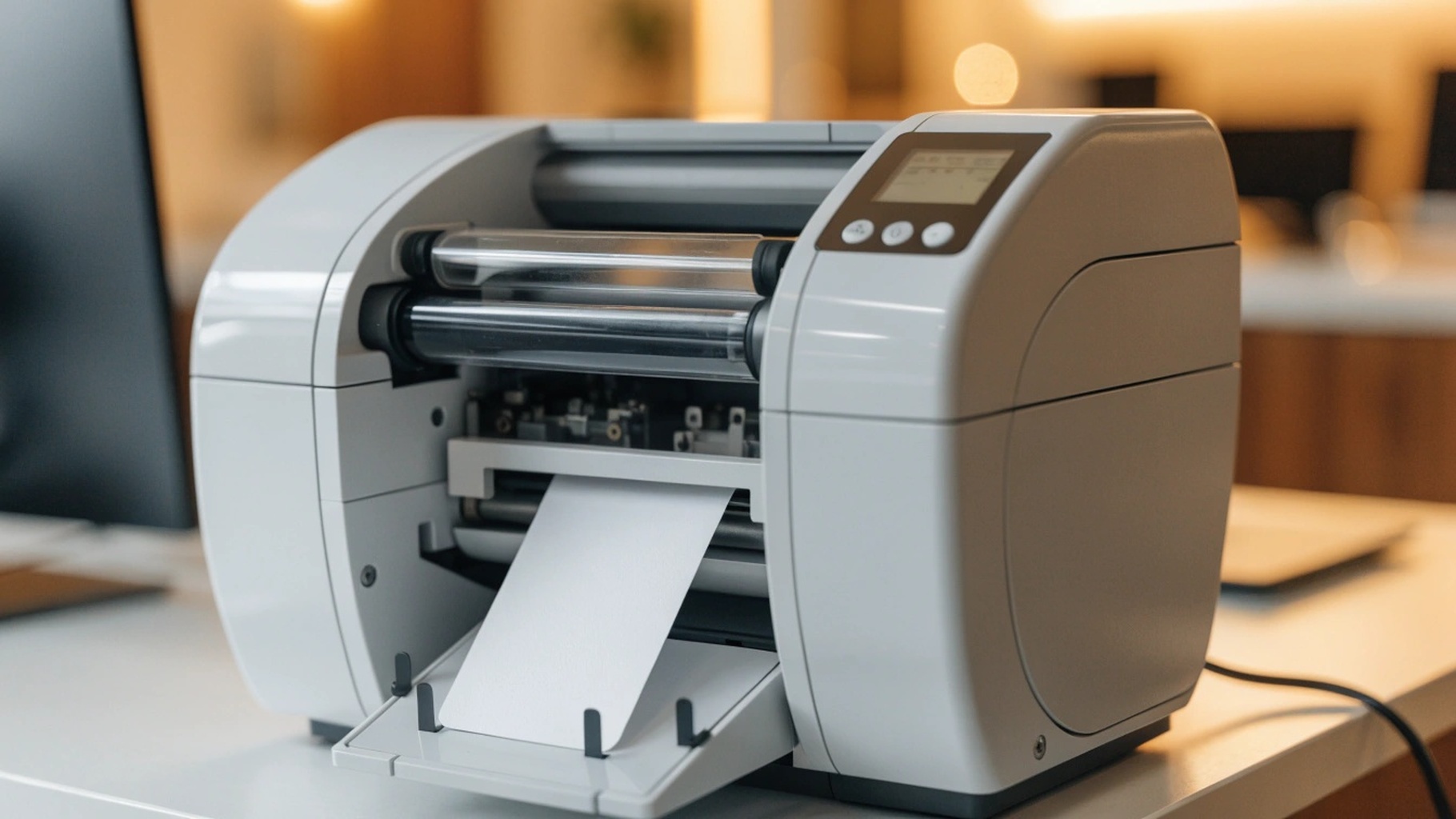
Thermal dye-sublimation vaporizes dye panels into the card surface, producing smooth, photo-quality color at a low per-card ribbon cost. For runs of a few hundred to tens of thousands, it is usually the cheapest route to a professional-looking employee badge, membership card, or loyalty card. The trade-offs are real: most direct-to-card dye-sub leaves a 1–2 mm unprinted border, and the image sits in the surface rather than on top, so it wears faster under daily friction than a retransfer print. If your program is indoor, low-abuse, and color-rich, dye-sub is the rational default—see how it compares with other card personalization methods before you commit.
Retransfer: Edge-to-Edge Coverage and the Durability Benchmark
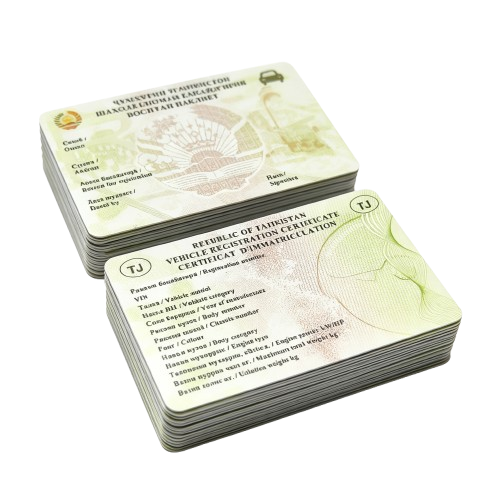
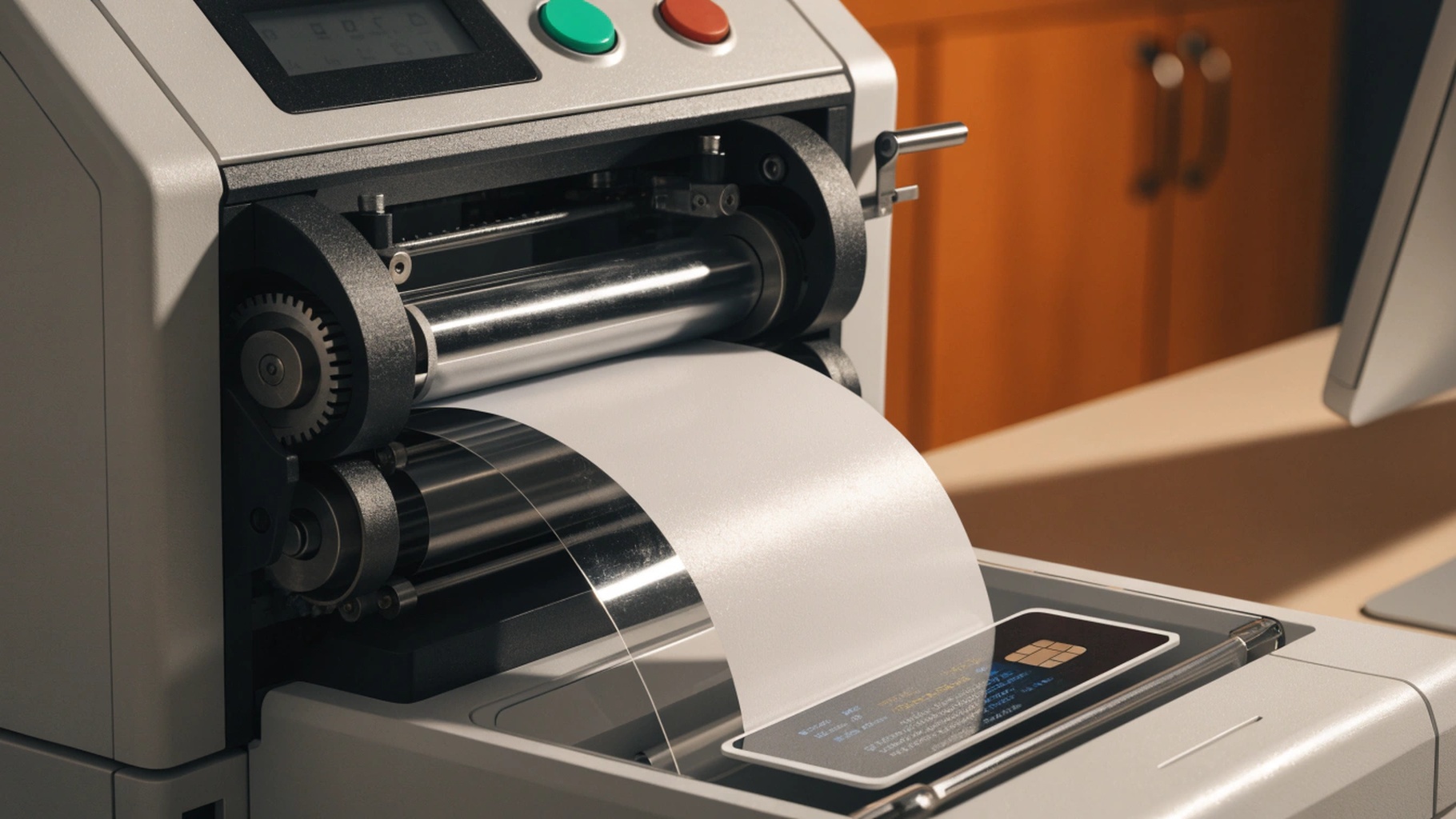
Retransfer printers lay the image on a clear transfer film, then fuse it onto the card in a second pass. That two-step process delivers true edge-to-edge coverage and, critically, conforms over the bumps of a contact chip or an embedded RFID inlay—something direct printing cannot do cleanly. Because the image is protected by the film and card body, retransfer prints resist abrasion, chemicals, and sunlight far better, which is why it is the standard for government ID, contactless smart cards, and transit credentials. Expect a higher per-card cost and slower throughput, but a longer field life. The underlying inlay and lamination steps are covered in how smart cards are made.
Durability claims should be verifiable, not marketing. Insist that wear performance is measured against ISO/IEC 10373 abrasion and chemical-resistance tests with a stated pass threshold, so a “durable” card means the same thing to you and to the factory.
Inkjet and Direct-to-Card: Speed for Variable Data
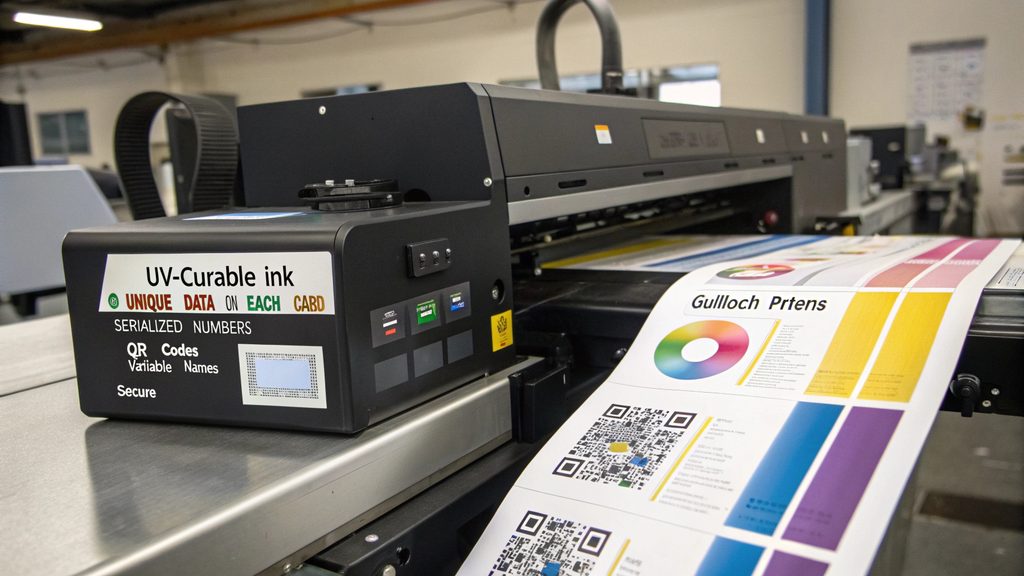
Industrial inkjet—especially UV-curable—excels when every card carries unique data: serialized numbers, QR codes, variable names, or secure guilloché patterns. UV ink bonds hard and cures instantly, giving durability that rivals retransfer without a thermal ribbon. The caution is adhesion: ink on a glossy or coated surface may need a primer or a protective overlaminate, and color consistency across a long run demands a managed ICC profile. For secure, high-speed variable printing, inkjet is increasingly the method of choice, and GlobalPlatform publishes the personalization and lifecycle specifications most issuers align to.
Offset and Screen Printing: Economics at Volume
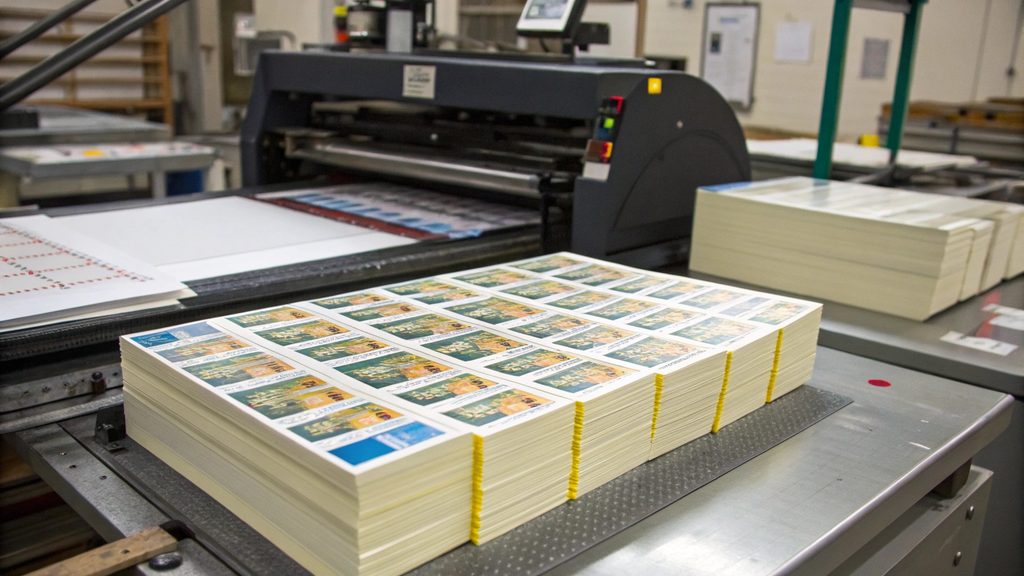
For pre-printed stock at very high volumes—think millions of loyalty shells or blank transit blanks—offset lithography and screen printing win on unit cost. Plates and screens carry setup cost, but per-card price collapses once the artwork is static. These methods are not for variable data; the usual pattern is to offset-print the common artwork, then personalize variable fields later with dye-sub, retransfer, or inkjet. If your program is large and stable, offset pre-printing plus digital personalization is the most cost-efficient split. The Secure Technology Alliance tracks adoption and best practice across these high-volume personalization models.
Surface Finishes Decoded: Gloss, Matte, and Frosted
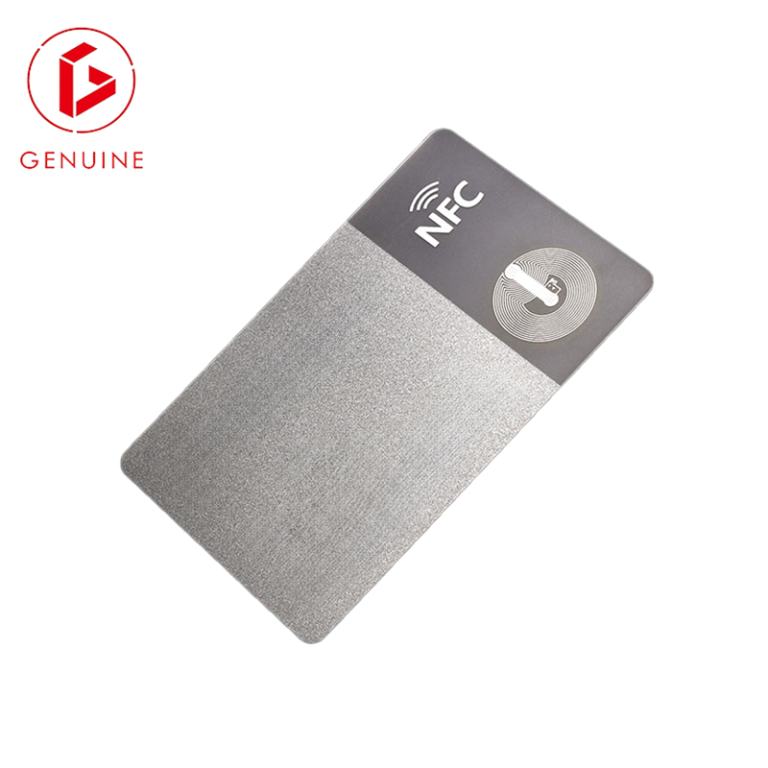
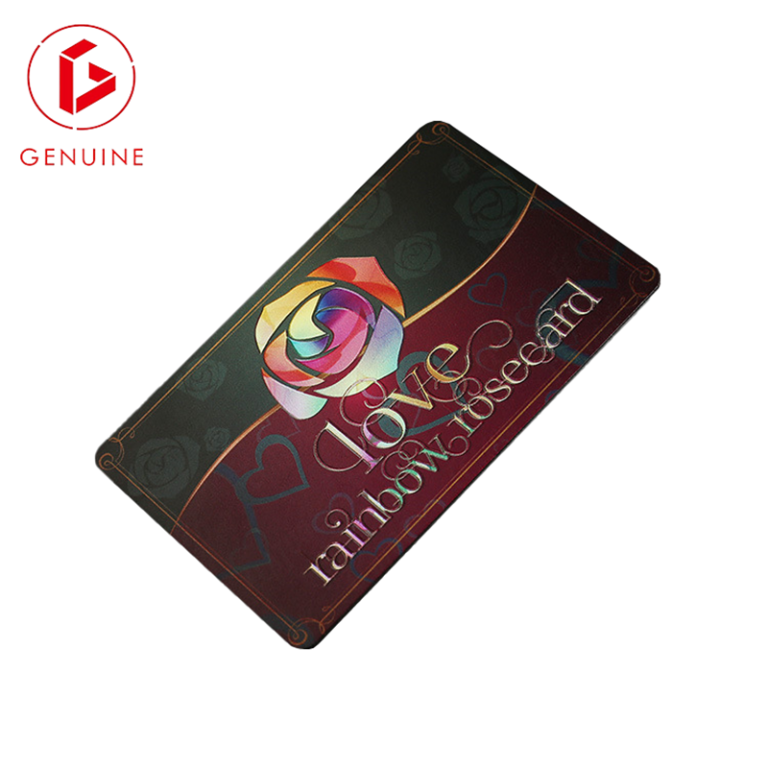
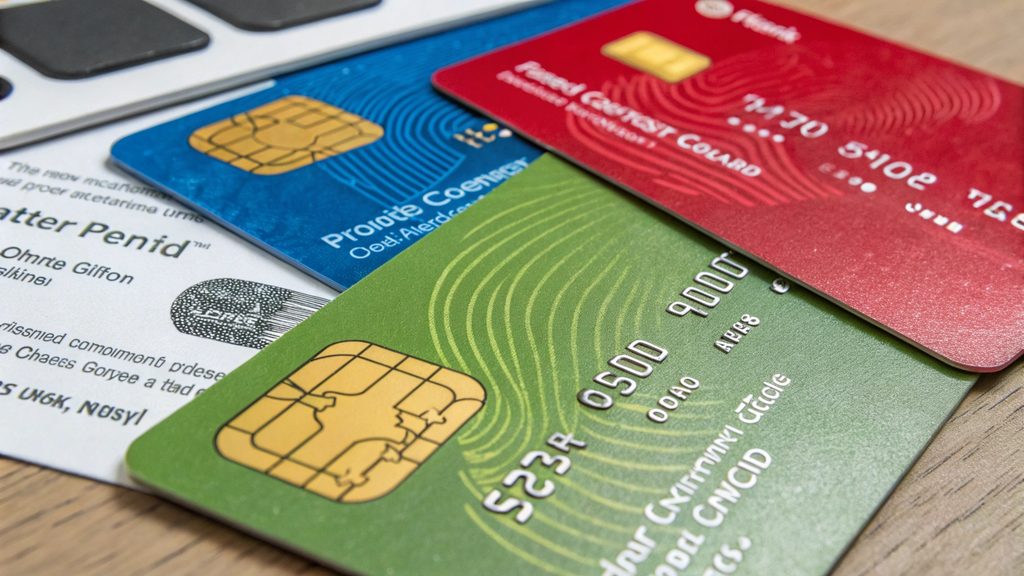
The finish is not cosmetic—it changes usability and security. Gloss makes colors pop but shows scratches and fingerprints and can glare under scanners. Matte cuts glare, takes a pen for temporary notes, and hides wear, which is why it dominates access and government cards. Frosted or textured finishes add a tactile, premium feel and are harder to counterfeit by photocopy. Finish also affects laminate adhesion and barcode/MRZ readability, so it must be specified alongside the print method, not after. Physical card dimensions and tolerances are set by ISO/IEC 7810, the baseline every finish must still meet.
Matching Method and Finish to Your Use Case
Use this quick map to brief your factory, and pair it with the right card body—material choice drives which method is even viable, as explained in our polycarbonate vs PVC vs PETG guide:
- Government e-ID / PIV: retransfer + matte or textured, with overlay laminate—durability and tamper evidence.
- Contactless access / transit: retransfer + matte—conforms over the inlay, survives daily tapping.
- Employee / membership / loyalty: dye-sub + gloss (indoor, cost-first) or retransfer + matte (abuse-prone).
- High-volume pre-printed shells: offset/screen + frosted, personalized later.
- Secure variable-data credentials: UV inkjet + protective overlaminate.
The wrong pairing—gloss on a scanned ID, dye-sub on a chipped card—is the most common, and most expensive, brief error.

How to Brief Your Factory: A Printable Spec Checklist
Send your supplier a one-page spec that removes ambiguity:
- Print method (dye-sub / retransfer / inkjet / offset) and the reason for choosing it.
- Color profile and match standard (Pantone or CMYK target).
- Edge coverage requirement (full-bleed vs bordered).
- Surface finish (gloss / matte / frosted) and overlaminate.
- Durability acceptance: cite ISO/IEC 10373 abrasion and chemical tests with a pass threshold.
- Machine-readable elements: confirm barcode/MRZ readability to ISO/IEC 7810 and ISO/IEC 15415.
- Sample approval: require a signed-off physical proof before the full run.
- Volume tiers and price breaks so the method matches your MOQ.
A precise brief is what separates a card that looks right in the showroom from one that still reads after two years in a wallet. Whether you personalize in-house or outsource is a separate decision—our card printer buying guide walks through the build-vs-buy trade-off, and FICAM documents the federal card-construction requirements many enterprise programs mirror.

Pick the method and finish from the use case, write it into the spec, and validate with a physical sample. That is the shortest path from “a card” to a credential your program can actually rely on.