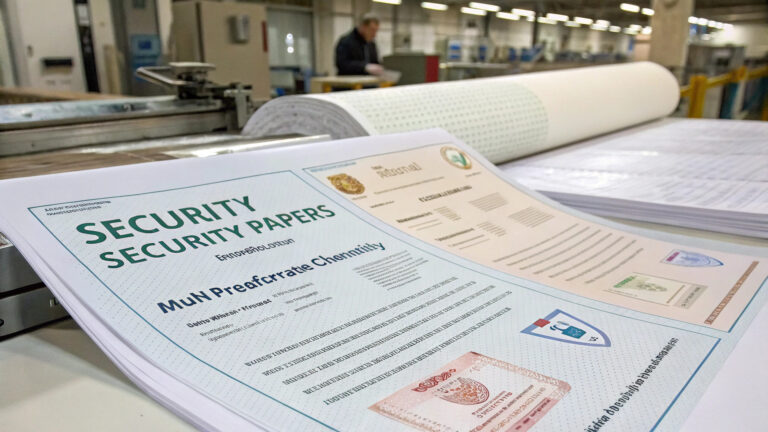
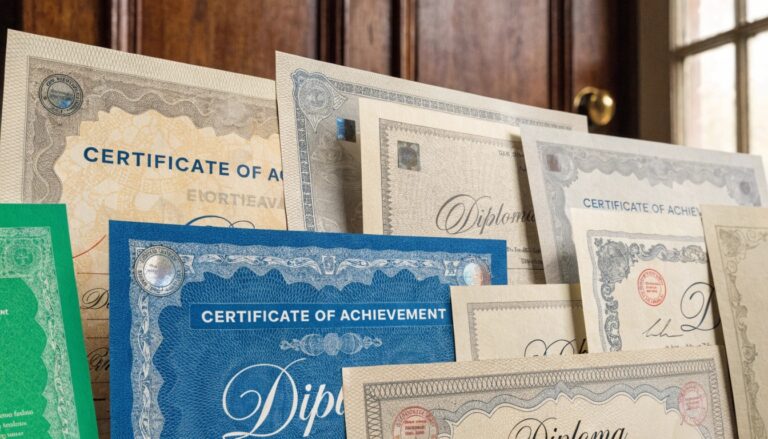
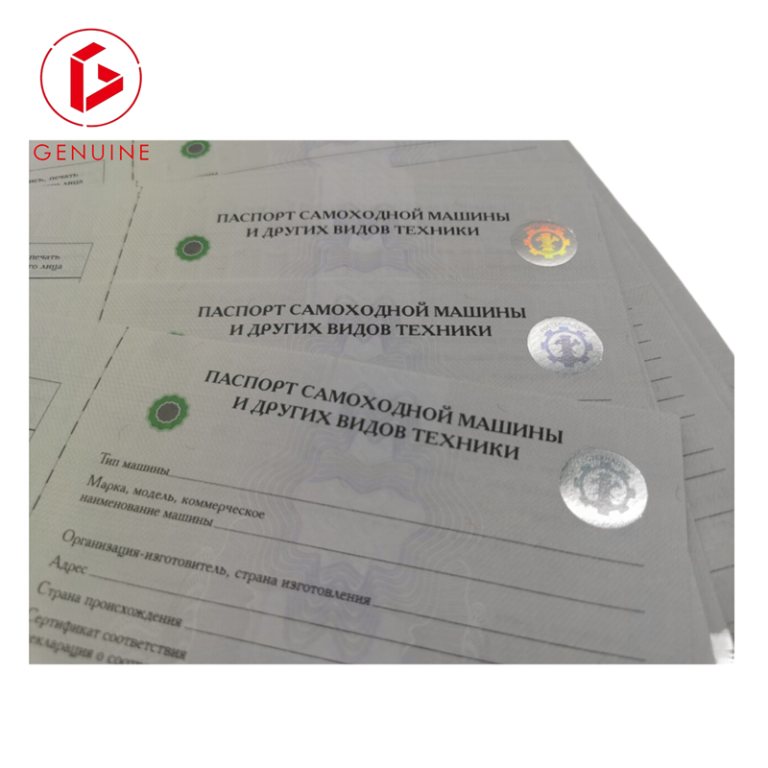
How do you source certified anti-counterfeit paper without overpaying by 30% or triggering a six-figure compliance penalty? For procurement teams, that question is where margin, legal exposure, and brand protection all collide at once.
Drawing on more than a decade of manufacturing security materials for regulated industries, we have watched buyers make the same avoidable mistakes: paying premium prices for features they never needed, or saving a few cents per unit only to lose a contract to a failed audit. With counterfeit-related losses exceeding $45 billion worldwide in 2024, the cost of getting anti-counterfeit paper procurement wrong is no longer just operational — it is existential. This guide gives you a buyer-side playbook to cut material spend by 20–30%, avoid $1M+ compliance fines, and tap government subsidies most suppliers never mention.
- Cut costs by 20–30% on high-security materials by matching the security tier to actual risk
- Avoid $1M+ compliance fines tied to certification gaps and hazardous-waste rules
- Leverage government subsidies for sustainable and recyclable sourcing

Cost Breakdown: What You Are Actually Paying For
The single biggest source of overspend is buying a higher security tier than your product risk requires. Before you compare quotes, understand what each price band actually delivers — and where the hidden charges hide.

Pricing Tiers Explained
| Certificate Type | Price Range | Key Features |
|---|---|---|
| Basic | $0.11–$0.21/unit | Watermarks, QR codes, GB/T 22258 compliance |
| Advanced | $0.42–$1.12/unit | RFID chips, holographic films, ISO 14298-certified printing |
Watch the hidden costs that rarely appear on the first quote:
- Testing fees: toxicity screening under REACH/RoHS can add roughly $3.50/unit for regulated end-uses
- Custom tooling: tamper-evident molds and dies typically run $1,200+ as a one-time charge
- Minimum order quantities: low MOQ flexibility often carries a 10–15% unit premium
Buyer’s tip: consolidating orders of magnetic security threads (12–18 mA signal strength) can reduce material costs by around 18%. If total cost of ownership is your priority, our data-driven guide to reducing security paper TCO by 18–30% breaks down where bulk buyers realistically find savings.
Compliance Risks: Real Cases and Real Penalties
Non-compliant sourcing rarely fails quietly. It surfaces during an audit, a customs inspection, or an environmental review — usually after the paper is already in your product. Two failure modes account for most buyer losses.

Contract Nullification
A Zhejiang medical supplier lost a $1.1M government contract after audits revealed non-compliant paper lacking GS1 barcodes. The lesson for buyers: certification is a purchase requirement, not a nice-to-have. Insist that suppliers hold:
- ISO 14298 certification for security printing process management
- CQC Mark — a qualification only a small number of Chinese factories currently hold
- GS1-compliant barcodes for traceability across regulated supply chains
Environmental Violations

A Shandong hospital was fined $99K for disposing of antibiotic-labeled paper as regular waste — classified as HW01 hazardous material under China’s 2025 National Hazardous Waste List. For pharmaceutical-grade and medical applications, disposal liability is part of your procurement decision. Partner with mills that offer documented incineration or take-back agreements so the compliance chain does not end at your loading dock. To screen out risky vendors before you sign, our supplier verification guide shows the red flags that separate genuine mills from resellers.
Government Subsidies: How to Claim Them
Sustainability incentives are one of the most overlooked levers in security paper budgeting. China’s 2025 Quality Infrastructure Fund and related regional programs can meaningfully offset the premium on eco-friendly materials:
- R&D grants: up to $41K for blockchain and AI anti-counterfeit technology adoption
- Tax breaks: a 15% VAT reduction for qualifying recyclable materials
- Regional incentives: Guangzhou covers up to 25% of biodegradable material costs
The practical move is to ask suppliers, at the RFQ stage, which of their materials and processes already qualify for these programs — a capable manufacturer will help you structure the order to capture them rather than leaving the paperwork to you.

Your Anti-Counterfeit Paper Procurement Checklist
Use this four-step checklist on every order to protect both your budget and your compliance record:
- Verify certifications: demand valid ISO 14298 and CQC documentation, and confirm the certificate numbers directly with the issuing body
- Test samples: run accelerated aging (72 hrs at 85°C / 85% humidity) to confirm durability before committing to volume
- Use hybrid solutions: apply low-cost QR codes (~$0.07/unit) for low-risk items and reserve RFID for high-value products — see our 2025 technology comparison to match features to risk
- Audit suppliers: prioritize A-grade mills with defect rates at or below 0.3%, and cross-check them against the national standards in our security paper procurement guide

Frequently Asked Questions
How much can bulk ordering realistically reduce anti-counterfeit paper costs?
Most B2B buyers see 18–30% total-cost savings through a combination of volume consolidation, matching security tier to risk, and standardizing on a single certified substrate across product lines. The savings come less from a lower unit price alone and more from eliminating over-specification and redundant tooling.
Which certifications are non-negotiable for security paper suppliers?
ISO 14298 for security printing management and, for the Chinese market, the CQC Mark are the baseline. For traceability in regulated supply chains, GS1-compliant barcoding is increasingly expected. Always validate certificate numbers with the issuing organization rather than accepting a supplier’s PDF at face value.
When should I choose RFID over QR codes or watermarks?
Reserve RFID for high-value or high-liability products where item-level tracking justifies the cost. For low-risk items, QR codes and watermarks deliver strong deterrence at a fraction of the price. A hybrid approach across your catalog usually gives the best security-per-dollar.
How do I avoid compliance fines when disposing of security paper?
For pharmaceutical, medical, or chemically treated paper, confirm the correct hazardous-waste classification in your jurisdiction and build disposal into the supplier contract via documented incineration or take-back agreements. Treating end-of-life as part of procurement is what keeps you off the wrong side of a HW01-style penalty.
Conclusion: Turn Procurement Into a Competitive Advantage
With 57% of counterfeit seizures involving forged certificates, non-compliant sourcing is a risk your supply chain cannot afford to carry. But procurement done well is more than damage control — matching security tiers to real risk, verifying certifications, and capturing available subsidies turns anti-counterfeit paper from a cost line into a source of margin and trust.

Ready to audit your supply chain? Book a free consultation and we will help you benchmark your current security paper spend, close compliance gaps, and identify subsidies you may be leaving on the table.