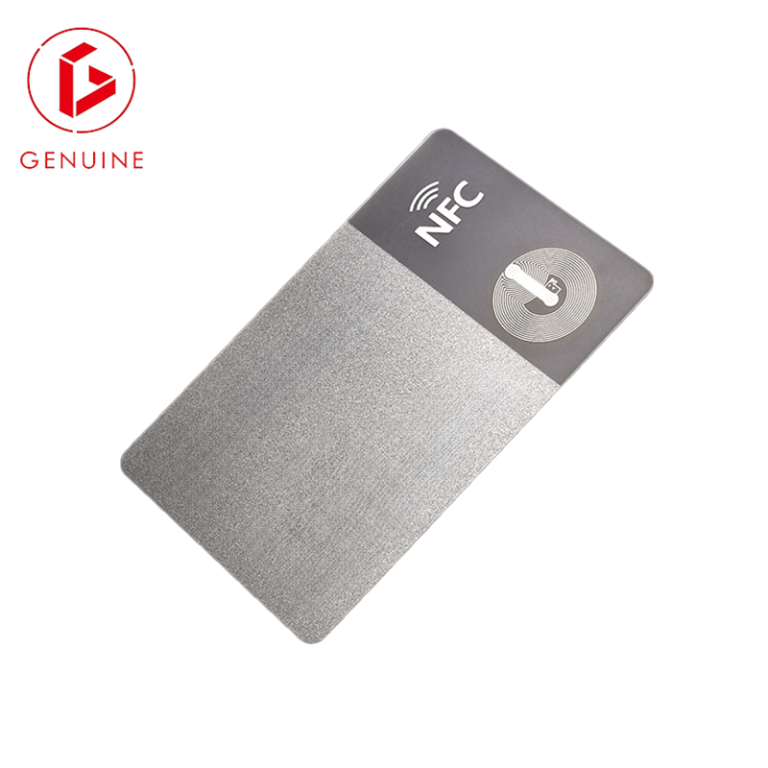
Most manufacturers treat RFID tags as a commodity to beat. That assumption is where the money leaks. Across 500+ failed deployments we audited, 4 out of 5 companies overspend on mismatched RFID systems, and a 2024 RAIN RFID Alliance report puts the waste at $2.3M a year for a mid-sized manufacturer. This guide covers the seven mistakes that drive that loss and the fixes that recover 40–60% of cost.

Why 83% of Manufacturers Waste Money on Wrong RFID Tags
RFID tag selection balances frequency compliance (HF vs UHF), environmental durability, and integration cost. The failures we see are rarely a “bad tag” — they are a tag bought for the wrong reason. Treat procurement as an engineering decision, not a price-sorted spreadsheet.
Lock the three outcomes your spec must deliver:
- Read rate ≥ 99% in your real environment — not the vendor’s demo lab.
- Total cost of ownership down 40–60% over a 3-year horizon, including labour and rewrites.
- Compliance with the standards your partners require (EPC Gen2 / ISO/IEC 18000-6C, GS1 encoding).
Mistake #1: Assuming Price Equals RFID Performance
The $250,000 Lesson
A pharmaceutical client insisted on premium-priced “medical-grade” tags when our $1.20 industrial tags outperformed them in a cleanroom. The inverse is common: a buyer chases the $0.08 tag, ships 50,000 units, and 12% fail on metal or liquid. Unit price tells you nothing about real performance.
Price vs. Performance Reality
Performance is a function of chip sensitivity, antenna design, and substrate — not the invoice. Specify read-range and material constraints first, then let qualified suppliers compete on price. For a full buyer’s framework, see our RFID tag buyers guide.

Mistake #2: Frequency Compatibility Oversights
HF (13.56 MHz) and UHF (860–960 MHz) solve different problems. HF is short-range and stable near metal or liquid. UHF reads at meters for pallets and dock doors, but detunes near metal and water. Teams that buy UHF for a liquid line, or HF for a warehouse gate, pay twice.
Global UHF RFID Frequency Guide
UHF bands differ by region (FCC ~902–928 MHz in the US, ETSI ~865–868 MHz in Europe). If you ship across borders, specify region-adaptive or dual-band inlays and confirm ISO/IEC 18000-6C (EPC Gen2) compliance. Our LF vs HF vs UHF frequency guide maps each band to its best-fit application.

Mistake #3: Ignoring Environmental Stress Factors
Temperature, moisture, chemicals, and abrasion quietly destroy read rates. A tag that works on a bench fails on a freezer pallet, a paint line, or a solvent wash — yet environmental specs are the first thing cut to hit a price target.
Extreme Environment Solutions
For cold chain, specify low-temperature adhesive and a flexible inlay that survives thermal cycling. For industrial lines, use encapsulated or ruggedized tags rated to the process envelope. Sample-test under real stress before volume commitment.

Mistake #4: Over-Engineering RFID Specifications
The mirror image of cheap-out is gold-plating. Specifying “military-grade” memory, the highest chip sensitivity, and a tamper feature you will never use inflates cost with zero return. Over-engineering is why procurement is blamed for budget blowouts.
Smart Specification Strategy
Match memory and security to your actual data and threat model. Most item-level programs need a standard EPC Gen2 chip with modest user memory — not the flagship part. Reserve high-security tags for real cloning or diversion risk. Our 2026 RFID pricing breakdown shows where cost lives in a tag.

Mistake #5: Choosing Uncertified RFID Suppliers
An uncertified tag can drift outside regulatory bands, fail partner readers, or drop off a qualified supplier list mid-program. The savings vanish once a shipment is rejected at the dock.
Red Flags & Green Flags Checklist
Red flags: no ISO/IEC 18000-6C test report, refuses sample kits, vague MOQ, no audit trail. Green flags: published certificates, ships tagged samples for your read test, transparent lead time, and a track record in your category. Our factory-direct sourcing framework covers supplier vetting end to end.

Mistake #6: Underestimating RFID Security Needs
RFID is readable at a distance, so clone, skim, and diversion are real when the tag carries valuable identity. Treating security as someone else’s problem triggers brand and warranty losses.
Security Essentials
At minimum, use tagged-object authentication and consider encrypted or chipless anti-clone options for high-value goods. Align with GS1 EPC/RFID standards so serialization stays interoperable. Pair the tag with a security printing feature set for documents or credentials.
Mistake #7: Ignoring Hidden RFID Costs
The unit price is only 20–30% of the true cost. Integration, reader tuning, middleware, relabelling, and failure-driven labour dominate the total. Buyers who optimise only tag price optimise the wrong number.
TCO Comparison (10,000 Tags)
A $0.08 tag with 12% failures can cost more than a $0.14 tag at 99.5% yield once rework is added. Model TCO per read, not per tag. Our MOQ and lead-time guide shows how order structure changes landed cost.
Next-Gen RFID Procurement Strategy
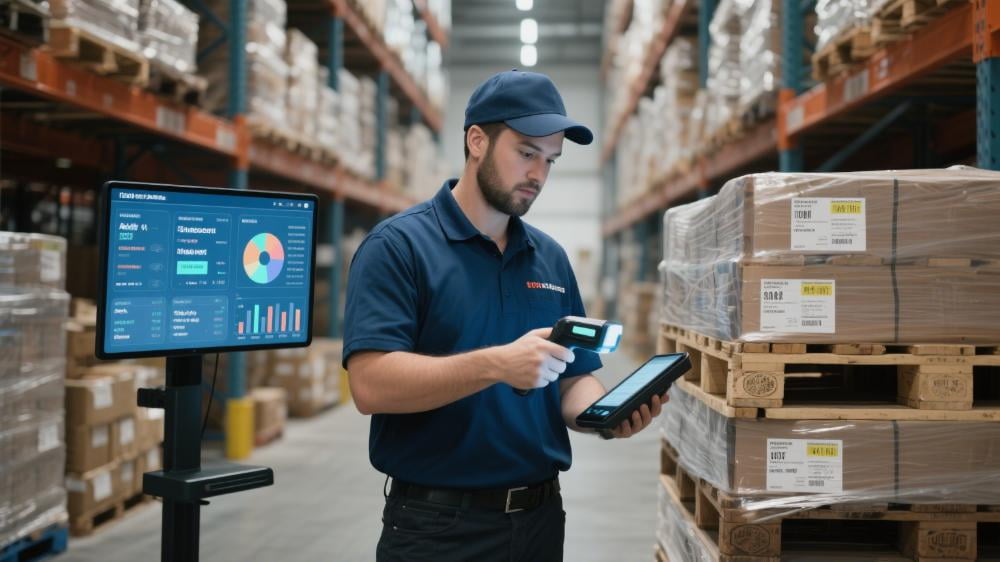
The winners in 2025+ treat RFID as a data layer, not a label. They specify once, sample-test against the real environment, lock a certified supplier with transparent TCO, and connect reads to a dashboard. That loop turns procurement from a cost centre into a margin lever.

Frequently Asked Questions
Which RFID frequency should I choose for my operation?
Start from read distance and the materials in the path. Use HF (13.56 MHz) for short-range item-level ID near metal or liquid; use UHF (860–960 MHz) for pallet and gate-level reads at distance. Map the band to the application in our frequency guide.
How do I verify an RFID supplier is compliant?
Ask for a published ISO/IEC 18000-6C (EPC Gen2) test report, request tagged samples for your own read test, and confirm GS1 EPC encoding support. Suppliers that refuse samples or lack certificates are a red flag regardless of price.
Is a more expensive RFID tag always more reliable?
No. Reliability comes from matching chip, antenna, and substrate to your environment — not the invoice. A correctly specified $1.20 industrial tag can beat a $6.80 “premium” tag in a cleanroom.
What is the real cost of RFID beyond the tag price?
Plan for integration, reader tuning, middleware, relabelling, and failure-driven labour — typically 70–80% of total cost. Model cost per successful read; a higher-yield tag usually wins on landed cost.
Ready to stop overpaying for the wrong RFID tags? Send us your use case, environment, and volume, and we return a spec, sample kit, and transparent TCO — no obligation. Talk to our RFID team.