Quick answer: Modern banknotes stay secure through layered physical and digital protections — watermarks, security threads, intaglio printing, UV-reactive inks, and increasingly nanotechnology and blockchain-linked verification — all built on a durable cotton-paper substrate that makes forgery both technically difficult and tactilely detectable by touch.
From Watermarks to Nanotech: How Banknote Security Evolved
Anti-counterfeiting technology has moved far beyond the simple portrait watermark. Today’s banknotes are miniature security engines, combining centuries-old print craft with cutting-edge materials science. The goal is simple but demanding: make a note that is cheap to produce in billions, yet nearly impossible to reproduce convincingly without a national mint’s infrastructure.
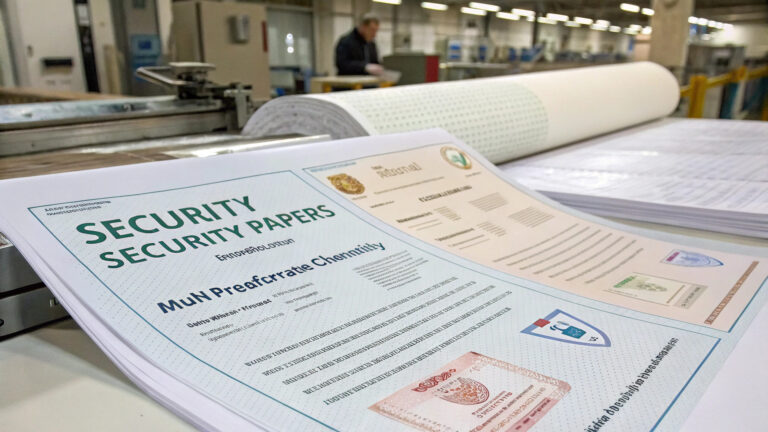
At the center of this effort is the substrate — the paper itself. Most high-security notes are printed on cotton-paper (often 100% cotton or cotton-linen blends) rather than standard wood-pulp paper. That single choice unlocks almost every other security feature below.

Core Security Features Found in Every Modern Note
- Watermarks: Embedded during paper production by varying fiber density, creating a translucent image visible when held to light. They are practically impossible to scan or photocopy faithfully.
- Security Threads: Metallic or polymer strips woven into the cotton paper — often with microtext or a color-shift effect. Some are windowed, appearing intermittently on the surface. See our explainer on what a security thread is and how it works.
- Intaglio Printing: Raised ink applied under extreme pressure, producing a texture detectable by touch — a feature blind and sighted users alike use to authenticate notes.
- UV-Reactive Inks: Invisible under normal light, these inks glow specific colors under ultraviolet light, revealing hidden denominations and symbols.
- Microprinting & Guilloché: Tiny text and fine interwoven line patterns that blur into nonsense on a photocopier.
Emerging Innovations Reshaping Currency Security
- Nanotechnology: Color-shifting inks and tamper-evident microcapsules that change appearance when scratched, heated, or chemically altered.
- Hybrid Notes: Combine cotton paper with polymer “windows” for layered, multi-material security (used by several commonwealth currencies).
- Blockchain Verification: QR codes or serial tokens linked to a digital ledger, enabling instant provenance checks. Nigeria’s eNaira project is an early example of tying physical notes to a verifiable digital record.
- Machine-Readable Features: Infrared and magnetic inks that counting and verification machines read automatically, flagging fakes at scale.
Why Cotton Paper Is the Backbone of Banknote Security
- Fiber Structure: Cotton’s long fibers let manufacturers embed threads and watermarks seamlessly, without weakening the sheet.
- Tactile Authentication: The unique crisp texture of cotton-paper helps the public detect fakes by feel — a low-tech but powerful check.
- Ink Adhesion: Cotton substrates support high-resolution microprinting and the bonding of holographic patches without bleeding or cracking.
- Durability: Cotton-paper withstands folding, moisture, and years of circulation far better than wood-pulp paper, extending a note’s secure lifetime.
For a deeper look at the material side, read our guide to cotton paper in currency printing and our security paper procurement guide for buyers.
How to Verify a Banknote: A Practical Checklist
- Feel the paper — genuine notes have a distinct crisp, fabric-like texture.
- Tilt the note to confirm color-shift inks and threads respond to light angle.
- Hold it to light to reveal the watermark and any see-through register.
- Check under UV for the expected fluorescent elements.
- Run it through a verified counting machine if available, to catch magnetic/IR markers.
Frequently Asked Questions
What is the most common anti-counterfeiting feature on banknotes?
The watermark and security thread are near-universal, present on the vast majority of modern notes because they are inexpensive, durable, and effective against casual copying.
Why are banknotes printed on cotton paper instead of wood-pulp paper?
Cotton fibers are longer and stronger, allowing embedded threads and watermarks without tearing, while delivering the tactile “feel” and durability that public authentication depends on. Wood-pulp paper simply cannot host these features reliably.
Can blockchain really prevent banknote counterfeiting?
Blockchain does not stop a physical forgery directly, but by linking a note’s serial number to a tamper-evident digital ledger, it lets authorities and banks verify provenance instantly — turning every transaction into a verification point.
Which authority documents standard banknote security features?
Interpol and central banks publish public guidance; for a widely cited reference, see Interpol’s guide to currency security features.
Secure Your Own Documents with the Right Substrate
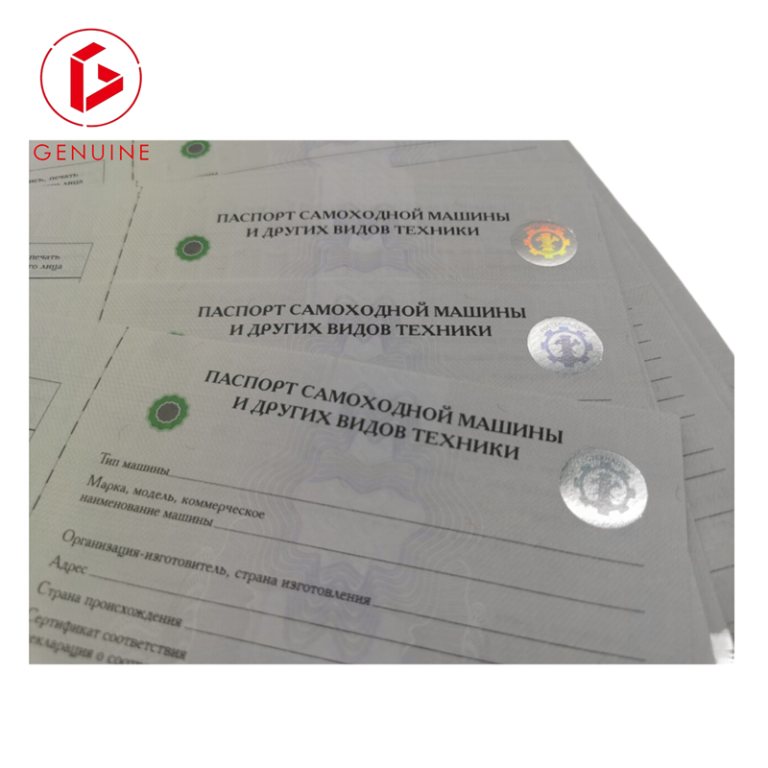
The same principles that protect national currencies — layered features on a durable substrate — apply to certificates, vouchers, and brand-protecting labels. If you are specifying secure paper or printed security elements, our team can help you match the right substrate and features to your risk profile. Explore our COC anti-counterfeiting certificates or contact Genuine Printing for a tailored recommendation.