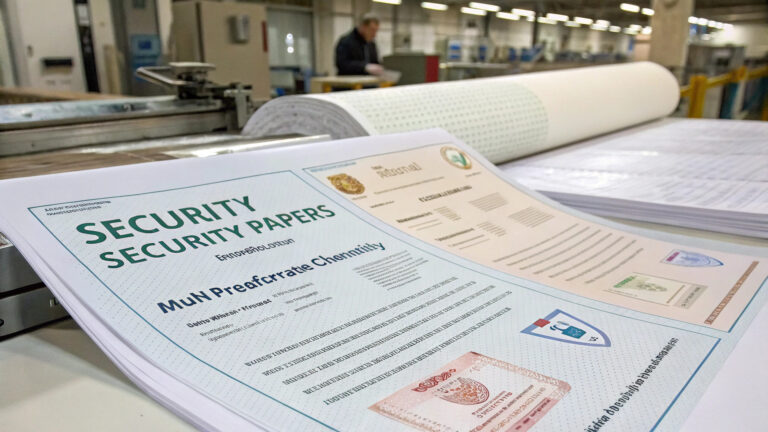
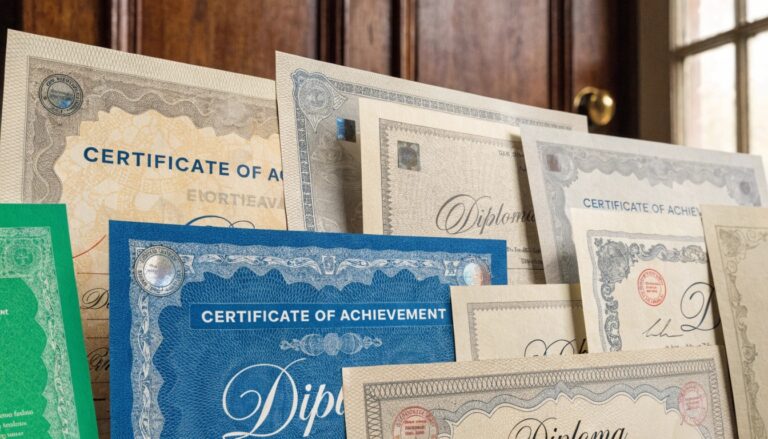
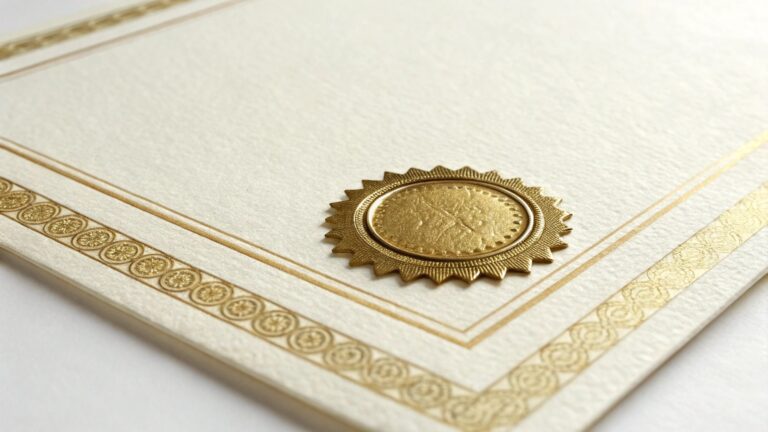
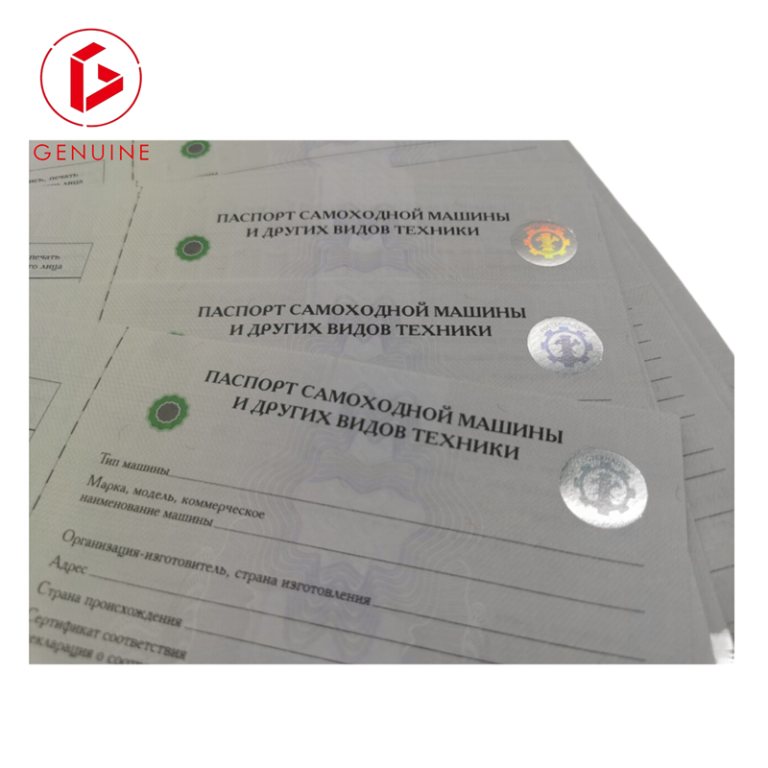
Generic paper is easy to copy. For certificates, property titles, bonds, and brand-protected documents, that copyability is a liability: a forged certificate can void a contract, a fake title can unlock a restricted building, and a counterfeit warranty card can quietly erode your customers’ trust. Cotton and linen security paper exists because those risks are real, and the difference between “adequate” and “defensible” comes down to the custom features you specify. This guide walks procurement, security, and brand-protection buyers through the features available on cotton and linen stock, how to brief them, and what to look for in a production partner.
Why Customization Matters for Cotton and Linen Security Paper
Customization is not a cosmetic upgrade — it is the mechanism that makes a document hard to forge and easy to verify. A plain cotton or linen sheet looks valuable, but without embedded features it can be scanned and reprinted on commodity stock. The features described below raise the cost and skill required to counterfeit, while giving your staff and customers a fast, reliable way to confirm authenticity by eye or under a simple light source.
Counterfeiting and product fraud remain a multi-billion-dollar transnational problem, and official documents are a recurring target. Layered, document-specific security features are the cheapest insurance you can buy against that exposure — they turn “looks official” into “provably genuine.” See INTERPOL’s overview of document and product counterfeiting for the scale of the threat: INTERPOL — Counterfeiting.

What Custom Security Features Can You Specify?
When you brief a security-paper mill, you are not picking a single trick — you are composing a stack of deterrents. The most useful options on cotton and linen stock are:
- Watermarks — tonal marks formed in the paper itself, with no ink. Use a logo, portrait, or custom motif; choose a shadow (light/dark) or dual-tone watermark for higher fidelity. Watermarks survive copying because they cannot be printed on afterward.
- Security threads — embedded strips (plain, windowed, color-shifting, or UV-reactive) that run through the sheet. Windowed threads “emerge” on the surface at intervals, making them obvious and hard to simulate.
- Colored and UV fibers — visible specks and invisible (UV-only) fibers scattered through the paper mass. A verifier with a UV lamp sees a pattern a photocopier never will.
- Chemical sensitivity — reagents that react (color change) to specific solvents or inks, exposing alteration attempts on deeds, certificates, and permits.
- Tactile and micro features — embossing, intaglio-style relief, and microprinting that reward a fingertip or a loupe.
The right answer is almost always a combination: a watermark plus a thread plus UV fibers covers the eye, the lamp, and the forger’s workflow. For a deeper look at one element, see our guide to what a security thread actually is.

How We Build Your Custom Cotton and Linen Paper
Specification starts with the substrate. Cotton and linen fibers are blended for feel, durability, and runnability; a 25% cotton / 75% linen mix, for example, balances a premium hand-feel with dimensional stability, while a higher cotton content reads as more formal and ages better. From there we fix basis weight, color, and any laid or deckle texture.
The security elements are integrated on the paper machine, not added later: the watermark is shaped by the mould, the thread is laid into the wet web, and fibers are introduced to the furnish. That integration is what makes the features inseparable from the sheet. You receive a physical prototype and a spec sheet before any production run, so watermark clarity, thread placement, and fiber density are approved against your sample — not a description. The same cotton content that drives durability in currency paper is what gives your documents their longevity: read more in our piece on cotton paper in currency printing.

Why Buyers Choose GENUINE as Their Security Paper Partner
Feature choices only matter if they are executed consistently, confidentially, and to a documented standard. We run security-printing processes under ISO 14298 (Graphic technology — Management of security printing processes) discipline — the recognized benchmark for chain-of-custody, traceability, and insider-risk controls in security-document production. Read the standard: ISO 14298 at ISO.org.
What that means for you: auditable batches, controlled proofs, and a partner who will not “improve” your spec without sign-off. For organizations issuing certificates or credentials, that rigor pairs naturally with our certificate-paper customization work — same substrate logic, document-specific finish.

Frequently Asked Questions
Can cotton and linen paper be used for both certificates and banknotes?
Cotton and linen stock is the traditional substrate for banknotes and high-value certificates precisely because it survives folding, moisture, and decades of handling. For certificates and bonds it delivers the same longevity and a tactile “real” feel that wood-pulp and polymer stocks cannot match. We tune the cotton/linen ratio and any coatings to the document’s expected life and handling.
How long does a custom security-paper project take?
From an approved brief, a prototype is typically ready within two to three weeks; production follows once you sign off on the sample. Rush slots exist, but watermark and thread tooling is the critical path — early artwork approval is the single biggest lever on lead time.
What is the minimum order quantity for custom features?
Watermark and thread tooling carries setup cost, so custom-feature runs are usually economical from a few thousand sheets upward. For lower volumes, we can often apply standard security elements (UV fibers, chemical sensitivity) to a custom cotton/linen base without bespoke tooling — ask us about the tiered options.
How can a verifier confirm a document is on genuine cotton/linen security paper?
Three checks: hold it to light for the watermark and any windowed thread; scan with a UV lamp for reactive fibers; and feel the relief of any embossing or intaglio. Because the features are part of the sheet, a photocopy or reprinted form will fail at least one. We supply a verification card with every custom order.

Next Steps
Specifying the right cotton and linen security paper is a brief away. Send us your document type, expected volume, and the threats you most need to deter, and we will return a prototype and a plain-English spec sheet. Talk to our security-paper team to start.