For a national travel-document program, the question is no longer whether e-passports work — it is which design choices keep your documents accepted at every border, resist cloning for a full ten-year validity window, and leave room for the digital credentials now arriving. The gap between a program that loses trust and one that stays ahead of fraud usually comes down to a handful of decisions made before the first booklet is issued. This guide covers what matters to an issuing authority: the technology, the standards that decide acceptance, the adoption reality, and how to vet the partner who will manufacture it.
What Actually Separates an E-Passport from a Digital Passport
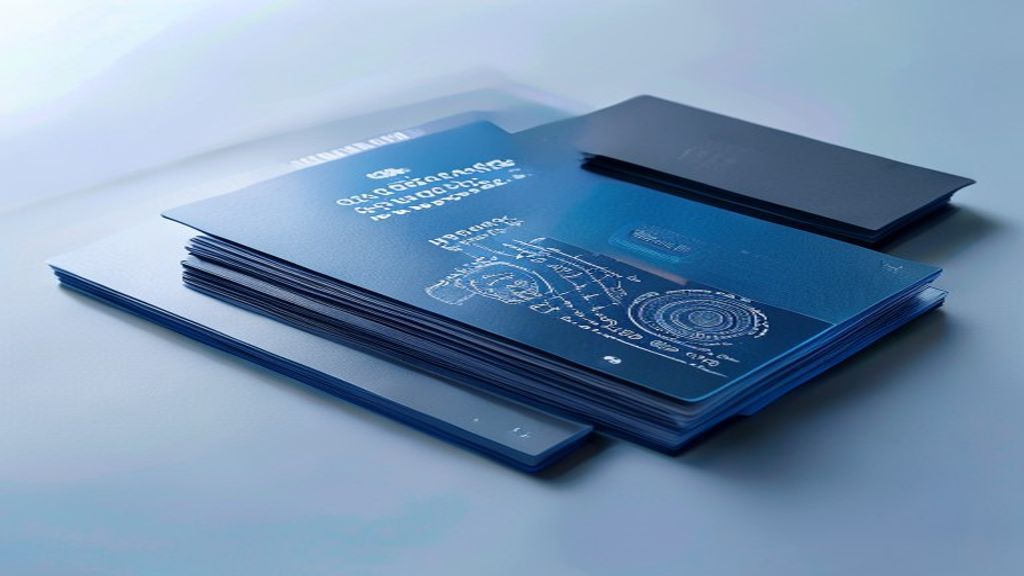
An e-passport (formally an electronic machine-readable travel document, eMRTD) is a booklet whose data page carries an embedded contactless chip. It holds the printed biographic data plus a facial biometric, increasingly a fingerprint. A digital passport goes further: a phone-based representation ICAO calls the Digital Travel Credential (DTC), which can complement or temporarily substitute for the booklet.
For a buyer, the distinction is commercial, not cosmetic. The physical eMRTD remains the trust anchor; the DTC is a derivative that must inherit its security. ICAO is explicit that a DTC must be at least as secure as an eMRTD and be issued by the travel document issuing authority — so any vendor offering a “passport app” detached from a certified issuance chain is a red flag. See ICAO’s high-level DTC guidance.
What Is Really Inside the Chip — and Why Issuers Should Care
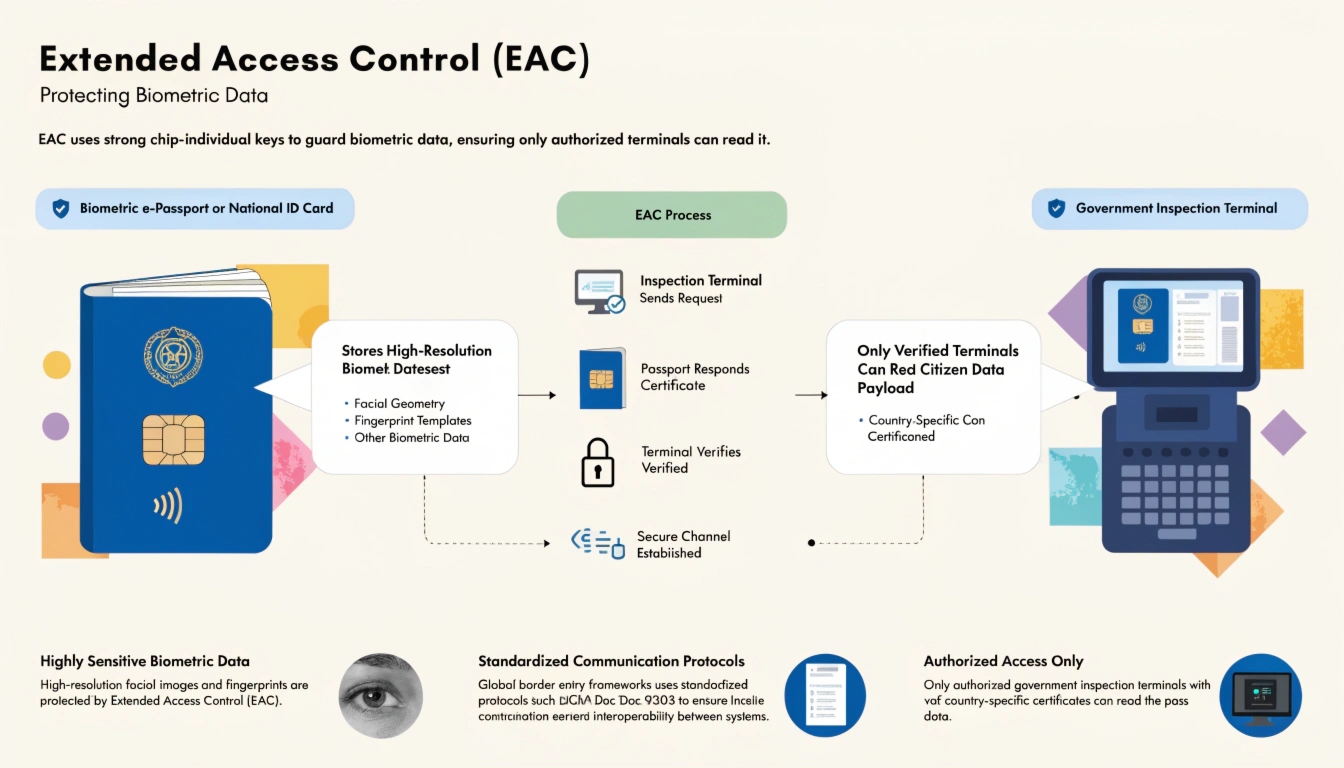
The chip is a small security device, not a storage stick. Its data sit in a Logical Data Structure protected by layered protocols: Passive Authentication signs the data so alteration is detectable, while Basic Access Control and Chip Authentication prevent skimming and cloning. Inspection systems verify those signatures against public keys in the ICAO Public Key Directory — the mechanism that lets one country’s border officer trust another’s document.
The real procurement question is not “does the chip work?” but “can your production process inject and protect keys consistently across every booklet, for the program’s full life?” Weak key management is the failure mode that turns a secure design into a vulnerable fleet — and the easiest thing to audit before you sign. Ask for the key-injection and personalization workflow in writing.
The Standards That Decide Whether Your Passport Is Accepted at the Border
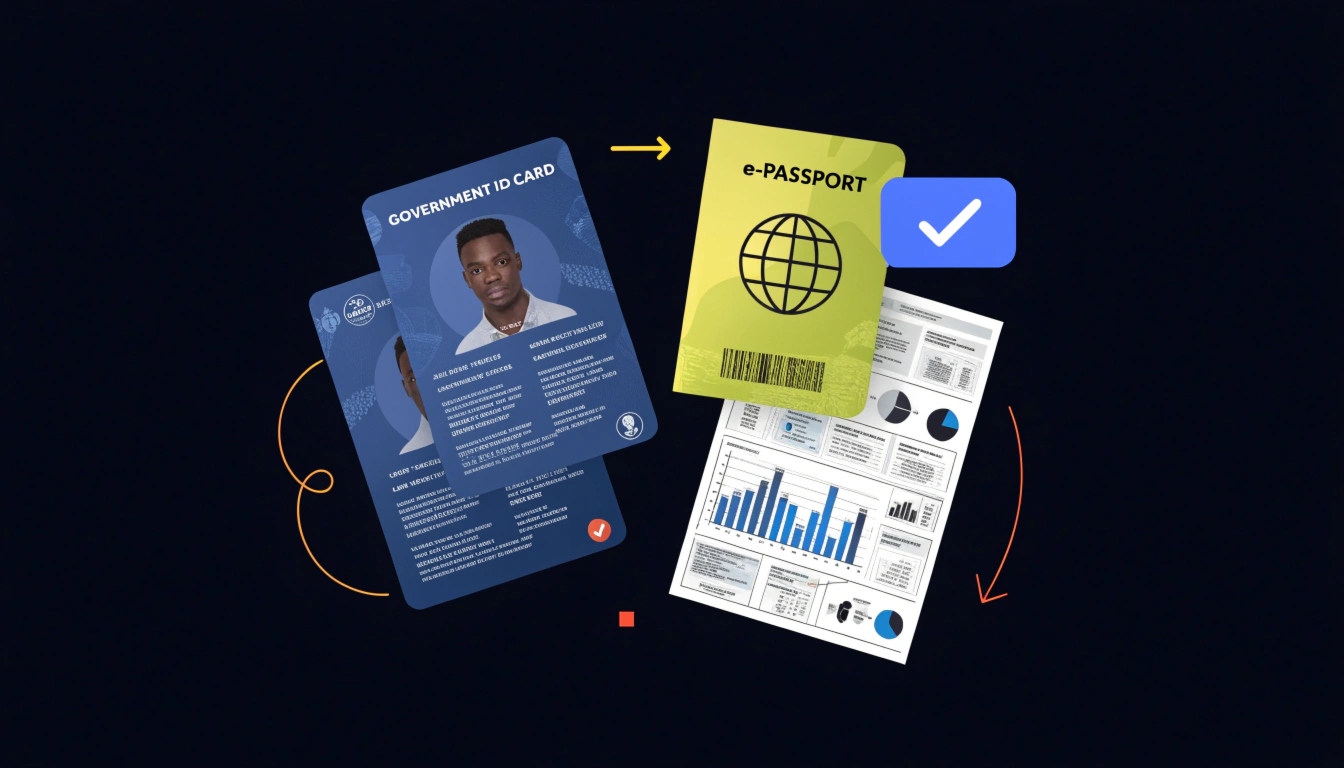
Border acceptance is governed by documents, not sales claims. ICAO Doc 9303 is the global rulebook — its parts cover security of design and manufacture, biometrics, the logical data structure, security mechanisms and public key infrastructure. A supplier who cannot map every layer of their booklet to the relevant part of Doc 9303 is asking you to accept the interoperability risk.
Physical format is equally non-negotiable. ID-3 data-page geometry and card credentials trace to ISO/IEC 7810:2019, while the contactless interface follows ISO/IEC 14443. Material choice then decides whether those tolerances survive a decade in a pocket — our guide to polycarbonate vs PVC vs PETG for government ID explains why polycarbonate data pages are the default for high-assurance programs.
How Biometrics and PKI Actually Stop Fraud at the Gate

Fraud control works because three layers must agree: printed security features an officer can see, signed chip data a machine can verify, and the biometric tying both to a person. Remove any one and the cost of a convincing clone collapses. This is why a chip-only strategy is not a strategy — substrate, laminate, printing and electronics must be specified as one system.
The operational payoff is measurable: ICAO’s DTC pilot reporting notes border processing averaging under eight seconds versus roughly twenty-five at typical automated kiosks. For an authority that is a staffing and throughput decision, which is why the evolution of passport security features is a procurement topic, not a curiosity.
What Global Adoption Actually Looks Like in 2026

Adoption has passed the tipping point. According to ICAO, 165 Member States have issued more than one billion eMRTDs, validated worldwide through the Public Key Directory. ICAO projects air traffic rising from 4.6 billion passengers in 2025 to 12.4 billion by 2050 — a tripling of the demand on border systems.
Interoperability is now table stakes. A document only your own readers can verify is a liability, since citizens will present it at borders you do not control. The passport manufacturing process should be evaluated against the inspection ecosystems it must satisfy, not just your domestic pilot.
From eMRTD to Digital Travel Credential: What Comes Next
The DTC is a secure digital companion to the booklet, with virtual and physical components. Its defining feature: authorities can verify passport data before the traveller arrives, enabling pre-arrival screening and faster automated processing. Crucially, revoking the eMRTD must revoke its DTCs, but revoking a DTC must not revoke the booklet.
For procurement, the actionable point is future-proofing. You need not launch a DTC program tomorrow, but you do need a partner whose chip, key management and personalization architecture can support one without retooling the line. That is the logic behind designing passport durability and lifespan around a ten-year horizon, not a single batch.
How to Choose a Passport Production Partner
Use a short, evidence-based checklist rather than a capability slide:
- Ask for a written mapping of the booklet to every relevant part of ICAO Doc 9303, plus ISO/IEC 7810 and 14443 conformity evidence.
- Request the key-injection and personalization workflow — how keys are segregated, audited and rotated across runs.
- Insist on physical samples — bent, laminated, engraved — and independent durability results against your acceptance thresholds.
- Confirm the DTC upgrade path: can the same chip platform and issuance system support a digital credential later?
The cheapest data page is rarely the lowest-cost program. Reissues, border failures and lost trust dwarf any per-unit saving — the real comparison is total cost over the document’s full validity period, not the unit price on a quote.
Frequently Asked Questions
Is a digital passport a replacement for the physical booklet?
Not by default. ICAO frames the DTC as a digital companion and, in defined cases, a temporary substitute cryptographically linked to an eMRTD. The physical document remains the trust anchor at most borders today.
Which standards should we name in an RFP?
At minimum, cite ICAO Doc 9303 for the document and data model, ISO/IEC 7810 for physical characteristics and ISO/IEC 14443 for the contactless interface, plus your national biometric and data-protection rules.
How long does a secure e-passport need to last?
Validity is commonly ten years, so the document must survive a decade of bending, humidity and wear while keeping chip and printed features readable. Specify measurable durability thresholds up front, not a generic “durable” claim.
Can we add a digital credential later without reissuing every passport?
Often yes, if the original chip, key infrastructure and personalization system were specified with that path in mind. It is a contract-stage design decision; retrofitting an unplanned fleet is the expensive alternative.
The future of travel documents is already here in the standards; the question is whether your program is specified to use it. If you are planning an issuance, renewal or DTC pilot, talk to our passport production team to request samples and a standards-mapping checklist.