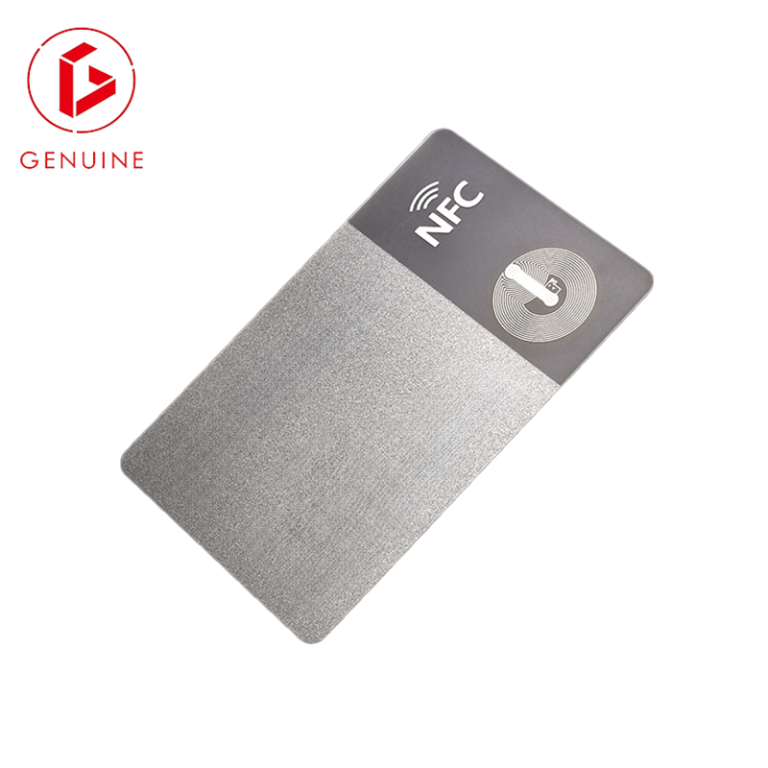
You planned a card rollout for next quarter. Then the chips went on allocation. For most B2B buyers a smart card looks like a simple plastic item you reorder by the box — but it is actually the final link in a long, specialized supply chain, and in 2026 that chain is under more strain than at any point in the last decade. This guide shows procurement, security, and facilities teams how to map their exposure and de-risk card sourcing before a single component stalls the program.
Why a smart card sits at the end of a fragile chain
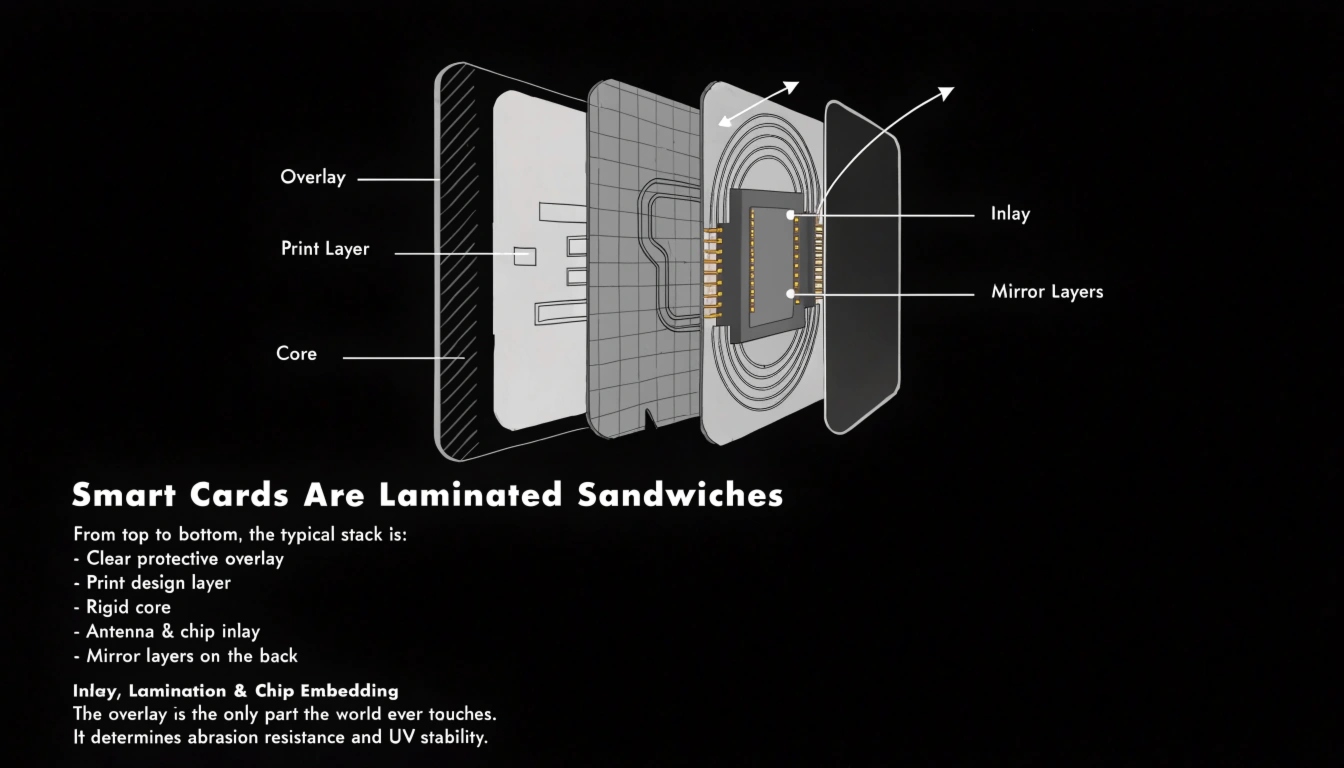
The credential in an employee’s wallet looks trivial, yet it bundles a secure microcontroller, an embedded antenna inlay, a plastic substrate, secure-printing overlays, and specialized inks — each sourced, qualified, and shipped separately, often from different continents and different suppliers. That chain is more fragile in 2026 than most buyers assume. Two forces dominate. First, chip fabrication is concentrated: card silicon runs on mature 28 nm-and-above nodes that fabs are increasingly diverting toward AI and data-center demand. Second, logistics and geopolitics are volatile. The Smart Payment Association’s October 2026 position paper warns that foundry capacity shifts and geopolitical friction are squeezing not just chips but also the gold used in EMV contacts and the PVC in the card body. Read the SPA position paper.
The numbers back the concern up. Industry analysis from Mordor Intelligence shows secure-microcontroller lead times stretched to 38 weeks in 2024 and stayed elevated through 2025, with export-control rules further delaying capacity in some regions. See the smart card market analysis. A single missing component — one EEPROM, one inlay — can stall an entire national-ID or employee-badge program for weeks.
The true cost of a single-source credential
When only one qualified supplier can deliver a component, you do not just pay their price — you inherit their risk. If that fab hits a yield issue, a force-majeure event, or a trade restriction, your program stops. We have seen access-card rollouts slip an entire quarter because a single EEPROM supplier could not ship. The real cost is not the unit price; it is the project delay, the re-badging of expired credentials, and the emergency air-freight premiums. For programs with fixed go-live dates — government ID, campus cards, corporate onboarding — that risk routinely exceeds the annual card budget.
Before you sign anything, decide whether you are buying from a factory or a trading layer. Our comparison of factory-direct versus reseller sourcing explains how the middle layer hides exactly this kind of concentration risk behind a comfortable single invoice.

Map your card’s bill of materials before you sign
You cannot de-risk what you have not mapped. Before issuing an RFQ, list every component in your card and note where it comes from. The usual concentration points are the secure chip (a handful of global suppliers dominate contact and contactless silicon), the inlay/antenna (often tied to the chip ecosystem), and specialty substrates — polycarbonate in particular has far fewer qualified converters than PVC. A bill-of-materials map turns a vague “supply risk” into a ranked list of single points of failure you can act on.
The map is only useful if every supplier is measured against the same standard. Use our smart card RFQ specification template so a qualified alternate is compared on identical electrical, mechanical, and security requirements rather than a vendor’s marketing sheet.

Qualify a second source without doubling your cost
Dual-sourcing does not mean running two production lines in parallel. The practical approach is to qualify a second supplier against the identical specification, then split volume — for example 70/30 — so both stay “warm.” The alternate must meet the same electrical, mechanical, and security requirements, which is exactly why writing a precise RFQ matters. Budget a one-time qualification run and shared test data; the insurance it buys against a single-source outage is almost always cheaper than one stalled program.
There is a known, bounded cost to this. Mordor Intelligence estimates dual-sourcing can raise per-unit chip cost by up to 18% — a predictable premium versus an unbounded outage where you cannot ship at any price. Mordor Intelligence smart card market report.

Buffer inventory and hedge your lead time
Not every component needs safety stock — but your long-lead and single-source items do. A practical rule: hold 1–2 months of blank or near-finished stock for any item with a lead time over eight weeks or a single qualified source. Encode-ready (“pre-personalized but blank”) stock lets you personalize locally and absorb demand spikes without re-ordering the whole chain. Size the buffer from your actual issuance velocity, not last year’s forecast — and track how often cards actually fail in the field so the stock you hold matches reality. Our guide to card warranty, SLA, and failure rates shows how to set that baseline.
Supplier financial and geopolitical due diligence
A “qualified” supplier can still disappear. Before committing, check the unglamorous things: financial stability, country-of-origin concentration, cybersecurity posture, and whether the supplier itself has dual-sourced its own inputs. Ask for a business-continuity statement and evidence of certified quality (ISO 9001; for cards, the relevant Common Criteria or EMVCo marks where applicable). For government or critical-infrastructure programs, map the geopolitical exposure of every tier. Frameworks such as NIST SP 800-161r1 and CISA’s supply chain risk management guidance give buyers a structured checklist, while ISO 28000 covers supply-chain security management at the organizational level.
Claims on a datasheet are not proof. Our factory audit guide for tenders explains how to turn a supplier’s assertions into verified facts before you commit volume.
A supply-chain risk checklist for your next card RFQ
Turn the above into procurement language. Your RFQ and contract should require: (1) a full bill of materials with identified single points of failure; (2) at least one qualified alternate for any single-sourced component; (3) stated lead times per component with buffer commitments; (4) a business-continuity and breach-notification clause; (5) evidence of quality and security certifications. Buyers who write these clauses before signing recover far faster when the chain breaks. Sourcing directly from a factory rather than a trading layer also shortens the visibility gap, because you see the component origins yourself. Compare factory-direct and reseller sourcing, and anchor your requirement set on NIST SP 800-161r1.

Frequently asked questions
How much safety stock should a card program hold?
For single-sourced or long-lead components, 1–2 months of blank or near-finished stock is a common starting point. Size it to your actual issuance velocity and recovery time, not a calendar guess, and revisit it whenever a component’s lead time crosses eight weeks.
Is dual-sourcing worth it for small programs?
Even a 70/30 split with a qualified alternate buys meaningful resilience, and the one-time qualification cost is usually far below a single stalled rollout. The alternative — a 100% single source — leaves you exposed to an outage you cannot control.
Which card component is most at risk in 2026?
The secure microcontroller and the polycarbonate substrate are the two most commonly concentrated items, and both were flagged by the Smart Payment Association’s 2026 position paper as active pressure points. Smart Payment Association.
Ready to pressure-test your own card supply chain? Download our RFQ template and request sample stock from a qualified, factory-direct source so your next rollout is not held hostage by a component you never saw coming.