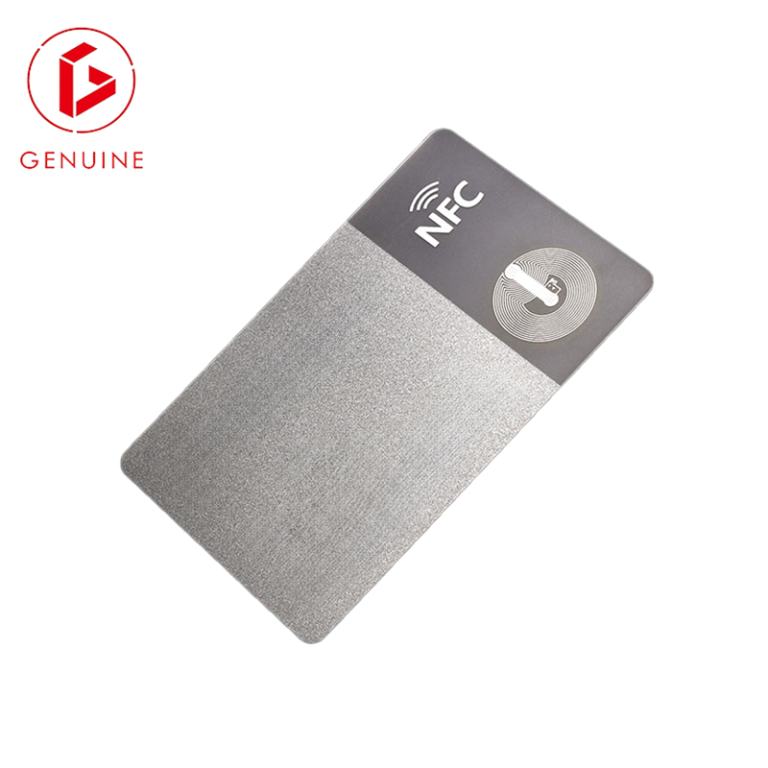
You specified the card body, the chip, and the encoding. The unit price looked right. Then three months after rollout, 2% of the cards stop reading, the supplier calls it “within tolerance,” and the cost of re-issuing badges, re-enrolling users, and fielding help-desk tickets quietly exceeds the entire card order. The missing line was never the material — it was the warranty, the SLA, and an acceptable failure-rate guarantee written into the supply contract before the PO was released.

Why the Warranty Clause Costs More Than the Unit Price
Buyers optimize the per-card quote because it is the number on the page. The number that actually hurts is the one that appears later: the total cost of a field failure equals re-issue hardware + personalization + shipping + help-desk time + lost productivity of every blocked user. A single bad-read at a turnstile costs the employer far more than the 30-cent card that caused it.
For a 10,000-card access program, a 1% annual failure rate means roughly 100 re-issues a year — each carrying its own personalization and logistics tail. Negotiating the failure-rate guarantee up front is almost always cheaper than negotiating a replacement price after the fact. Treat warranty and SLA as a line item in the same RFQ as the card body, not as boilerplate you skim at signature.
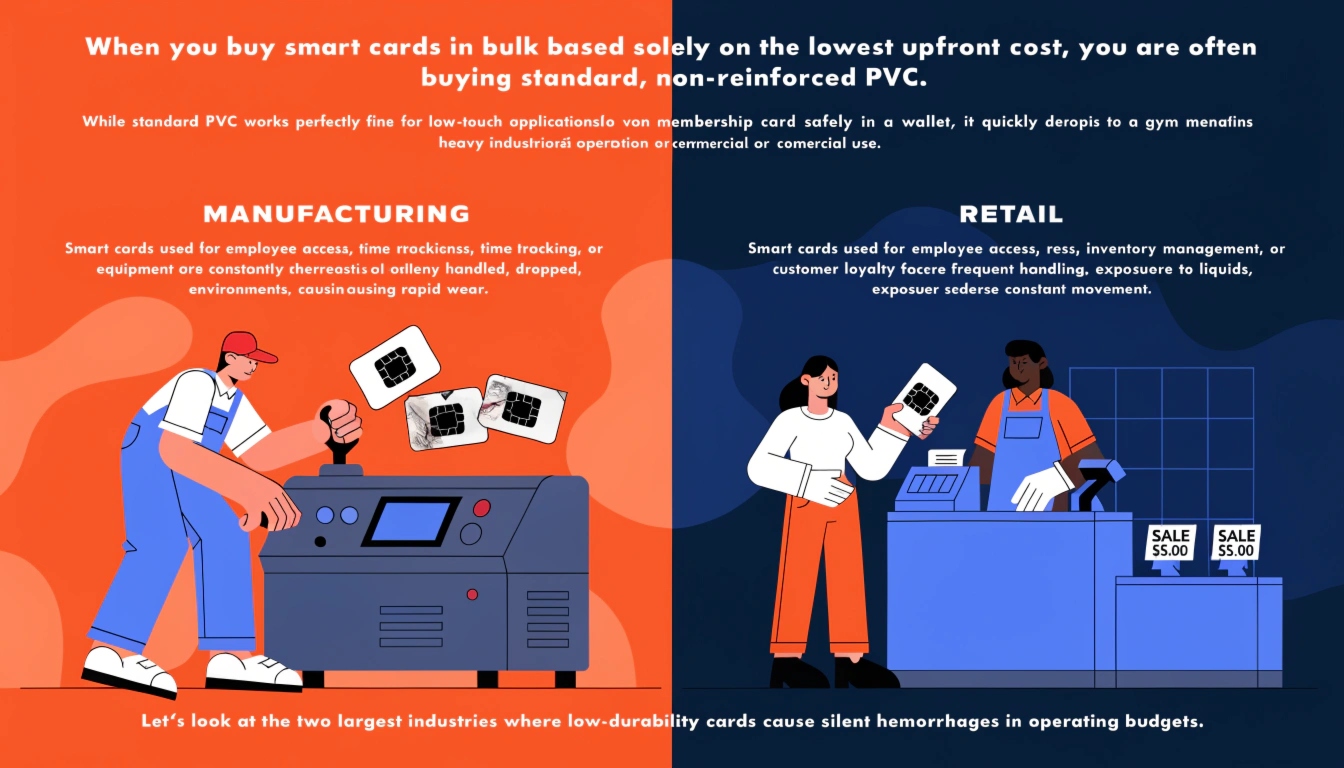
What a Card Warranty Actually Covers — and What It Quietly Excludes
A “12-month warranty” on a smart card is not one promise; it is several, and the exclusions are where programs get burned. Read the clause for each layer of the card:
- Print and visual layer — UV, microtext, hologram overlay, and dye-sub/re-transfer graphics. Many suppliers warranty print only against “gross delamination,” not against fading or abrasion.
- Chip and module — the secure element and contact pad. This is the layer that should carry the longest, most explicit guarantee.
- Antenna and inlay — the embedded coil. A hairline break from lamination stress shows up as intermittent reads, not a dead card on day one.
The exclusion to watch: “cosmetic” or “wear and tear” language that swallows the whole claim. Insist the warranty names each failure mode (non-read, chip rejection, antenna open-circuit) rather than a vague “defects in materials and workmanship” sentence that the supplier interprets narrowly. If you also need the encoding verified, pair this with a written card encoding specification so a “bad card” is unambiguous.

Defining an Acceptable Failure Rate (AFR) You Can Actually Measure
“High quality” is not a spec. An acceptable failure rate (AFR) is a number, a window, and a measurement method. For most contactless ID and access programs a reasonable starting point is ≤0.5% field failures per 12 months from manufacturing cause; high-security or long-life (5–10 year) credentials should aim tighter, often ≤0.1–0.2%/year.
Write the AFR against a baseline, not against hope. Require that the approved golden sample and first-article inspection (FAI) lot define the reference, then measure field returns against that lot, not against a supplier’s internal historical average. A short burn-in period (functional read test after 48–72 hours) catches infant-mortality chips before cards are personalized and issued. The measurement method should reference the same durability framework you already use for incoming inspection — see writing ISO/IEC 10373 acceptance criteria into the contract.

The SLA Components Buyers Forget: Response, Advance Replacement, RMA Logistics
A warranty tells you who pays; an SLA tells you how fast. Four components belong in every card supply agreement:
- Response time — acknowledge a failure report within a stated business window (e.g., 2 business days).
- Root-cause turnaround — time to return a failure-analysis report with a corrective action, not just a credit note.
- Advance replacement — ship known-good replacements before the defective lot is received, so re-issue never stalls. This single clause prevents the most damaging outcome: a credential gap on a live access system.
- RMA logistics — who pays freight both ways, and whether failed cards must be returned (they often carry keys or PII and should be destroyed, not shipped back).
If the cards carry personalization data or keys, the RMA clause should require certified destruction of returned media and prohibit refurbishment/resale of failed credentials. Tie the logistics terms to your issuance and lifecycle plan so advance-replacement stock is already accounted for in the program buffer.

Field-Failure Classification: Who Pays When a Card Dies
Not every dead card is the supplier’s fault, and a good contract says so explicitly — because an ambiguous clause is resolved against the buyer. Sort failures into three buckets:
- Manufacturing defect — chip reject, antenna open-circuit, lamination void. Supplier pays, full stop.
- Handling / personalization defect — cracked module from over-pressure encoding, damaged antenna from improper slotting. Often a shared root cause; assign ownership by process (who encoded it).
- Environmental / user cause — bent card, washed card, magnetic interference. Buyer pays, but only if the card was specified for that environment.
The trap: a supplier blames “environment” for a defect that was really a weak antenna. Neutralize it by requiring failed-card failure modes to be reported with a count and a representative sample, and by keeping an independent test method (ISO/IEC 10373) as the arbitrator. For sourcing-side risk more broadly, the factory-direct vs reseller comparison explains which party is actually accountable when something breaks.
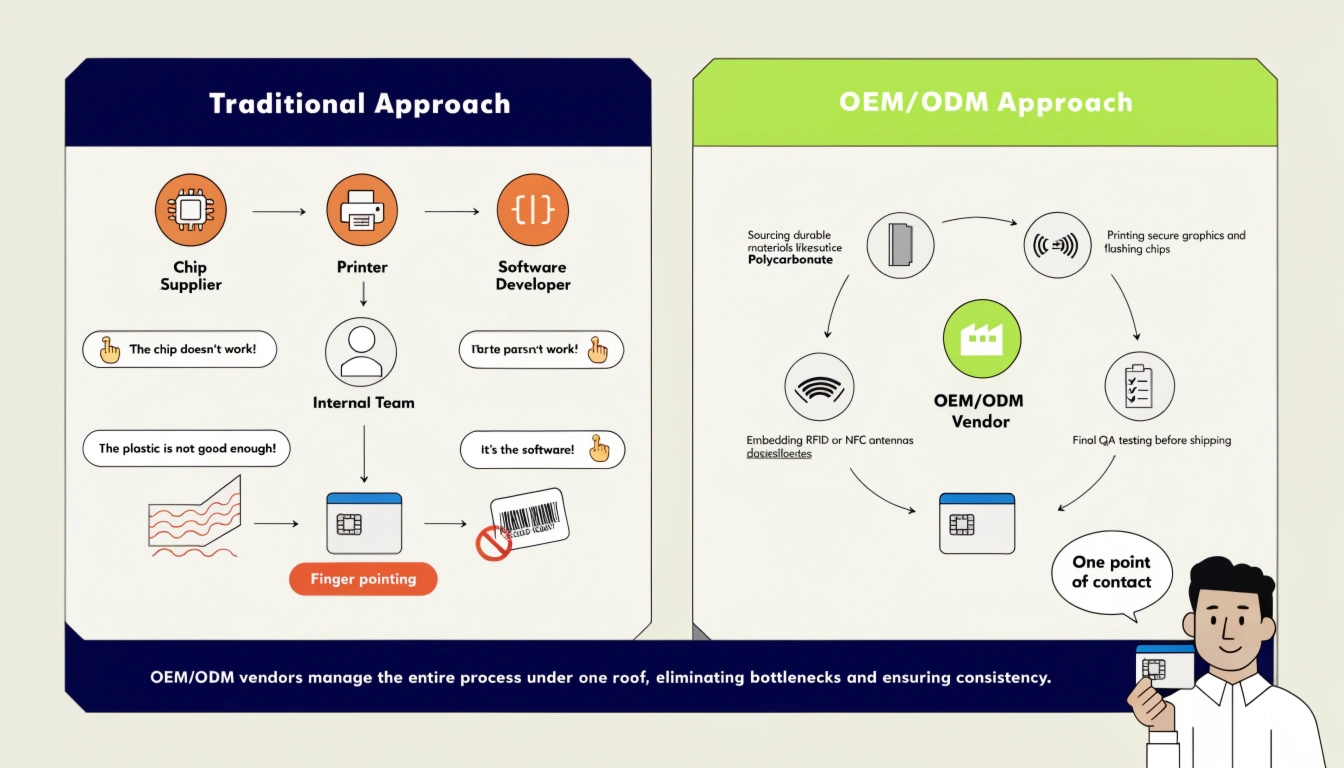
A Copy-Ready Warranty & SLA Clause for Your Card RFQ
Drop the following block into the commercial section of your card RFQ or supply contract and fill the brackets. It is a starting template, not legal advice.
| Term | What to specify |
|---|---|
| Warranty period | [_] months from issue date (not ship date) against manufacturing defect |
| Acceptable failure rate | ≤ [_]% field failures per 12 months, measured vs FAI/golden sample |
| Burn-in | Functional read test at 48–72 h on FAI lot; infant mortality excluded from AFR |
| Response time | Acknowledge failure report within [_] business days |
| Advance replacement | Ship known-good replacements before defective lot returned |
| RMA & destruction | Supplier pays return freight; failed credentials certified-destroyed, not refurbished |
| Arbitration | Failure mode verified per ISO/IEC 10373; supplier bears cost if manufacturing cause |
Back the clause with standards, not trust. Reference ISO/IEC 7810:2019 for physical card dimensions and tolerances, ISO/IEC 24789-1 for card service-life and durability expectations, and a supplier ISO 9001 quality-management certification as the process baseline. For the credential-management lifecycle those cards sit inside, NIST SP 800-116 Rev. 1 and GlobalPlatform specifications describe how keys and states should be governed across the card’s life.

Red Flags in Supplier Warranty Language
Read the warranty draft for these warning signs before you sign:
- “Cosmetic” exclusion that implicitly covers print wear you actually care about.
- No numeric AFR — only “best effort” or “industry standard.”
- Ship-date start for the warranty clock, which expires before cards are even personalized.
- No advance replacement — you wait for the supplier to receive and test returns.
- Return-of-failed-cards required with no destruction clause, creating a data/key exposure.
Frequently Asked Questions
What is a normal smart card warranty period?
For contactless ID and access cards, 12 months from issue is common, but long-life credentials (5–10 year programs) should negotiate 24–36 months or a lifetime-against-manufacturing-defect clause tied to the AFR instead of a calendar window.
What acceptable failure rate should I ask for?
Start at ≤0.5% per 12 months from manufacturing cause for standard programs, and ≤0.1–0.2%/year for high-security or long-life cards. Always define it against the approved golden sample and FAI lot, not the supplier’s internal average.
Should the warranty start at ship date or issue date?
Insist on issue date. A ship-date start can expire while cards sit in inventory or before personalization, leaving you uncovered for the exact period failures appear.
Who pays freight on a returned defective card?
The supplier should, for confirmed manufacturing defects. More importantly, require failed credentials to be certified-destroyed rather than returned, especially if they carry personalization data or keys.
Does a warranty cover encoding errors?
Only if you specify it. Encoding correctness is a separate deliverable — write it into the encoding specification and confirm both layers (card and data) in incoming inspection and sample evaluation.
Your Next Step: Put the Failure Clause in the RFQ
A card order without a written failure-rate guarantee is a bet that nothing breaks — and field data says otherwise. Before you release the PO, add the warranty period, a numeric AFR, advance-replacement SLA, and a destruction clause for failed credentials. If you want a factory that will sign those terms, request card samples and a draft supply agreement from GENUINE and we will walk the clause with your procurement team.