You approved the artwork, the chip profile, and the delivery date. But the one thing that decides whether you can trace, recall, or defend every card in the field—the serialization and numbering scheme—is often left to a one-line note at the bottom of the purchase order. That gap is exactly where counterfeit exposure, inventory blind spots, and warranty disputes are born. This guide shows B2B buyers how to specify card serialization up front, so traceability is built into the order instead of bolted on after a problem appears.
Why serialization is the backbone of a traceable card program
Serialization is the practice of assigning a unique, verifiable identifier to every individual card—not just to the batch. For a government ID, employee badge, transit pass, or membership card, that identifier is what lets you answer four questions instantly: which card is this, when was it issued, where did it go, and is it genuine? Without it, a lost or cloned card is indistinguishable from a valid one.
With a proper scheme you can reconcile issued vs. active cards, isolate a bad batch during a recall, and tie every credential to a real holder record. Serialization also underpins anti-counterfeit programs: a number checked against your registry at issuance and at use is far harder to forge than a printed logo alone. The cost of getting this wrong is not theoretical—distributors routinely discover duplicate or sequential ranges circulating in the grey market because the numbering plan was never written down.
Choose your numbering scheme: sequential vs randomized
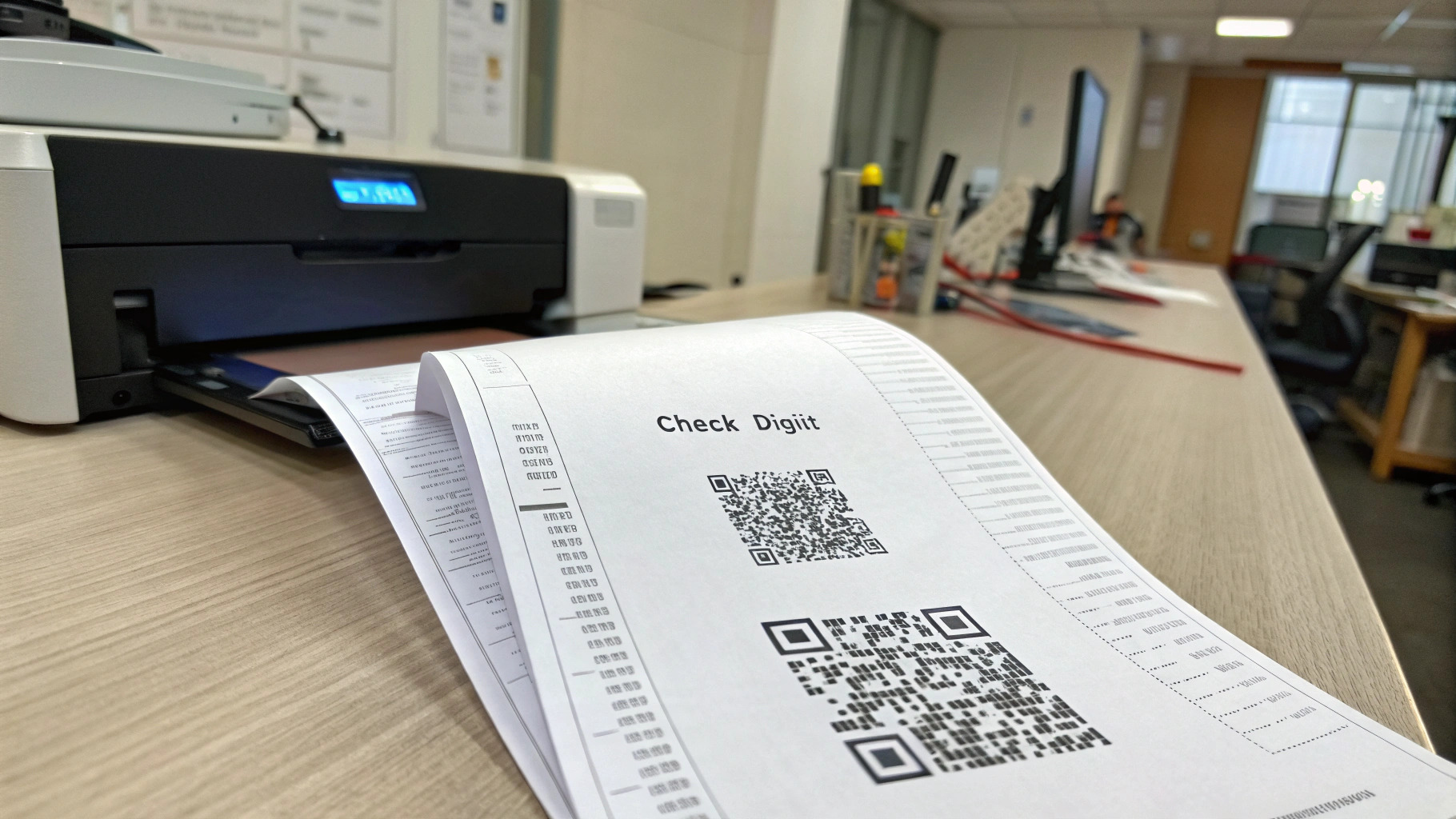
The first decision in any card serialization spec is the scheme. A sequential scheme (000001, 000002, …) is simple to print, easy to read, and trivial to audit—but it is also predictable, which lets an attacker guess or enumerate valid numbers. A randomized or pseudo-random scheme removes that predictability and avoids collisions across batches, at the cost of needing a registry to translate a number back to its record.
Most secure programs use a hybrid: allocate non-overlapping ranges per batch or per issuer (governed by the ISO/IEC 7812 issuer-identification framework developed under ISO/IEC SC 17) and randomize within the range. Whatever you choose, write it down: scheme type, total length, character set (numeric vs alphanumeric), and whether a checksum digit such as Luhn is appended. If you plan to personalize cards in-house, the printer and middleware must enforce the same serialization rules—our card printer buying guide covers which hardware can do that consistently.
Barcode, QR, or embossed—match the identifier to how it is read
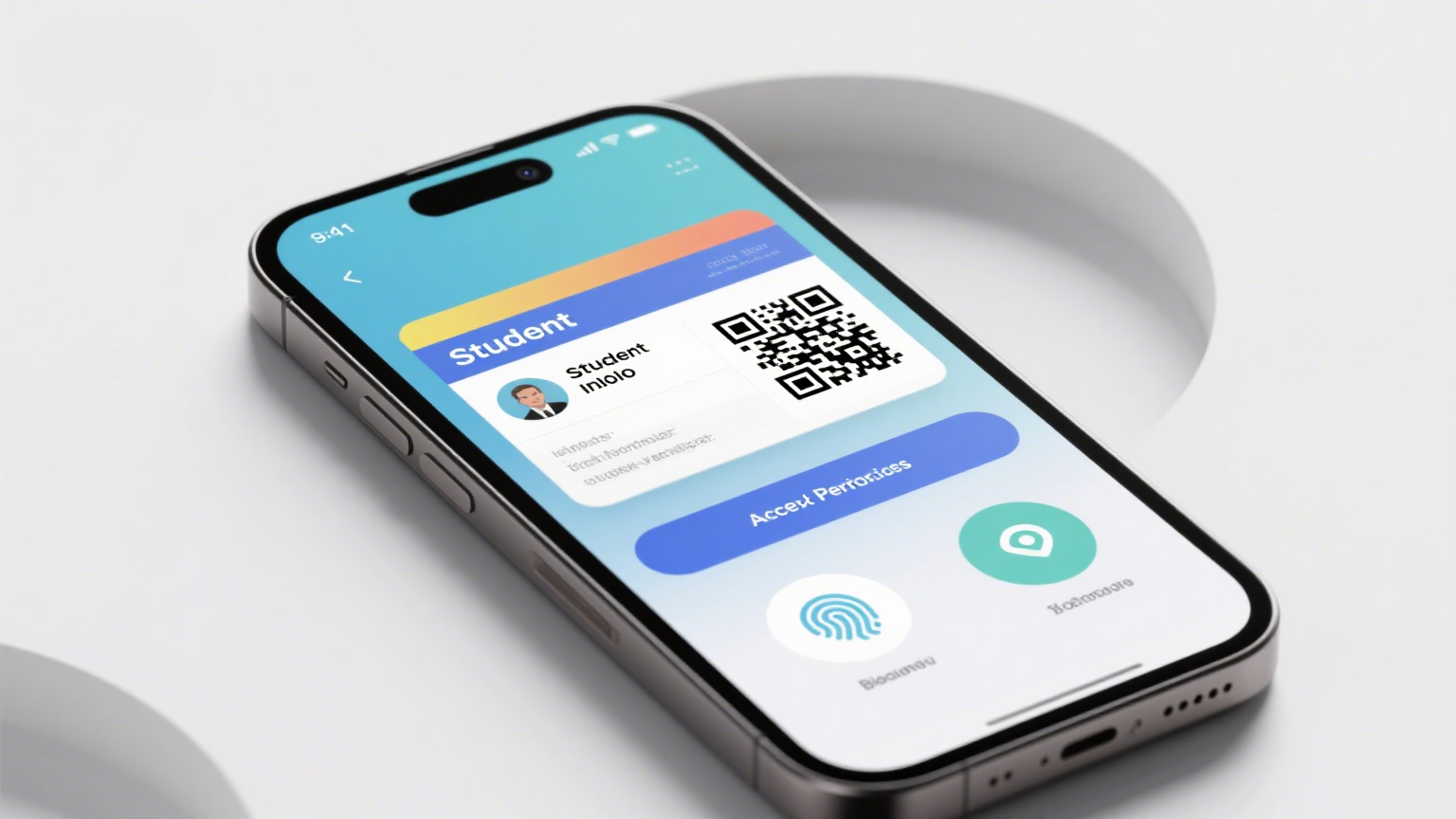
Once you have a number, you must decide how it is presented on the card. Embossed numbers are read by eye or by mechanical impression—no power, no reader, but they wear and carry little data. Barcodes (typically Code 128 or GS1 symbologies) are cheap and fast, but need line-of-sight and degrade with scratches or dirt; a worker fighting a greasy, unreadable barcode is a support ticket waiting to happen. QR codes hold far more data and scan with any smartphone, which is why dynamic student and staff IDs increasingly carry a QR alongside the chip.
Then there is the chip UID—a unique serial burned into the contact or contactless chip that machines read with no printed mark at all. The right answer is usually layered: a printed human-readable number, a machine-readable barcode/QR, and the chip UID, each carrying the same identity. Standards bodies such as GS1 define the barcode and QR data structures you should reference in the spec.
Where the number actually lives: chip UID, printed surface, and your database
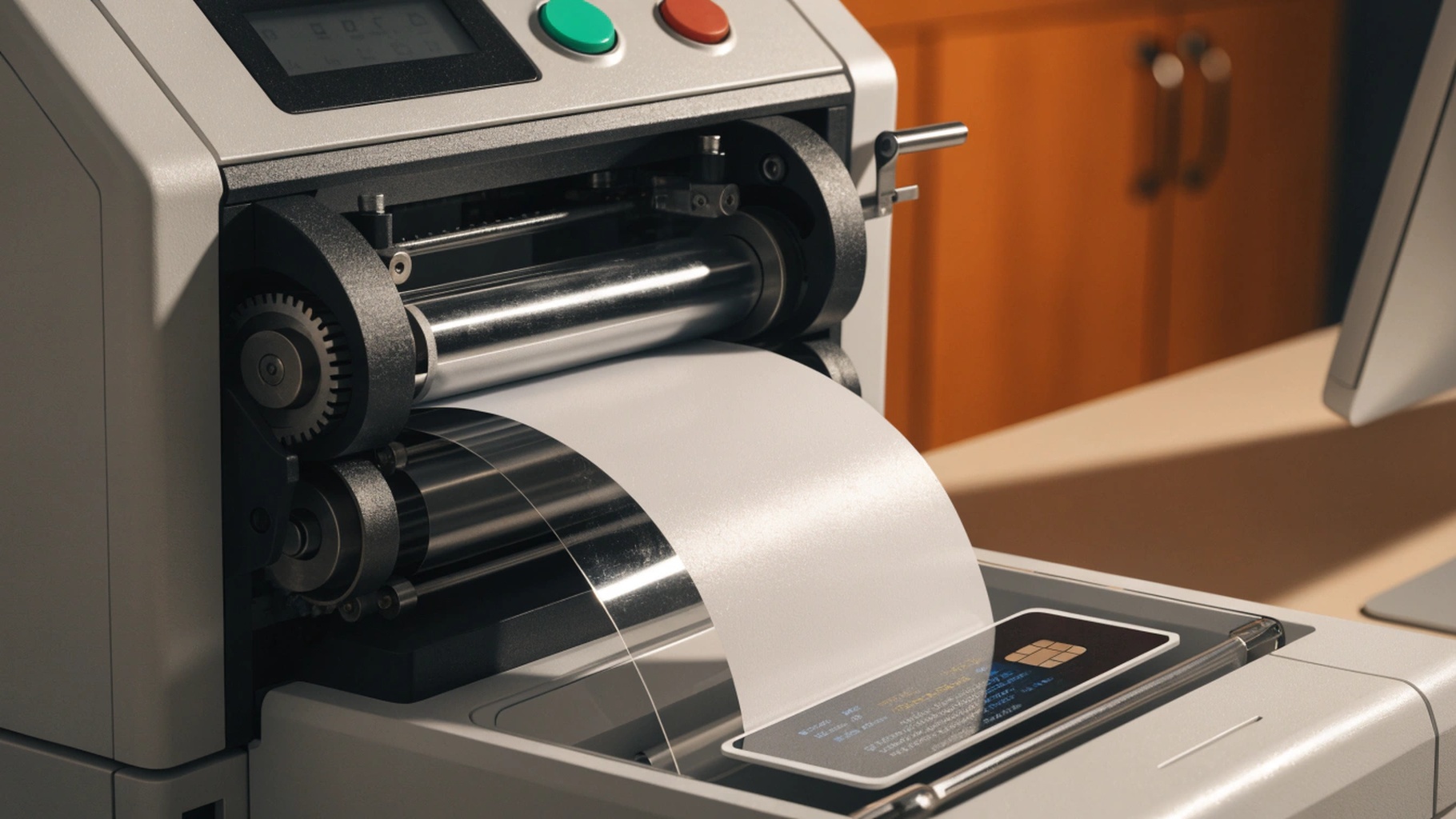
A common mistake is treating the printed number and the chip UID as the same thing. They are not. The printed serial is the human-readable key; the chip UID is the machine key; and your card management system is the system of record that joins them to a holder. For a traceable program these three must agree. If the printed number says 000512 but the chip reports UID A1-B2, every verification breaks.
That is why a mature program generates the identifier once—ideally inside the card management system and middleware—and pushes it to both the surface print and the chip encoding in the same personalization job. Payment and PIV programs go further: EMVCo governs how the PAN is derived, and NIST FIPS 201-3 requires unique, rigorously managed identifiers for federal PIV credentials. Our EMV payment personalization guide walks through how the encoded number is bound to the chip.

Writing serialization into your purchase specification
This is the part most buyers skip. Your purchase order should state serialization explicitly, not assume the factory will “just do it.” A complete spec covers five points:
- Scheme: sequential, randomized, or range-based—and the issuer prefix if applicable.
- Format: total length, character set, fixed vs variable, and the checksum rule.
- Presentation: printed (laser/ink), embossed, barcode symbology, QR version, and chip UID handling.
- Registry responsibility: who owns the master list and de-duplication—you or the vendor.
- Proof: a signed sample or proof sheet showing the first and last numbers of the run.
Hand this to your supplier alongside the artwork. If you are weighing in-house personalization, the card printer buying guide explains which equipment can enforce these rules run after run.
Five serialization mistakes that quietly break traceability
1. No checksum—transposed digits become silent ghosts in your registry. 2. Reusing ranges across batches or suppliers—two cards share a number and verification collapses. 3. Printed number ≠ chip UID—the two identities drift and nothing reconciles. 4. No de-duplication registry—you cannot prove a card is unique. 5. Ignoring issuer standards—a made-up prefix can collide with a real ISO/IEC 7812 issuer.
Each of these is cheap to prevent in the spec and expensive to discover in the field. A worker who cannot scan a worn barcode at the worst moment is the visible tip of a much larger data problem.

Get a sample with your serialization applied
Before you commit to a full run, order a proof or sample batch with your exact serialization applied—same scheme, same checksum, same print and chip encoding. It is the fastest way to catch a mismatch between what you specified and what the line produces. Transit agencies do this routinely: a transit fare card program will validate the stored-value serial and the surface print together before scaling to millions of cards. Treat the sample as a contract, not a courtesy—if the numbers do not match your spec, send it back before a single production card ships.

Serialization is not a printing detail—it is the data foundation of your entire card program. Specify it like one, and every later decision about recall, audit, and trust gets easier.