You need smart cards — for staff badges, member IDs, access credentials, or a private-label program you plan to resell. Before you start weighing chip families or print finishes, you face a bigger decision: buy straight from a factory, or through a reseller? That single choice drives your unit cost, your minimum order, your lead time, and — most importantly — how much quality and compliance risk you personally absorb. This guide gives you a practical framework to match the right channel to your volume and risk profile, plus a six-point checklist to vet any supplier before you commit.
What “factory-direct” and “reseller” actually mean in smart cards

The terms get blurred, so let’s be precise. Factory-direct means you contract with the actual manufacturer — the plant that laminates the inlay, embeds the chip, prints and personalizes the card. Reseller (or distributor / value-added reseller) means a trader or intermediary that buys from one or more factories and sells under its own brand or as a middle layer.
The trap is that “factory” is not always a factory. A trading company can rent a sleek sales office and present itself as a manufacturer, when in reality it outsources production it does not control. If you want to understand what a finished card is made of before you negotiate, our explainer on how smart cards are made is a useful primer on the inlay, lamination, and chip-embedding steps a real plant must own.
- A real OEM/ODM plant owns production lines, tooling, and QA — and can show them to you.
- A trading company owns a catalogue and relationships, but not the press or the bonding bench.
- A VAR (value-added reseller) adds services — encoding, software, local support — on top of a factory’s cards.
Cost, MOQ, and lead time — what actually changes by channel

The headline difference is price, but the deciding variables are minimum order quantity (MOQ) and lead time. The reseller’s quoted price already includes their margin — you are paying for convenience, local stock, and a single point of accountability. Route the same volume to a factory and the per-card cost usually drops, but only once you clear the factory’s MOQ and absorb a longer, more hands-on qualification cycle.
| Factor | Factory-direct | Reseller |
|---|---|---|
| Unit price at volume | Lower | Higher (margin stacked) |
| Minimum order (MOQ) | Often 500–5,000+ pcs | Low / by-the-box |
| Lead time | Longer (production + your QA) | Shorter (local stock) |
| Accountability | Direct to plant | Single throat to choke |
| Technical support | You drive specs | Bundled / local |
| Best for | Large, steady programs | Small runs, urgent top-ups |
Before you request quotes, standardize what you send out. A clear, complete specification prevents “apples-to-oranges” pricing and is the fastest way to compare a factory and a reseller on equal terms — see our smart card RFQ specification template for a ready-to-use brief.
Quality risk and accountability — who owns the failure?
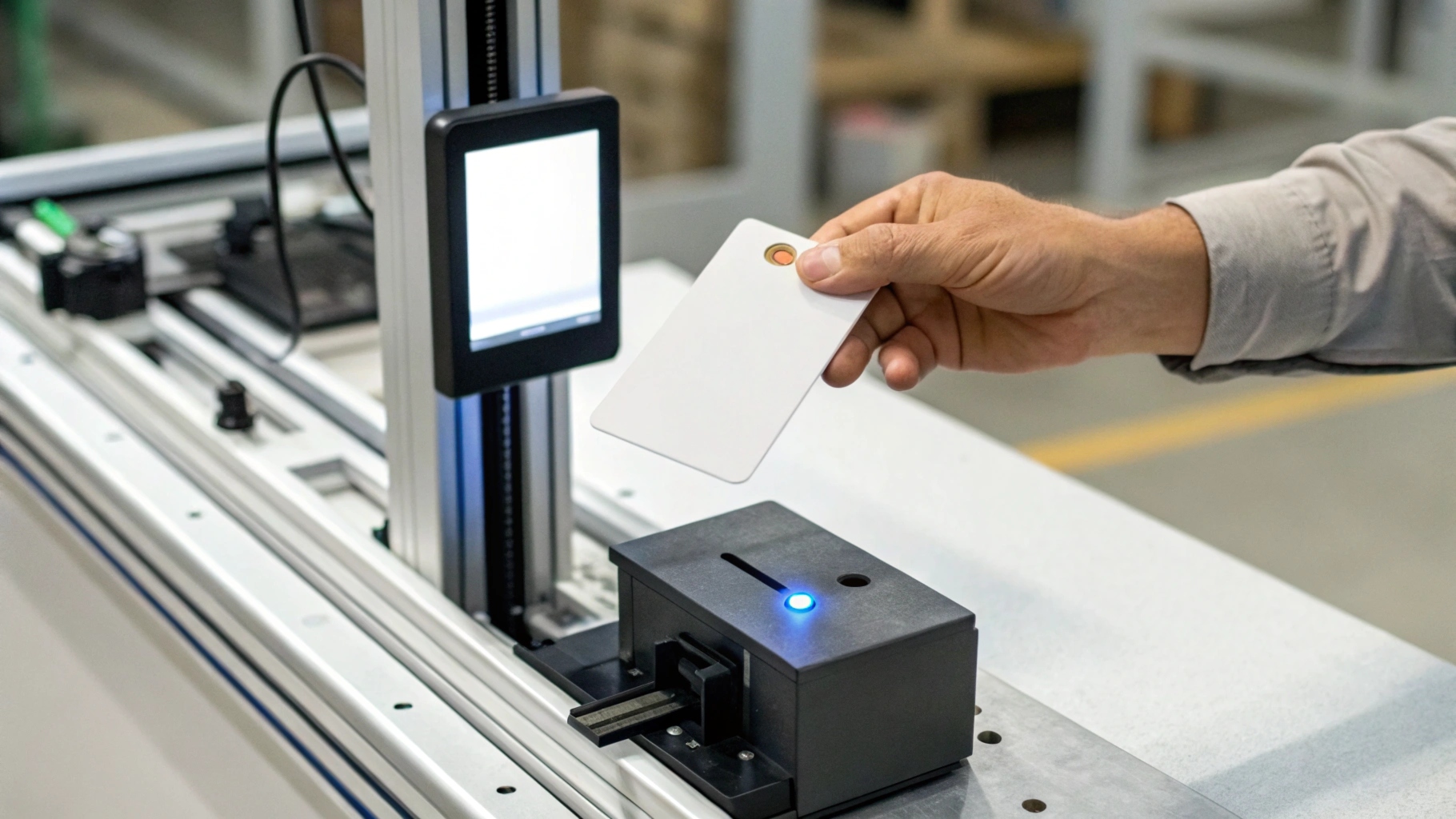
This is where channel choice stops being about price and becomes about liability. If a batch fails — chips that won’t encode, lamination that delaminates, color that’s off, or cards your readers reject — someone has to fix it. Buying direct gives you a faster technical loop straight to the plant, but you must put warranty, root-cause, and re-run terms in the contract yourself. A reseller gives you one accountable party, at the cost of an extra hop back to their factory.
Either way, know the baseline your cards must meet. ISO/IEC 7810 defines the physical dimensions and durability of identification cards, while ISO/IEC 14443 governs contactless proximity cards. For payment or e-passport programs, EMVCo and ICAO requirements apply — our ICAO, ISO 7810 & EMV compliance checklist walks through what to verify before you buy. A card that works on the bench but fails in the field after six months is a warranty and compliance problem you will own — specify acceptance testing and retention samples in writing.
Once cards arrive, the risk isn’t over. Our card shipment inspection checklist shows how to accept or reject a delivery with objective tests rather than a visual glance.
Trust signals that separate a real factory from a trader
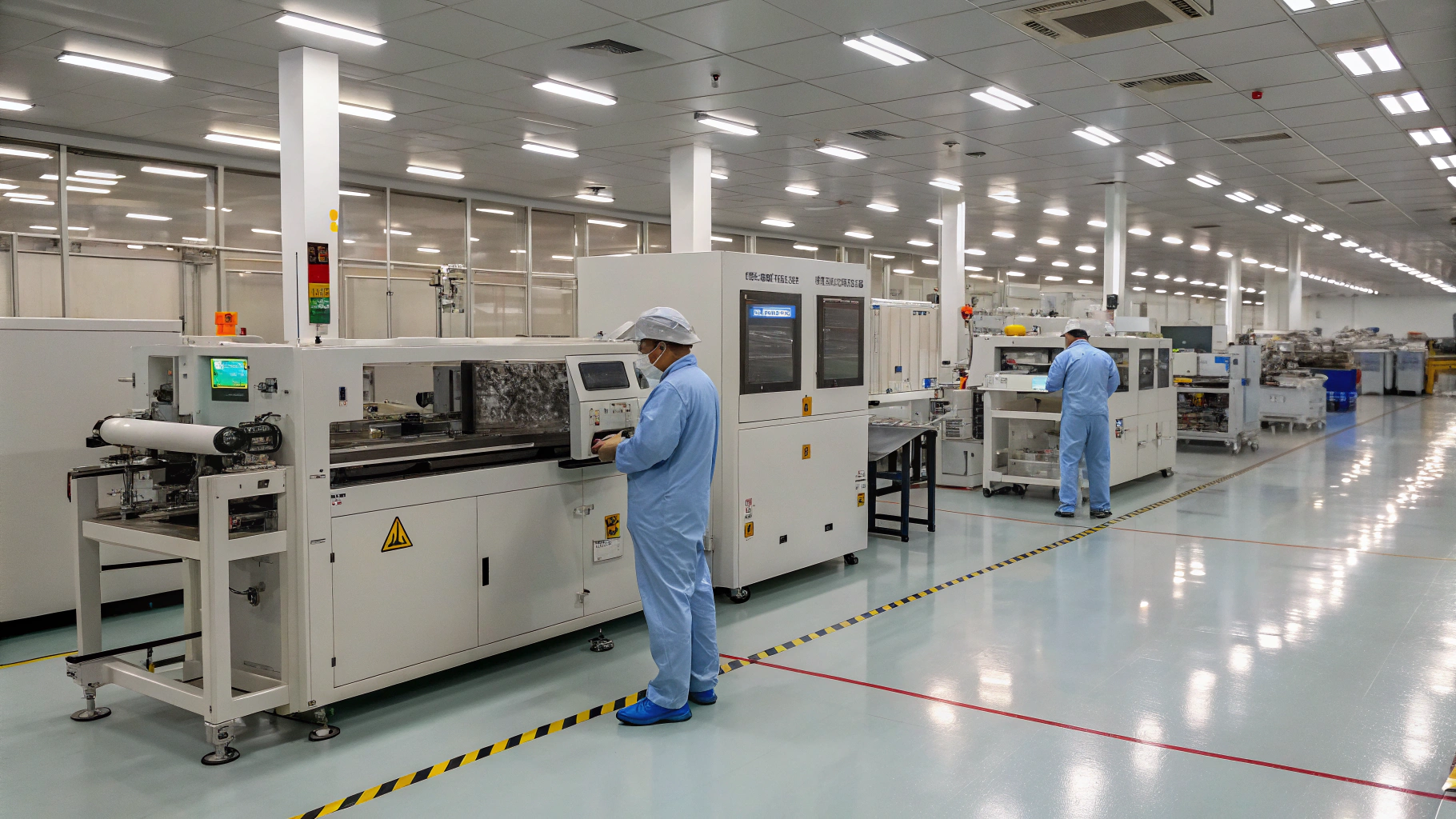
Whether you go direct or through a reseller, you are ultimately betting on a factory somewhere. Learn to read the signals. A supplier that cannot show you the lamination and chip-bonding line — or a valid ISO 9001 certificate — is a trader, not a factory.
- Certifications: ISO 9001 (quality) and ISO 14001 (environmental), plus REACH and RoHS declarations for cards bound for the EU.
- Production evidence: live lines, clean rooms, personalization and bonding equipment — not just a PDF catalogue.
- Auditability: willingness to host a virtual or on-site factory audit and share export references.
- Sample policy: free or low-cost samples you can test before committing volume.
For government or high-assurance programs, the bar is higher — our guide on how to evaluate a secure printing factory for national ID and passport tenders details the audit and qualification steps buyers should expect.
A six-point supplier vetting checklist before you commit

Regardless of channel, run every supplier through the same gate. These six points turn “they seemed legit” into documented evidence:
- Confirm the legal entity and facility — business license, factory photos/video, and (ideally) an audit.
- Verify certifications — ISO 9001/14001 and REACH/RoHS declarations for your target markets.
- Request and field-test samples — read range, flex endurance, solvent resistance, and encoding under your own readers.
- Lock warranty and retention terms — root-cause SLA, retention samples, and re-run responsibility in the contract.
- Check export experience and references — especially in your region and industry.
- Protect IP and design confidentiality — NDA plus explicit tooling and artwork ownership in writing.
When a reseller is actually the smarter choice

This guide is not anti-reseller. Direct is not automatically “better” — it is simply a different trade. The right answer is rarely “factory always wins”; it is “match the channel to your volume, risk, and internal capability.” A reseller is the smarter choice when:
- Your volume is below a factory’s MOQ, or you need urgent stock now.
- You want local support and fast replacement without running your own qualification.
- You prefer one accountable party handling compliance paperwork for you.
- You are running a hybrid model — factory for the core program, reseller for top-ups and replacements.
Frequently asked questions
Is factory-direct always cheaper?
At volume, yes — but only above the factory’s MOQ. Below that threshold, the reseller’s lower minimum and faster delivery usually win on total cost once you count your own qualification effort.
How do I know if a “factory” is real?
Ask for production evidence and a valid ISO 9001 certificate, and be ready to run a factory audit. A trader cannot show you the lamination and chip-bonding line. See the trust signals section above for the full list.
Can I use both channels at once?
Yes, and many enterprises do. A common pattern is factory-direct for the steady core program and a reseller for urgent top-ups, replacements, and local support.
Next step: get a comparable quote
The fastest way to see the real gap between direct and reseller pricing for your program is to send one standardized specification to both and compare like-for-like. Start from our smart card RFQ template, then request a quote and free samples so you can run your own field tests before committing volume.