Specifying RFID tags looks simple until the first rollout stalls at the dock door. The fix is rarely the tag itself—it is a mismatch between the physical environment, read distance, and chip capability you actually need. This guide walks procurement and engineering teams through the decisions that separate a tag that works on day one from one that quietly fails in the field.
Lock Your Use Case Before You Shop
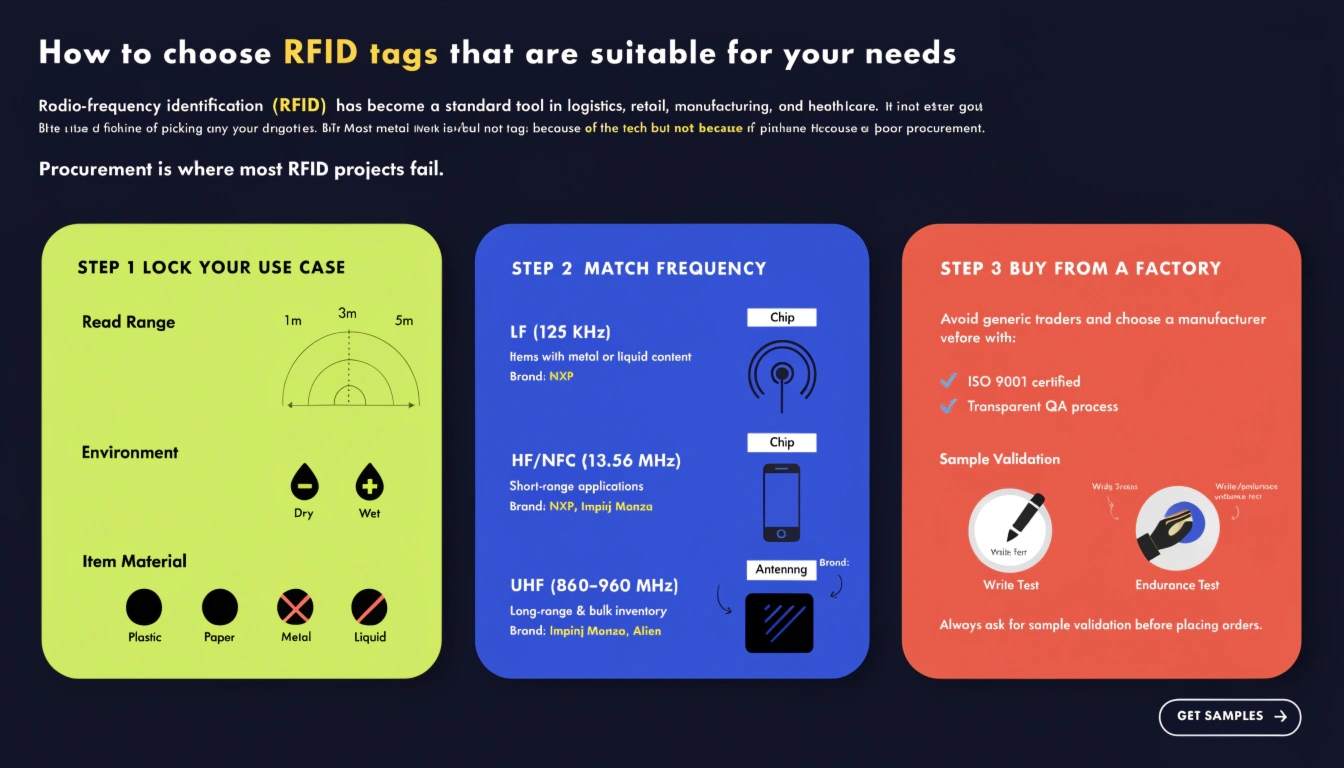
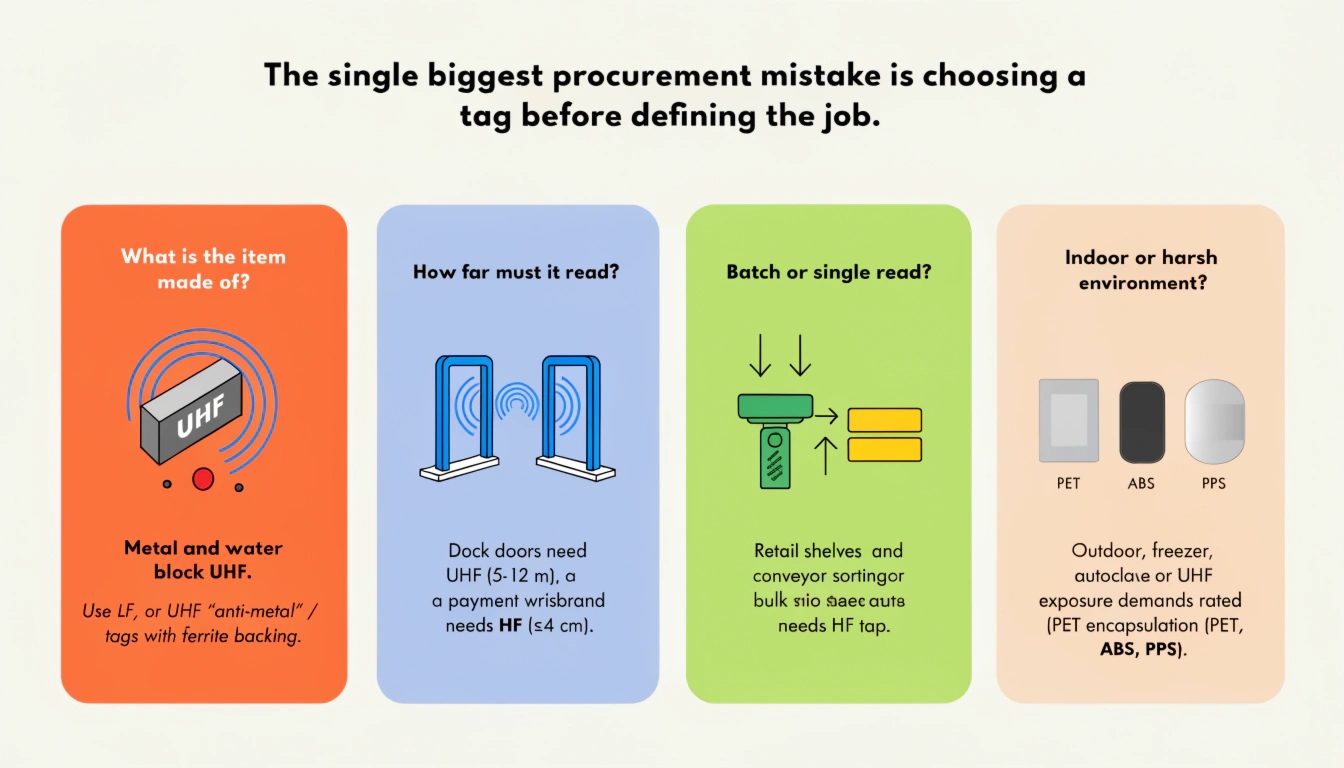
Before requesting quotes, write down three things: what the tag is attached to, where it is read, and how often. A tag on a metal asset in a freezer behaves nothing like a tag on a cardboard carton on a conveyor. Vendors optimize to the answer you give them, so a vague brief produces a vague—and often wrong—recommendation.
The Three RFID Frequencies
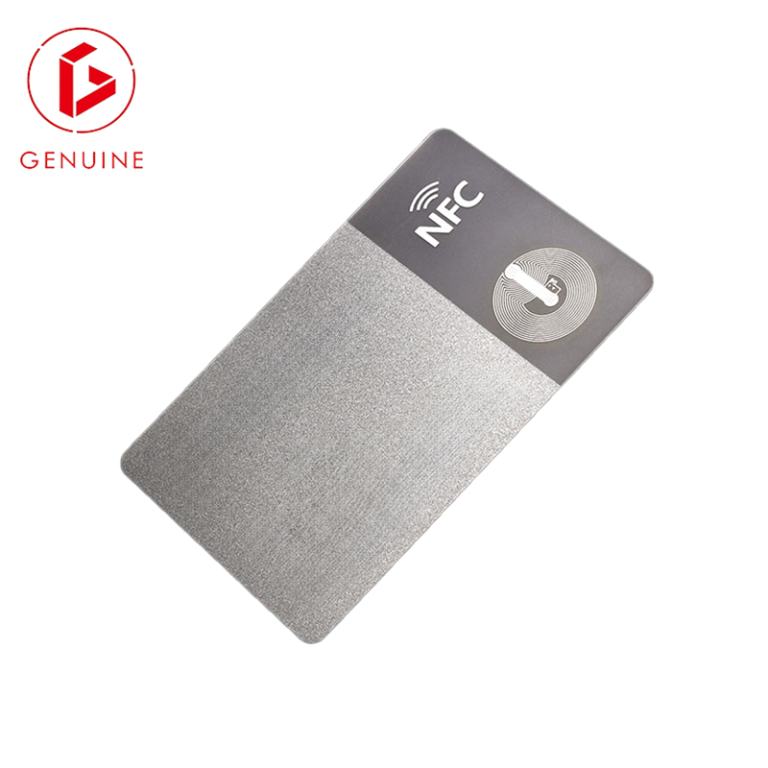
RFID splits into three bands, each with trade-offs. LF (125–134 kHz) penetrates metal and liquid but reads only inches away. HF (13.56 MHz) is the NFC and ISO 15693 world—good for cards and item-level. UHF (860–960 MHz) delivers meters of read range and is the supply-chain default. Region matters: UHF bands differ by geography, so confirm the regulatory range before you standardize. For the full comparison, see our LF vs HF vs UHF frequency guide.
Choose the Right Tag Form and Material
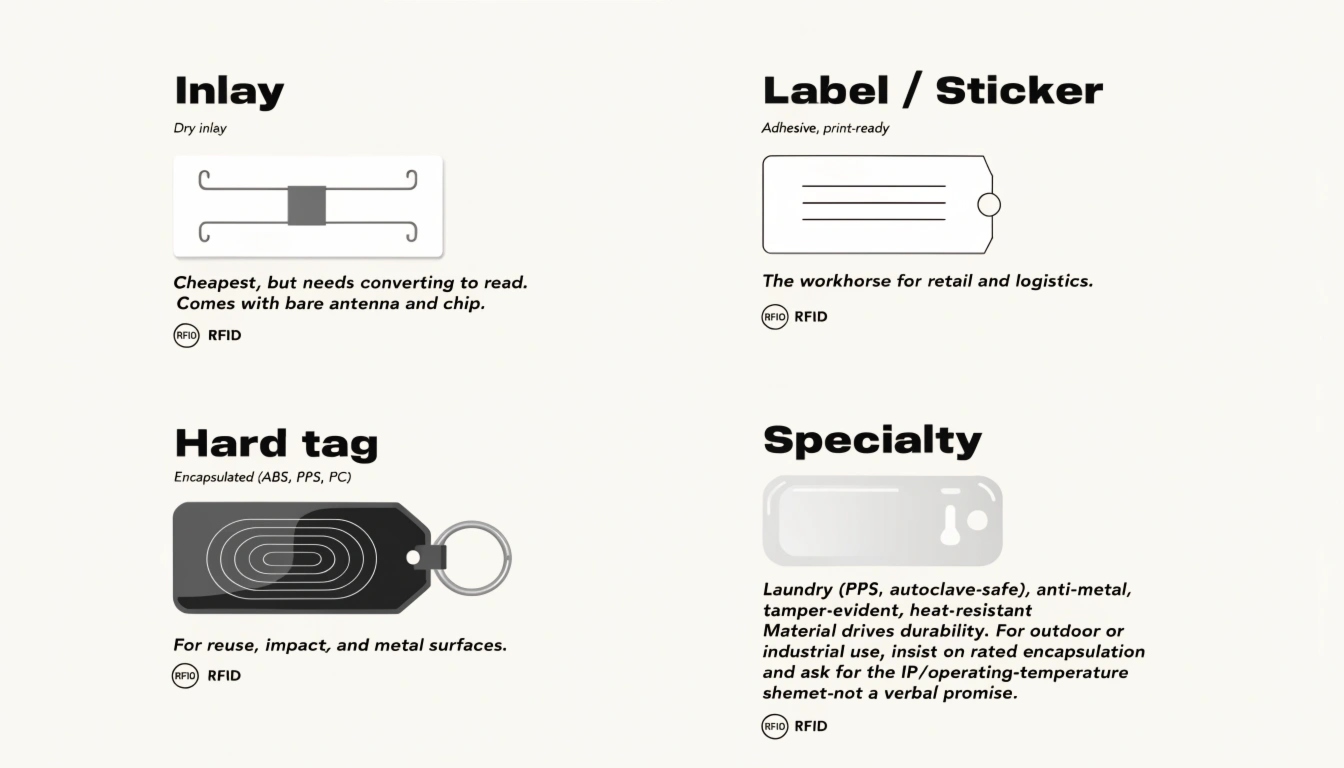
The inlay (antenna + chip) is the heart; the label, hard tag, or mount wraps around it. For metal surfaces you need on-metal tags; for harsh environments, encapsulation; for apparel, a soft flexible label. Matching the form factor to the substrate prevents the most common field failures—a paper label on a curved metal part will delaminate.
Chip and Memory: What Actually Matters
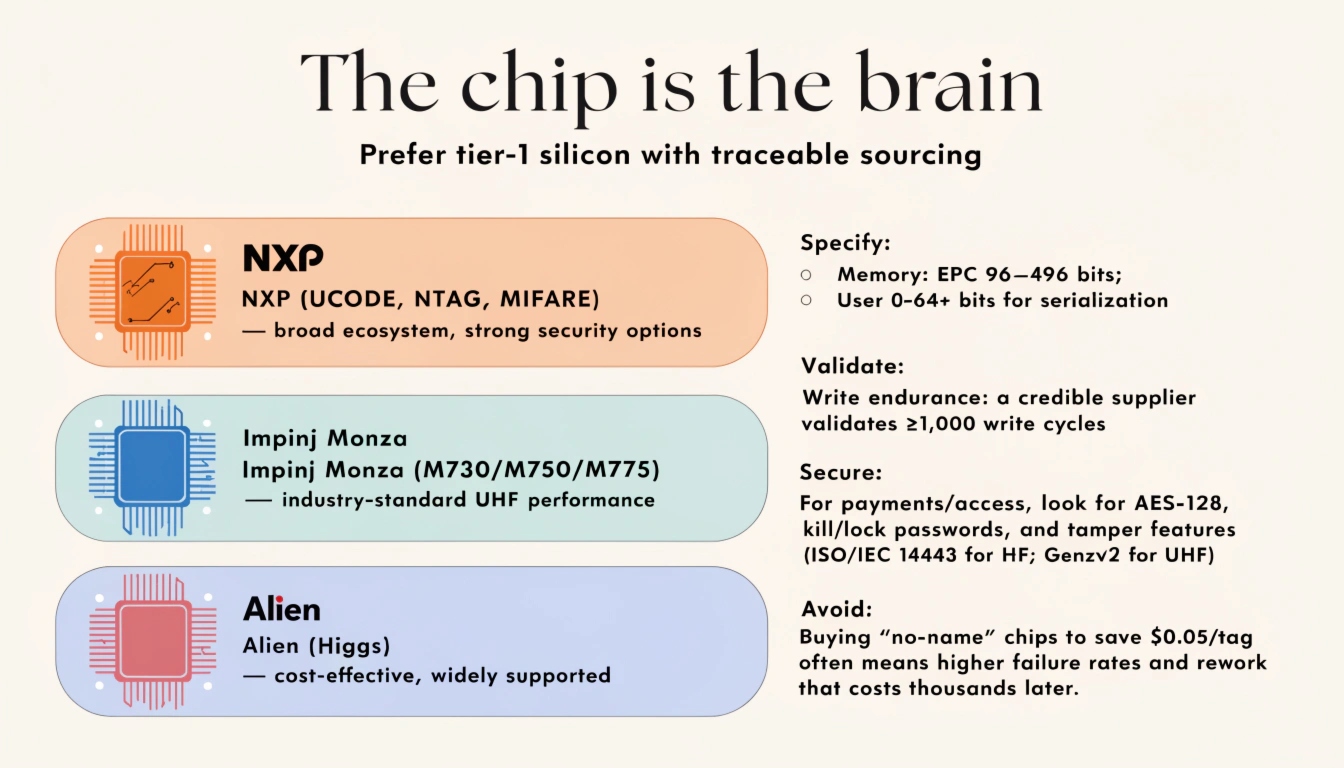
Do not buy on price per chip alone. Tier-1 silicon gives you consistent read sensitivity, memory integrity, and longer support life. Decide how much user memory you need: a serial number needs almost none, while a locked authentication record needs more. If anti-counterfeit is the goal, pick a chip with a unique signed ID or tamper feature.
How to Evaluate an RFID Supplier
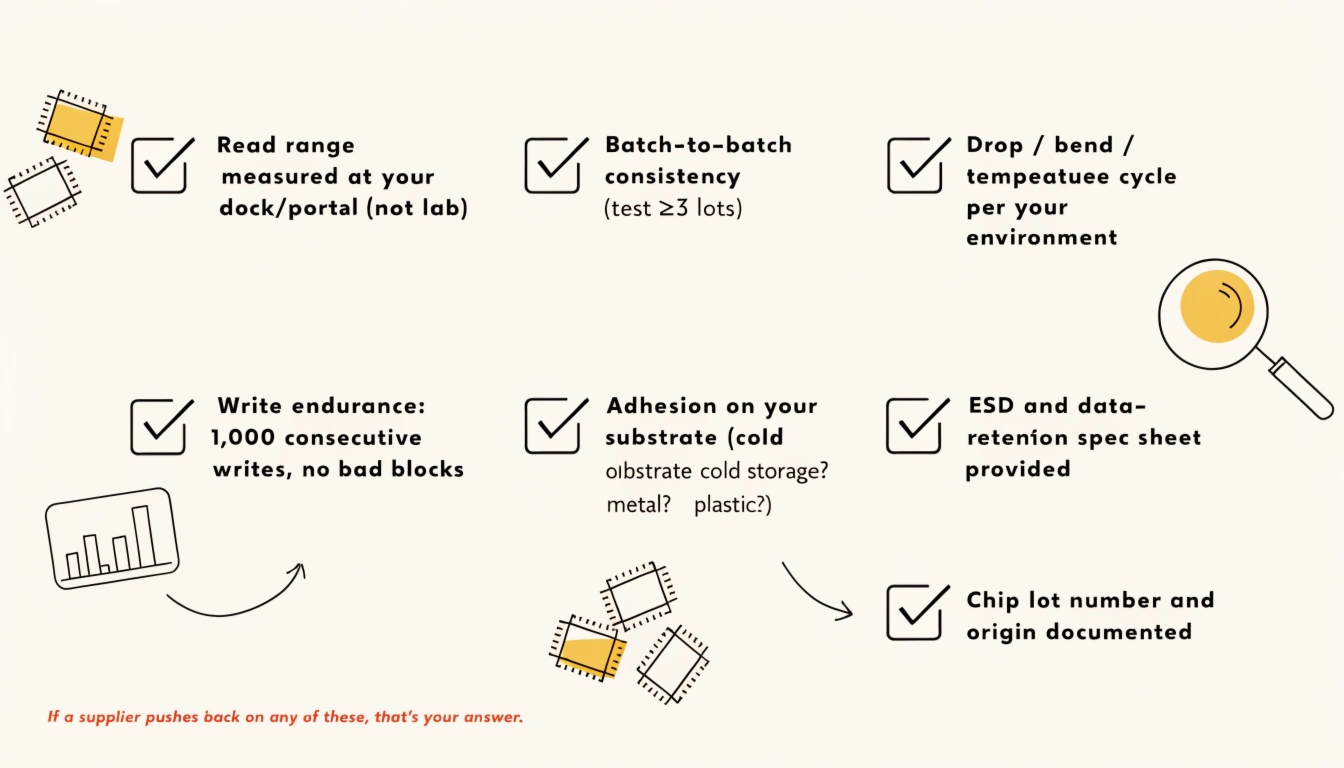
Ask for three things: published read-range test data, a sample lot you can pilot, and references from a similar deployment. Read range must be measured at your dock portal, not a lab bench, because metal, liquid, and stacking change everything. Confirm MOQ and lead time up front—our RFID MOQ and lead-time guide covers what to negotiate.
Common Procurement Mistakes to Avoid
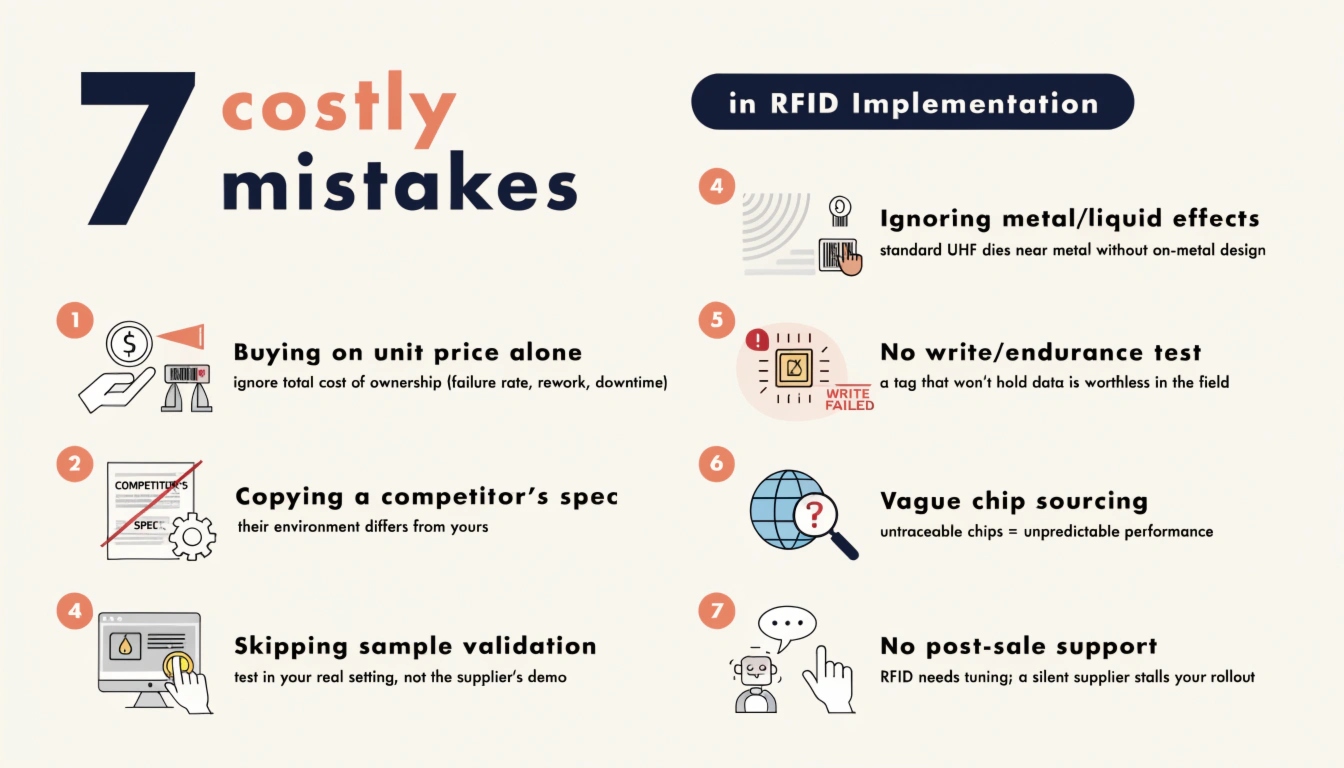
The most expensive error is optimizing for the lowest unit price instead of the lowest cost of failure. A $0.08 tag that fails at 8% in the field costs more than a $0.12 tag that works. We broke down all seven in our 7 costly RFID procurement mistakes guide.
Total Cost of Ownership, Not Unit Price
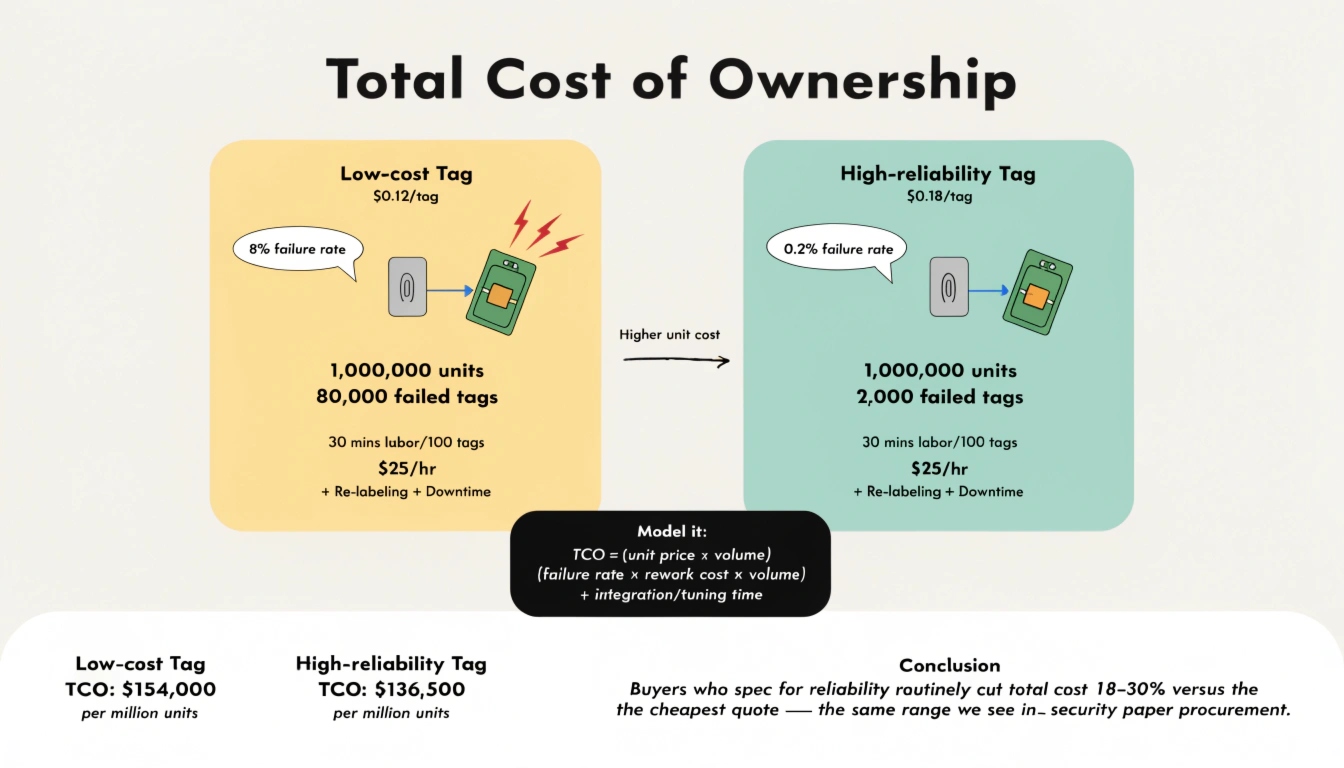
Model the real cost: tag price + read failure rate + rework labor + returns. A reliable tag with a slightly higher unit cost usually wins on TCO. For current pricing math, see our 2026 RFID pricing breakdown.
Sample Supplier Testing Checklist
- Request published read-range data at your frequency and region.
- Pilot 200–500 units in the real environment for two weeks.
- Confirm memory size, chip tier, and any security features.
- Verify MOQ, lead time, and reorder terms in writing.
- Check certification to GS1 and RAIN RFID where applicable.
Real-World Proof It Pays Off
Deployments from retail to cold-chain logistics show the same pattern: specifying tags against the real use case cuts read failures and labor cost within the first quarter. The saving is rarely the tag—it is the avoided rework and shrinkage.
FAQ
Which RFID frequency should I choose?
Match the frequency to the read distance and material. Use LF for metal and liquid at short range, HF for cards and item-level, and UHF for supply-chain range. The frequency guide has the full table.
Do I need a special chip for anti-counterfeit?
If authentication matters, choose a chip with a unique signed ID or tamper function. A plain low-cost chip only stores a serial number and will not stop cloning.
How many samples should I pilot?
Pilot 200–500 units in the actual environment for at least two weeks. Bench tests hide real-world failures from metal, moisture, and stacking.
Is a cheaper tag always the better deal?
No. A tag that fails in the field costs more through rework and returns than a reliable tag at a higher unit price. Decide on total cost of ownership.
Ready to Specify Your Tags?
If you have a use case and a read environment, our team can suggest a shortlist and run a pilot lot. Contact us with your substrate, frequency, and volume and we will return a spec sheet.