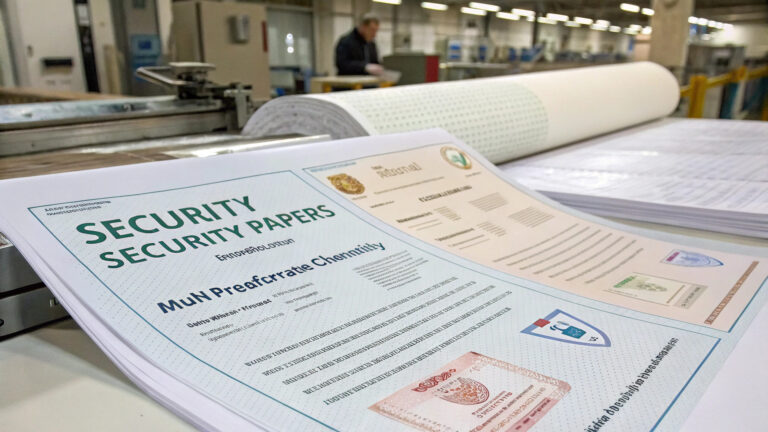
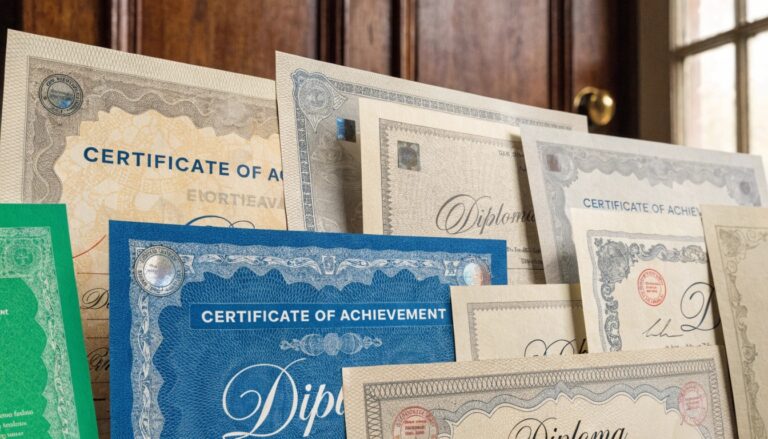
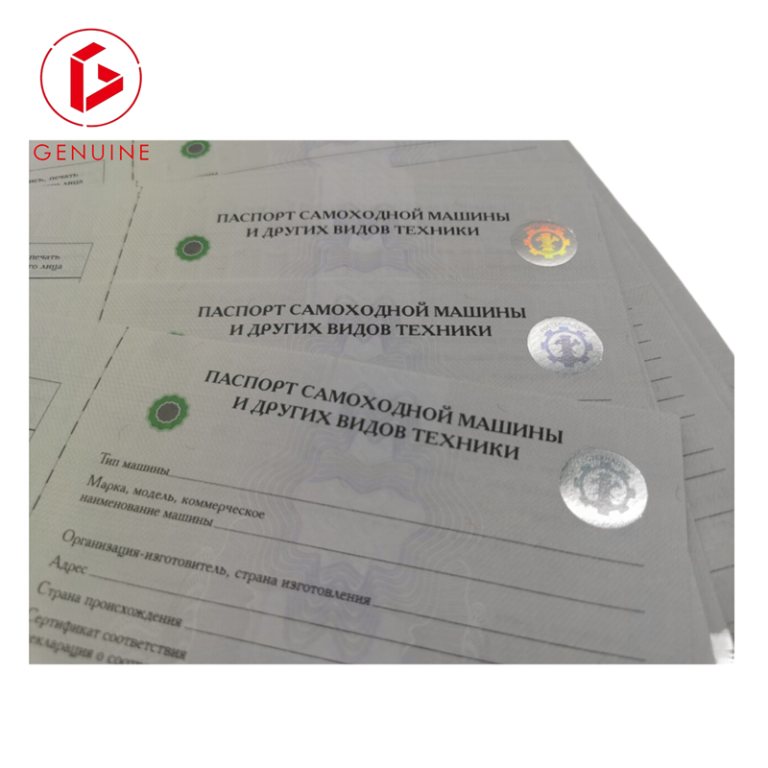
If you issue documents that prove something — a degree, a license, a share certificate, a banknote — you’ve probably asked the same question every security printer gets: how do I make this impossible to convincingly fake? Watermark paper is usually the first answer, and for good reason. It’s been the quiet workhorse of document security for centuries, and it’s still one of the hardest features for a counterfeiter to replicate without industrial papermaking equipment.
This guide covers what watermark paper actually is, how it’s made, where it’s used, and what to look for when you spec it for your own documents.
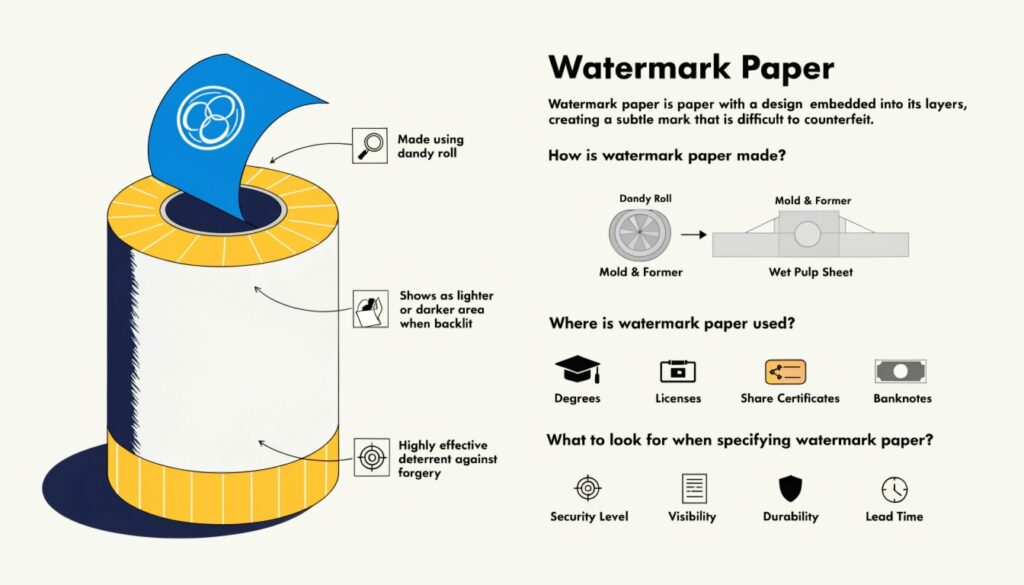
What Is Watermark Paper?
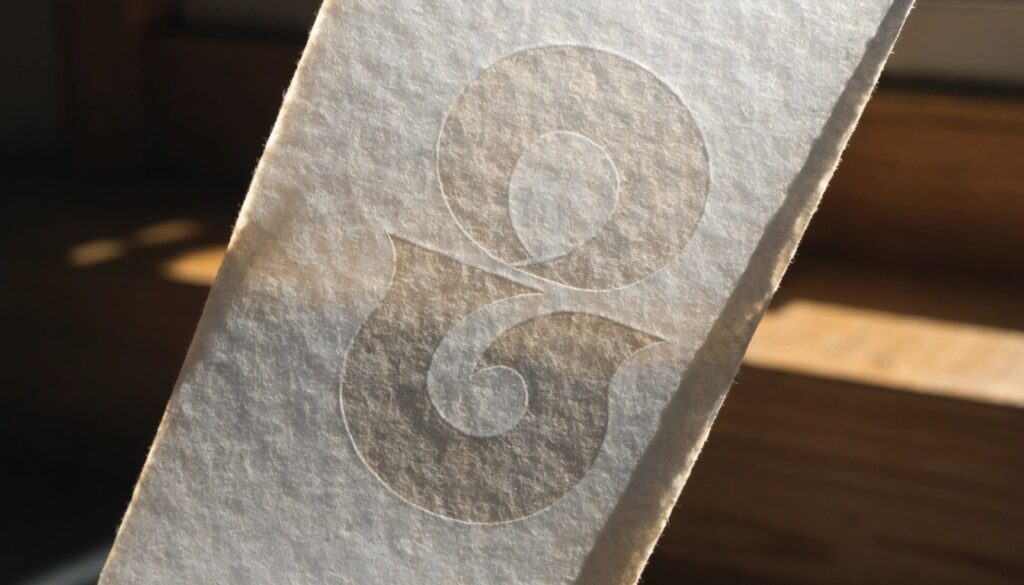
A watermark is a design — a logo, a portrait, text, or a pattern — embedded directly into the paper structure during manufacturing. Unlike a printed logo, you can’t feel it on the surface, and you can’t scratch it off. Hold the sheet up to the light and the image appears in lighter and darker tones of the paper itself.
That’s the whole trick, and it’s also why it works: the watermark isn’t on the paper, it is the paper, formed by varying the thickness of the fiber as the sheet is made. A desktop printer or photocopier can’t reproduce that. At best, a forger gets a blurry toner copy that vanishes the moment you tilt the sheet.
How Watermark Paper Is Made
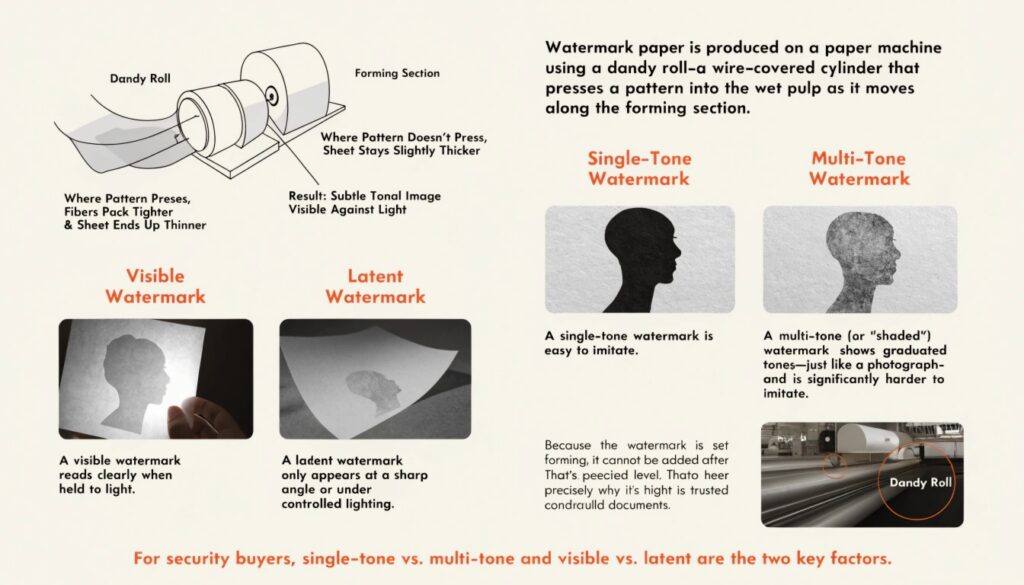
Watermark paper is produced on a paper machine using a dandy roll — a wire-covered cylinder that presses a pattern into the wet pulp as it moves along the forming section. Where the pattern presses, the fibers pack tighter and the sheet ends up thinner; where it doesn’t, the sheet stays slightly thicker. The result is a subtle tonal image visible against light.
Two things matter for security buyers:
- Single-tone vs. multi-tone. A single-tone watermark shows one lightness level. A multi-tone (or “shaded”) watermark shows graduated tones — like a photograph — and is significantly harder to imitate.
- Visible vs. latent. A visible watermark reads clearly when held to light. A latent watermark only appears at a sharp angle or under controlled lighting, adding a layer a casual inspector would miss.
Because the watermark is set during forming, it cannot be added after the sheet is made. That’s precisely why it’s trusted for high-security documents.
Types of Watermarks You’ll Encounter
| Type | What it looks like | Typical use |
|---|---|---|
| Single-tone | One flat lightness | General certificates, letterhead |
| Multi-tone (shaded) | Photographic gradient | Banknotes, passports, national IDs |
| Electrotype | Small text/logo in a specific area | Denominations, serial validation |
| Latent | Only visible at angle | High-security government docs |
Where Watermark Paper Is Used
Watermark paper shows up wherever authenticity has real consequences:
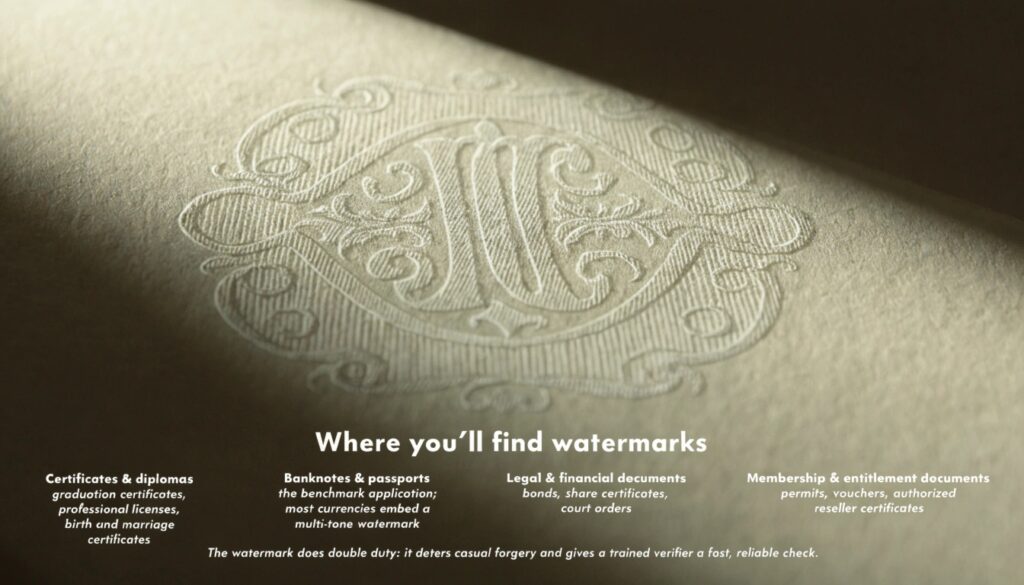
- Certificates & diplomas — graduation certificates, professional licenses, birth and marriage certificates
- Banknotes & passports — the benchmark application; most currencies embed a multi-tone watermark
- Legal & financial documents — bonds, share certificates, court orders
- Membership & entitlement documents — permits, vouchers, authorized reseller certificates
For any of these, the watermark does double duty: it deters casual forgery and gives a trained verifier a fast, reliable check.
Why Institutions Still Rely on It
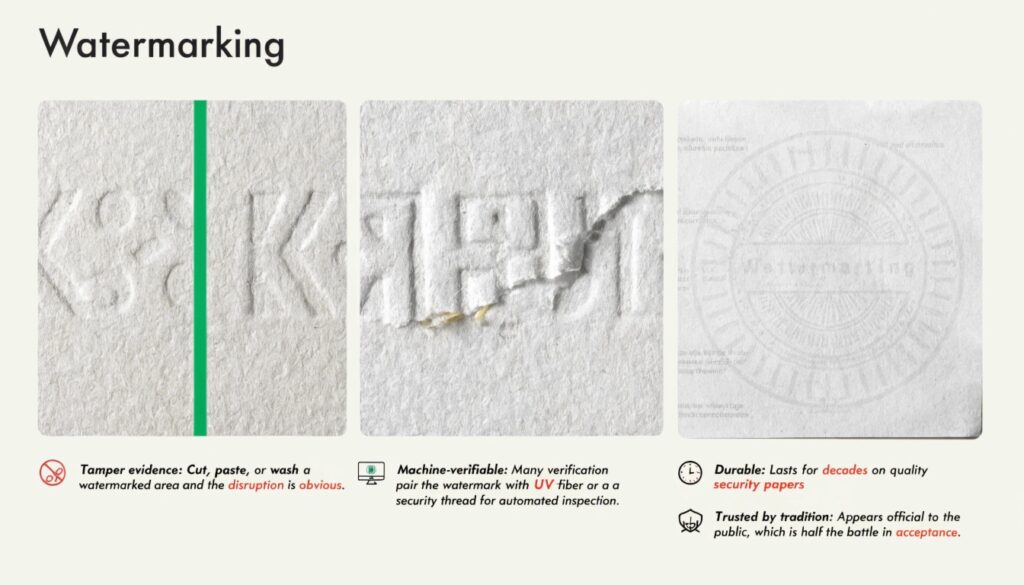
- Tamper evidence. Cut, paste, or wash a watermarked area and the disruption is obvious.
- Machine-verifiable. Many verification workflows pair the watermark with UV fiber or a security thread for automated inspection.
- Durability. Quality security paper outlasts standard stock — important for records meant to last decades.
- Trust by tradition. A watermark reads as “official” to the public, which is half the battle in acceptance.
Customizing Watermark Paper for Your Documents
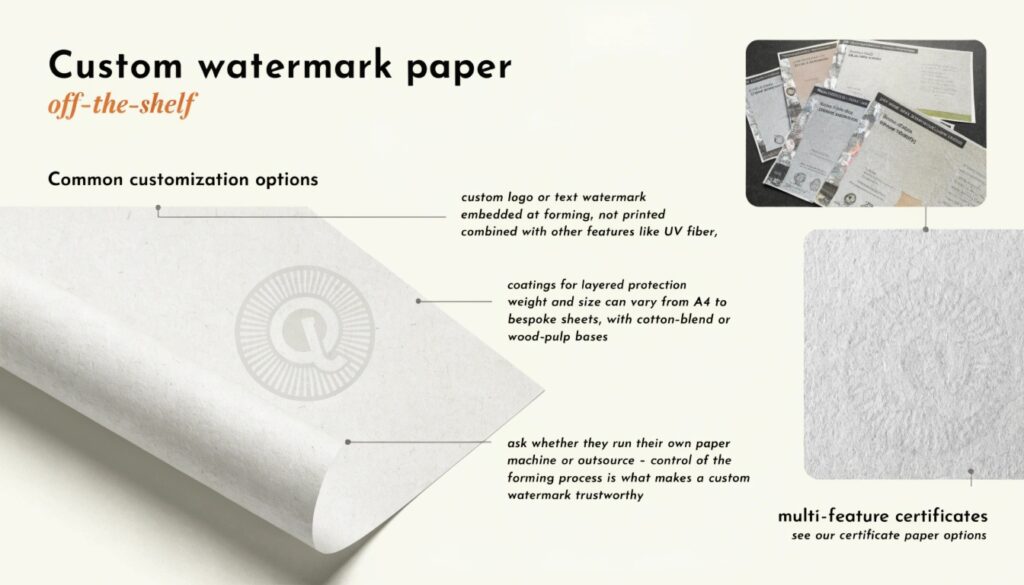
Off-the-shelf watermark paper exists, but most institutions that care about security go custom. A custom watermark can carry your agency crest, university seal, or brand mark, making the document uniquely yours.
Common customization options:
- Custom logo or text watermark — embedded at forming, not printed
- Combine with other features — pair the watermark with UV fiber, a security thread, or chemical-sensitivity coatings for layered protection
- Weight and size — from A4 to bespoke sheets, cotton-blend or wood-pulp base
- Multi-feature certificates — see our certificate paper options
If you’re evaluating a security paper supplier, ask whether they run their own paper machine or outsource — control of the forming process is what makes a custom watermark trustworthy.
How to Choose a Watermark Paper Supplier
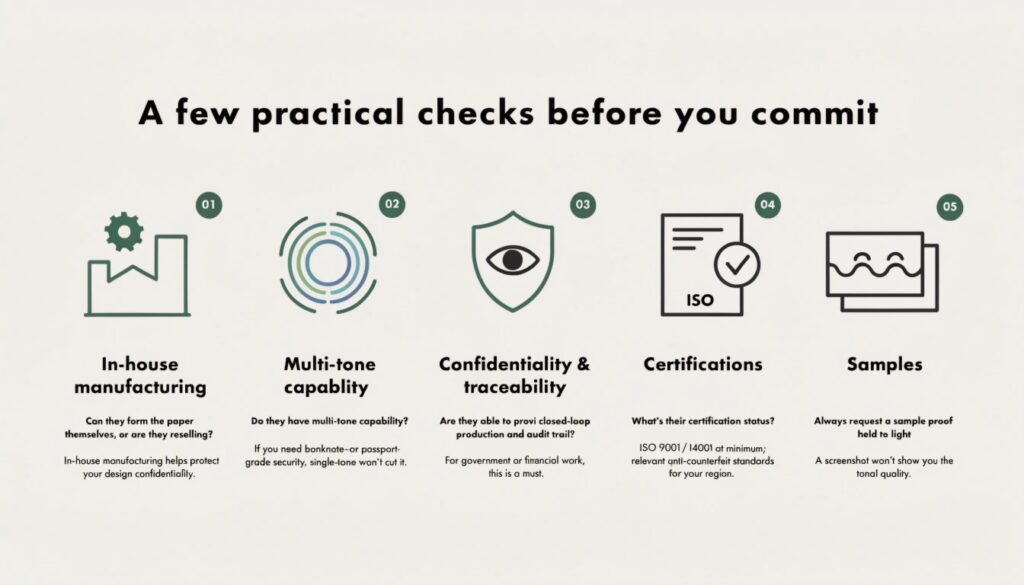
A few practical checks before you commit:
- In-house manufacturing. Can they form the paper themselves, or are they reselling? In-house control protects your design confidentiality.
- Multi-tone capability. If you need banknote- or passport-grade security, single-tone won’t cut it.
- Confidentiality & traceability. For government or financial work, ask about closed-loop production and audit trails.
- Certifications. ISO 9001 / 14001 at minimum; relevant anti-counterfeit standards for your region.
- Samples. Always request a physical proof held to light — a screenshot won’t show you the tonal quality.
FAQ
Can a watermark be copied by scanning or photocopying?
No. A scanner captures the surface tone, not the paper thickness variation, so copies show a flat, unconvincing imitation — or nothing at all. That’s the point.
What’s the difference between a watermark and a security thread?
A watermark is formed into the paper thickness; a security thread is a separate strip embedded in the sheet. They’re complementary — many high-security documents use both.
Can watermark paper run through standard printers?
Yes, for printing text and graphics on top. Durability varies by base stock; cotton-blend papers handle inkjet, offset, and copiers well.
How long does a custom watermark take to produce?
Typically 2–3 weeks for design and proofing, then production lead time depends on volume. Confirm timelines with your supplier during specing.
GENUINE has manufactured custom security paper — including watermark, UV fiber, and security-thread substrates — for government agencies, banks, and universities since 2005. Talk to our engineers about a confidential watermark specification for your documents.