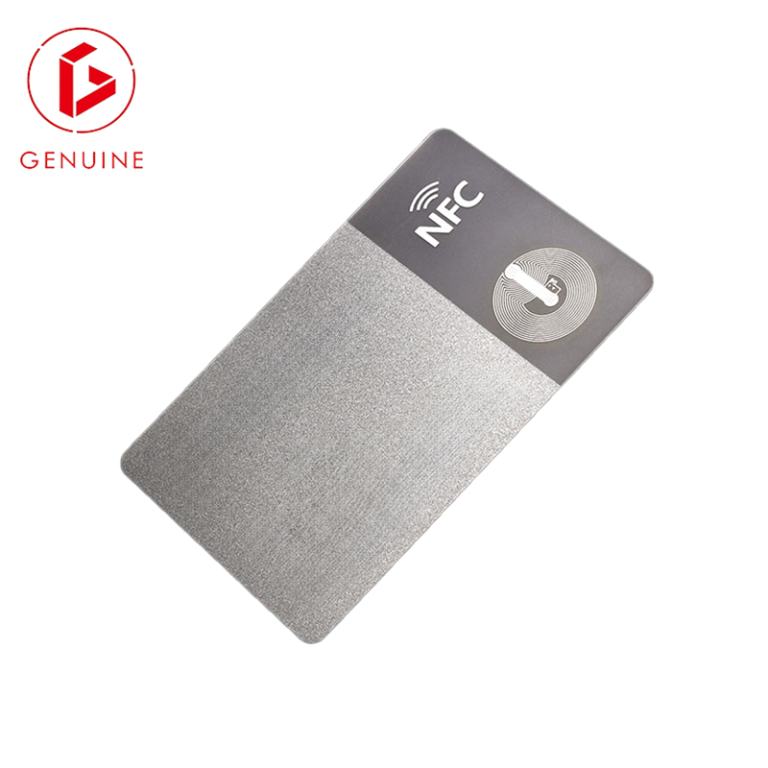
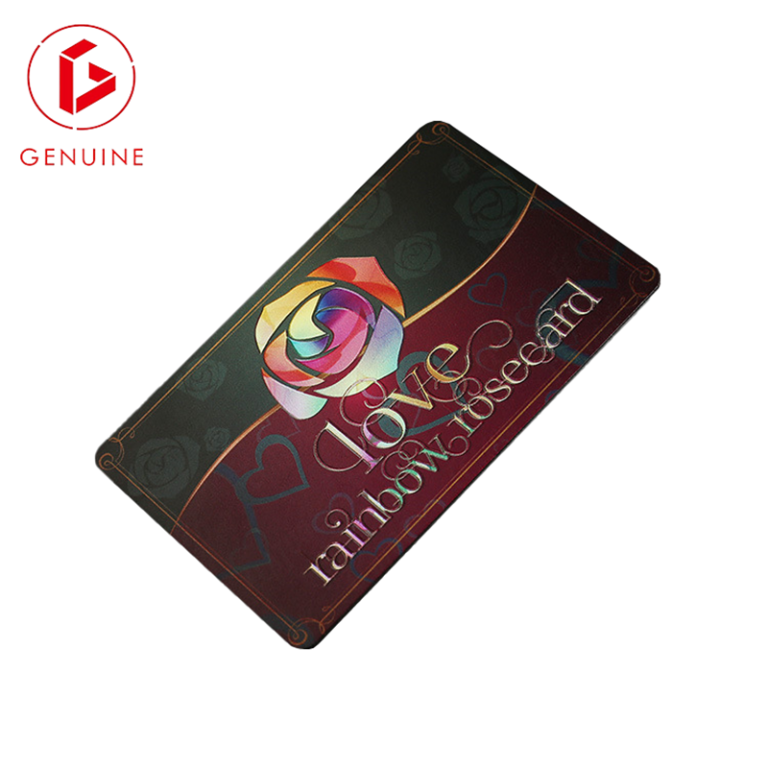
Putting your own brand on a smart card program should be a margin win, not a margin trap. Yet most distributors lose money on private-label cards not because the unit price was wrong, but because the specification was vague. If your purchase order only says “contactless cards, 5,000 pcs,” you have handed the factory every incentive to cut corners on chip grade, print durability, encoding, and lead time. This guide is the specification playbook we wish every reseller brought to the table: the exact clauses to write down before you sign, so your OEM or white-label program ships on cost, on time, and on brand.

What “OEM” and “white-label” mean in card manufacturing
In card manufacturing the two terms are used loosely, and that looseness is exactly where disputes start. OEM (original equipment manufacturer) means the factory builds the card to your defined specification — substrate, chip, antenna, print, and encoding — and ships it under your brand or a neutral house brand. White-label means the factory’s existing, proven design is sold under your label with minimal change, typically just your logo and a color variant.
The practical difference for you: a true OEM / build-to-print program gives you control and differentiation, but needs a complete spec and often tooling; a white-label program is faster and cheaper to launch but locks you to the factory’s standard construction. Know which one you are buying, because the questions you must ask — and the prices you are quoted — depend on it. The physical build itself spans lamination, inlay embedding, and personalization; our guide to how smart cards are made walks through the full production flow.
MOQ and how it drives your real unit cost
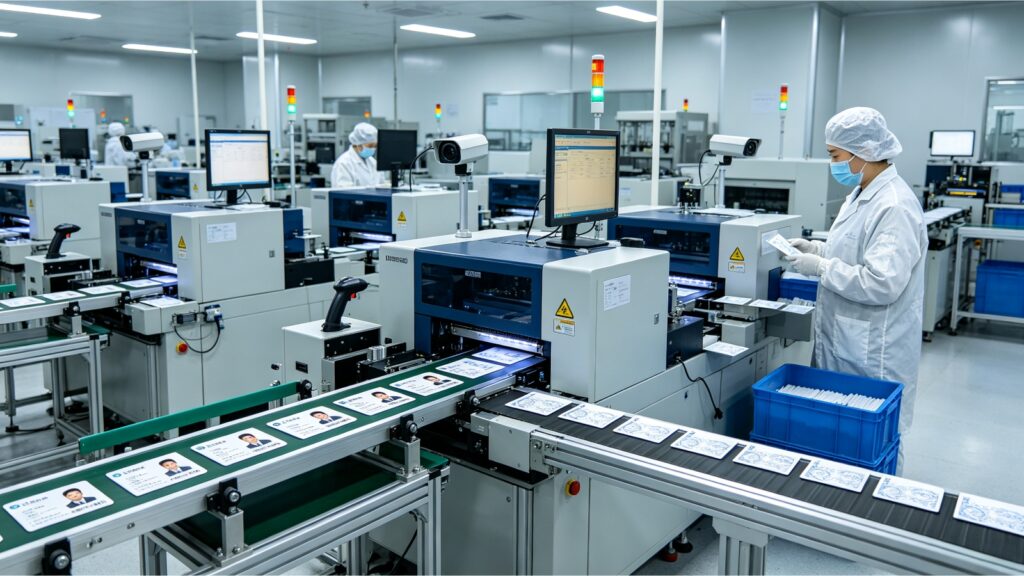
Minimum order quantity is the single biggest lever on your unit economics, and the quote sheet almost never tells the whole story. A blank, unprinted card often carries a low MOQ (as few as 200–500), while custom-printed or pre-encoded cards can start at 1,000–5,000 per artwork because the factory must set up print plates or a personalization job.
The trap: a supplier advertises a tiny per-unit price, but only at an MOQ you cannot sell through in two quarters — so the “saving” becomes dead stock. Always model real unit cost = (tooling + NRE + per-unit × volume) ÷ sellable volume, and ask for the price at your realistic order size, not the factory’s headline tier. Tiered breaks are real, but only valuable if the break point matches your actual demand.
Custom printing, branding, and who owns the artwork
Print method should follow volume and durability need: offset for long runs with edge-to-edge, photographic art; retransfer or dye-sublimation for shorter runs and over-the-edge coverage on uneven surfaces; laser engraving for tamper-evident personalization. For branding, specify Pantone or spot colors and exact logo placement — not “match the PDF,” because screens lie.
The clause buyers forget is IP and artwork ownership. Write explicitly that the factory may not reuse your artwork, plates, or film for any other client, and that exclusive rights to the design stay with you. Otherwise your “unique” card can quietly appear under a competitor’s label. If you are deciding where printing happens, our card printer buying guide compares in-house vs outsourced personalization trade-offs.
Specifying the chip, OS, and pre-encoding
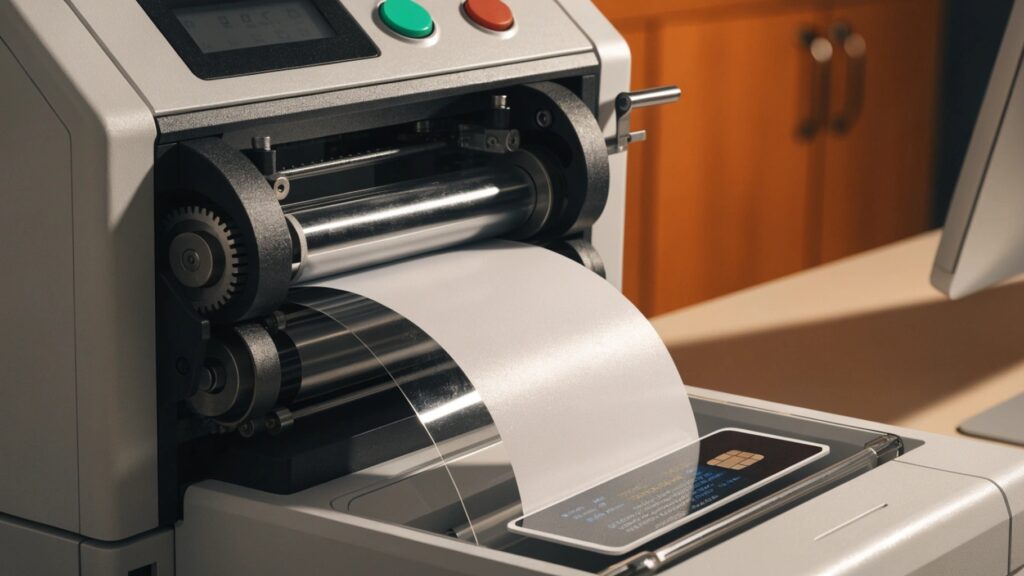
Never specify a card as just “a smart card.” Pin down chip type (contact, contactless, or dual-interface), memory size, and the exact silicon part number, plus the operating system and version (Java Card, MULTOS, or a native OS) when applets matter. Pre-encoding is where liability hides: decide who loads keys, who holds the CA, and who owns the UID/serial scheme — get it wrong and an entire batch fails personalization downstream.
For payment or government programs the bar is set by external specs: EMVCo approval for payment, GlobalPlatform for secure card management, and ISO/IEC 14443 for the contactless air interface. If your end customer is a public agency, plan for FIPS 201-3 compliance early — retrofitting it later is not possible. Our smart card operating systems explainer details what the OS choice changes for you.

Lead time, tooling, and golden samples
Lead time is not a single number. True lead time = tooling + production + electrical/visual QC + freight, and any one stage slipping moves your launch. Clarify upfront who pays for tooling (print plates, die, module jig) and whether it is amortized across the order or billed separately — a “free tooling” promise often means it is buried in the unit price.
Insist on a golden sample / pre-production approval: the factory ships one signed reference card you approve before mass production. If the mass run deviates from the golden sample, you have documentation to reject it. This single step prevents most “the color is off / the chip reads intermittently” disasters before they reach your warehouse.

Quality ownership: inspection, certifications, and defect liability
Quality is a contract, not a hope. Specify an incoming inspection plan with an AQL level (for example AQL 1.0–2.5 for visual, with 100% electrical read/write test on the chip), dimensional checks against ISO/IEC 7810 (85.6 × 54.0 mm, 0.76 mm nominal), and a documented scrap/rework rate.
Demand the certifications your market requires: Common Criteria evaluation for secure elements, EMVCo for payment, FIPS 201-3 for US federal, and ISO/IEC 14443 conformance test reports. Then settle defect liability in writing: replacement terms, whether the factory or you own return freight, and the window for claims. Pair this with card serialization and numbering so any defective lot is traceable to its production batch.

Hidden costs and your distributor specification checklist
The quoted unit price is the tip of the cost iceberg. Budget for: tooling/NRE, color-match fees, golden-sample freight, per-artwork setup, international freight and insurance, import duties and customs brokerage, currency fluctuation, re-inspection, and a realistic scrap allowance. A program that looks 8% cheaper per card can be 15% more expensive landed.
Use the checklist below as your purchase-order attachment. It turns a vague “send me a quote” into a build-to-spec sheet a factory can price accurately the first time.
- Construction: substrate, thickness (0.76 mm nominal), and finish (matte / gloss / frosted).
- Silicon: chip part number, interface (contact / contactless / dual), memory, and OS + version.
- Branding: print method, Pantone colors, logo placement, and an exclusive-artwork clause.
- Pre-encoding: who loads keys, who holds the CA, and who owns the UID/serial scheme.
- Volume: MOQ per artwork and the tiered price at your realistic order size.
- Tooling & samples: tooling owner + amortization, and golden-sample approval required.
- Quality: AQL level, 100% chip test, ISO/IEC 7810 dimensions, and required certifications.
- Liability & logistics: defect replacement terms, return-freight owner, claim window, and Incoterms (EXW / FOB / CIF) with duties.

Before you request a quote, lock the clauses above. A complete build-to-spec sheet is the difference between a private-label program that builds your brand and one that erodes your margin — and it is the fastest way to get an accurate price back from any factory.