You have the ISO specs, the chip datasheet, and a supplier who swears the card is “fully compliant.” Yet the tender comes back rejected—or worse, the program passes audit on paper and fails it in the field. For government and institutional ID programs, “compliant” is not a single standard. It is a stack of overlapping frameworks, and missing one quietly invalidates the rest. This guide maps the frameworks that actually govern national ID, driver-license, and e-passport programs—REAL ID in the United States, eIDAS in the European Union, and the ICAO/ISO base layer beneath them—and gives procurement teams a checklist of what to verify before signing.
Beyond ICAO and ISO: What “Government ID Program Compliance” Really Covers

Most buyers start—and stop—at the component standards. ICAO Doc 9303 defines the e-passport and machine-readable travel document; ISO/IEC 7810 sets card dimensions, and ISO/IEC 7816 and 14443 define the chip and contactless interface. Those tell you the card will physically work. They do not tell you the card is legal to issue. A national ID or driver-license program also sits under a legal trust framework: REAL ID in the U.S., eIDAS in the EU, plus the member state’s own regulations and data-protection law. The trap is that a card can be perfectly ISO-compliant yet fail a tender because it does not satisfy the legal framework’s trust, audit, or facility requirements. Buyers should verify program-level compliance, not just component conformity.
For the chip standards themselves, see our guide to card encoding standards (ISO 7811, 7816, and 14443). And before you shortlist suppliers, our factory-evaluation checklist for national ID and passport tenders explains the facility audits these frameworks implicitly require.
REAL ID (United States): What State and Federal Buyers Must Verify

The REAL ID Act, passed in 2005 on the 9/11 Commission’s recommendation, set minimum security standards for state-issued driver’s licenses and identification cards (codified as 6 CFR Part 37). Enforcement began on May 7, 2025—federal agencies now accept only REAL ID-compliant cards (or accepted alternatives) for boarding aircraft, entering federal facilities, and accessing nuclear plants. For a program or supplier, compliance means more than a star on the card. Buyers should verify:
- Physical and digital security features on the card that prevent tampering, counterfeiting, and duplication.
- A documented security plan (6 CFR 37.41) covering production-facility security, PII handling and retention/destruction, document security features (including biometrics and the technical standards used), facility access control and employee background checks, fraud-awareness training, and internal audit controls.
- DHS inspection rights—the agency may inspect sites for enrollment, production, personalization, and issuance, and interview involved staff.
- Employee background checks (name- and fingerprint-based criminal history) for anyone touching card production.
- Recordkeeping: 7 years for paper/microfiche source documents, 10 years for digital images.
- Recertification every three years (on a rolling basis).
The most overlooked clause is facility access: if the personalization plant is not auditable, the card is not REAL ID-compliant no matter how good the chip is. Full details are on the DHS REAL ID FAQ, and our factory-evaluation checklist translates those clauses into supplier questions.
eIDAS (European Union): The eID Trust Framework Behind EU Credentials

In the EU, the legal backbone is Regulation (EU) 910/2014—eIDAS—in force since 1 July 2016 and updated by Regulation (EU) 2024/1183, which introduces the European Digital Identity (EUDI) wallet. eIDAS does two things that matter to a card buyer. First, it mandates mutual recognition of notified eID schemes across member states at defined assurance levels (low, substantial, high), so a credential issued in one country is accepted in another. Second, it defines qualified trust services: for an eID card, the on-card credential must be issued by a Qualified Trust Service Provider (QTSP), and the signature-creation device must be a QSCD (Qualified Signature Creation Device). On top of eIDAS, Regulation (EU) 2019/1157 sets the minimum security features every member-state ID card must carry—a machine-readable zone, a chip, and mandatory security elements. Buyers specifying EU credentials must verify the QTSP, the qualified certificates, QSCD compliance, and alignment with 2019/1157.
Read the framework at the European Commission’s eIDAS regulation page and the text of Regulation (EU) 2019/1157. For the underlying chip interface, see our card encoding standards guide.
Credential Trust Frameworks and Interoperability: PKI, QSCD, and Cross-Border Recognition
These frameworks connect through public-key infrastructure. An ICAO e-passport uses PKI—a country signing certificate authority, passive authentication, and (optionally) active authentication or Extended Access Control for biometric data. eIDAS builds a pan-European trust chain: QTSP → national trusted list → the EU Trusted List (the “Trust Backbone” European credentials rely on). The practical buyer question is interoperability, which is itself a compliance requirement, not a nice-to-have: does the credential verify against the authoritative trust list, and is the card readable by the national reader infrastructure and cross-border gates? That depends on standards-based, technology-neutral design—ISO/IEC 7816 for the chip, ICAO for the eMRTD. Specifying a proprietary or non-conforming interface quietly breaks recognition. For the EU trust services behind this, see the eIDAS framework and our chip-standards explainer.
Document Numbering, Audit Trails, and Chain of Custody

The compliance buyers most often miss lives in operations, not on the card. Blank and pre-encoded cards are high-value, abuse-prone inventory. A robust tender should specify: unique document numbering per ICAO/ISO conventions; a secure, auditable personalization environment (air-gapped networks and logged, unescorted access, as required in serious national programs); chain of custody from blank delivery through issuance; audit trails recording who personalized which card and when; and secure destruction of rejects and obsolete stock. Real programs mandate ISO/IEC 27001-aligned information-security management for the personalization facility and PCI CPP-style controls for card production. The lesson: treat blank and pre-encoded cards as controlled inventory, and require logged, auditable access to the personalization environment. Our ID card issuance program guide walks through the enrollment and personalization workflow this clause protects.
What to Put in the Tender: A Government ID Compliance Checklist
Drop this into the tender as the compliance section:
- Name the exact framework(s) the program must satisfy—REAL ID, eIDAS (+2019/1157), ICAO Doc 9303, and any national standard. Do not assume.
- Require supplier certifications: ISO 9001 (quality), ISO/IEC 27001 (information security), Common Criteria for the chip operating system, and—for U.S. federal programs—FIPS 201-3 / PIV approval on the Approved Products List.
- Demand a documented security plan and facility-audit rights (the clauses REAL ID and serious programs expect).
- Require QTSP + QSCD evidence (EU) or REAL ID security-plan and inspection-clause evidence (U.S.).
- Mandate unique numbering and audit trails for every issued credential.
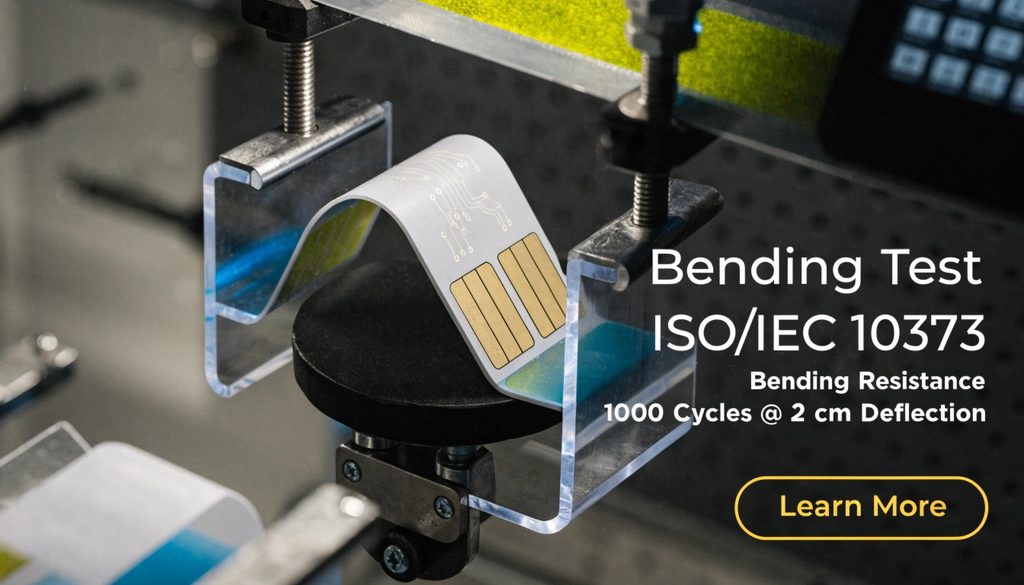
- Require durability and lifespan test reports (ICAO expects e-passport booklets to last ~10 years; card programs should show equivalent evidence).
- Include data-protection and privacy clauses—GDPR for EU programs, and equivalent handling rules elsewhere.
Our factory-evaluation checklist and issuance program guide turn each of these items into concrete supplier questions.
Common Compliance Gaps That Sink ID Program Tenders
Auditors and evaluators repeatedly reject programs for the same reasons. Watch for: (1) assuming ISO-only conformity satisfies the legal framework; (2) omitting assurance-level and QTSP/QSCD evidence in EU bids; (3) no facility-audit or security-plan clause; (4) undocumented chain of custody or numbering; (5) no data-protection clause; (6) weak supplier provenance—subcontracted or unaudited personalization. The pattern: a card can be ISO-perfect and still fail the tender. Build the compliance section before you evaluate suppliers, not after. For the EU privacy angle, see our card data privacy and GDPR guide, and for supplier diligence our factory-evaluation checklist.
Frequently Asked Questions
Is ICAO Doc 9303 enough for a national ID program?
No. Doc 9303 governs e-passports and travel documents; a national ID or driver-license program also falls under REAL ID (U.S.), eIDAS (EU), or the member state’s own regulations. ICAO is the base layer, not the whole requirement.
What does “qualified” mean under eIDAS?
A qualified trust service—such as a qualified electronic signature or a QSCD—carries the same legal weight as a paper process across the EU, and must come from a QTSP listed on a national trusted list.
How often must a REAL ID program recertify?
States must recertify compliance every three years on a rolling basis, and DHS may inspect production and personalization facilities at any time.
If you are scoping a government or institutional ID program, start from the framework, not the card. Tell us which regime you operate under—REAL ID, eIDAS, ICAO, or a national standard—and we can map the compliance and production requirements to a concrete, auditable specification. Request a consultation or samples to begin.