You have signed off the artwork, and your card supplier has sent back a “proof.” But is that proof an accurate representation of the 10,000 cards about to roll off the press? For procurement, brand, and security teams ordering employee badges, membership cards, or access credentials, the proof-approval step is the last — and cheapest — point where a colour error, a misplaced logo, or a dead barcode can still be fixed for free. Skip it, or approve it on a phone screen, and the next stop is a reprint that can run 30–100% of the original order. This guide walks you through what a card print proof is, when a digital soft-proof is enough, how to read colour tolerance, and the sign-off gate that keeps costly mistakes off the production floor.
What a card print proof actually is — and why it is your contract
A print proof is a representation of how your card will look once manufactured. It usually comes in two forms. A digital soft-proof is a calibrated PDF (ideally PDF/X with an embedded colour profile) showing layout, colour, and finishes on screen. A physical drawdown — sometimes called a press proof, crush proof, or substrate proof — is a small print produced on the actual card stock with the actual print process. Both exist for one reason: to give you a reference you can accept or reject before the full run is committed.
The detail buyers miss is this: the approved proof — not your memory of the artwork call or the email thread — is the reference a factory will measure the production batch against. If the batch drifts from the proof, the proof is what protects you in a dispute. If you approved “on the phone,” you have no reference at all.

Digital soft-proof vs physical drawdown: when each is enough
A digital soft-proof is fast and nearly free, and it is perfectly adequate for checking layout, positioning, text, and bleed. What it cannot tell you is how the colour and finish will actually land on plastic. A screen — even a calibrated one — only approximates ink on a glossy or matte PVC surface, and it cannot show substrate interaction, edge sealing, or how a metallic element reads in person.
A physical drawdown prints your design on the real stock with the real process. It reveals colour shift, substrate effects, and finish behaviour that a screen hides. Use the decision rule below:
- Digital soft-proof is enough when you are reordering an unchanged design, or when colour is not brand-critical (e.g. a plain monochrome access card).
- Demand a physical drawdown when you have brand-critical Pantone colours, metallics or foil, a new supplier you have not qualified, or a large / high-value run where a reprint would be painful.
If the colour is brand-critical, never approve on a screen alone — request a physical drawdown on the production substrate. The extra few days and small fee are trivial against a full-run reprint.

Understanding colour tolerance: Pantone, CMYK, and the Delta-E you should accept
Two systems collide on every card order. Pantone (spot) colours are your brand reference — a defined, repeatable colour. CMYK is the process translation a printer actually lays down, and it shifts depending on substrate, print method, and even the gloss level. The same brand blue can read noticeably different on matte versus gloss PVC. That is why “just match the PDF” is not a usable instruction.
To make tolerance objective, buyers use Delta-E (written ΔE, defined by the CIE) — a single number for perceived colour difference. Lower is closer. A practical rule:
- A ΔE of 3 or less is the widely used rule of thumb for an acceptable brand-colour match on a printed card.
- Tighten to ΔE ≤ 2 for premium brand programs where colour is part of the trademark.
- Always agree tolerance in the same finish (matte or gloss) as the final card — finish changes perceived colour.
Reference the relevant process-control and viewing standards in your purchase order so the number means the same thing to both sides: ISO 12647-2 for printing process control, ISO 3664 for controlled viewing conditions, and the CIE for the ΔE colour-difference definition behind the tolerance.
What to check on every proof (beyond colour)
Colour gets the attention, but most rejects come from everything else. Run this checklist on every proof before you sign:
- Logo and text position — correct placement, no clipping, proper bleed past the trim.
- Trim and cut-window alignment — the chip/module cut-out and any punch line up with the artwork (card dimensions follow ISO/IEC 7810).
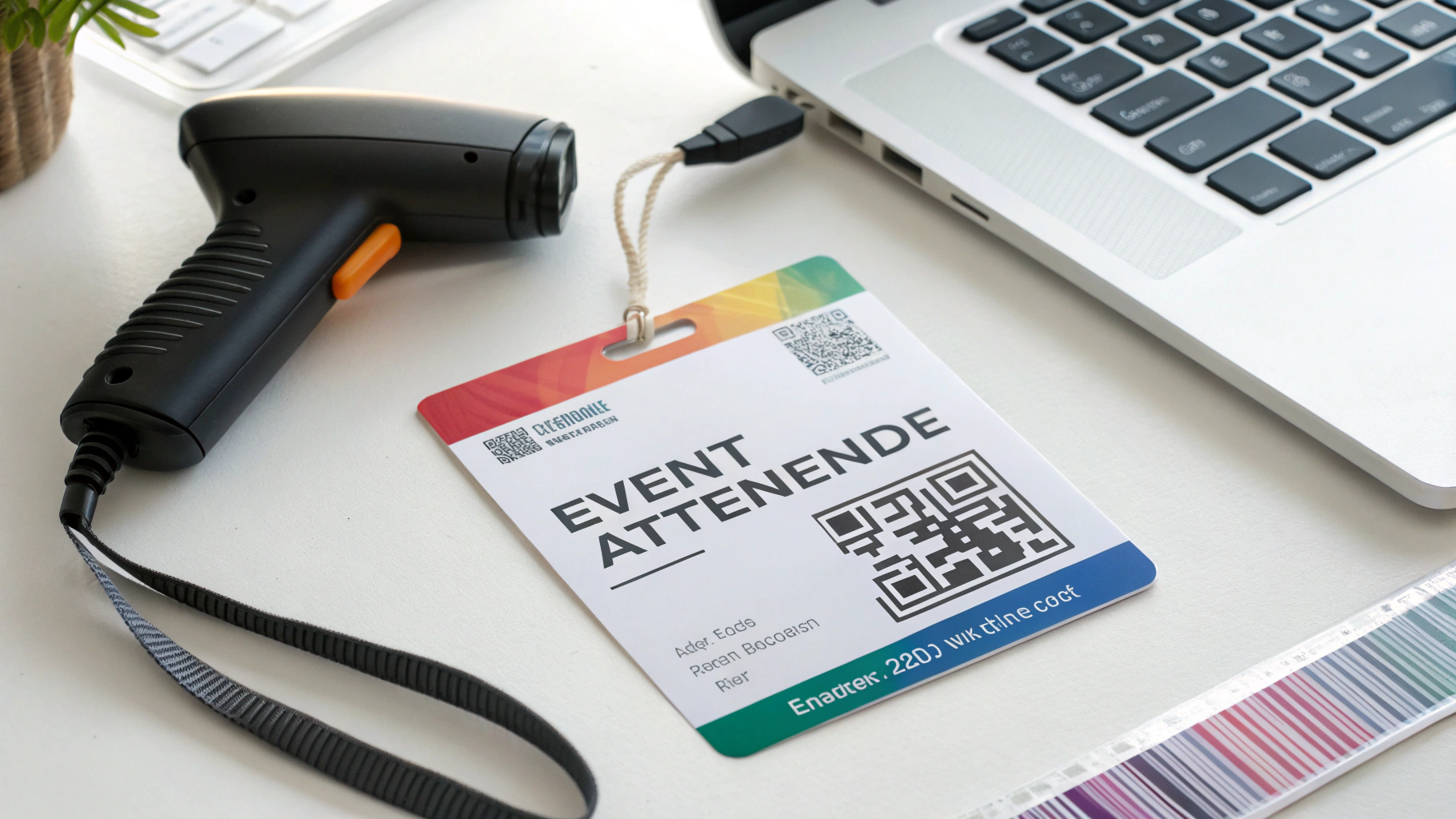
- Barcode / QR scannability — a barcode that looks fine to the eye can still fail a scanner; always verify machine-readability on the proof with a reader, not by sight, and check the quiet zone.
- Finish (matte / gloss / frosted) and security features (UV, microtext, hologram, guilloché) present and positioned as specified.
- Variable-data sample if the card carries personalized fields — confirm a sample record prints and encodes correctly.
Build your sign-off gate: who approves, what gets recorded
Approve-by-committee in an email thread is where proofs go to die — and where accountability disappears. Instead, assign a single accountable approver (brand plus security sign-off where both apply), and make the gate explicit:
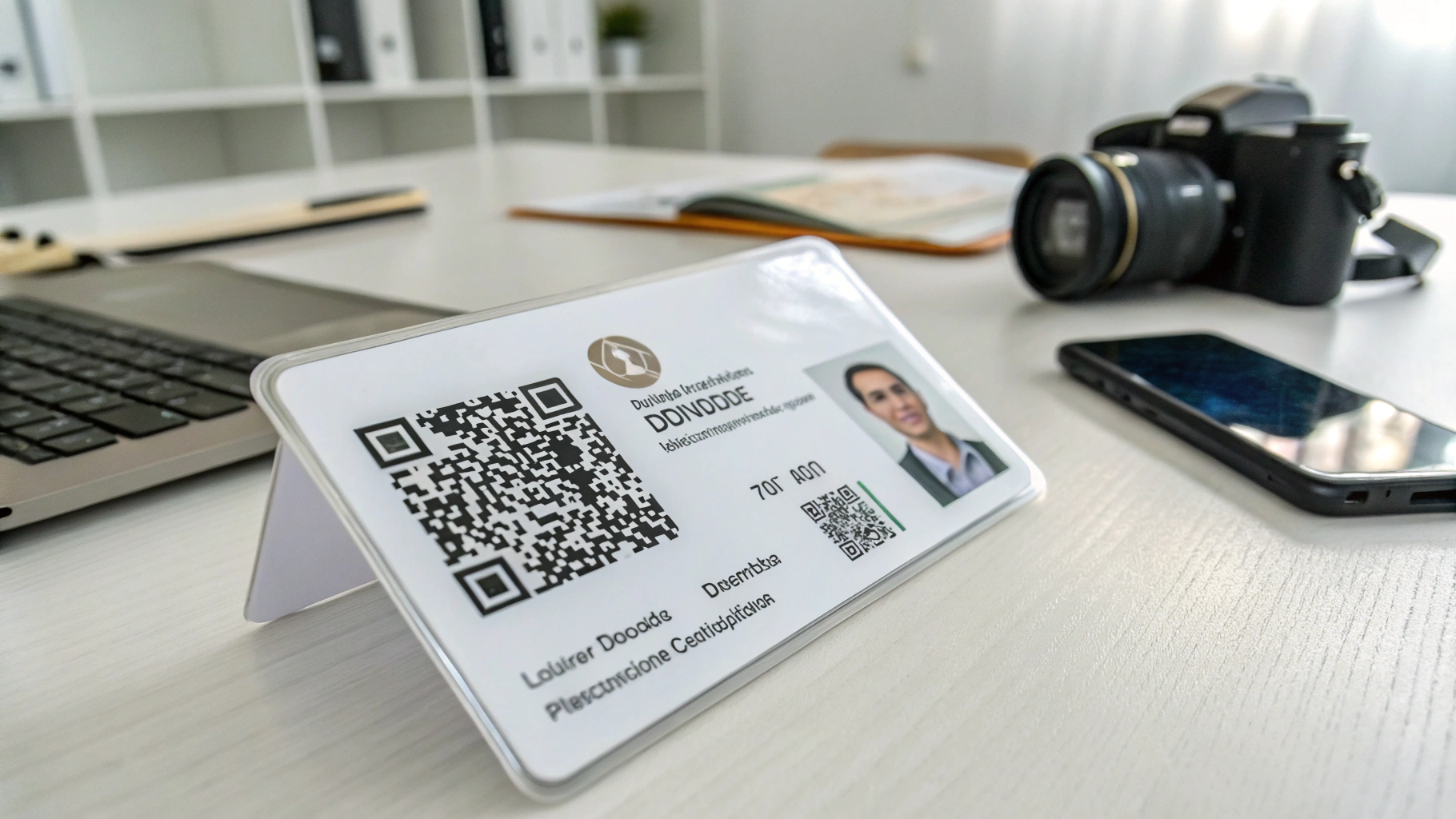
- The approver signs and dates the proof (digital signature on the soft-proof PDF, or on the physical drawdown).
- The signed proof is filed as the batch reference for incoming inspection.
- The record captures the agreed ΔE tolerance, substrate, finish, and any accepted exceptions.
Treat the signed, dated proof as the binding colour and layout standard for the entire production run — not a courtesy preview. Doing this up front also tightens your artwork handoff; if you repeatedly need multiple proof rounds, the weak link is usually the file you supplied — see our guide to card artwork specifications and our smart card RFQ template.

Common proof-approval mistakes that lead to reprints
- Skipping the physical drawdown for brand-critical colour and approving on a screen.
- Approving on an uncalibrated phone or tablet — the device, brightness, and ambient light all lie.
- Checking under the wrong light — use a D50 viewing booth per ISO 3664, not office LED or window light.
- Ignoring substrate difference — a proof printed on different stock than the production card is not a valid reference.
- No documented tolerance — “make it look right” cannot be measured or disputed.
- Approving a low-resolution JPG screenshot instead of the supplied soft-proof PDF.

When to reject — and how to communicate it
Rejection at proof stage is essentially free; rejection after sign-off is not. Define the line up front so it is not emotional:
- Reject if colour is outside the agreed ΔE, artwork is misaligned, a barcode/QR fails a reader, or a specified security feature is missing.
- Request a re-proof — return the marked-up proof, the measured ΔE values, and a reference swatch.
- Never approve “subject to” — that ambiguity becomes your problem the moment the batch ships.
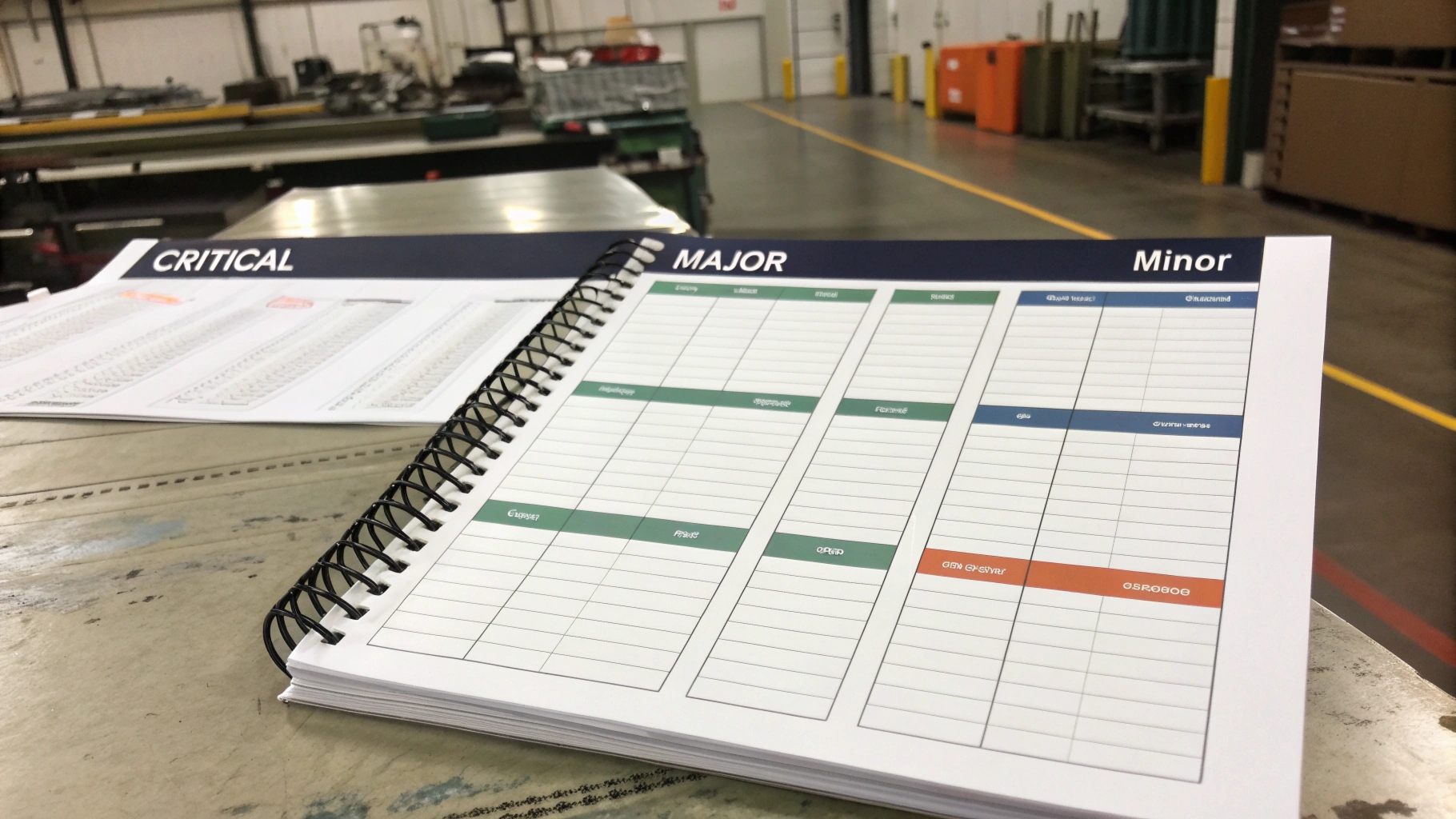
Put the cost in perspective: a reprint triggered after sign-off typically costs 30–100% of the order and resets the lead time, whereas rejecting at proof stage costs nothing but a short delay. A useful framing for your approvers is a three-tier defect system — cosmetic, functional, and critical — so minor blemishes do not block a run while real failures never slip through. Before you release a bulk order, request a physical drawdown and a small sample set; our team can prepare both and walk your approvers through the gate. See how to request and evaluate card samples, and reach us via the contact page.
Frequently asked questions
Can I approve a proof from a phone photo the supplier emailed?
Not for colour. Screen rendering and photo compression both distort colour and finish. Use the supplied soft-proof PDF on a calibrated display, or — for brand-critical colour — a physical drawdown on the production substrate.
How many proof rounds should I budget for?
Usually one to two. If you need three or more, the root cause is normally a weak artwork handoff rather than the factory; tightening your artwork specifications resolves most repeat rounds.
Who pays for a physical drawdown?
Most factories supply a digital soft-proof free of charge. A physical drawdown may carry a small fee, frequently waived above a volume threshold or credited against the order — confirm this in the quote so there are no surprises.