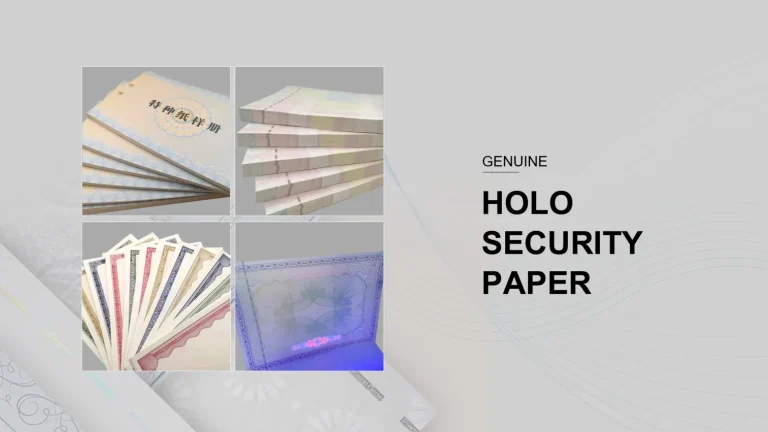
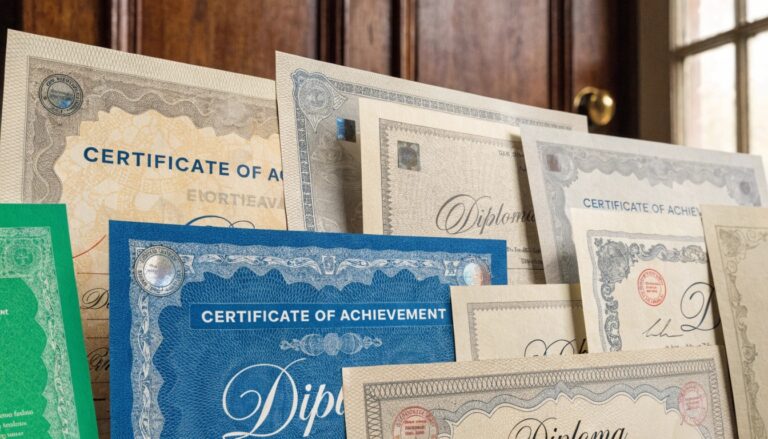
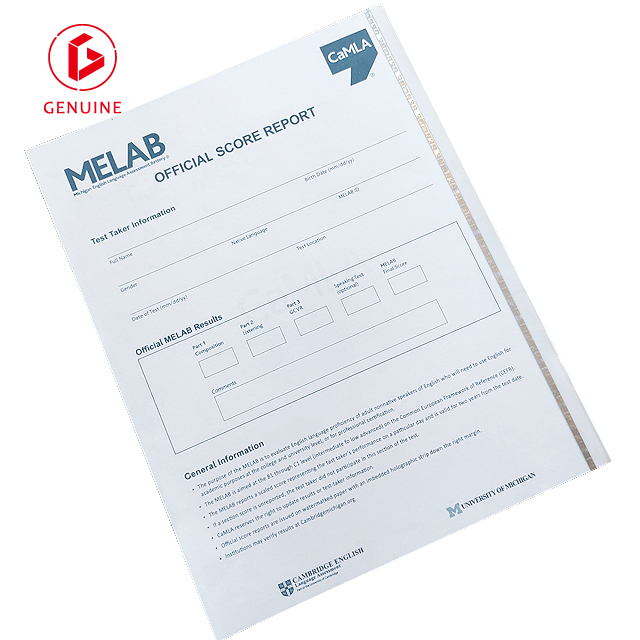
By Genuine Printing Co., Ltd. – ISO 20245 Certified Security Printing Expert
Why Custom Anti-Counterfeit Paper Matters in Global Supply Chains
Counterfeit goods cost businesses over $2.3 trillion annually (WHO, 2025), with fakes compromising 30% of pharmaceutical and luxury packaging. As a manufacturer serving 50+ Fortune 500 brands, we’ve identified material-process mismatch as the top reason for security label failures. This guide combines 12 years of R&D and industry benchmarks to help procurement teams:
- Select cost-effective materials (copperplate/PET/PVC) for your product category
- Match printing processes (gravure/digital/hot stamping) to security features
- Comply with FDA, REACH, and ISPM 15 regulations
Material Showdown: Copperplate vs. PET vs. PVC
1. Copperplate Paper (180–300 gsm)
- Best for: Apparel tags, luxury boxes, pharma leaflets
- Pros:
- High print resolution (200 LPI) for microtext/guilloche patterns
- Cost-efficient for large batches (30% cheaper than synthetics)
- Cons:
- Thermal limit: 80°C (unsuitable for sterilized medical packaging)
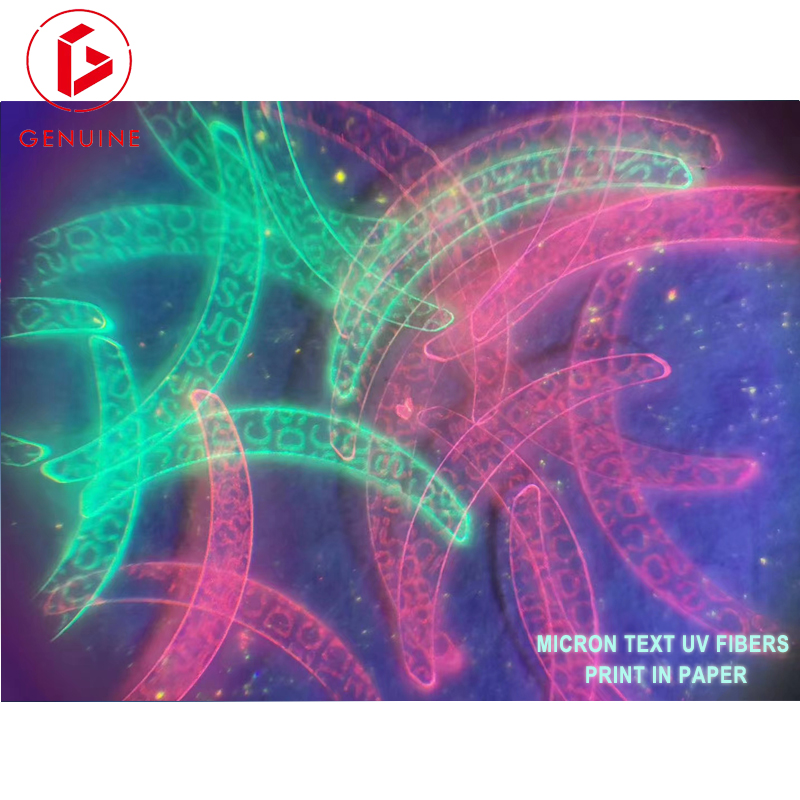
- Case Study: A European fashion brand reduced counterfeit tags by 72% using 220g copperplate with tactile ink and hidden UV markers.
2. PET Film (12–50μm)
- Best for: E-cigarette labels, durable logistics tags
- Pros:
- Tear resistance: 15 N/mm² (vs. 5 N/mm² for PVC)
- Compatible with nano-coatings (AlOx layers block moisture)
- Cons: Requires plasma pretreatment for ink adhesion
3. PVC Synthetic Paper (200–300μm)
- Best for: ID cards, event tickets, tamper-proof seals
- Pros:
- 10,000+ bend cycles without cracking
- Eco-friendly options: 30% recycled PVC available
- Cons: 0.5% thermal shrinkage at 80°C – needs precision die-cutting
Process Optimization: Beyond 200 LPI Standards
Gravure Printing
- Security must: ≥200 lines/cm engraving for ≤0.2mm microtext
- Ink specs:
- Viscosity: 22–26 sec (DIN4 cup) to prevent dot gain
- OVI/Iridescent inks: 15–45° angle color shift required
Digital UV Printing
- Best for: Holograms/short-run QR codes
- LED-UV curing: Achieves 98% opacity at 0.3mm line width
- Blockchain integration: Unique cryptographic QR codes
Hot Stamping
- Foils: 130–150°C at 2.5–3.5 bar pressure
- Test nano-coating resistivity (target: 10⁶–10⁸ Ω/sq)
Design Compliance Checklist
- Microtext Legibility
- Minimum height: 0.2mm (verifiable under 10x lens)
- Font: Sans-serif for texts <0.5mm
- Guilloche Patterns
- Line spacing: ≥0.15mm to avoid moiré effects
- Use CMYK+OVI 5-color separation
- Regulatory Marks
- FDA 21 CFR 175.300 for food contact inks
- REACH SVHC <0.1% in EU exports
- QR Codes
- Module size: ≥0.3mm for smartphone scanning
- Error correction: ECC Level H recommended
Case Studies: Real-World Implementations
1. Liquor Anti-Tamper Seals (PET-Based)
- Challenge: Counterfeit baijiu bottles in China
- Solution:
- AlOx nano-coating (moisture barrier: <0.5 g/m²/day)
- Thermochromic ink (reacts at 40°C – human touch trigger)
- Blockchain-linked UV serials
- Result: 89% reduction in fakes
2. Eco-Friendly Apparel Tags (Copperplate)
- Requirements: 100% recyclability, RFID tracking
- Solution:
- 220g recycled copperplate + soy-based inks
- Laser-etched RFID + 0.8mm perforation