If you issue employee badges, membership cards, campus IDs, or access credentials, someone has probably already tried to copy one. A plain printed PVC card is, unfortunately, one of the easiest security products in the world to fake: the same artwork you send to your card supplier can be reprinted by anyone with a desktop card printer and a scanned sample. This guide walks through the anti-counterfeit ID card features you can actually specify — hologram overlays, UV printing, microtext, guilloché, and serialized verification — what each one adds to unit cost, and how to layer them so that forging your card stops being worth the effort.
Why Plain ID Cards Are Easy to Clone (and What It Costs You)
Start with the uncomfortable math. A flat-printed PVC card has no security features to copy badly — everything a counterfeiter needs is visible on the surface. With a consumer flatbed scanner and an entry-level card printer, a convincing duplicate of an unsecured card can be produced in minutes.
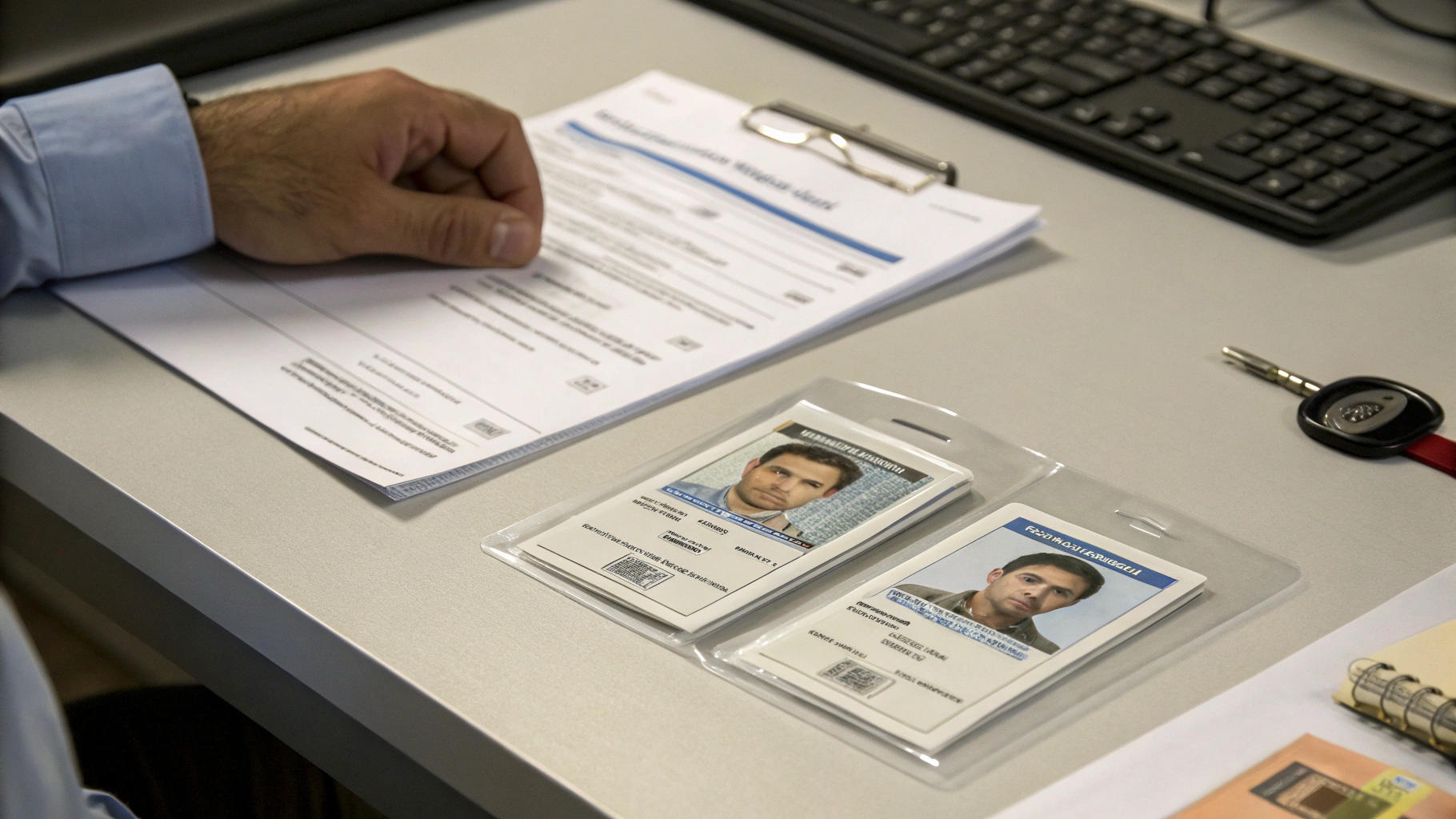
The cost of that capability lands differently depending on what your card controls. For a membership or loyalty program, clones mean revenue leakage and corrupted points data. For a workplace, cloned credentials mean unauthorized access and a compliance trail you cannot defend afterwards. And this is not petty crime: Interpol treats illicit goods and document fraud as organized, cross-border crime, and customs authorities worldwide run dedicated enforcement programs against it (Interpol — Illicit Goods; World Customs Organization).
The good news is that the bar you need to clear is practical, not absolute: a clone that survives a two-second glance will rarely survive a ten-second structured check. Buying those ten seconds of scrutiny is exactly what each feature below is designed to do.
The Anti-Counterfeit Feature Stack: What You Can Actually Specify
Card security features are usually grouped into three tiers, and a credible anti-counterfeit program draws at least one feature from each:
- Overt — visible without tools: hologram overlays, guilloché backgrounds, tactile marks. These deter the casual forger and give any checker something to inspect on the spot.
- Covert — visible only with a cheap tool: UV/fluorescent inks, microtext under a loupe. These catch a forger who faithfully copied only the visible layer.
- Serialized — verifiable only in your system: a unique serial number or QR code checked against an issuance database. This is the only tier that produces proof rather than suspicion.
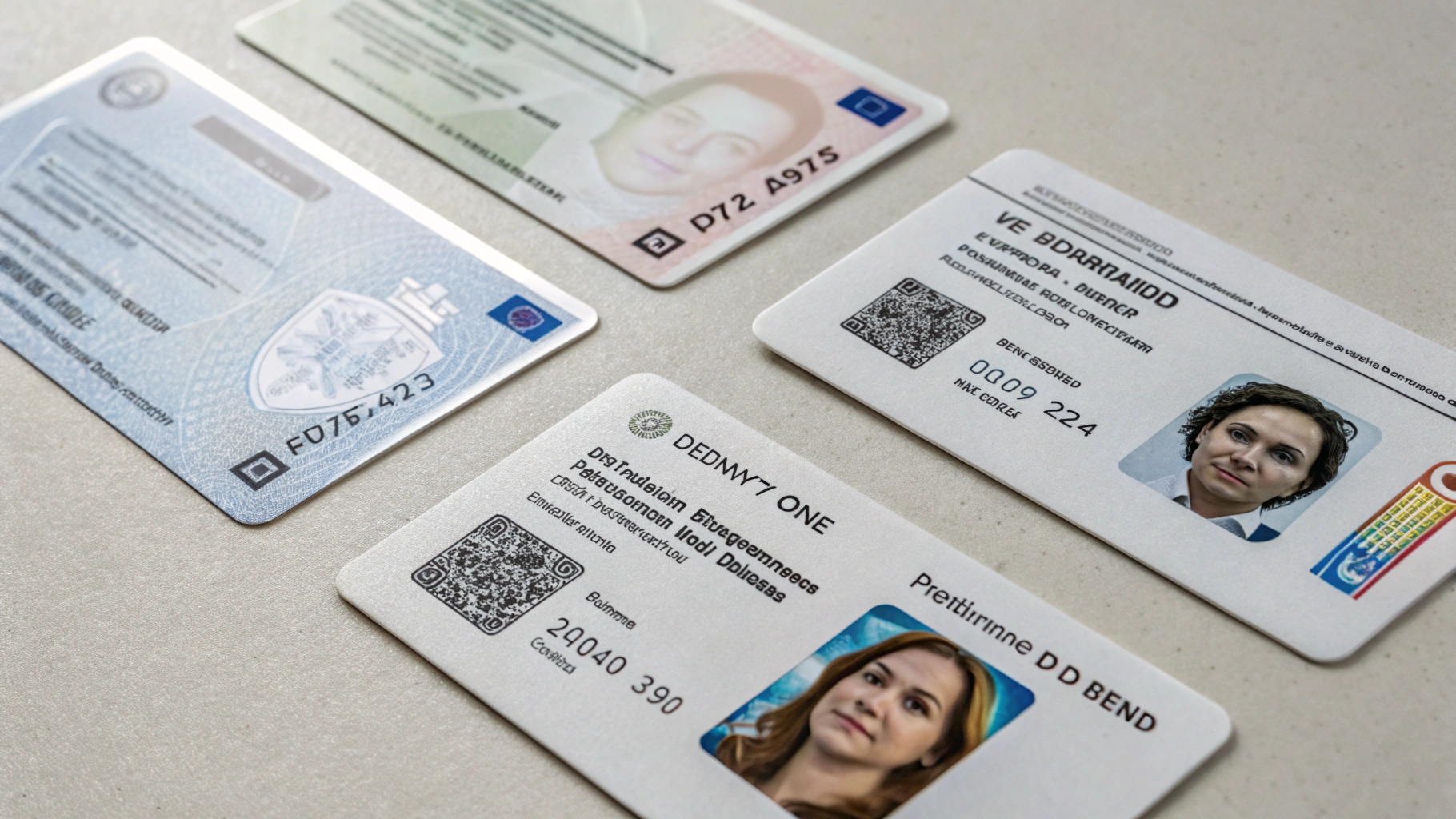
This layering logic is the same principle used in national credential programs: US federal employee credentials under NIST FIPS 201-3 must carry multiple, independently verifiable security features precisely so that no single copied element can pass a check (NIST FIPS 201-3). Most of these features are applied during lamination and personalization, so it helps to know the production chain — our overview of how smart cards are made shows where each layer enters the process. When you brief your designer, specify every feature explicitly in the artwork: our guide to card artwork specifications covers how.
Hologram Overlays: The First Line of Visual Defense
A hologram overlay is a thin diffractive film applied over the printed card — either laminated into the card body or applied as a registered patch. A photocopier or desktop scanner reproduces flat ink; it cannot reproduce diffractive optics, which is why the hologram remains the most cost-effective overt feature per card at volume.
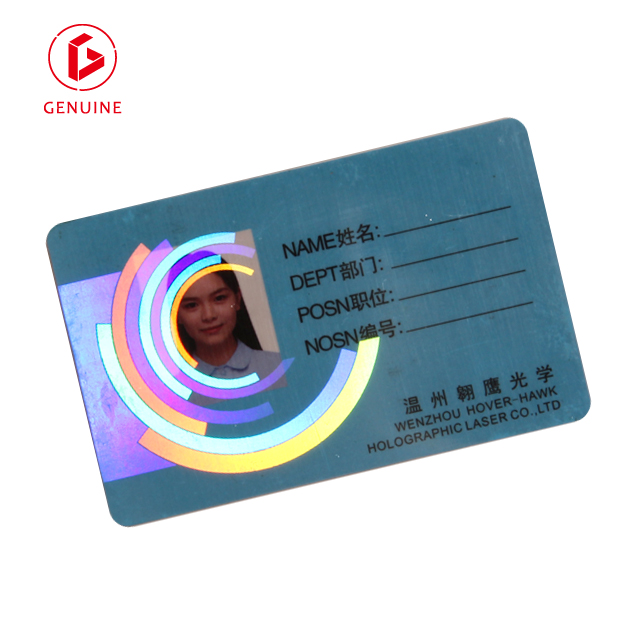
Two specification decisions matter. First, placement: a registered overlay aligned precisely over the cardholder photo is significantly harder to fake than a randomly positioned label, because the forger must reproduce position as well as optics. Second, custom artwork: a generic stock hologram is a deterrent; a custom design carrying your logo and a fine microtext ring is evidence of authenticity. At typical B2B volumes the overlay adds only a small amount to unit cost while covering the whole card surface — which is why it is the default first feature for membership, employee, and event credentials.
UV and Fluorescent Printing: Covert Marks You Control
UV (fluorescent) inks are invisible under normal light and glow under a 365 nm blacklight. On a card they are typically used for a logo, the serial number, or a secondary fine-line pattern. Because the visible layer of a cloned card will not glow correctly, UV marks reliably catch the forger who copied your card from a photograph or a scan.
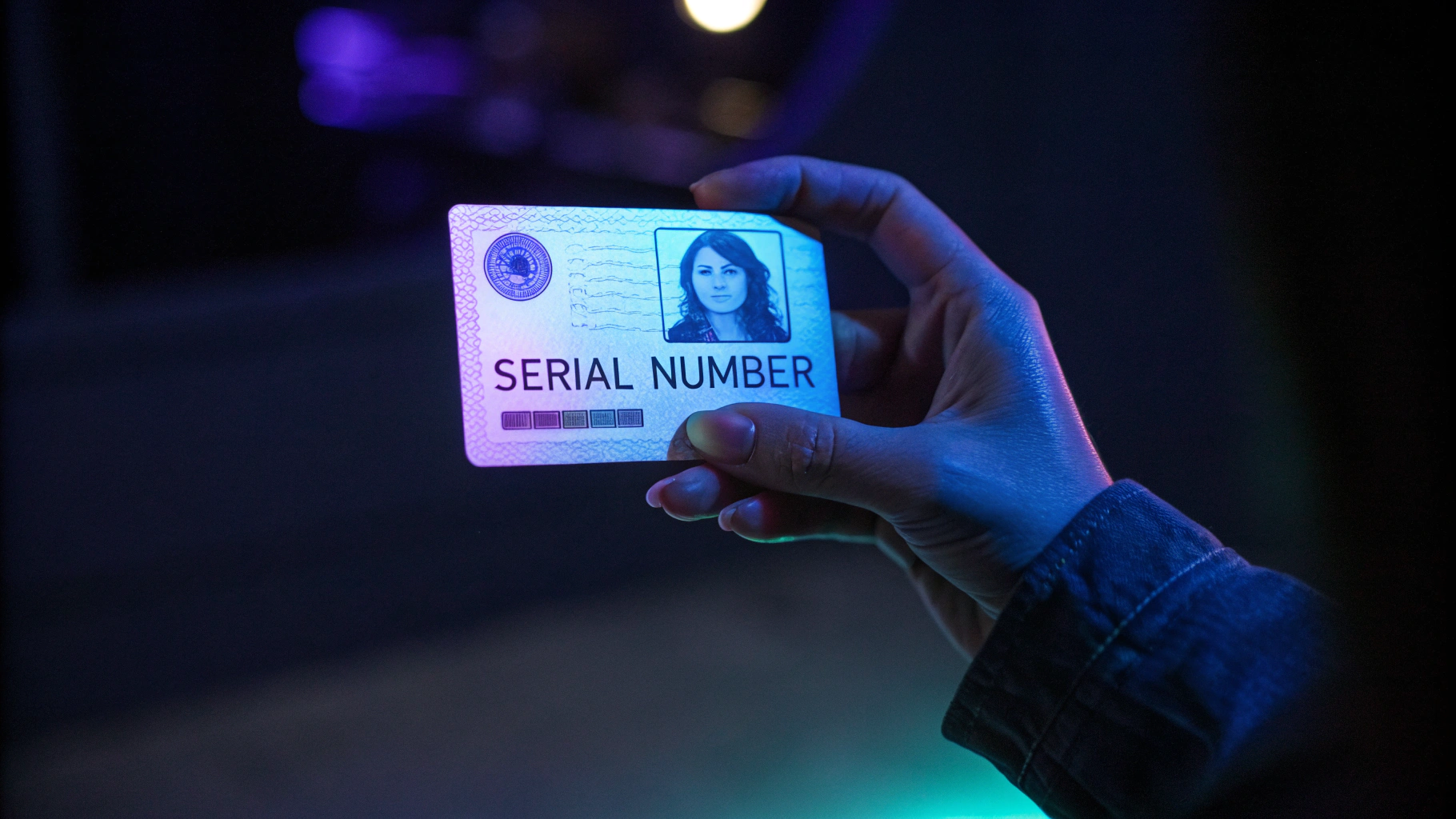
The economics are attractive: the printing adds little to unit cost, and the verification tool — a UV lamp — costs less than a team lunch. The catch is operational rather than technical: a covert feature only works if your front-line staff know where to look and actually have the lamp. Build the check into reception, gate, or floor procedures and train for it, or the feature exists only on paper.
Microtext, Guilloché, and Tactile Marks: Beating the Scanner
These are the banknote-derived features. Microtext is type rendered so small it reads as a solid line to the naked eye and becomes legible only under a loupe. Guilloché is the fine spirograph-like linework drawn from mathematical curves, used on banknotes and stock certificates. Tactile or laser-engraved marks add physical depth that flat printing cannot imitate.
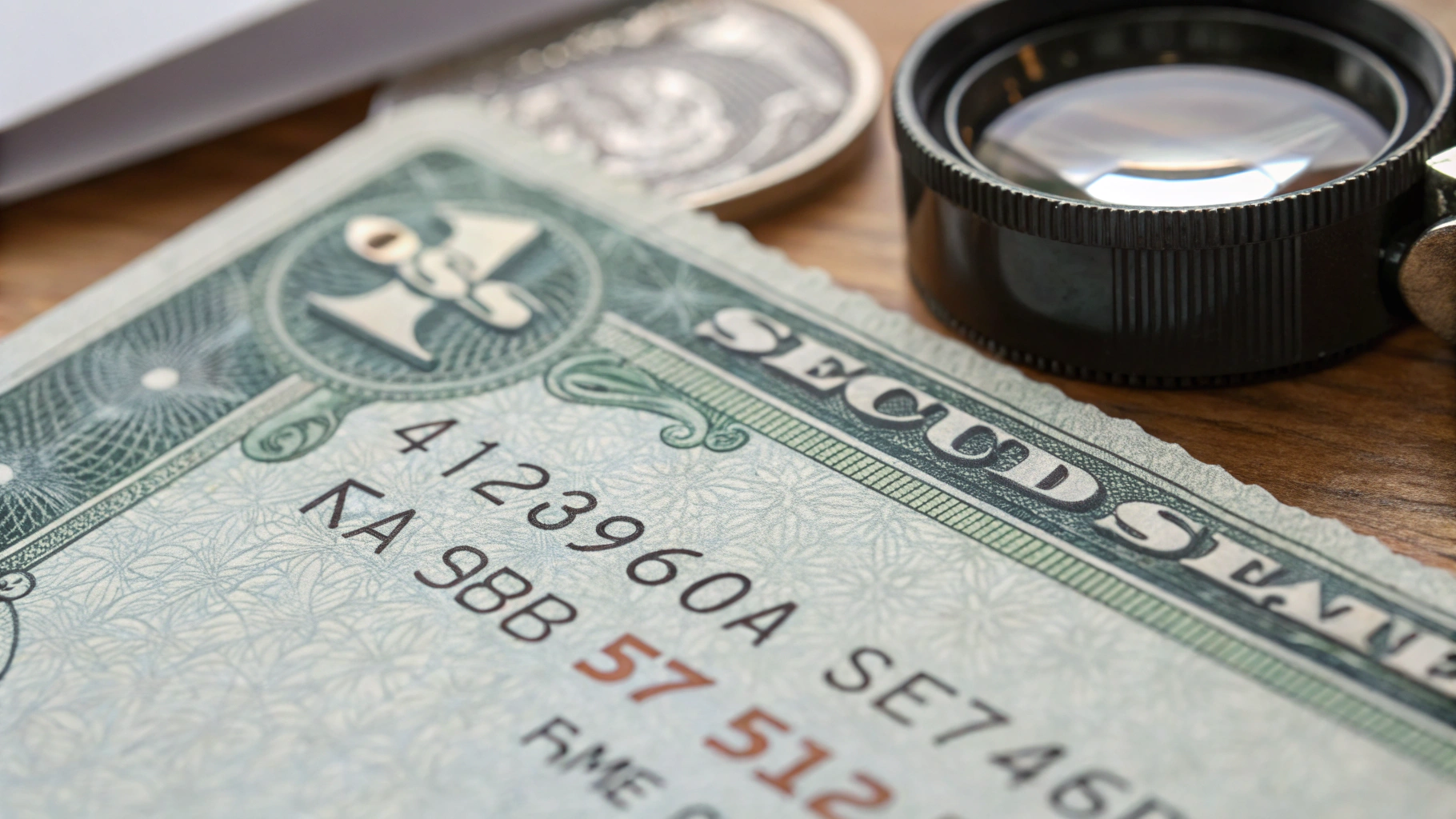
All three exploit the same weakness in counterfeiting workflows: any detail that collapses into a solid smear at 600 dpi is doing its job. Desktop scanners and office printers reproduce them badly, and the defects are obvious under magnification. Substrate choice amplifies this tier — polycarbonate accepts laser engraving and fuses its layers into a single body, so personalization cannot be delaminated and reprinted the way it can on standard PVC. We compare the materials in detail for government ID programs in polycarbonate vs PVC vs PETG.
Serialized Verification: Turn Every Card Into a Checkable Record
Serialization closes the loop. Each card carries a unique serial number — printed as text, encoded in a chip or barcode, or exposed through a QR code — that a checker can validate against your issuance database in seconds. Once cards are serialized, a duplicate shares a serial with the genuine article, so the clone is not merely suspected; it is detected on the first collision.
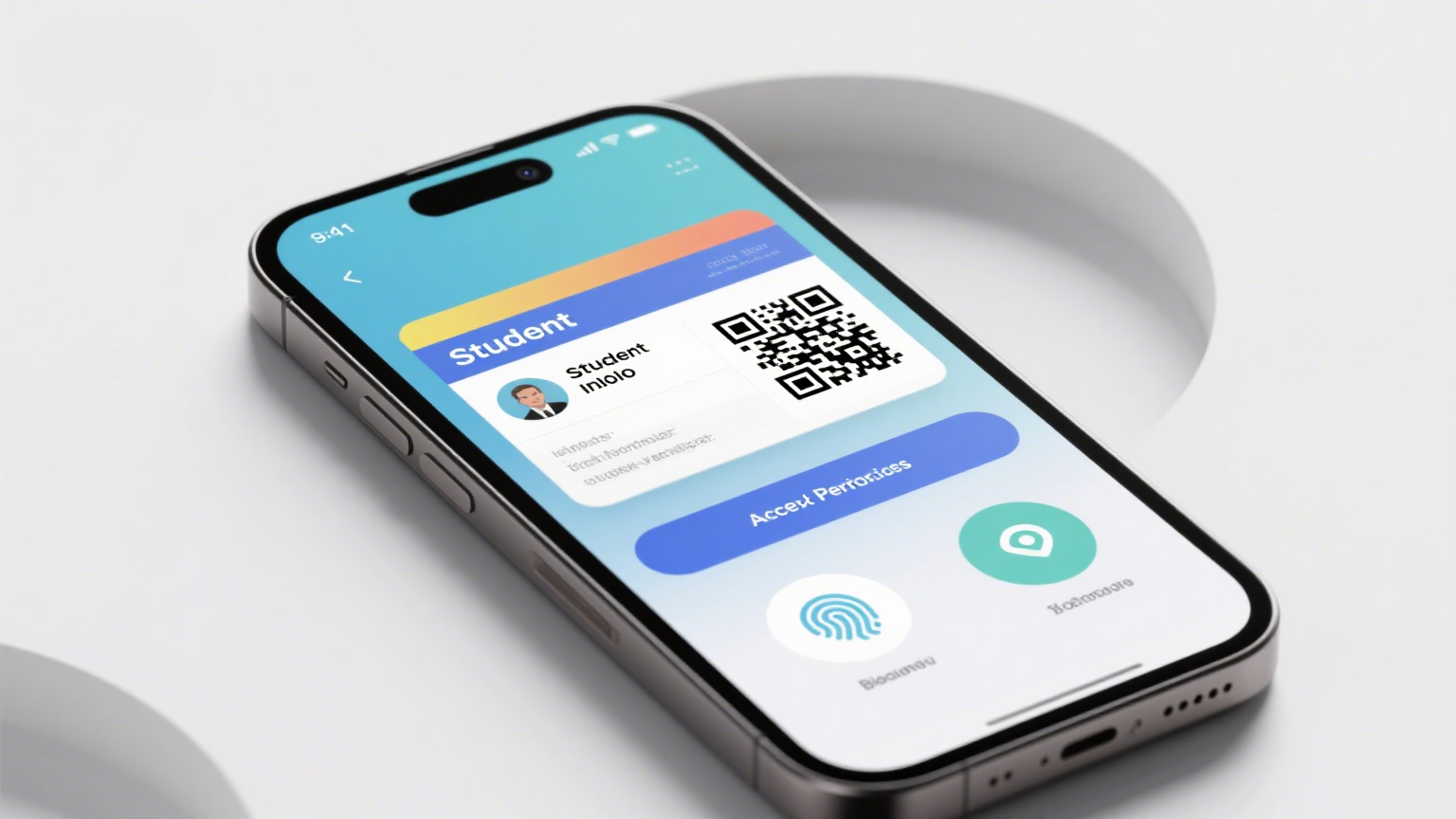
Serialization is also the only feature that keeps working as forgers improve: they can copy optics, but they cannot copy the record in your database. Used well, the same identifier feeds your operations — expiration tracking, revocation, and bulk reissue all hang off it. If you are building this into an order, our guide to card serialization and numbering covers numbering schemes, where the serial should live (print, chip, or both), and how to keep the register consistent across batches.
How to Match Features to Your Risk and Budget
Every feature adds unit cost, and paying for protection where you have no exposure is the most common over-buy. Match the stack to what a clone would actually cost you:
| Program type | Recommended feature stack | Why this tier |
|---|---|---|
| Internal attendance, visitor badges | Hologram overlay + serialized number | Deters casual copying; verification is administrative, not adversarial |
| Membership, loyalty, transit passes | Overlay + UV marks + microtext + serialized QR | Revenue leakage justifies covert checks and database validation |
| Government ID, high-value credentials | Registered overlay + guilloché + tactile engraving + polycarbonate substrate + serialization | Adversarial forgery; multiple independent verification paths (FIPS 201-3-style layering) |
The table is deliberately conservative. Adding a covert layer to a low-risk program rarely hurts, but the serialization tier is what produces actionable detections — if you can only fund one upgrade, fund the record, not the optics.
Questions to Ask Your Card Supplier (and Get Samples)

Before you commit, put these five questions to any prospective supplier:
- Which security features are produced in-house, and which are outsourced? (Outsourced holograms weaken your chain of custody.)
- Can you supply samples carrying each feature, so we can test them under UV and a loupe?
- What is the per-card cost delta for each feature at our annual volume?
- Is your serialized numbering compatible with our issuance or membership software?
- Can you provide compliance evidence — for example, FIPS 201-3 alignment for government programs, or GlobalPlatform-certified chip configurations for the smart card layer?
Context for the threat, if you need to justify budget internally: studies by the EUIPO and OECD put the global cost of counterfeiting in the hundreds of billions of euros annually, and industry bodies such as the Secure Technology Alliance publish guidance on credential security for exactly these decisions. For most B2B programs, though, the decision is simpler: order samples, attack them the way a forger would, and confirm your staff can actually perform the verification.
We produce hologram overlays, UV printing, microtext, guilloché, and serialized verification in-house, and we ship sample packs so you can verify every claim before committing. Request card samples before you order and put this feature stack to the test on your own program.