In today’s fast-moving business environment, security and operational efficiency are no longer separate line items — they are the same system. A single lost key, a shared password, or an unbadged visitor walking past reception is enough to expose assets, data, and people. Professional ID card solutions turn identity into a controllable, auditable layer that protects your premises and simultaneously removes friction from daily work. This guide walks procurement and facilities leaders through what actually matters when choosing an ID card system — and the mistakes that quietly inflate both cost and risk.
Why Every Business Should Prioritize ID Card Systems

Identity theft and unauthorized access remain the most common entry points for workplace incidents. Passwords and mechanical keys do not scale: keys get copied, passwords get shared, and neither leaves a record of who went where. A modern ID card binds a physical credential to a digital identity, so access, attendance, and activity all become traceable. Whether you run a 20-person office or a multi-site manufacturing group, the right card program adapts to your size and risk profile rather than forcing a one-size-fits-all lock.
The real cost of doing nothing is auditability. When an incident occurs, the inability to prove who accessed a zone turns a minor event into a compliance and liability problem. A credentialed environment closes that gap before it opens.
How ID Cards Strengthen Physical Security

The core job of an ID card is to make unauthorized access hard and detection instant. Three capabilities matter most:
- Access control — integrate cards with door controllers to grant or revoke entry to specific zones per person, shift, or role. Sensitive areas stay protected, and every entry and exit is logged for audit.
- Identity verification — at a glance, staff and security can confirm a person is who they claim to be. For visitors, a time-bound temporary badge keeps their movement visible and contained.
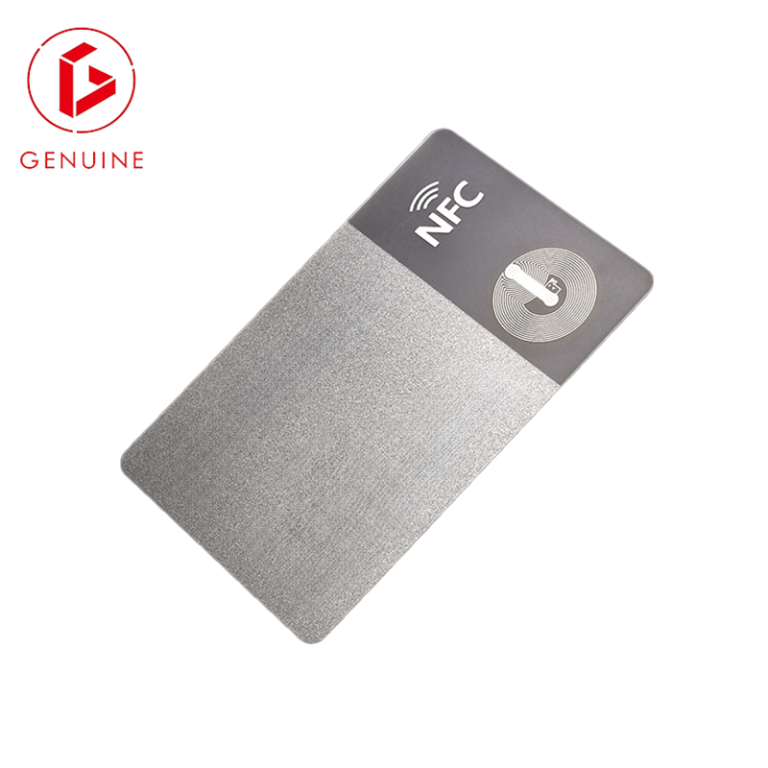
- Multi-technology integration — modern cards combine magnetic stripe, barcode, QR, RFID, and contact or contactless smart chips in one credential, letting a single card talk to access, HR, and payment systems.
Standards back this up. ISO/IEC 14443 defines the contactless smart-card interface used across secure facilities worldwide, while NIST SP 800-116r1 gives enterprises a framework for matching credential strength to real risk rather than buying on price alone. For organizations handling personal data, card programs also support the security-of-processing obligations under GDPR Article 32.
Streamline Operations & Boost Efficiency
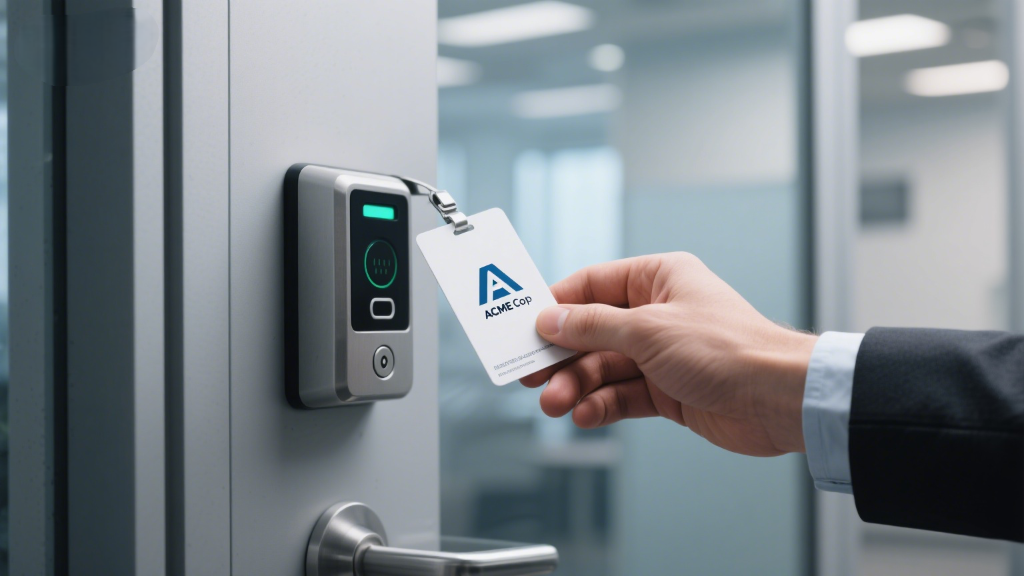
Security is only half the value. A well-designed card program pays for itself in saved labor and cleaner data:
- Automated time & attendance — employees tap to clock in; records sync to payroll without manual entry, cutting admin hours and error rates.
- Cashless payments — in cafeterias, vending, or print rooms, the ID card becomes an internal wallet, simplifying reconciliation and spend control.
- All-in-one functionality — one card for access, attendance, library loans, equipment checkout, and internal purchasing collapses a dozen processes into a single, governed credential.
Buy it as infrastructure, not stationery. A credential that integrates with your existing HR and access systems avoids the hidden cost of running parallel, disconnected tools — and the duplicate data entry that comes with them.
Choosing the Right Card Technology

Not every card fits every environment. The four common options, roughly in order of capability:
- Magnetic stripe — cheapest, but easily cloned and prone to wear; acceptable only for low-risk, indoor use.
- Barcode / QR — cheap to print and scan, but requires line-of-sight and is easy to copy; best as a secondary identifier.
- RFID (LF/HF/UHF) — contactless and durable, ideal for access and attendance; HF at 13.56 MHz under ISO/IEC 14443 is the de facto standard for secure proximity.
- Smart chip (contact / contactless) — stores encrypted credentials on the card itself; the strongest option for high-assurance identity and offline verification.
Geometry matters too. ISO/IEC 7810 specifies the ID-1 card format (85.6 × 54 mm) so cards, readers, and wallets stay interoperable across vendors — a detail that protects you from proprietary lock-in later.
How to Choose a Reliable ID Card Supplier

Your supplier determines whether the program holds up in year three, not just at launch. Vet them on four points:
- Print & personalization capability — can they handle durable substrates (PET, PET-G, polycarbonate) and encode the technologies you need in-house?
- Security & certification — ask about ISO 9001 quality management and, for government or financial use, relevant scheme certifications; request sample cards you can physically inspect.
- Integration support — do they help connect the card to your access, HR, and attendance systems, or just ship plastic?
- Lifecycle & re-issuance — clarify replacement SLAs, data handling, and secure destruction of deactivated credentials.
A credible partner should hand you reader-compatible samples before you sign — see our employee ID card buyer’s guide for a compatibility checklist, and our ID card best-practices overview for governance basics. For high-assurance programs, our polycarbonate vs PVC vs PET-G material guide helps you specify the right substrate from day one.
Frequently Asked Questions
Are ID cards worth it for a small business?
Yes. Even a 20-person team benefits from audited access and automated attendance. The bigger the site or the stricter the compliance requirement, the faster the labor and risk savings outweigh the per-card cost.
Magnetic stripe or RFID — which should I choose?
Choose RFID (HF / ISO/IEC 14443) for any environment where durability, contactless speed, or security matters. Magnetic stripe is only worth it for the lowest-risk, indoor, budget-first use cases where cloning resistance is not a concern.
How do ID cards help with compliance?
They create a verifiable record of who accessed what, when — directly supporting access-control and data-protection obligations such as GDPR Article 32 and NIST SP 800-116r1. That audit trail is what turns “we think it’s secure” into “we can prove it.”
What should I ask an ID card supplier before ordering?
Ask about substrate options, in-house encoding, certification (ISO 9001 and scheme-specific), integration support, and re-issuance SLAs. Always request physical samples you can test against your own readers before committing to a volume order.
Ready to scope an ID card program that fits your sites and risk level? Talk to our team about design, encoding, and system integration — and request reader-matched samples before you commit.