You have chosen the chip and the frequency. But the physical form factor—whether that RFID lives inside a card, a key fob, a sticker, or a wristband—often decides whether your deployment actually survives contact, weather, and real human behavior. This guide helps B2B buyers match each RFID form factor to its use case, durability needs, and frequency band, so the credential you specify keeps working long after the pilot ends.
Why the Form Factor Matters as Much as the Chip
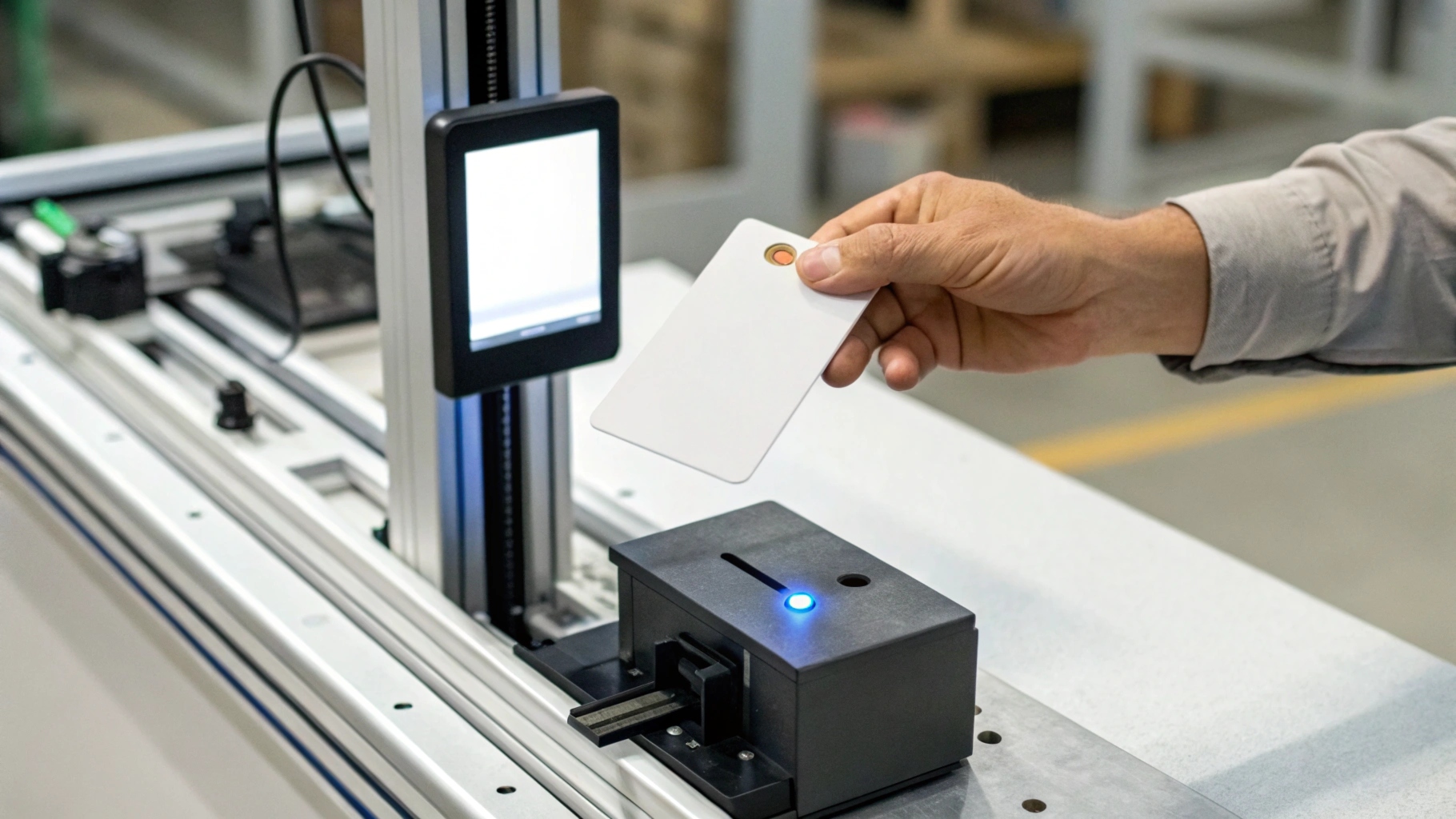
It is tempting to treat the inlay as the whole product. The silicon sets the read range, memory, and security class, but the housing sets whether the tag survives its environment. A high-security DESFire EV3 chip embedded in a fragile paper sticker is worthless the moment the sticker peels or creases. Before you compare chips, ask where the tag will live: in a wallet, on a keyring, on a product, or on a wrist?
The wrong housing silently breaks the entire system—not with an error message, but with a credential that stops reading at the worst possible moment. Buyers who evaluate read performance before they evaluate physical reality are the ones who end up reissuing credentials six months early. Specify the form factor from the deployment environment outward, not the other way around.
RFID Cards — the Default for Access and Payment
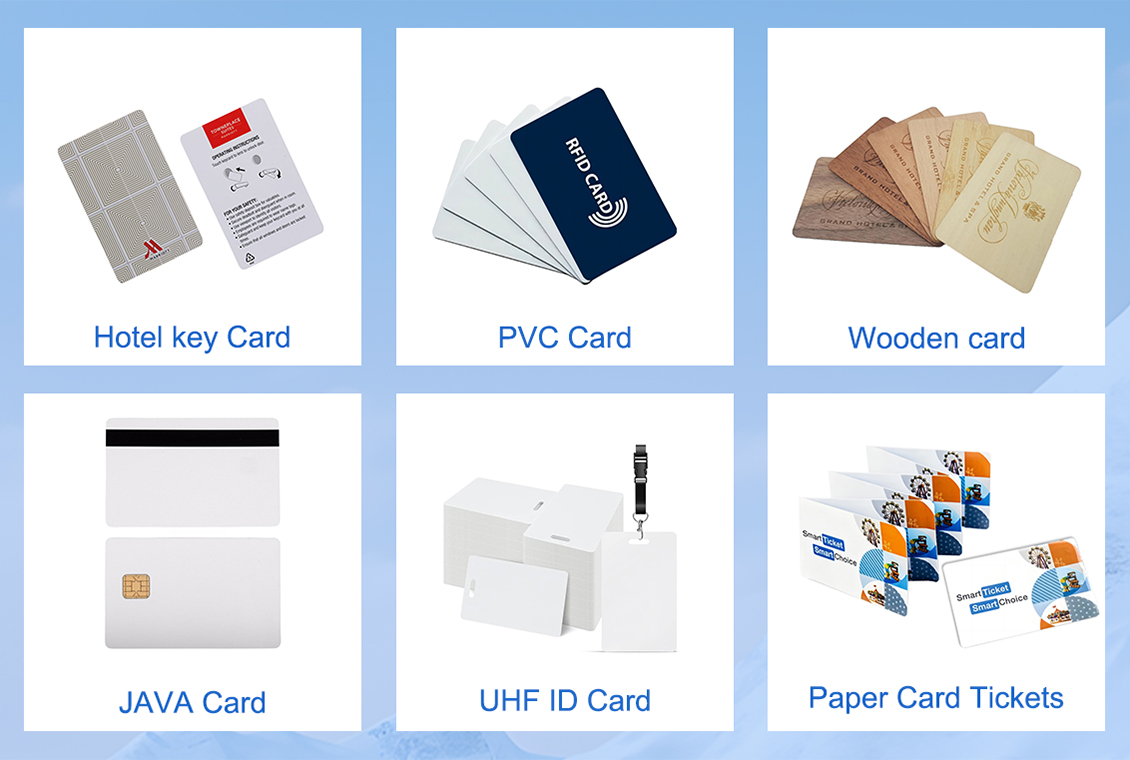
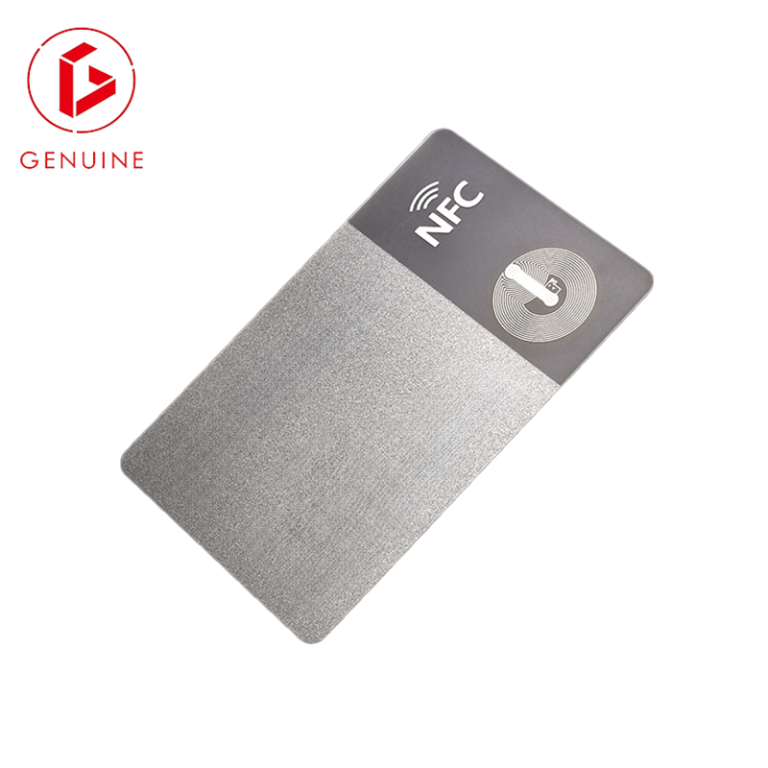
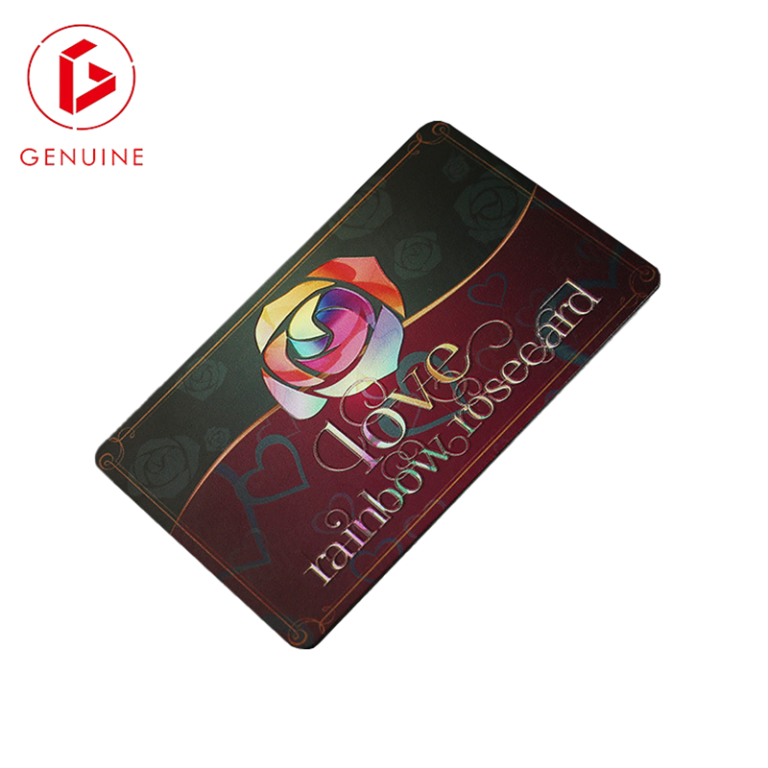
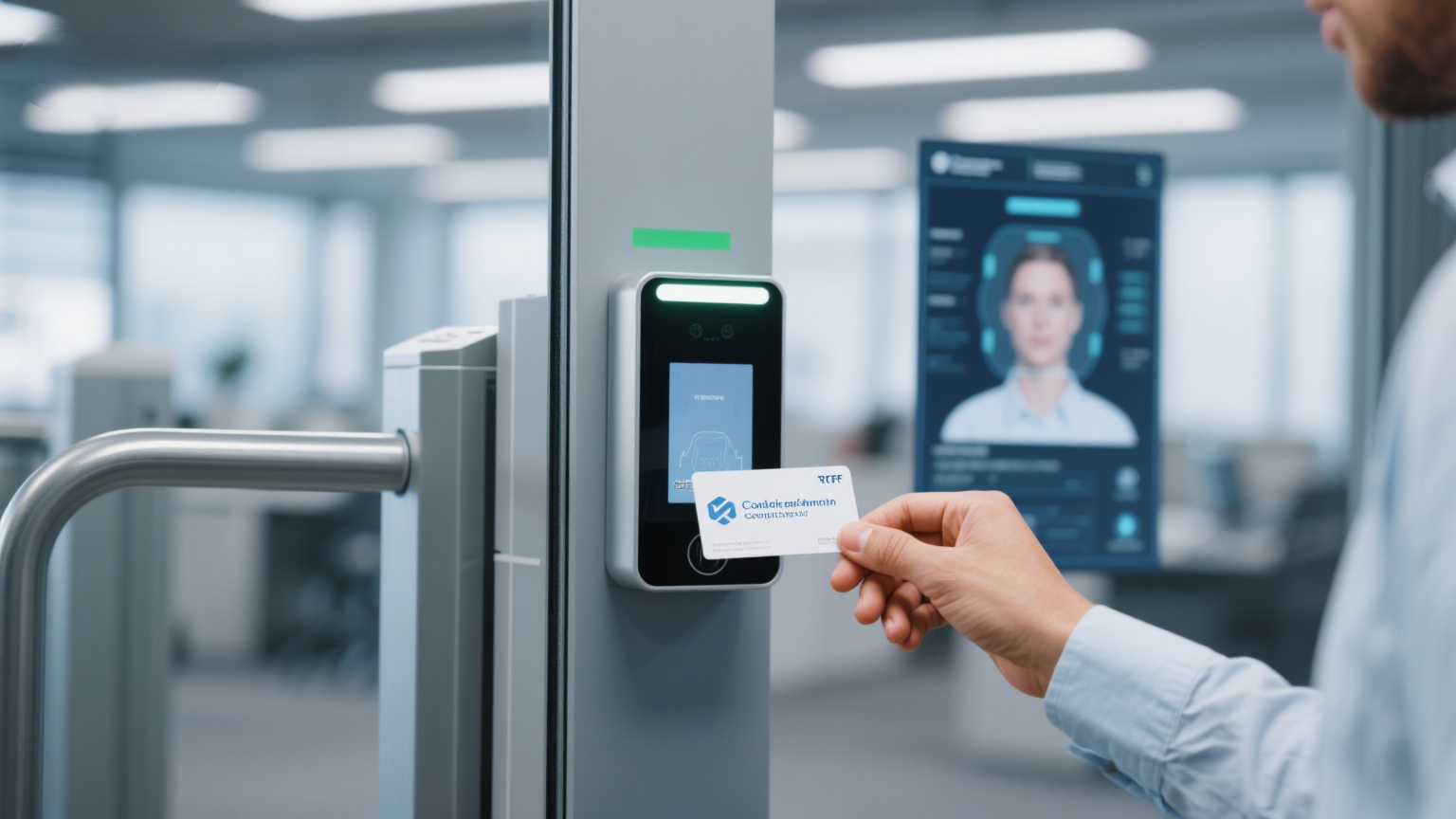
The ISO/IEC 7810 CR80 card (85.6 × 54 mm) is the familiar default for employee badges, building access, and transit. It slips into a wallet or badge holder, supports a dual-interface inlay (contact + contactless), and can also carry a magnetic stripe, a barcode, or a holographic overlay. For most access-control and payment programs, the card is the right answer when the credential is carried in a wallet or worn on a lanyard and read at a fixed reader.
The trade-off is rigidity: a card can crack at the edge under flex, and it is awkward where a wallet is inconvenient—think gyms, pools, or production floors. If you need a visual identity (photo, name, logo), the flat printable surface of a card is unmatched. This is also where chip choice comes in: see our MIFARE vs NTAG vs ICODE comparison when you are deciding what sits inside the card.
Key Fobs — Rugged, Pocketable, No Wallet Required
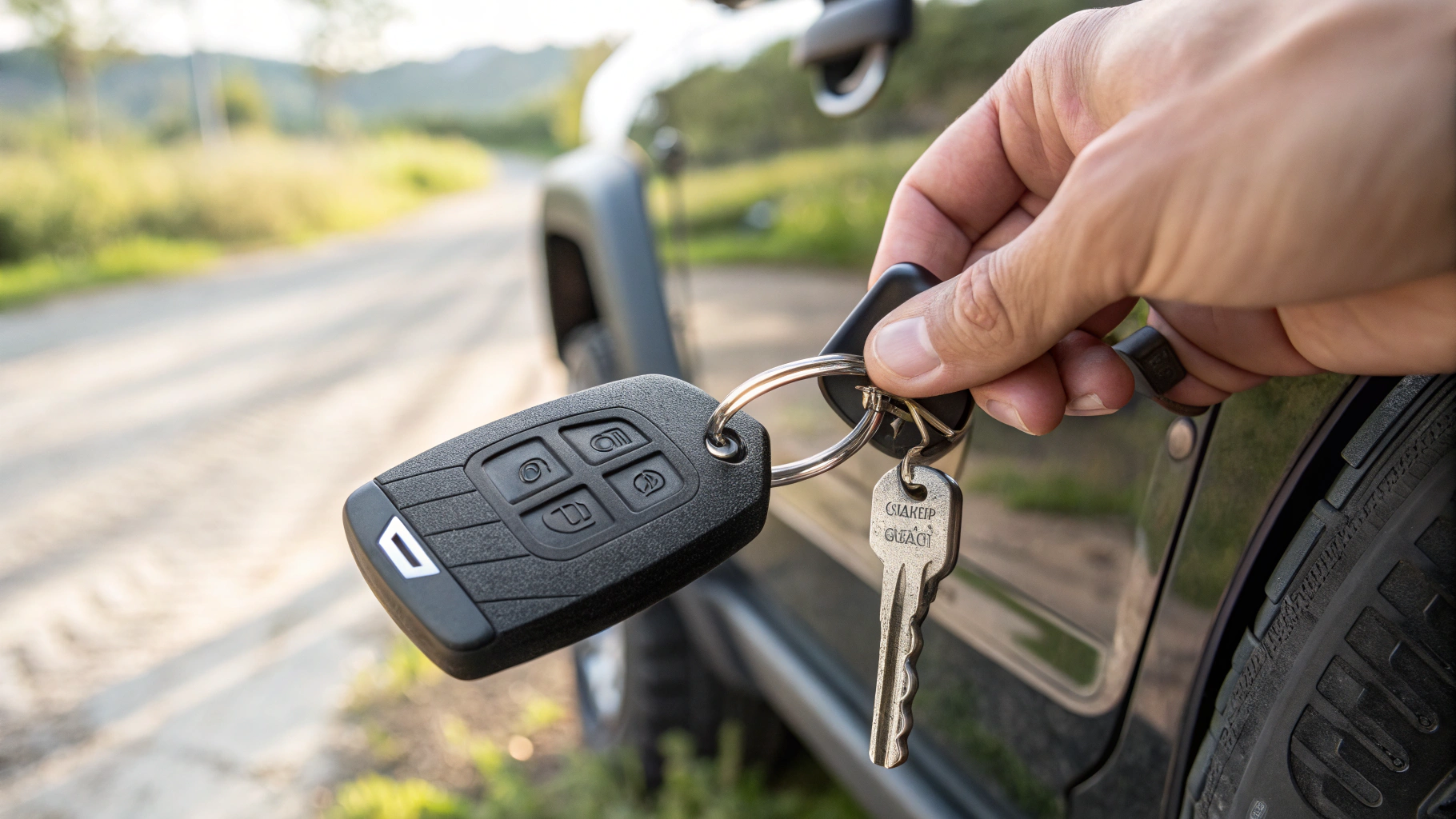
A key fob is a small molded housing—usually ABS or PPS—that protects the inlay and adds a keyring loop. That simple loop is why fobs dominate residential and office access, fleet management, and gyms: users carry keys anyway, so the credential is never “forgotten at home in a drawer.” Fobs survive being dropped, kicked, or rattling loose in a pocket, and they read reliably through a closed hand.
The trade-off is surface area: there is little room for a printed photo or barcode, and the per-unit cost is slightly higher than a card. Choose a fob when the user will not reliably carry a wallet and the environment is rough. Note that many industrial fobs run at LF (125 kHz) specifically because LF reads through metal and liquid where HF struggles—more on that in our LF vs HF vs UHF frequency guide.
RFID Stickers and Labels — Low-Cost Retrofitting and Asset Tagging
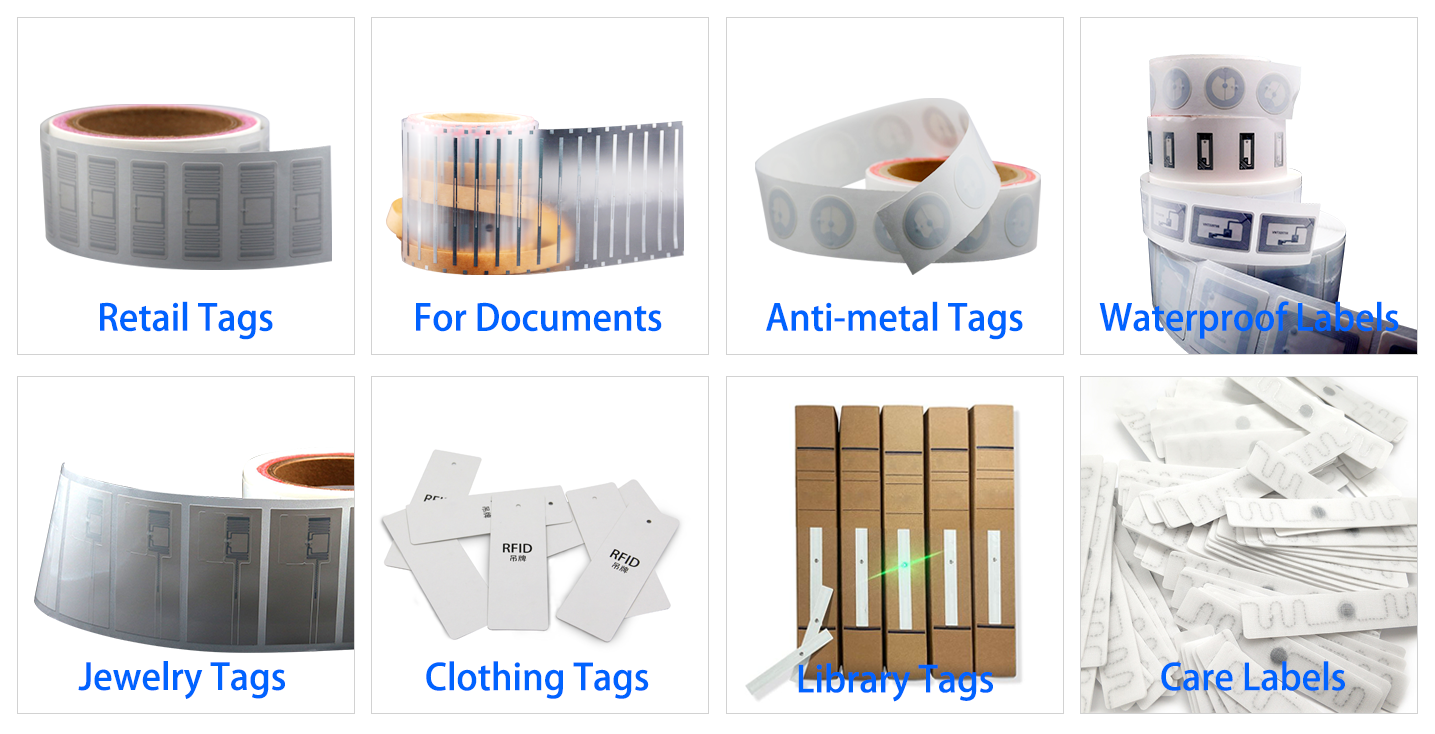
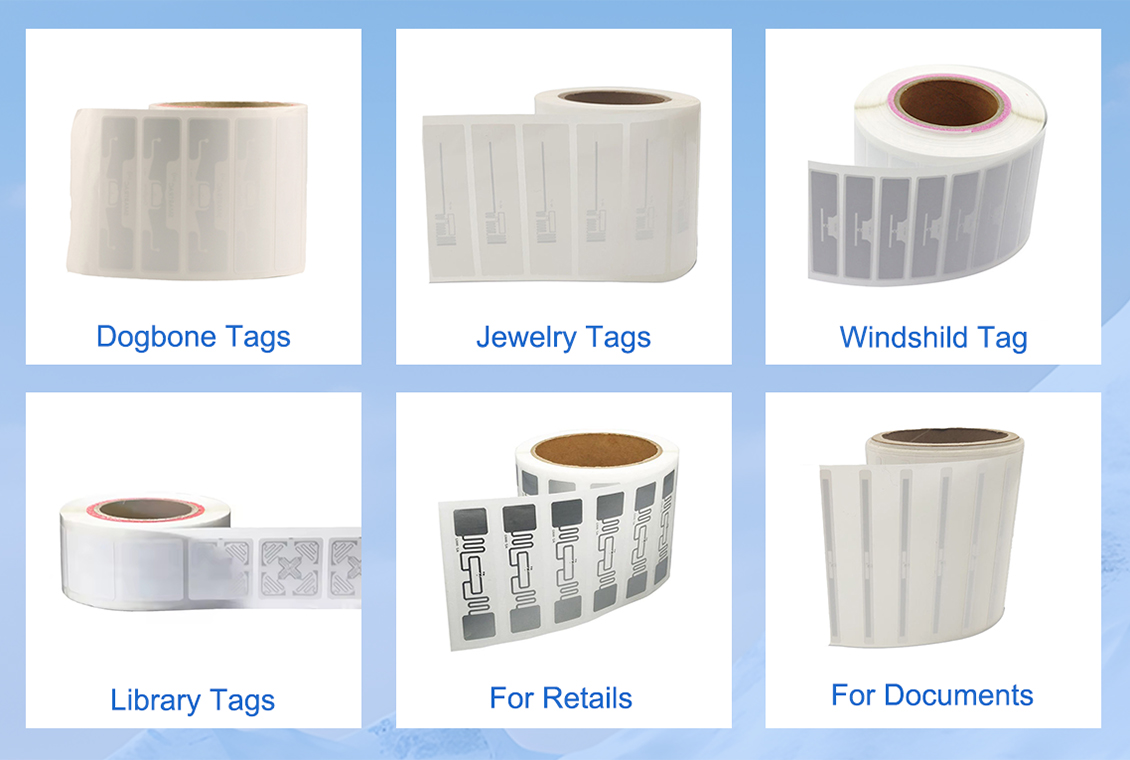
Thin adhesive inlays—a paper or PET face over the antenna—turn any object into a readable asset. They are the workhorses of IT asset tracking, library circulation, retail electronic article surveillance, and industrial laundries. At volume they are the cheapest RFID you can buy, and they apply in seconds. The catch is fragility: a sticker that peels, scratches, or goes through a wash cycle is gone.
For metal or liquid-surrounded assets you need an on-metal (or “flag”) tag, because a standard inlay detunes against conductive surfaces. Specify wet inlay versus dry inlay and on-metal capability explicitly in your RFQ, or your “asset tag” will fail on the very objects you bought it for. Stickers are a tagging tool, not a personal credential—keep that distinction clear when you brief your supplier.
RFID Wristbands — Events, Healthcare, and Leisure
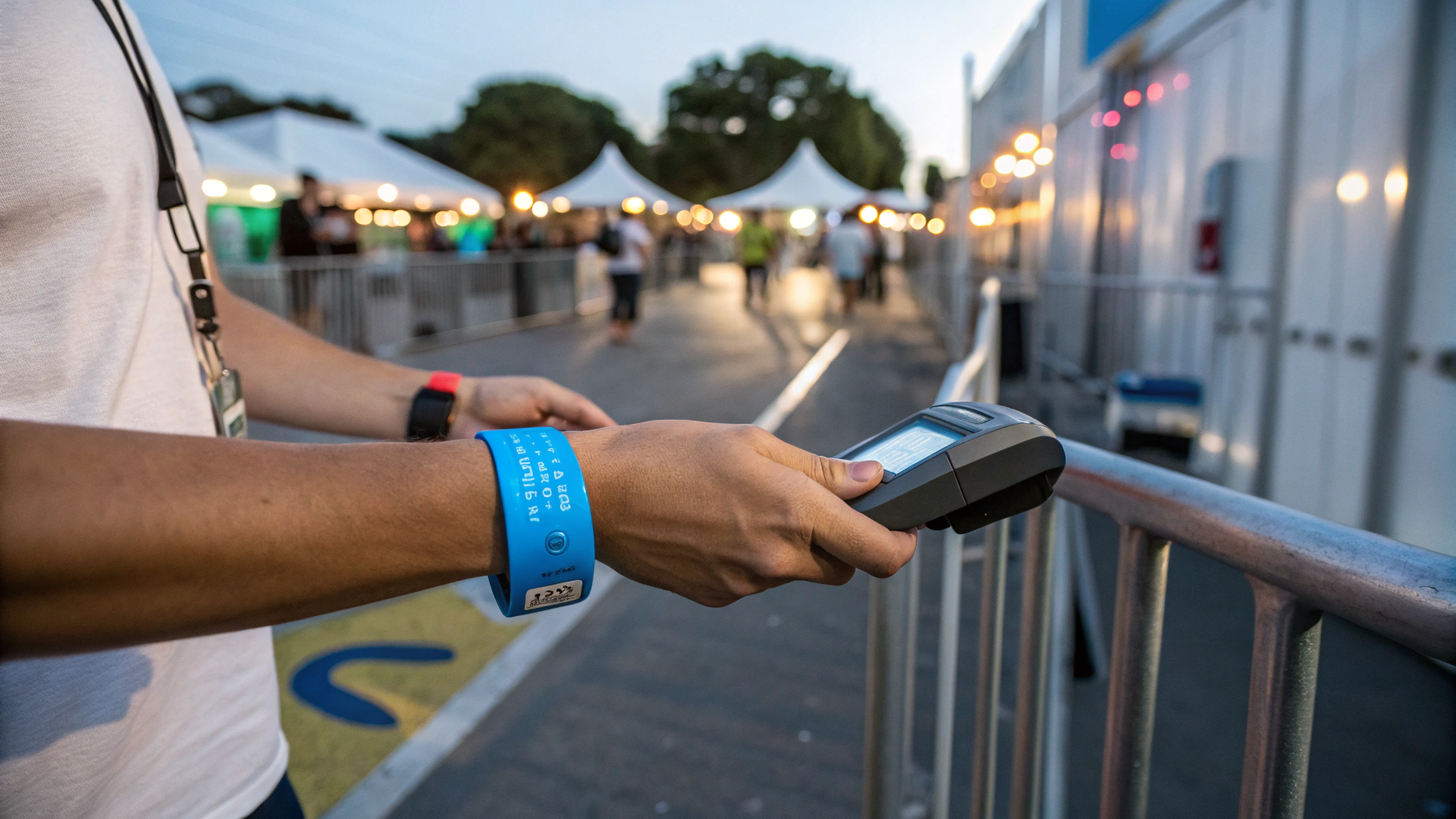
Silicone or woven wristbands embed an HF (13.56 MHz) inlay—occasionally UHF—and solve a problem the other form factors cannot: the credential is worn, so it is never lost in a pocket or left on a desk. That is why hospitals use them for maternal–infant matching and patient flow, and why festivals, hotels, and water parks use them for cashless access.
The trade-off is fit and endurance: you need sizing, and the inlay must survive water, sweat, and repeated flex. Reusable silicone bands suit multi-day events; single-use woven bands suit high-throughput venues. Either way, confirm the IP and temperature rating before you commit—water parks and autoclave-adjacent clinical areas are not gentle on electronics.
Match the Form Factor to Frequency and Environment
Frequency is not independent of form factor. LF (125 kHz) reads only a few centimeters but performs through metal and liquid, which is why industrial fobs often use it. HF (13.56 MHz, ISO/IEC 14443 and ISO/IEC 15693) is the sweet spot for cards, fobs, and wristbands—good anti-collision, NFC-compatible, and the backbone of access and payment.
UHF (860–960 MHz) reaches several meters for bulk asset reads but struggles near metal and liquid and is rarely the right choice for a personal credential; for item-level UHF, GS1 EPC/RFID is the relevant framework. The practical rule: pick the band for the read, then pick the housing for where the tag lives.
Durability, IP Rating, and Material Choices

Once you leave the office, ingress protection and material grade decide lifespan. An IP rating (defined by IEC 60529) tells you how well a sealed fob or wristband resists dust and water; a basic ABS fob is around IP54, while a properly sealed silicone wristband rates higher. For cards, lamination and edge sealing prevent the delamination and edge cracking that kill credentials in the field—an often-overlooked spec that separates a card that lasts two years from one that fails in six months.
Operating-temperature range, chemical resistance, and UV stability matter for laundries, labs, and outdoor sites. Write the IP rating, temperature range, and chemical-exposure limits into the procurement spec, not just the word “durable.” A vague durability claim is the easiest line in a quotation to quietly downgrade.
A Buyer’s Decision Checklist

Before you place the order, run every candidate form factor through seven questions:
- Where will it be carried or worn—wallet, keyring, product, or wrist?
- What read range and environment does the use case demand?
- Which frequency band fits that environment (LF/HF/UHF)?
- What durability and IP rating does the setting require?
- Do you need a printed visual identity (photo, barcode, logo)?
- What are the volume and per-unit budget constraints?
- Have you requested physical samples and tested them in the real environment before committing to a bulk run?
A sample tested on your actual reader, against your actual metal door or wet environment, beats any datasheet. If you are not sure which form factor fits, start with a small sample batch rather than guessing at scale—our guide to ordering card samples walks through what to request. For volume and lead-time planning, see our RFID MOQ and lead-time guide.
Frequently Asked Questions
Can the same chip go into any form factor? Yes. The inlay—chip plus antenna—is largely interchangeable; what changes is the housing, printing, and attachment method. The same DESFire or NTAG silicon can ship in a card, a fob, a sticker, or a wristband.
Which form factor is cheapest at scale? Stickers and labels, by a wide margin, because they use minimal material and no molded housing. Cards are mid-range; fobs and silicone wristbands cost the most per unit.
Is one form factor more secure than another? Security comes from the chip and the personalization, not the shape. A contactless card and a contactless fob can carry the same secure element; choose the form factor for ergonomics, and the chip for security.
Still weighing card versus fob versus sticker for your program? Talk to our engineering team with your reader model and environment, and we will narrow the shortlist to two form factors and a sample plan.