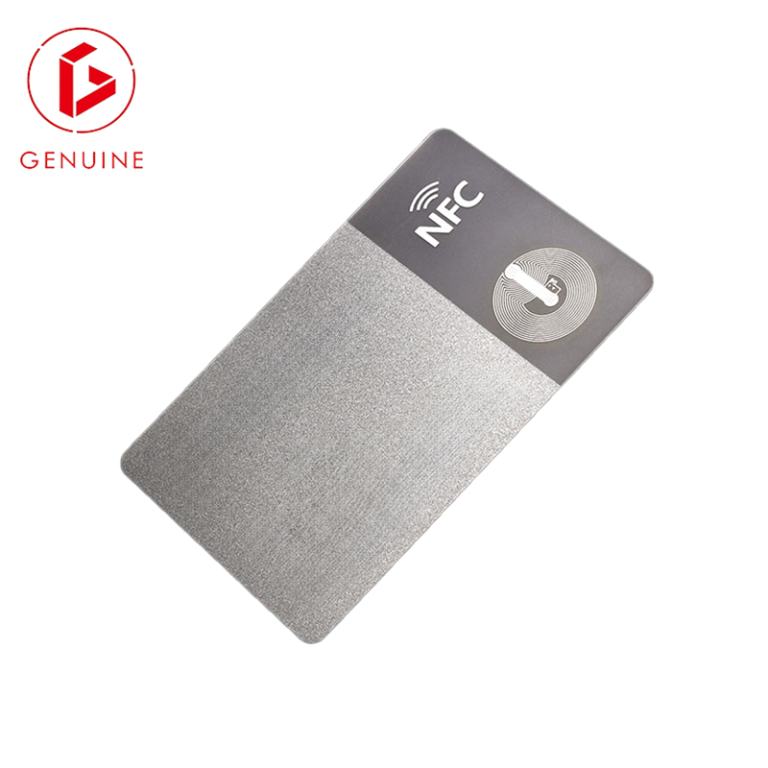
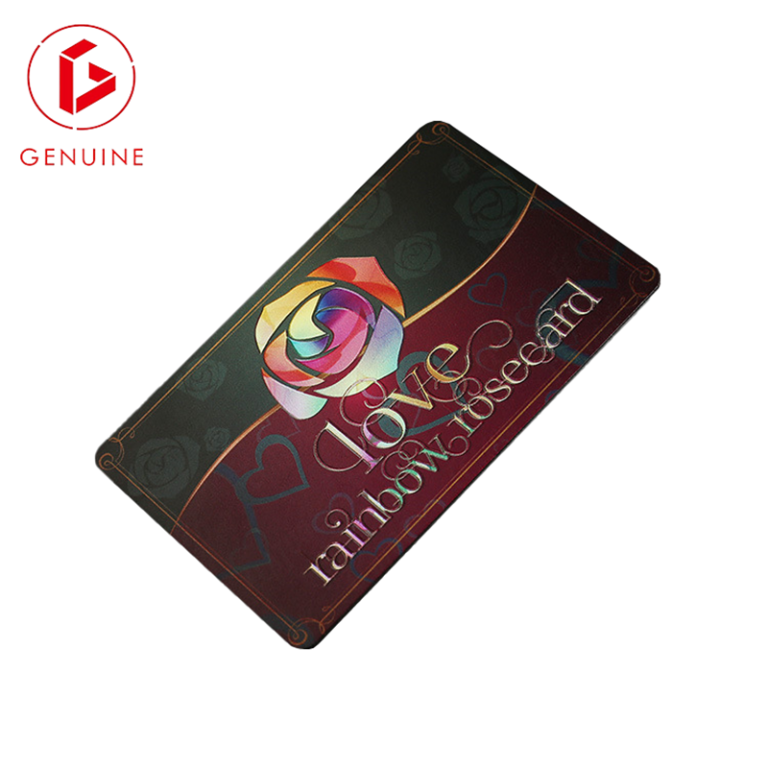
If your loyalty or membership card cracks at the lanyard slot, fades within a month, or stops reading after a few hundred taps, the problem is rarely the member — it is the card specification. For clubs, gyms, retailers and hospitality groups, the card is the single most-handled object in the whole relationship, and a weak spec quietly drives up replacement cost, help-desk calls and churn.
Why a cheap card is the most expensive one you can buy
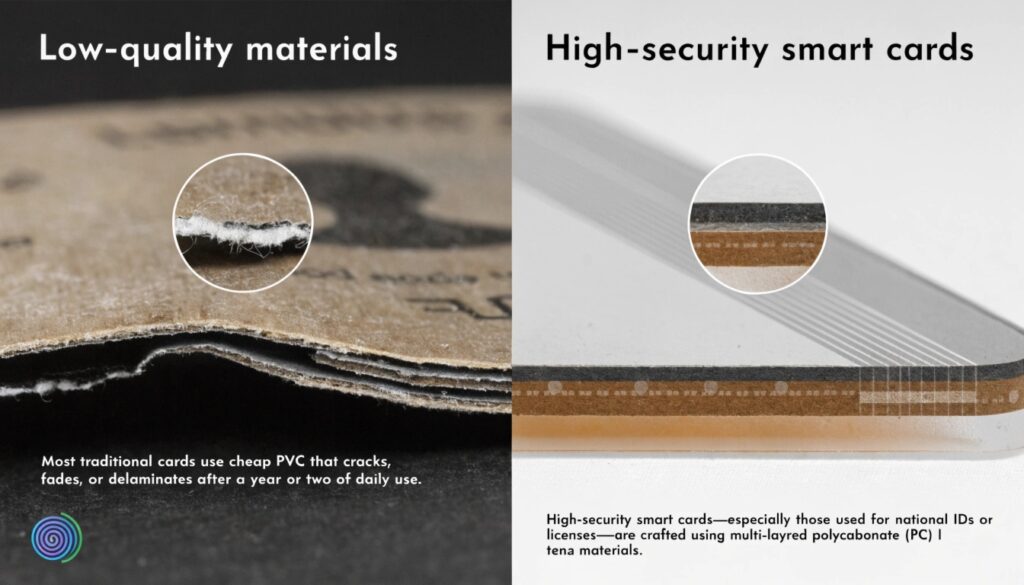
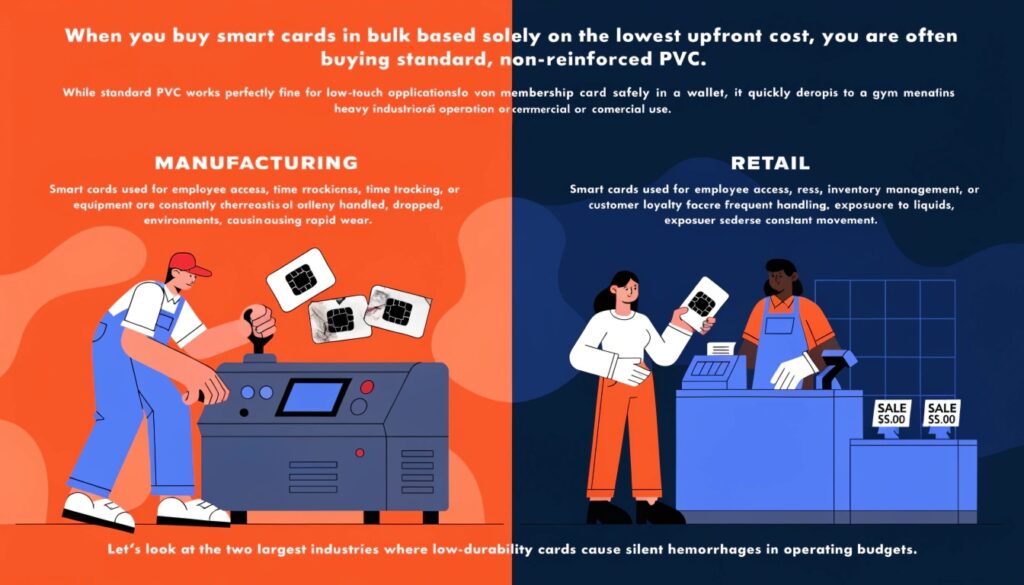
The purchase order shows a low unit price, but that number hides the real economics. A card that fails in six months has to be re-issued, reprinted, packaged and posted — and every failed card is also a member standing at the front desk, a frustrated call, and a small dent in trust. For a program running thousands of cards a year, a 12-month failure rate of even 15% can dwarf the entire original card saving. The buying question is never “what is the cheapest card?” — it is “what card survives the way my members actually use it?”
That shifts the conversation from unit price to total cost of ownership: how the card behaves across swipe, tap, drop, wash and wallet friction for the full life of the program. The sections below give you the spec levers to control it.
Card body material: PVC, PETG, and composite

All three conform to the same outline defined by ISO/IEC 7810 (the ID-1 / CR80 format your readers, wallets and printers expect), so size is never the differentiator — durability is.
- PVC is the lowest-cost base and fine for low-cycle use, but it turns brittle and cracks at the edges after repeated flexing or exposure to heat.
- PETG stays flexible and resists cracking far better, which is why it is the default for cards that are tapped, bent or carried daily.
- Composite (PET/PVC or polycarbonate) is the choice when the card must survive years of heavy use, laser engraving or laminated security features.
For a gym, a leisure club or a transit-linked membership, PETG or composite is usually the safer baseline. Specifying the base material explicitly in the RFQ prevents a supplier from quietly quoting the cheapest PVC and calling it “standard.”
Magnetic stripe or contactless: pick the interface your members use
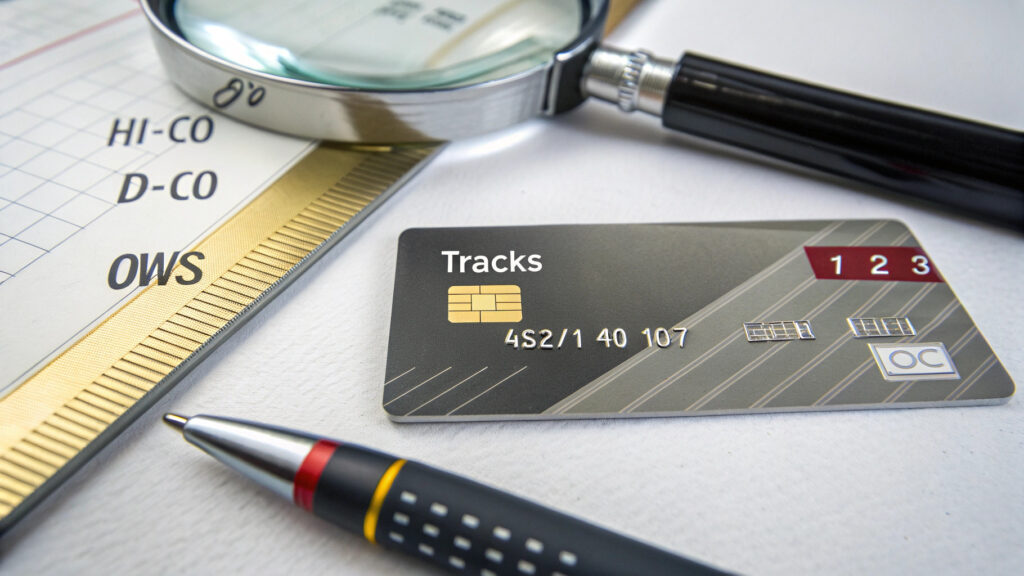
Magnetic stripe is the legacy option: cheap, universally readable, and adequate for a static ID or a simple points lookup. Its weaknesses are real, though — the stripe physically wears, it can be skimmed, and it forces a swipe that slows the queue. Contactless cards built on ISO/IEC 14443 tap in under a second, survive far more cycles, and support top-up, tier changes and even stored-value without re-issuing the plastic.
The right call follows your reader infrastructure, not fashion: if your POS, gate or check-in app already reads 13.56 MHz contactless, specify it and skip the stripe; if you must support legacy readers, a hybrid card carries both. Do not let the interface decision stall the program — match it to what your members actually tap against.
Branding and personalization: turn the card into a marketing surface
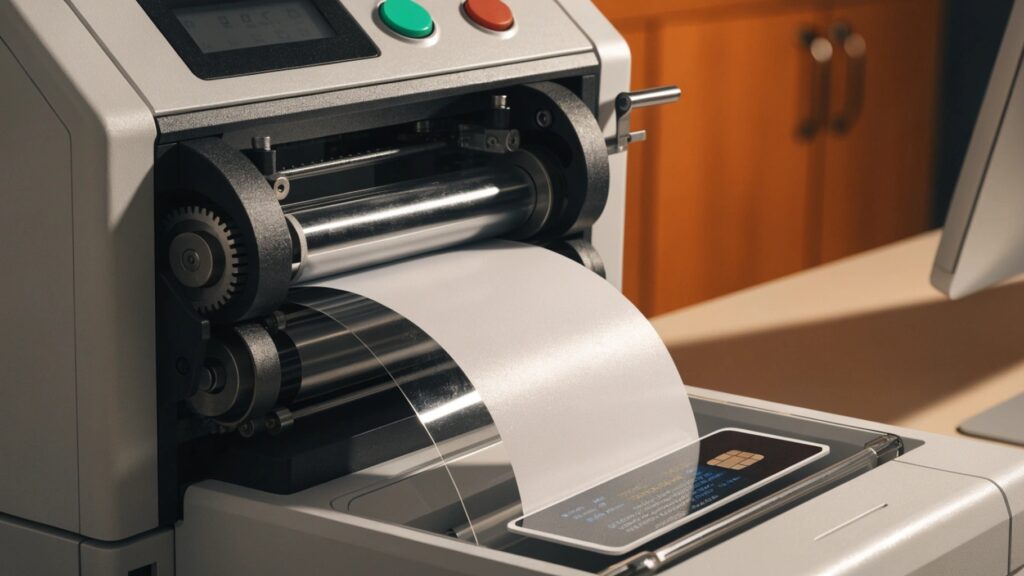
The card is also the only piece of marketing your member carries in their wallet every day, so print quality is brand equity. Three methods dominate: dye-sublimation is fast and cheap but sits on the surface and fades; re-transfer prints edge-to-edge under a protective film and lasts; laser engraving is permanent and tamper-resistant for high-security tiers. Our card personalization methods comparison breaks down cost and durability per method. For a loyalty or membership program, re-transfer is the usual sweet spot — durable branding without the premium of laser.
Encoding and data: so the card actually talks to your systems
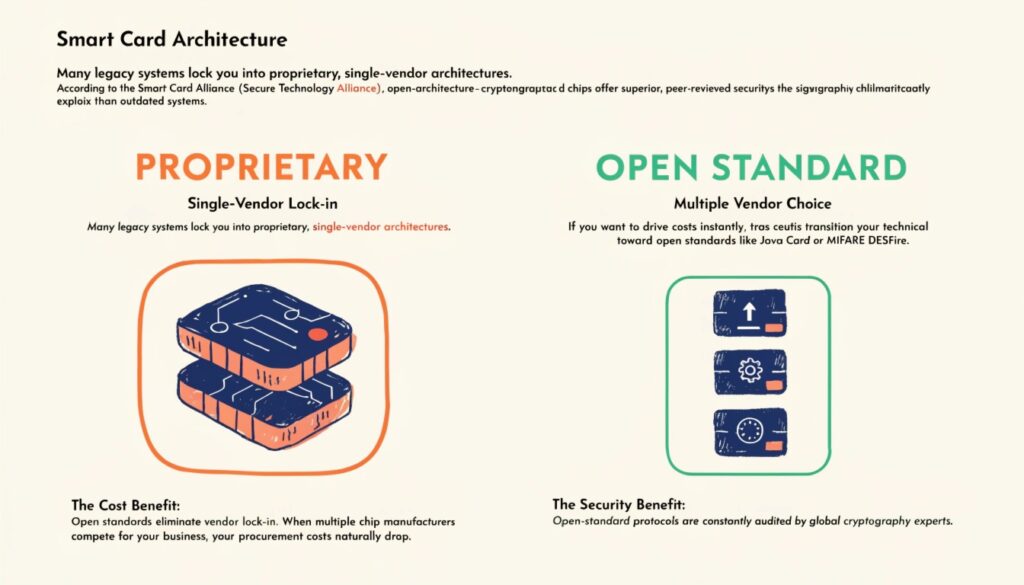
A card is only as useful as the data it carries and the systems that read it. Specify the encoding stack explicitly: magnetic stripe to ISO/IEC 7811, contact chip to ISO 7816, contactless to ISO/IEC 14443 — and decide what each field means before production, not after. Our card encoding specification guide gives a copy-ready RFQ block covering coercivity, track layout, ATR and chip applet. The most common launch failure is a card that prints beautifully but will not reconcile with the POS or CRM because the encoding was left vague.
Durability vs price: calculate the real cost of ownership
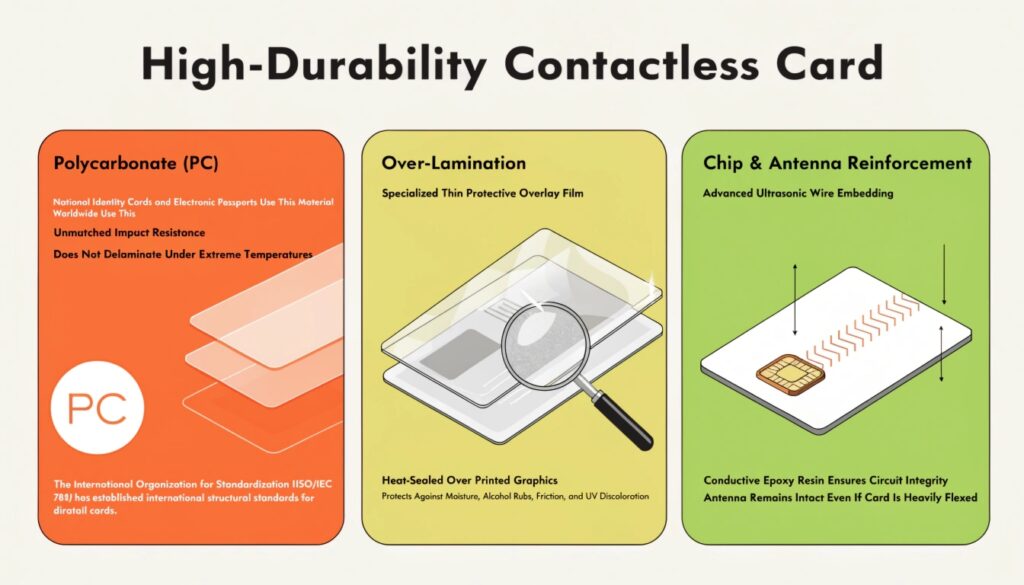
Durability is not a premium feature — it is the lever that controls cost. Total cost of ownership, not unit price, should drive the spec. A PETG contactless card may cost 1.5× a PVC magnetic-stripe card, but if it lasts three times as long and needs no re-issue logistics, it wins on every program that runs beyond a single season. Back the claim with testing: ISO/IEC 10373 defines the flex, torsion, abrasion and chemical-resistance tests that turn “durable” from a slogan into an acceptance criterion. Our durability testing guide shows how to write those criteria into the contract.
MOQ and order sizing: buying right for SMB and enterprise
Minimum order quantities reward volume, but over-ordering locks cash in plastic that may be superseded by a rebrand. A small operator should negotiate a low-MOQ pilot run, validate read rate and print in the field, then scale; an enterprise rolling out region by region should phase releases to match activation. Either way, approve a golden sample before the full run — our card sample evaluation guide lists exactly what to test on arrival: print durability, encoding read rate, material thickness and edge quality.
Frequently asked questions
- How long should a membership card last? For daily-use programs, spec for 2–3 years; PETG or composite with contactless encoding typically gets there, PVC magnetic stripe often will not.
- Can I run magnetic stripe and contactless on one card? Yes — hybrid cards carry both, which is the safe choice when part of your estate still reads stripes.
- What is a realistic MOQ? It varies by method and substrate; ask for a pilot run, validate a golden sample, then scale — do not commit the full volume blind.
Choosing cards that survive daily use is mostly about writing the spec before the purchase order, not after the failures show up. Tell us your reader type, volume and lifecycle, and we will return a bid-comparable specification — and a golden sample you can stress-test before you commit.