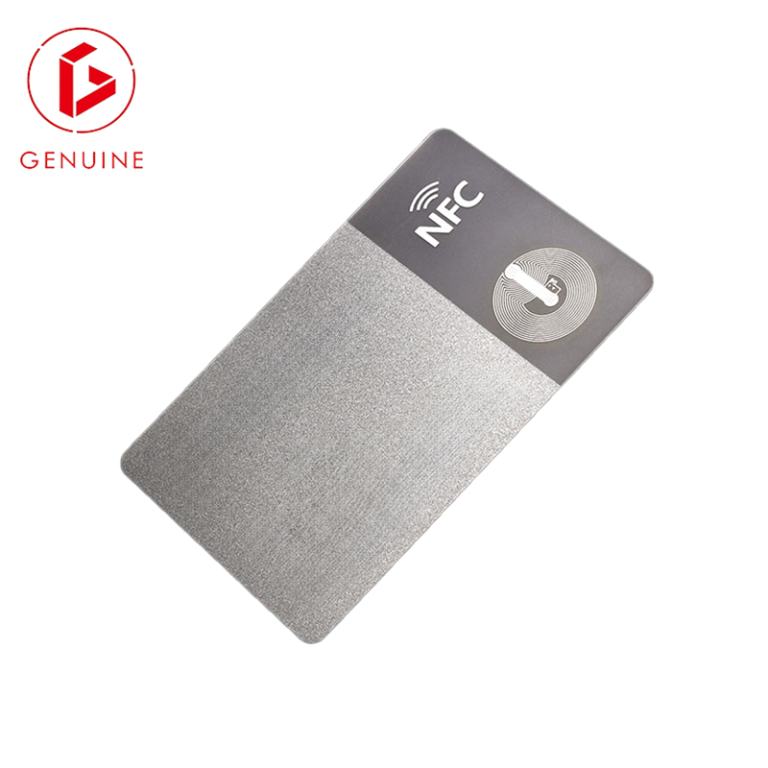
A sample is the cheapest insurance in card procurement. Before you commit to a 10,000-card order, a handful of physical samples lets you catch a wrong substrate, a dead chip, or a print defect that would otherwise surface after the whole batch ships. This guide walks distributors, resellers, and sourcing managers through how to request card samples that actually represent production, what to inspect, and the red flags that should stop an order before it starts.
Why Sampling Beats Trusting the Datasheet

The cost of a bad order is rarely the cards themselves — it is the reissue, the angry end-customer, and the slotting failures in the field. A sample that costs you a few dollars can prevent a five-figure bad batch. Treat sampling as a standard step in supplier qualification, not a favour you ask for. Reputable manufacturers expect it and will usually ship samples at or below MOQ.
Sampling also protects you legally: a signed-off sample becomes the golden reference you can hold production against if a dispute arises later.
What to Put in Your Sample Request Brief

Vague requests get vague samples. A useful sample brief specifies, in writing:
- Exact card construction — substrate (PVC, PET, PETG, polycarbonate), layer stack, thickness target (nominal 0.76 mm, ID-1 per ISO/IEC 7810).
- Chip and encoding — exact chip model and whether you need it pre-personalised or blank, plus the encoding standard you will use (see our note on specifying card encoding standards).
- Artwork — send your real artwork or a representative proxy so you can judge print quality, not a generic demo layout.
- Quantity and variants — ask for at least 3–5 units per variant so you can run destructive and reader tests without running out.
- Your target readers — list the reader models and frequencies in your deployment so the sample is validated against your actual environment.
What a Sample Should Let You Verify
| Dimension | What the sample proves | How you check it |
|---|---|---|
| Substrate & build | The card is the material you were quoted, not a cheaper substitute | Edge inspection, cross-section, weight versus spec |
| Encoding & chip | The chip reads and encodes on your systems | Read on your own readers; write and re-read a test credential |
| Print quality | Resolution, colour, and edge-to-edge coverage meet your brand bar | Magnifier, colour check, edge inspection |
| Durability | The card survives flex, heat, and solvent in your use case | Refer to our guide on card durability testing to ISO/IEC 10373 |
| Electrical performance | Read range and reliability match the deployment | Distance sweep on your antennas, not the supplier’s bench |
The Physical Inspection Checklist

Before any electronic test, look at the card with your own eyes and a magnifier:
- Edges and lamination — no delamination, no sharp or uneven edges, no layer separation at the chip window.
- Chip seat — the module sits flush, with no raised lip or gap that would catch in a reader.
- Print registration — text and photo aligned, no banding, no colour drift at the edges.
- Thickness and dimensions — measure with calipers; the card must hold ISO/IEC 7810 ID-1 (85.6 × 54.0 × 0.76 mm nominal), as the standard defines at ISO/IEC 7810.
Electrical and Reader Testing

A card that reads on the supplier’s demo reader can still fail in your building. Test on the oldest and most marginal readers in your fleet, because that is where weak cards drop out first.
- Read rate — sweep a distance gradient and record where reads become unreliable.
- Encode and re-read — write a real credential and confirm it decodes, not just that the chip UID is visible.
- Multi-card behaviour — if your use case ever presents cards in bundles, test collision and anti-collision.
Durability and Environmental Tests
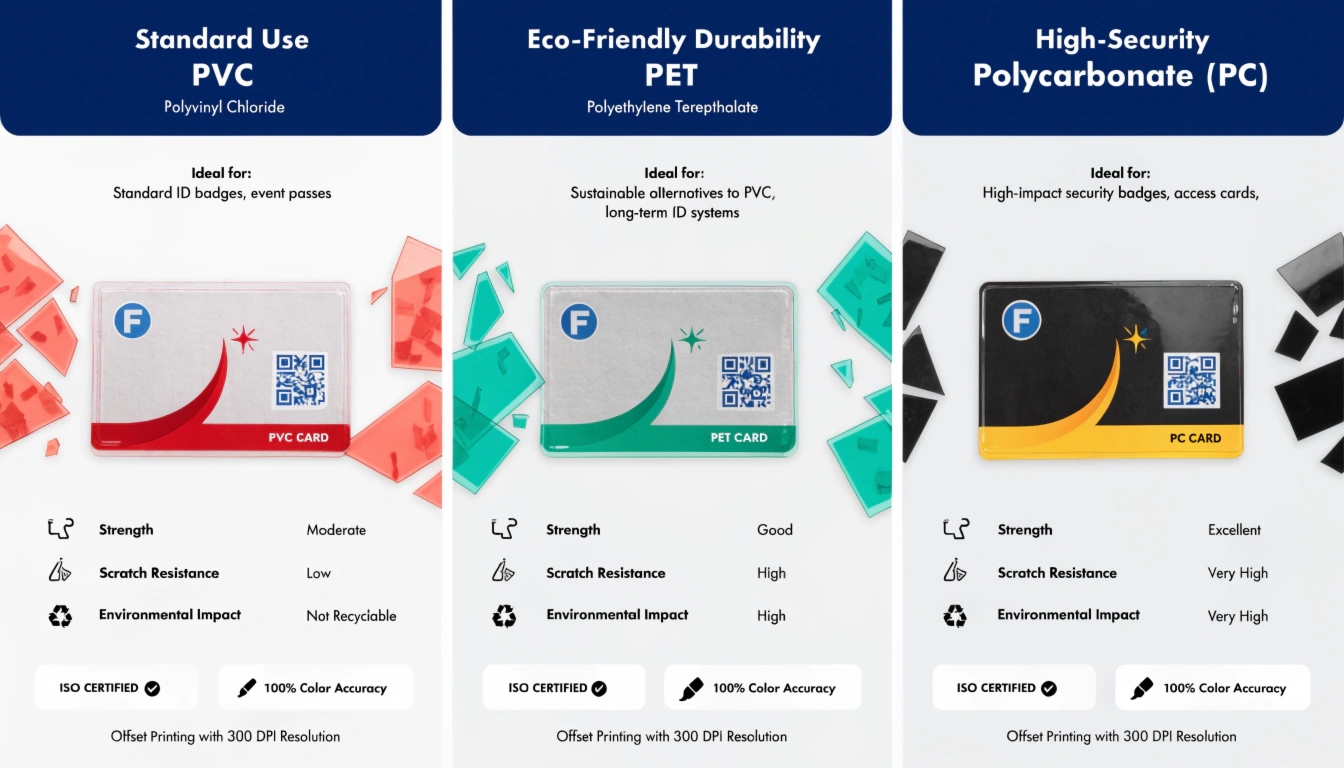
A sample that looks perfect on day one can embrittle by month three. Do not accept “durable” as a word — require test data for the specific card construction, referencing the ISO/IEC 10373 series for bending, torsion, and environmental cycling. Apply the same acceptance criteria to the sample you will apply to volume.
Holding Production to the Sample
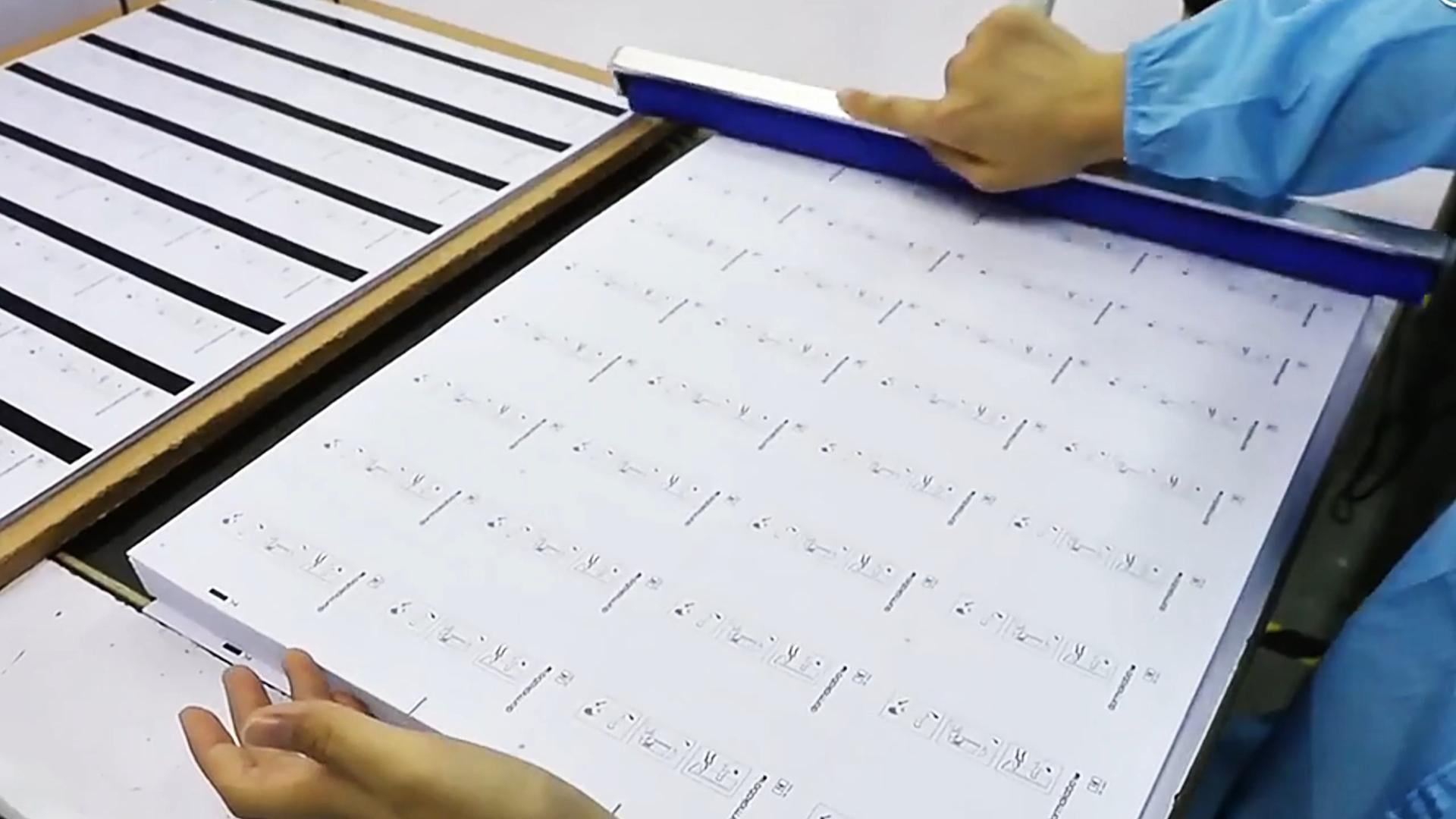
The biggest risk after a good sample is that volume does not match it. Close that gap contractually:
- Retain a signed golden sample — keep one unit as the reference the line is measured against.
- Require a first-article inspection (FAI) on the initial production run before the balance ships.
- Specify acceptable variance — colour delta, thickness tolerance, and chip performance bands, stated in writing; for secure-element cards, keep the chip configuration aligned with the platform’s certification expectations (GlobalPlatform).
Red Flags When Samples Arrive
Stop and question the supplier if you see any of these:
- Stock-photo “samples” — a supplier that only shows renders, never a physical card you can receive, is not qualifying anything.
- Different substrate than quoted — a heavier, glossier, or lighter card than the spec usually means a cheaper swap.
- Chip that won’t encode — a readable UID is not the same as a usable credential; insist on a written test.
- No traceability — if the supplier cannot tell you the chip lot or substrate batch, you cannot audit production later.
A Sample Request Email You Can Copy

A precise brief gets a usable sample back. Adapt this:
“We are scoping an order of [quantity] [smart/ID] cards for [use case]. Please send [3–5] samples per variant with: [PVC/PETG] body at 0.76 mm ISO/IEC 7810, [chip model], [blank/pre-personalised], our attached artwork, and your standard lamination. We will test read range on [reader models] and bending per ISO/IEC 10373. Please confirm substrate batch, chip lot, and lead time for samples and production.”
Frequently Asked Questions
How many samples should I request?
At least 3–5 per variant. You need enough to keep one as a retained reference, run destructive or durability tests, and still have units for reader validation without running dry.
Can I get samples below the minimum order quantity?
Yes. Reputable manufacturers routinely ship sample quantities well below production MOQ — it is part of qualifying the job. If a supplier refuses samples entirely, treat that as a red flag rather than a policy.
How long does sampling usually take?
Typically a few days to two weeks depending on whether artwork personalisation and encoding are included. Build sampling into your lead time; do not compress it, because the test results are what de-risk the order.
What if the sample is good but production differs?
That is exactly why you retain a signed golden sample and require a first-article inspection on the opening production run. If volume drifts outside the written tolerance, you have a documented reference to reject or rework against.
Next Step: Send Us Your Sample Brief
As a card manufacturer since 2005, we ship physical samples against a written brief and retain a golden reference for every production run, so what you approve is what ships. If you are a distributor or sourcing manager qualifying a supplier, send us your sample request with your card spec, target readers, and expected volume — we will return testable samples and the durability and encoding data to back them, and we will be plain about where a cheaper substrate would compromise your program. For broader sourcing context, our comparison of factory-direct versus reseller card sourcing covers what to weigh before you commit.