Hey there. If you’ve ever been tasked with sourcing thousands of smart cards, you know the pressure. One batch of faulty chips or a security breach can stall an entire project. Today, I’m going to show you exactly how to vet a manufacturer so you never have to worry about that.
Quick Answer: How to Choose a Reliable Smart Card Manufacturer
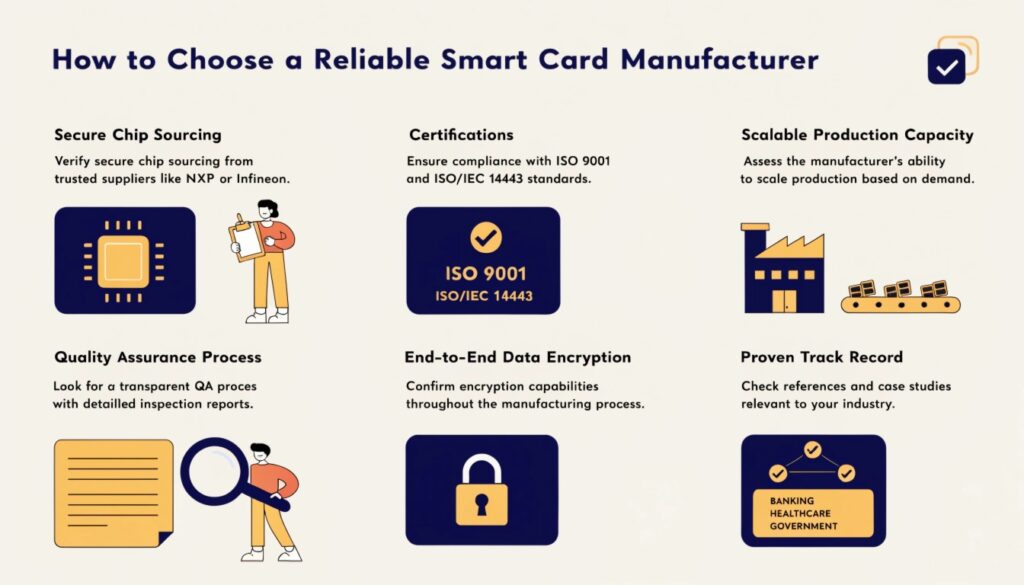
To choose a reliable smart card manufacturer, prioritize providers with ISO 9001 and ISO/IEC 14443 certifications, verified secure chip sourcing (like NXP or Infineon), and a transparent QA process. Ensure they offer scalable production, end-to-end data encryption, and have a proven track record in your specific industry.
Read on to discover the “hidden” red flags in the manufacturing process and the five specific questions you must ask during the vetting stage to protect your bottom line.
Why Your Choice of Manufacturer Is a Security Decision
When we talk about smart cards, we aren’t just talking about plastic. We are talking about data carriers. Whether it’s for access control, payment, or identification, the manufacturer is the first link in your security chain.
If their facility isn’t secure, your data isn’t secure. According to industry reports, security breaches in the supply chain have increased by over 40% in recent years, making manufacturer transparency more than a luxury—it’s a survival trait.
1. Certification Is Non-Negotiable
Don’t just take their word for it. A reliable manufacturer must have the paperwork to back up their claims. You should look for:
- ISO 9001: This ensures a consistent quality management system.
- ISO/IEC 7816 & 14443: These are the “gold standards” for contact and contactless smart cards.
Pro Tip: Ask for a PDF of their latest audit. A truly reliable partner, like GENUINE, will have these ready to share because they are proud of their standards.
2. Sourcing: Where Do the Chips Come From?
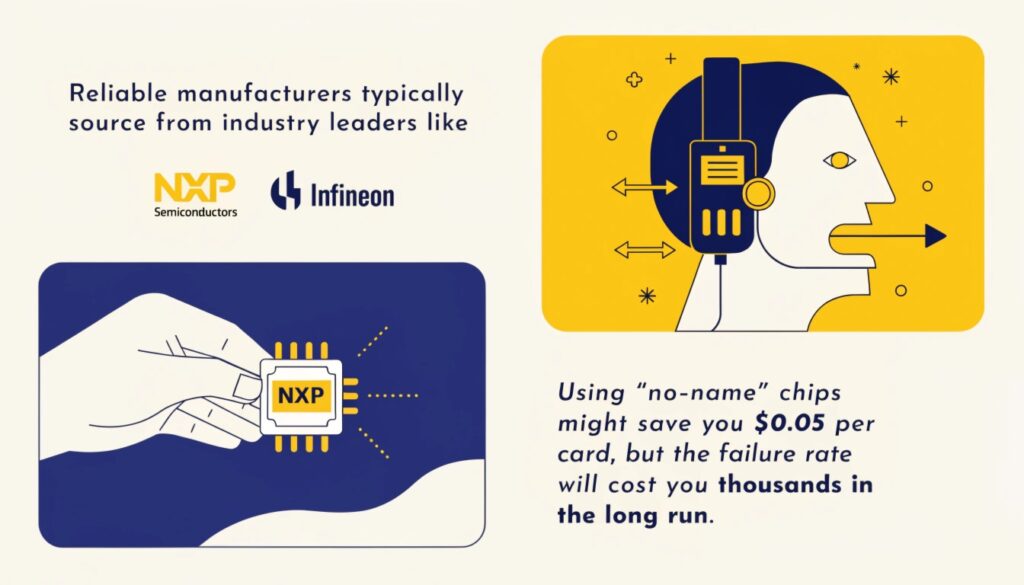
The “brain” of the card is the chip. Reliable manufacturers maintain direct relationships with top-tier silicon providers. If a manufacturer is vague about where they get their RFID or EMV chips, walk away.
Reliable manufacturers typically source from industry leaders like NXP Semiconductors or Infineon. Using “no-name” chips might save you $0.05 per card, but the failure rate will cost you thousands in the long run.
3. The “Hidden” Details: Material Quality and Printing
I’ve seen it a hundred times: the chip works, but the card cracks after three months of use. You need to know about the PVC, PET, or Polycarbonate quality they use.
| Material | Durability | Best For |
| Standard PVC | Medium | Loyalty/Gift Cards |
| PETG | High | Corporate ID / Access Control |
| Polycarbonate | Ultra-High | Government IDs / Passports |
Make sure your manufacturer uses high-definition offset printing to ensure your brand’s logo doesn’t look like a blurry photocopy.
4. Data Security and Personalization Capabilities
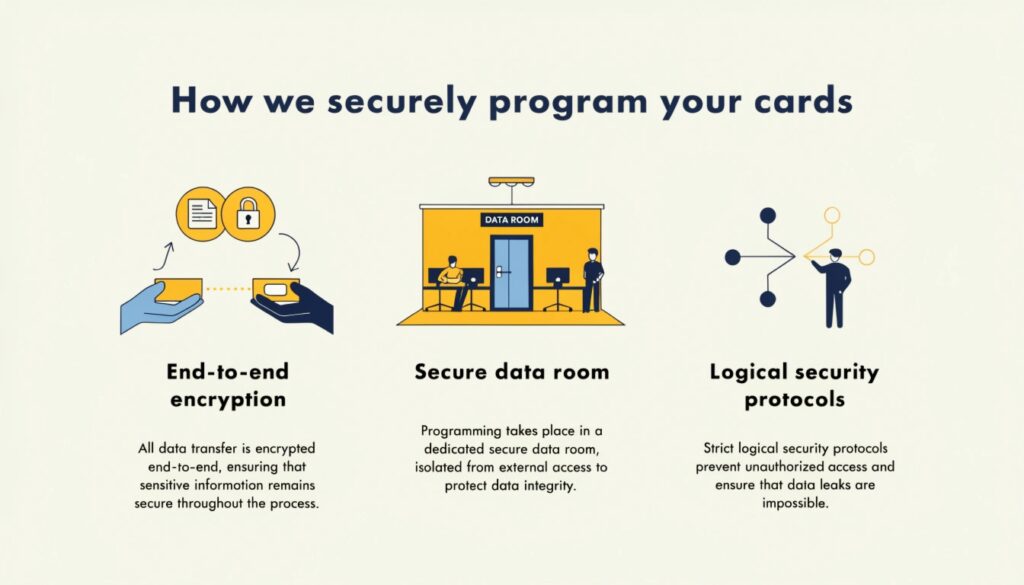
If you need your cards pre-programmed, security is paramount. A reliable manufacturer should offer:
- End-to-end encryption during data transfer.
- Secure data rooms where the programming happens.
- Logical security protocols to prevent data leaks.
5. Scalability and Lead Times
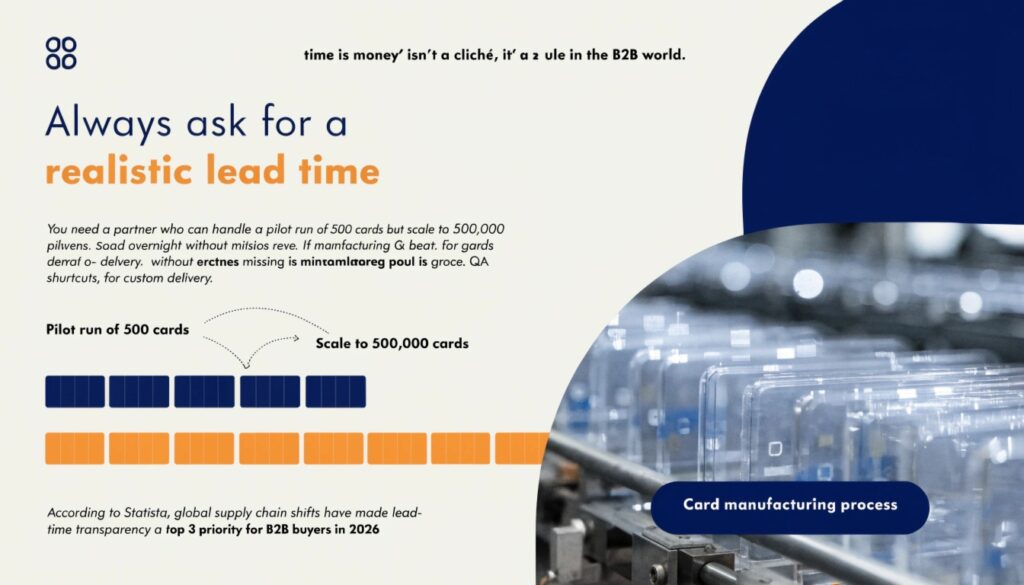
In the B2B world, “time is money” isn’t a cliché; it’s a rule. You need a partner who can handle a pilot run of 500 cards but scale to 500,000 without missing a beat.
Always ask for a realistic lead time. If a manufacturer promises “overnight” delivery for a custom high-security order, they are likely cutting corners on Quality Assurance (QA). According to Statista, global supply chain shifts have made lead-time transparency a top 3 priority for B2B buyers in 2026.
Conclusion
Choosing the right smart card manufacturer comes down to three things: Security, Quality, and Transparency. Don’t settle for a vendor when you can have a partner who understands the technical nuances of your industry.
Are you ready to elevate your project with cards that actually last? Or are you still worried about chip failure rates? Feel free to reach out—I’m here to help you navigate these technical waters.