Hey there, fellow procurement pro. If you’re here, you’re probably facing a challenge that keeps many sourcing managers up at night: How do you slash your wholesale smart card procurement costs without completely compromising your data security? It feels like a balancing act on a razor’s edge. Cut costs too much, and you risk buying low-quality chips that leak sensitive data. Focus solely on security, and your procurement budget blows wide open.
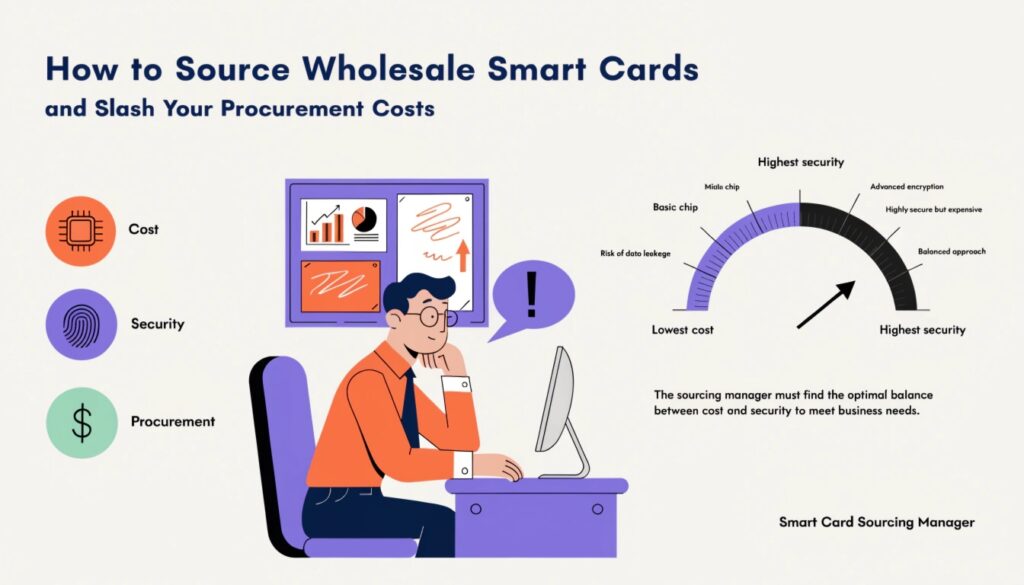
As someone who has navigated the B2B printing and smart card manufacturing landscape for years, I’ve got some good news for you. You don’t have to compromise. Today, I’m going to share 5 actionable, insider tips to help you optimize your smart card procurement budget while keeping your security locked down tight.
Wholesale Smart Cards: 5 Tips to Reduce Procurement Costs Without Sacrificing Security
Quick Answer: To reduce wholesale smart card procurement costs without sacrificing security, companies should standardize chip protocols (like moving from proprietary to open standards), opt for dual-interface cards to future-proof hardware, consolidate order volumes to leverage economies of scale, negotiate directly with source manufacturers (avoiding trading markups), and implement strict post-production security audits.
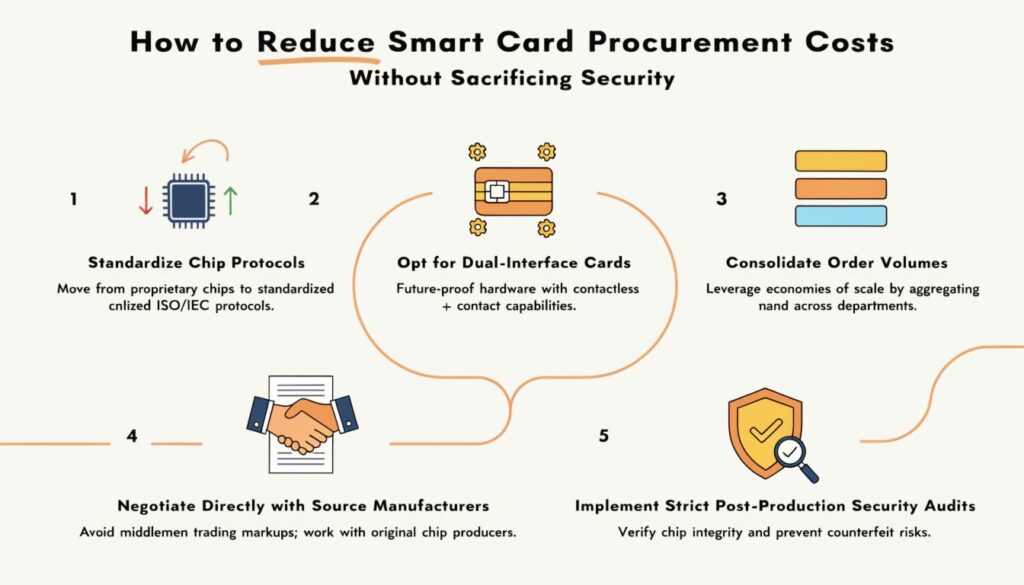
Read on to discover exactly how to apply these strategies to your supply chain, optimize your B2B sourcing workflow, and secure the best factory-direct pricing.
1. Shift to Open-Standard Chip Protocols (Like MIFARE DESFire or Java Card)
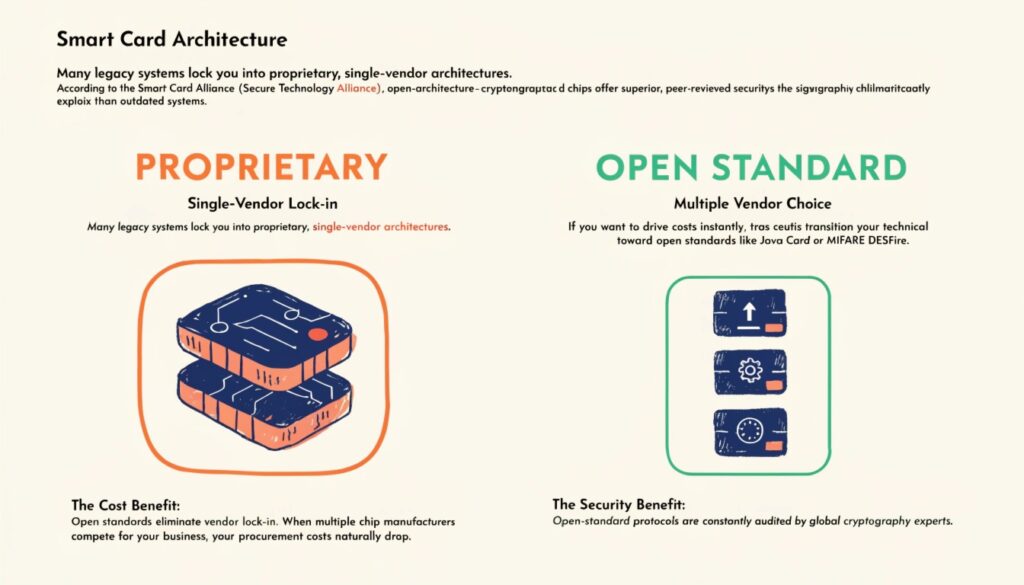
When it comes to smart cards, the chip inside accounts for the vast majority of your hardware cost. Many legacy systems lock you into proprietary, single-vendor architectures.
If you want to drive down costs instantly, transition your technical specifications toward open standards like Java Card or MIFARE DESFire.
- The Cost Benefit: Open standards eliminate vendor lock-in. When multiple chip manufacturers compete for your business, your procurement costs naturally drop.
- The Security Benefit: Open-standard protocols are constantly audited by global cryptography experts. According to the Smart Card Alliance (Secure Technology Alliance), open-architecture cryptographic chips offer superior, peer-reviewed security algorithms that are significantly harder to exploit than outdated proprietary systems.
2. Consolidate Your Volume and Optimize Batch Ordering
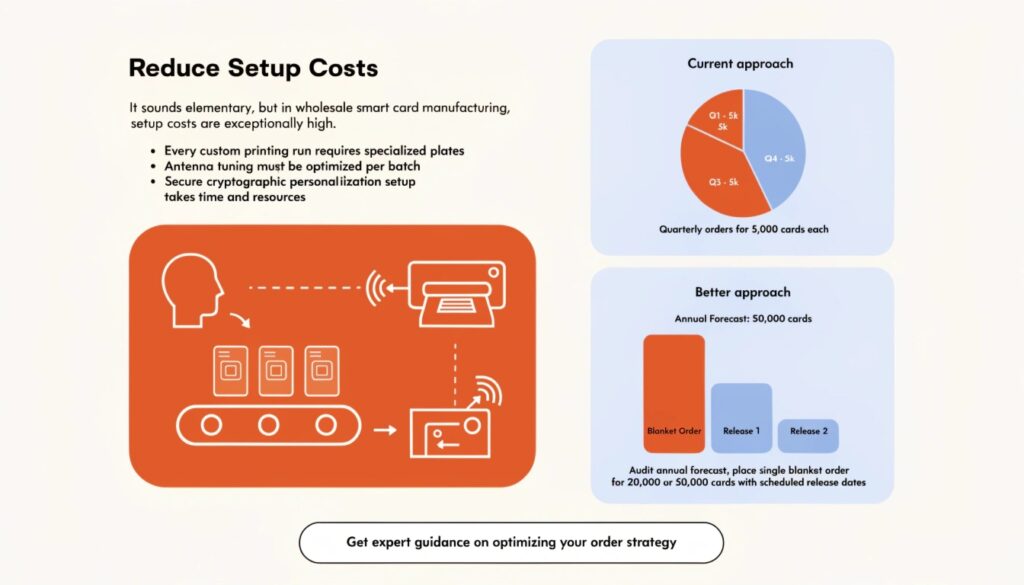
It sounds elementary, but in wholesale smart card manufacturing, setup costs are exceptionally high. Every custom printing run requires specialized plates, antenna tuning, and secure cryptographic personalization setup.
Instead of placing fragmented, quarterly orders for 5,000 cards, audit your annual forecast and place a single blanket order for 20,000 or 50,000 cards with scheduled release dates.
Sourcing Cost Breakdown by Volume
The table below illustrates how drastically your unit cost drops when you transition from low-volume ad-hoc ordering to consolidated wholesale purchasing:
| Order Volume (Units) | Relative Setup/Plate Costs | Cryptographic Personalization Cost | Total Per-Unit Sourcing Cost |
| 1,000 – 3,000 | Extremely High | High | Premium Pricing |
| 5,000 – 10,000 | Moderate | Standard | Standard Wholesale |
| 20,000+ | Negligible (Amortized) | Optimized/Automated | Factory-Direct Minimum |
By committing to a higher annual volume, you give the manufacturer the predictability they need to offer you their absolute lowest tier of pricing.
3. Choose Dual-Interface Cards to Future-Proof Hardware
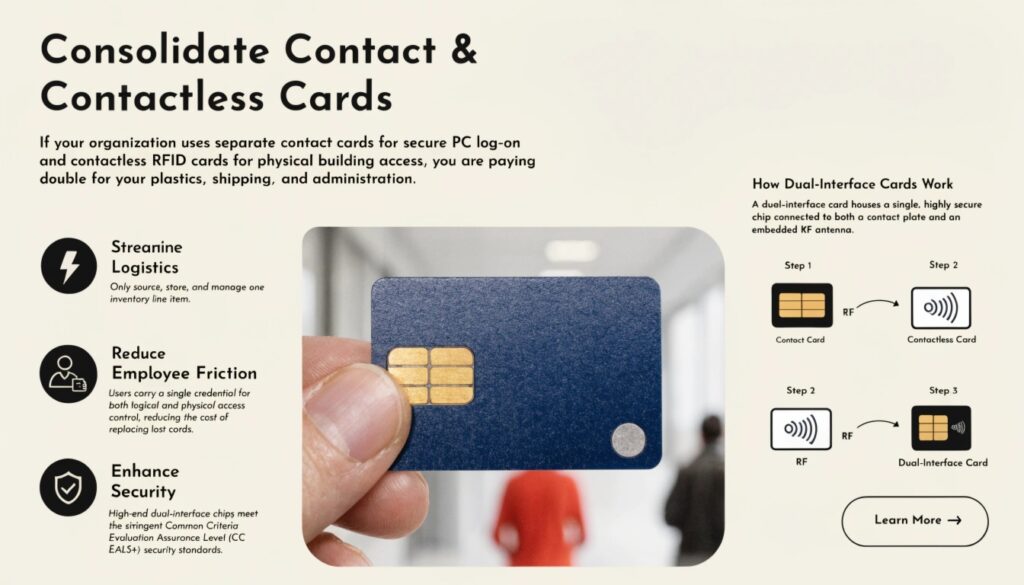
If your organization uses separate contact cards for secure PC log-on and contactless RFID cards for physical building access, you are paying double for your plastics, shipping, and administration.
Instead, consolidate your requirements into a dual-interface smart card. These cards house a single, highly secure chip connected to both a contact plate and an embedded RF antenna.
- Streamlined Logistics: You only source, store, and manage one inventory line item.
- Reduced Employee Friction: Users carry a single credential for both logical and physical access control, reducing the cost of replacing lost cards.
- Maximum Security: High-end dual-interface chips meet the stringent Common Criteria Evaluation Assurance Level (CC EAL5+) security standards, ensuring your physical and digital perimeters remain unbreachable.
4. Work Directly with Source Manufacturers, Not Middlemen
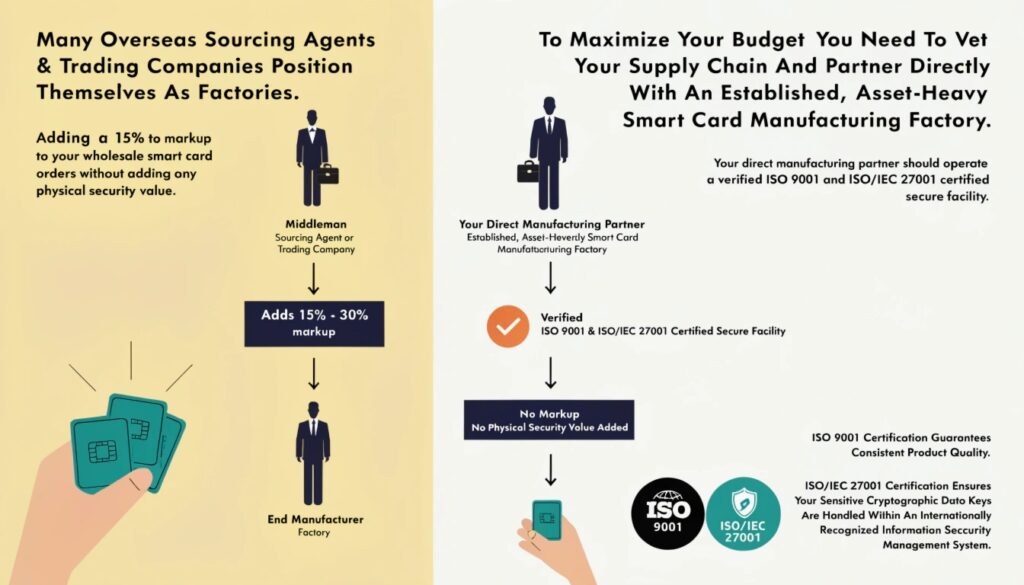
Many overseas sourcing agents and trading companies position themselves as factories, adding a 15% to 30% markup onto your wholesale smart card orders without adding any physical security value.
To maximize your budget, you need to vet your supply chain and partner directly with an established, asset-heavy smart card manufacturing factory.
What to look for: Ensure your direct manufacturing partner operates a verified ISO 9001 and ISO/IEC 27001 certified secure facility. This guarantees that not only is the product quality consistent, but your sensitive cryptographic data keys are handled within an internationally recognized information security management system.
5. Standardize on Durable Card Materials (PET-G or Polycarbonate)
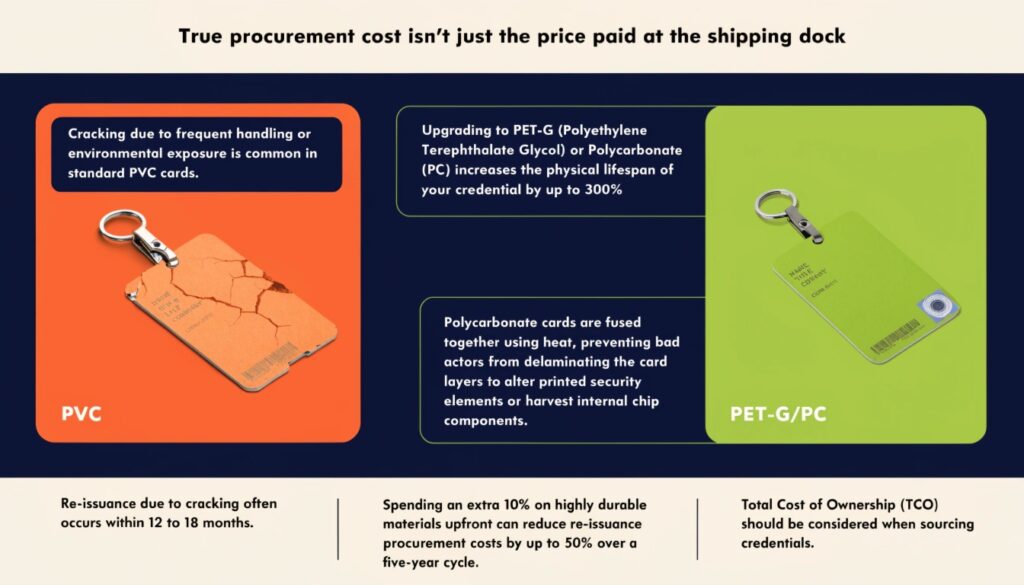
True procurement cost isn’t just the price you pay at the shipping dock—it’s the Total Cost of Ownership (TCO) over the lifespan of the credential. Standard PVC cards are cheap upfront, but they easily crack, delaminate, or snap under daily corporate or industrial use, forcing you to pay for re-issuance within 12 to 18 months.
By upgrading your material specifications to PET-G (Polyethylene Terephthalate Glycol) or Polycarbonate (PC), you increase the card’s physical lifespan by up to 300%.
- Tamper Evidence: Polycarbonate cards are fused together using heat, making it physically impossible for bad actors to delaminate the card layers to alter printed security elements or harvest the internal chip components.
- Long-Term Sourcing Savings: Spending an extra 10% on highly durable materials upfront will slash your re-issuance procurement costs by up to 50% over a five-year cycle.
Sourcing Checklist for Smart Card Buyers
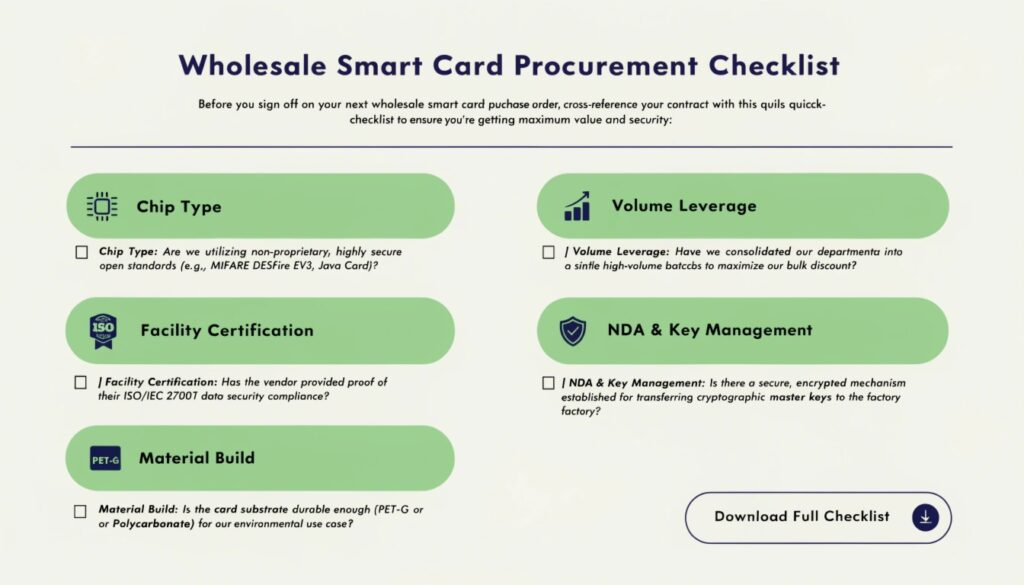
Before you sign off on your next wholesale smart card purchase order, cross-reference your contract with this quick procurement checklist to ensure you’re getting maximum value and security:
- [ ] Chip Type: Are we utilizing non-proprietary, highly secure open standards (e.g., MIFARE DESFire EV3, Java Card)?
- [ ] Facility Certification: Has the vendor provided proof of their ISO/IEC 27001 data security compliance?
- [ ] Material Build: Is the card substrate durable enough (PET-G or Polycarbonate) for our environmental use case?
- [ ] Volume Leverage: Have we consolidated our departmental needs into a single high-volume batch to maximize our bulk discount?
- [ ] NDA & Key Management: Is there a secure, encrypted mechanism established for transferring cryptographic master keys to the factory?
Conclusion
Sourcing secure wholesale smart cards doesn’t mean you have to bleed your budget dry. By shifting to open-architecture chips, leveraging batch-order volumes, choosing dual-interface technology, and working directly with certified source factories, you can significantly drive down your procurement expenses while keeping your data locked down.
Are you looking to optimize your smart card supply chain or get a direct factory quote on your next batch of high-security credentials? Let’s chat! What specific chip protocol or security standard is your infrastructure currently running on?