In the warehouse, employee Xiao Li is holding a scanner gun, bending down to scan barcodes on each cargo box one by one. The “beep-beep” sounds rise and fall intermittently. Suddenly, the scanner runs out of battery, forcing him to rush back to the office to replace it. The aisles between shelves are piled high with pending packages, and the supervisor is already urging today’s inventory data… Does this scene feel familiar?
In warehouse management, barcodes have dominated for half a century, but RFID tags are now challenging them with “no-line-of-sight, batch-scanning” technology. This showdown isn’t just about efficiency—it’s a battle that will define the survival of warehousing costs over the next decade. This article cuts through technical jargon and uses real data and industry cases to reveal which technology better suits your warehouse.

I. Technology Showdown: Why Can RFID Tags “Scan Blindfolded”?
1. Barcodes: The Visible “ID Card”
- How it works: Relies on light reflection from black-and-white stripes, requiring manual alignment for scanning.
- Fatal flaw: Must scan “one-to-one”; fails immediately if dirty, wrinkled, or reflective.
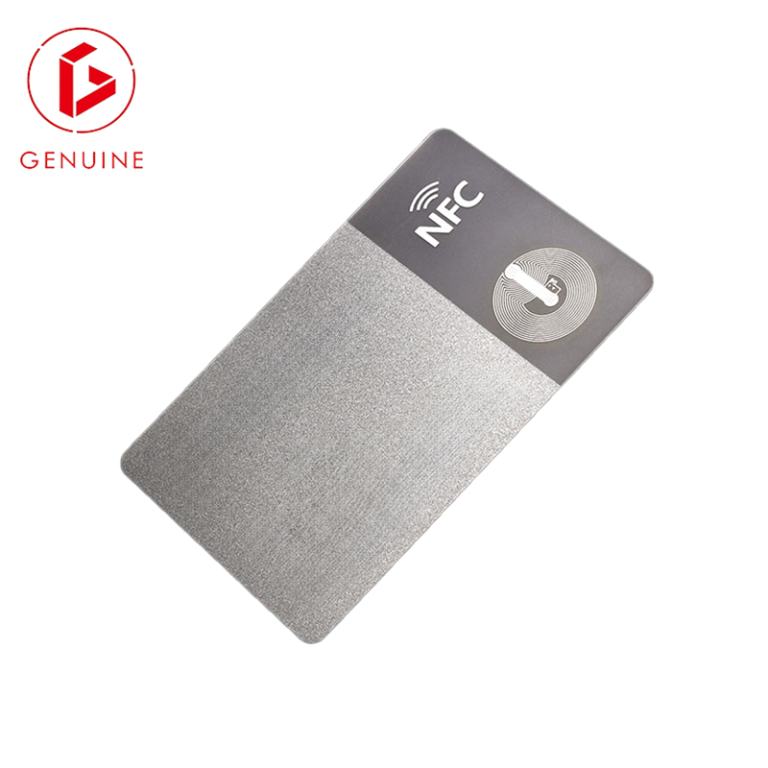
2. RFID Tags: The Hidden “Sensors” in Products
- How it works: The data in the tag chip can be automatically identified through radio waves, with a maximum penetration distance of 20 meters.
- Key advantages:
- Batch-read 200+ tags per second (e.g., entire pallets scanned via a gateway);
- Immune to obstructions, stains, or even embedding inside products.
- Case study: A home appliance company once tested that it took 6 hours to count 5,000 pieces of inventory using barcodes, while RFID only took 15 minutes, increasing efficiency by 24 times.
II. Cost Analysis: Barcodes Are Cheap, But RFID Might Save More?
Many assume “RFID tags are expensive ($0.3–1 each) compared to barcodes ($0.01)”—but long-term costs tell a different story:
| Cost Factor | Barcode Solution | RFID Solution |
|---|---|---|
| Labor Time | Dedicated staff for scanning | Automated reading, 70% labor reduction |
| Error Rate | 3%-5% (missed/mis-scanned) | Below 0.1% |
| Equipment Maintenance | Frequent scanner/printer replacements | Readers last 5+ years |
| Hidden Losses | Delays from inventory errors | Real-time data prevents stockouts/overstock |
Cost calculation:
- For a warehouse handling 10,000 items daily:
- Barcodes: Annual labor + error costs ≈ $150,000;
- RFID: Initial investment (tags + equipment) ≈ $200,000, but breaks even in Year 2, with long-term costs 60% lower.
III. Real-World Applications: Where RFID Is a Must?
Scenario 1: High-Frequency E-commerce Warehouses
- Pain point: “Double 11” sales overwhelm scanners.
- RFID fix: Install gateways on sorting lines to auto-track packages, boosting sorting efficiency by 300%.
- Keywords: E-commerce warehouse automation, RFID sorting systems
Scenario 2: Automotive Parts Traceability
- Pain point: Engine numbers/batch codes require 100% accuracy; barcodes fall off.
- RFID fix: Embed tags internally for full lifecycle tracking. One automaker reduced post-sale disputes by 80%.
- Keywords: RFID traceability, automotive supply chain
Scenario 3: Cold-Chain Drug Monitoring
- Pain point: Barcodes can’t track temperature-sensitive drugs.
- RFID fix: Tags with built-in sensors trigger alerts for temperature deviations. A pharma company cut spoilage from 8% to 0.5%.
- Keywords: RFID temperature tags, pharmaceutical cold chain
IV. Will Barcodes Disappear? Rules for Coexistence
Despite RFID’s rise, barcodes retain three “lifelines”:
- Ultra-low cost: Ideal for low-value consumables (e.g., tissues, boxes);
- Legacy systems: 90% of global warehouses still use barcode-based systems;
- Consumer compatibility: Phones universally scan barcodes.
Smart strategies:
- Hybrid use: RFID for high-value goods, barcodes for low-value items;
- Data integration: Link RFID systems to existing barcode databases to avoid silos.
V. The Next 5 Years: RFID’s Decisive Leap
- Tag prices below ¥0.1: Mass production will make RFID tags dirt-cheap;
- Miniaturized readers: Phone NFC can read tags, lowering hardware barriers;
- Regulatory push: EU mandates RFID for apparel/electronics; China is following.
A retail giant’s prediction: “By 2028, RFID will dominate high-end warehousing, while barcodes retreat to consumer retail.”
Final Takeaway:
No “right” choice—only what fits your needs. For e-commerce hubs shipping 5,000+ orders daily or medical warehouses with 10,000+ SKUs, RFID’s accuracy and speed will boost profits. But for small stores or book warehouses, barcodes still rule.
The ultimate answer to future warehouse management may be a hybrid model of “RFID + barcode + AI”. But the only certainty is that technology will not eliminate enterprises, but only eliminate enterprises that do not know how to use technology.