In an era where counterfeit IDs enable fraud costing billions annually, relying on basic holograms or UV printing is akin to locking a vault with tape. Modern security demands a multi-layered approach tailored to your organization’s risk profile, operational needs, and compliance landscape. Here’s how to architect a truly resilient defense.
1. The Foundational Tier: Visual & Physical Security
Ideal for: Low-risk environments (e.g., library cards, basic employee badges).
These technologies are visible to the naked eye or simple tools, providing immediate verification:
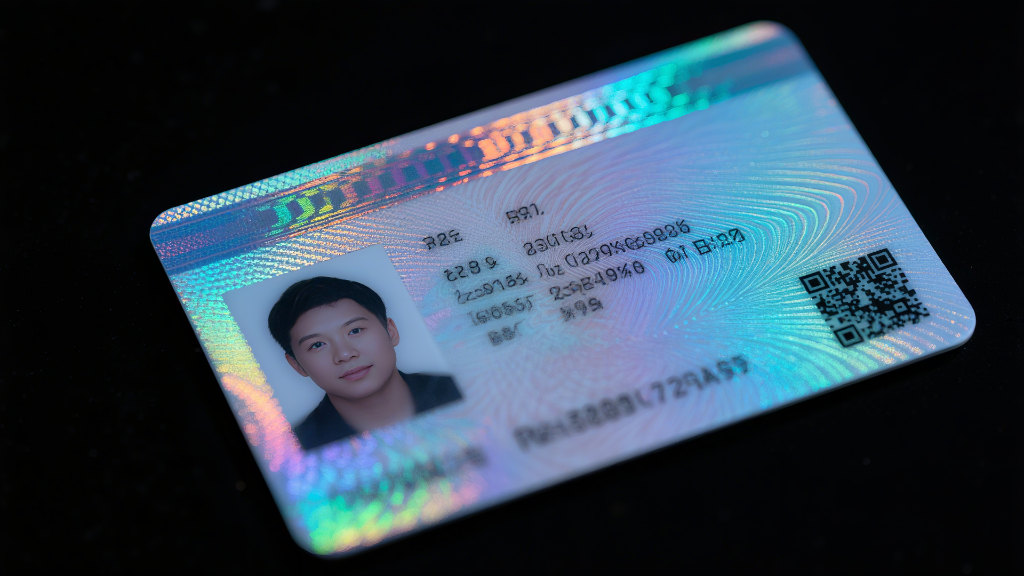
- Optical Variable Devices (OVDs): Like the directional color-shifting “Great Wall” pattern on Chinese IDs, which changes from blue to green/gold when tilted.
- UV Fluorescent Elements: Hidden patterns (e.g., fluorescent Great Wall motifs) emerge under ultraviolet light.
- Rainbow Printing & Fine Linework: Complex, multi-color gradients resistant to photocopying.
2. The Intermediate Tier: Machine-Assisted Verification
Ideal for: Moderate-risk scenarios (e.g., university IDs, healthcare credentials).
This layer combines human-readable and machine-verifiable features:
- Microtext/Strings: Tiny embedded text (e.g., “JMSFZ” in Chinese IDs), legible only under magnification.
- Laser-Engraved Personalization: Permanent subsurface text that resists alteration.
- Optical Variable Ink (OVI): Ink appearing metallic or color-shifting under different angles.
- Tamper-Evident Films: Peeling attempts visibly damage the card structure.
💡 Why it works: These features balance cost and security, complicating replication without specialized equipment.
3. The Advanced Tier: Digital & Biometric Integration
Ideal for: High-stakes applications (e.g., national IDs, financial access cards).
Here, security merges with digital identity:
- Embedded RFID Chips: Stores encrypted biometric/data (e.g., China’s SFZ cards with 8MB capacity). Chip data is signed with cryptographic keys, blocking tampering.
- Biometric Binding: Facial images or fingerprints linked to chip data, enabling 1:1 verification.
- Dynamic Code Authentication: On-card algorithms generate time-based codes for remote validation.

4. Customizing Your Defense: Matching Solutions to Threats
Not all organizations need military-grade security. Consider:
- Risk Assessment: A university dorm ID ≠ a border control document.
- Regulatory Requirements: Standards like GA/T 451-2020 dictate durability, encryption, and testing for Chinese IDs.
- Operational Workflow: Can staff verify microtext? Do you have chip readers?
- Cost vs. ROI: Advanced tech (e.g., nano-optical films) costs more but reduces long-term fraud losses.
▶ Case Study: Banks in China reduced fake account openings by 74% after adopting chip-based IDs with machine-readable zone (MRZ) verification.
5. Future-Proofing: Emerging Innovations
Stay ahead with:
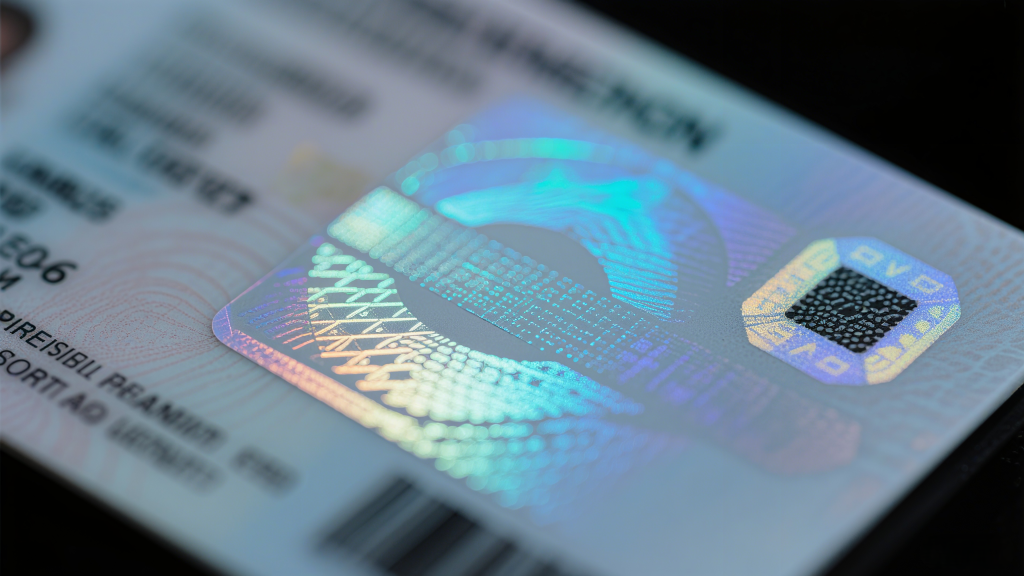
- Nanostructured Optical Films: Microscopic surface patterns that create iridescent, unforgeable effects.
- Multi-Layer Lamination: Combines holographic patches, laser perforations, and embedded fibers.
- Blockchain-Backed Issuance: Immutable audit trails for credential lifecycle management.
Implementation Checklist
- Audit existing vulnerabilities: How are current IDs being forged?
- Prioritize features: Start with essential visual/digital layers; scale as needed.
- Partner with specialized manufacturers: Ensure ISO/IEC 10373 compliance for durability and encryption.
- Train verifiers: Staff must recognize optical features and use validators correctly.
Final Insight
Security is a spectrum, not a checkbox. By strategically layering technologies—from light-shifting inks to cryptographically sealed chips—you create a barrier that adapts to evolving threats. As China’s decade-long ID revolution proves: the most secure systems blend the seen (OVIs, microtext), the unseen (chips, UV ink), and the unforgeable (dynamic encryption, nanostructures)