Introduction
Hello, corporate procurement leaders and IT security executives! You are currently managing one of the world’s most sensitive assets: Identity.
We all know that relying on outdated magnetic stripe cards or low-security contactless cards is essentially a ticking time bomb for enterprise data security. With the global digital identity solutions market rapidly scaling—projected to grow at a Compound Annual Growth Rate (CAGR) exceeding 16%—this isn’t just a trend; it’s an urgent mandate for your organization’s security and compliance. Don’t worry, you’ve come to the right place. Together, we will explore how to approach High-Security ID Card Procurement and make your decision-making process clearer than ever.
The key to High-Security ID Card Procurement is choosing Encrypted Chip ID Cards. These cards integrate smart chips, support advanced features like Biometric Smart Card Technology, and enable Multi-Factor Authentication (MFA), offering enhanced security and superior compliance. They are the preferred solution for preventing identity theft and fraud in sectors handling sensitive data, such as finance, government, and healthcare, making them the foundation for successful Identity and Access Management (IAM) strategies.
This is more than just a card order; it’s the cornerstone of your enterprise’s Identity and Access Management (IAM) strategy. In the deep dive that follows, I will walk you through every detail, from technical principles to vendor selection, ensuring your investment is future-proof and provides the maximum return on security.
In-Depth Analysis: The Technical Pillars of High-Security ID Cards
Why Encrypted Chip ID Cards Are Non-Negotiable in Modern Enterprise Security
In today’s volatile business landscape, every identity verification is a test of corporate trust. Traditional ID cards are simply incapable of meeting the demands of increasingly sophisticated cyber threats and stringent regulatory requirements.
The Silent Threat: How Legacy Cards Fuel Identity Fraud
The security mechanisms of old magnetic stripe cards or simple RFID cards (like Mifare Classic) are often easily compromised. They are highly susceptible to cloning, skimming, or data interception via basic readers. In a corporate setting, this means unauthorized individuals can easily duplicate cards to access restricted areas or steal employee identities. For B2B procurement clients, this potential for fraud far outweighs the initial investment cost of a chip-based card system.
The Data Security Imperative: Meeting Global Compliance
For global enterprises, data privacy regulations are a critical barrier to entry. Mandates like the European Union’s General Data Protection Regulation (GDPR) and various Know Your Customer (KYC) requirements place stringent demands on protecting sensitive personal information.
Encrypted Chip ID Cards feature an embedded microprocessor that not only stores data but is also capable of securely processing data. It utilizes proprietary encryption algorithms (such as AES) to reinforce information during storage and transmission, ensuring that data exchanged between the card and the reader is not intercepted or tampered with. This powerful hardware-level encryption directly helps your organization meet the strictest demands for data privacy and regulatory compliance.
The Market Perspective: The Surging Demand for Digital Identity
The core driver behind the High-Security ID Card Procurement wave is the massive global demand for robust Digital Identity Solutions.
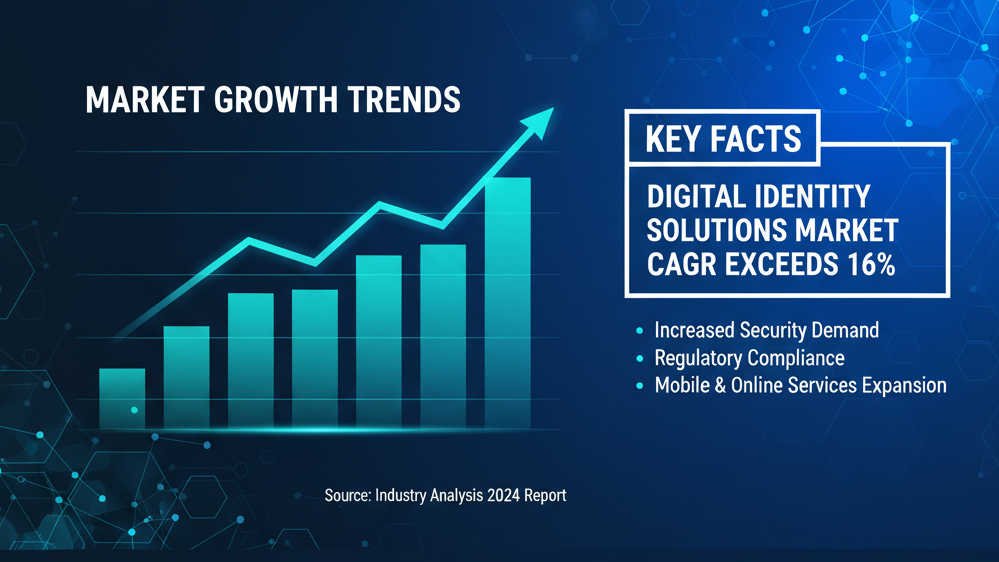
With the proliferation of remote work and connected devices, enterprises urgently need a unified, secure identity management system to control access to their internal networks. The smart card is no longer just a physical key; it is a digital identity hub that integrates physical access, logical access (VPN, network login), and Multi-Factor Authentication (MFA). If you do not invest in Encrypted Chip ID Cards now, your identity management infrastructure will quickly fall behind industry security standards.
Understanding the Core Technologies: Contact vs. Contactless vs. Biometric
When preparing for High-Security ID Card Procurement, understanding the core chip technology is crucial, as it determines the card’s security level, convenience, and application scenarios.
Contact Chip Cards: The Workhorse of Physical Access
Contact chip cards represent the earliest form of smart cards. They require physical insertion into a reader to maintain contact for data transfer and authentication.
- Advantage: Extremely high security, suitable for financial payments (like EMV standards) and high-value data interactions such as digital signatures and secure terminals.
- Ideal Scenarios: Environments demanding maximum security but not requiring high-speed throughput, such as government document signing or restricted laboratory access.
- Learn about GENUINE’s High-Quality Contact Smart Card Manufacturing Process
Contactless Cards (NFC/RFID): Balancing Speed and Security
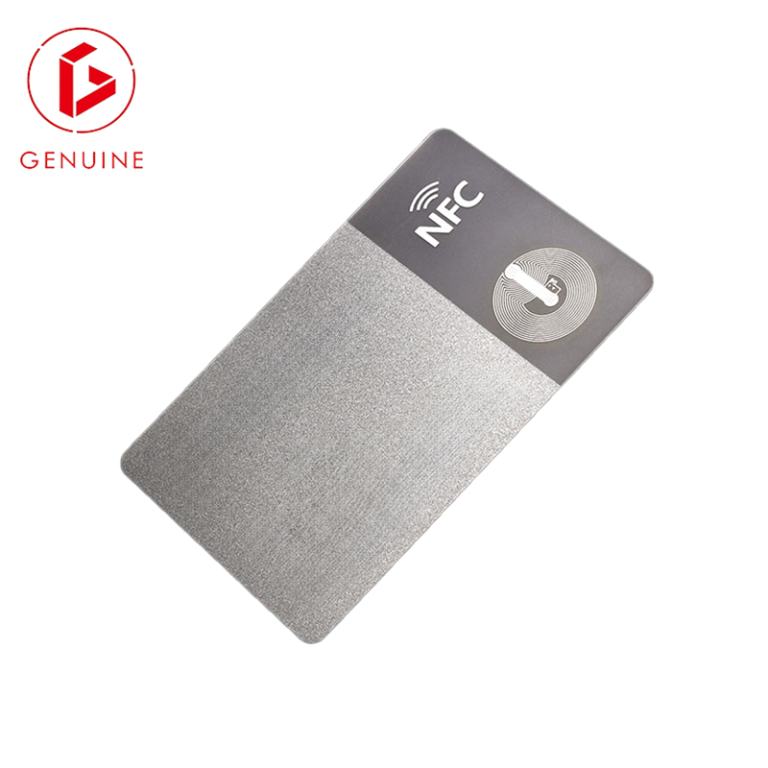
Contactless cards (based on NFC or RFID technology) are the current mainstream choice for corporate ID cards. They enable communication with the reader over a short distance, facilitating a seamless “tap-and-go” experience.
- Procurement Consideration: The key is to select cards using strong encryption protocols (such as Mifare DESFire or higher). While lower-level contactless protocols still pose security risks, high-level Encrypted Chip ID Cards achieve the optimal balance between convenience and security.
The Game Changer: Biometric Smart Card Integration
The integration of biometric technology is the most significant innovation in the High-Security ID Card field. This type of card embeds a fingerprint sensor, requiring the user to authenticate using their unique biometric data directly on the card before it activates and sends an authorization signal to the reader.
- Advantage: This enables a true combination of “what you have (the card)” and “who you are (the biometric feature).” The user’s biometric data is securely stored within the card’s encrypted chip and never leaves the card, drastically enhancing privacy protection while eliminating the risks associated with card sharing and theft.
- Ideal Scenarios: Banks, hospitals, government facilities, and data centers—this is a must-have for meeting future security standards.

The B2B Procurement Checklist: 5 Crucial Factors for Security-Focused Buyers
For B2B procurement clients, High-Security ID Card Procurement is a strategic decision involving supply chain, technical standards, and system integration—not just ordering plastic cards.
1. Chip Architecture and Encryption Standards
You must thoroughly understand the chip’s inherent security capabilities. A top-tier vendor will provide chips utilizing a Secure Element (SE)—a tamper-proof microprocessor dedicated to executing cryptographic operations and safeguarding private keys.
- Key Question: Can the vendor provide chips compliant with ISO/IEC 14443 Type A/B standards? What encryption algorithms (e.g., RSA or ECC) are used? Always choose chips that support the highest industry standards and feature anti-tampering functions.
2. Card Durability and Lifespan
The cost of smart cards is not a one-time expense. For enterprises requiring frequent use and long-term deployment (e.g., manufacturing or transportation), the card’s durability directly impacts the Total Cost of Ownership (TCO).
- Procurement Consideration: Buyers should request detailed information from the card manufacturer regarding card body materials (such as high-end PVC/PET/PC composite materials resistant to high temperatures and bending) and the chip module packaging. High-quality printing and lamination techniques ensure the card’s physical integrity and internal chip connection remain stable over years of use.
3. Seamless Integration with Existing IAM/IT Systems
A well-designed chip card is useless if it cannot communicate with your IT infrastructure. High-Security ID Cards must be perfectly compatible with your Enterprise Identity and Access Management (IAM) Solutions.
- Core Requirement: Confirm that the vendor’s cards support your cloud or on-premise identity management systems. This includes supporting common protocols like SAML, OAuth, or SCIM. An excellent vendor will offer professional integration services to ensure your new cards smoothly merge into your existing IT security ecosystem.
4. Vendor Capabilities: Manufacturing, Personalization, and Fulfillment
Selecting a vendor is the most critical step in the procurement process. You need a supplier who acts not just as a printer but as a Secure Technology Partner.
- GENUINE’s Advantage: As a professional international card manufacturer, we offer high capacity and global delivery. More importantly, we enforce strict quality control over secure printing and chip encoding processes. Every step—from chip pre-loading to card personalization—must be conducted in a secure environment to prevent data breaches within the supply chain.
5. Custom Security Features
The defense of a High-Security ID Card is a combination of physical and digital security. Beyond chip encryption, you need custom physical security features to prevent counterfeiting.
- Physical Security Features: We recommend utilizing features such as Holograms, Micro-text, UV/OVI Inks (Optically Variable Ink), and custom secure background patterns. These features work in conjunction with the chip’s digital security to form a multi-layered defense system, deterring counterfeiters immediately.
Future-Proofing Your Investment: Trends in Digital Identity and Access
Future-proofing your High-Security ID Card Procurement means embracing cutting-edge technology trends.
The Rise of Self-Sovereign Identity (SSI)
SSI is a decentralized identity model that allows individuals or entities to completely control their digital identity data. Smart cards serve as a critical “Secure Wallet” hardware token within the SSI ecosystem, ensuring that credentials stored on the card are encrypted and verifiable when shared. Although SSI is still emerging, choosing upgradeable, programmable Encrypted Chip ID Cards will ensure your infrastructure can smoothly transition to this future model.
Blockchain and Decentralized Identity Solutions
Blockchain technology introduces a new foundation of trust to authentication systems through its immutability and transparency. Combining Encrypted Chip ID Cards with a Blockchain-driven identity platform can eliminate reliance on a single, centralized database, significantly lowering the risk of data breaches. For enterprises seeking ultimate security and a decentralized trust model, this is the next major investment area.
Conclusion
As we’ve explored, Encrypted Chip ID Cards are not just the future of protecting sensitive data and identity; they are the optimal strategy for your High-Security ID Card Procurement. They represent a shift from passive defense to proactive, multi-layered security. Partnering with a supplier like GENUINE, who possesses deep manufacturing capabilities and professional integration experience, ensures you acquire a complete and reliable Identity and Access Management (IAM) Solution.
Now, it is time to translate these insights into action and propel your organization’s security to new heights. Are you ready to design your next generation of High-Security ID Cards with us?