If you’re looking to upgrade your company’s door access system, you’ve definitely heard the name “HID.” Honestly, in the world of security credentials, HID is the straight-A student that everyone wants to copy. But facing a sea of model numbers can give anyone a headache: Should you stick with the classic Prox or jump to the cutting-edge Seos? Don’t worry; I’ve got you covered.
What are HID Smart Cards and Credentials?
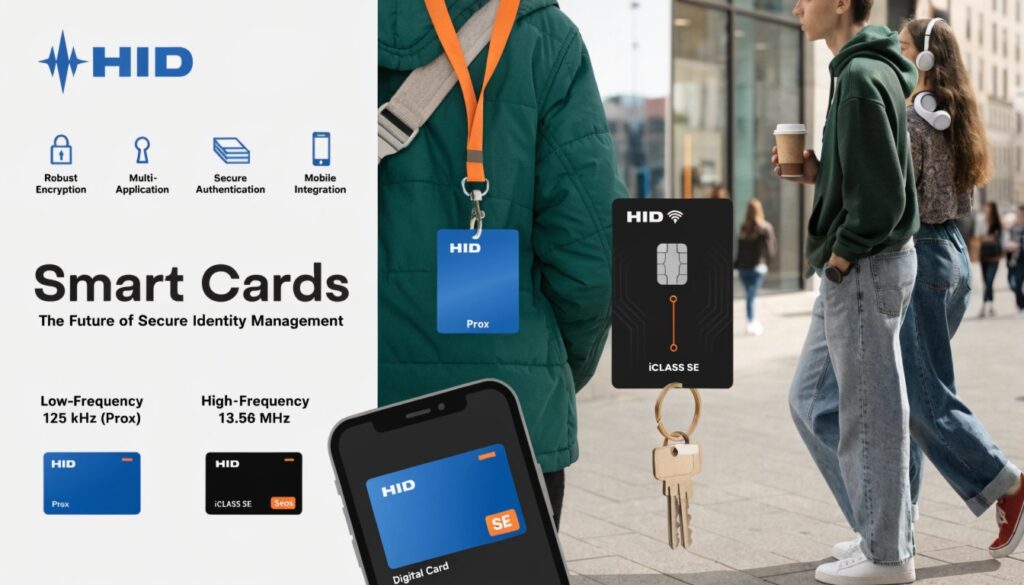
HID smart cards are high-security identity credentials used for physical and logical access control. They utilize Radio Frequency Identification (RFID) technology to communicate with readers, ranging from 125 kHz low-frequency (Prox) to 13.56 MHz high-frequency (iCLASS SE, Seos). Their core strengths lie in robust encryption, multi-application support, and seamless mobile compatibility.
Now, you might have a basic understanding of HID. But as a procurement professional, what you really need to know is how to balance security, cost, and future-proofing. Let’s dive deep.
Why HID Credentials are the “Gold Standard” for Enterprise Security
After years in the security industry, I’ve realized that HID isn’t just a brand—it’s an entire ecosystem. Here is why they dominate the market:
1. Top-Tier Encryption
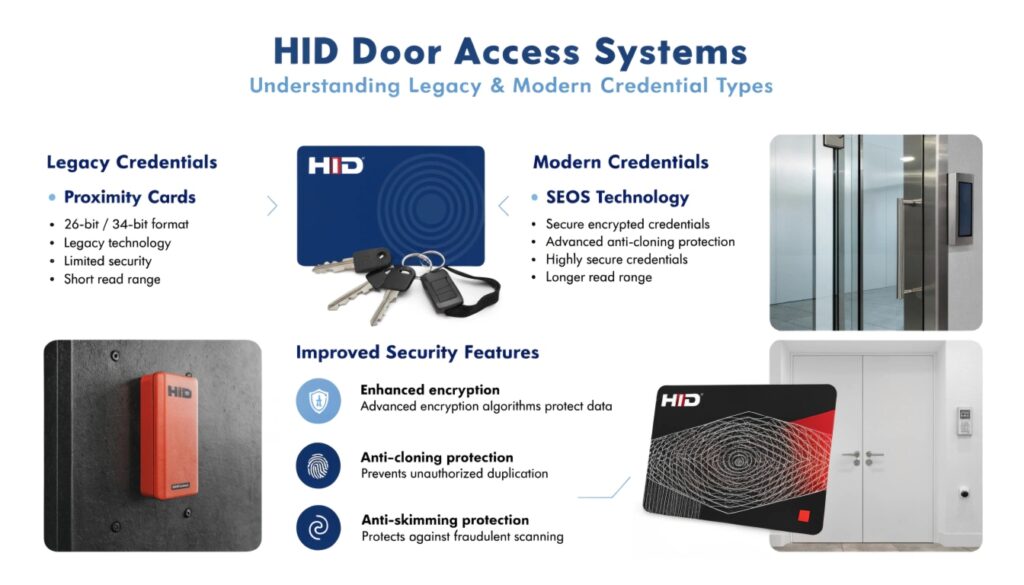
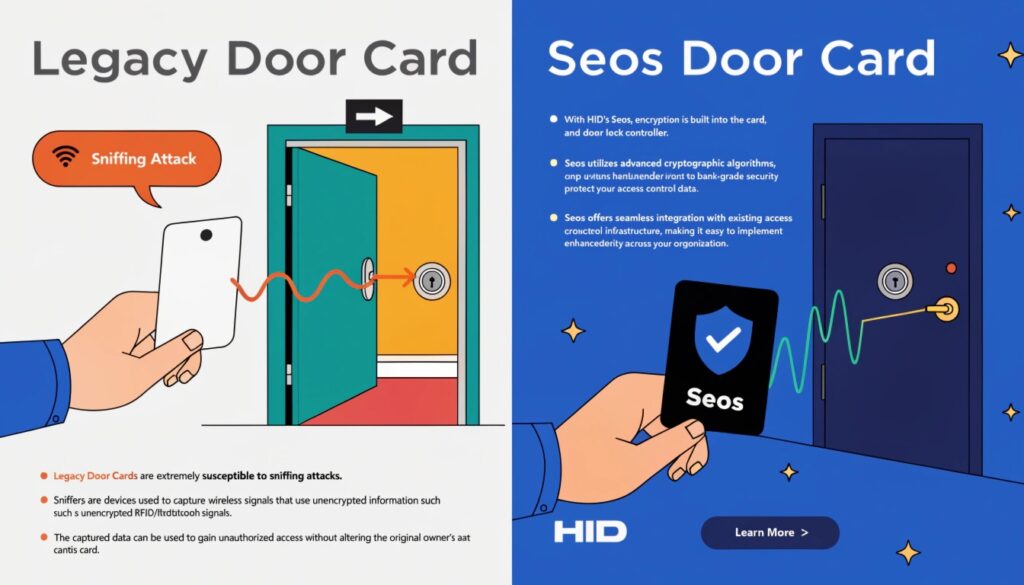
Legacy door cards (the ones you can easily clone for five bucks) are incredibly vulnerable to “sniffing.” HID’s Seos technology uses advanced cryptographic algorithms. Think of it as putting your access data inside a bank-grade vault.
2. The “All-in-One” Convenience
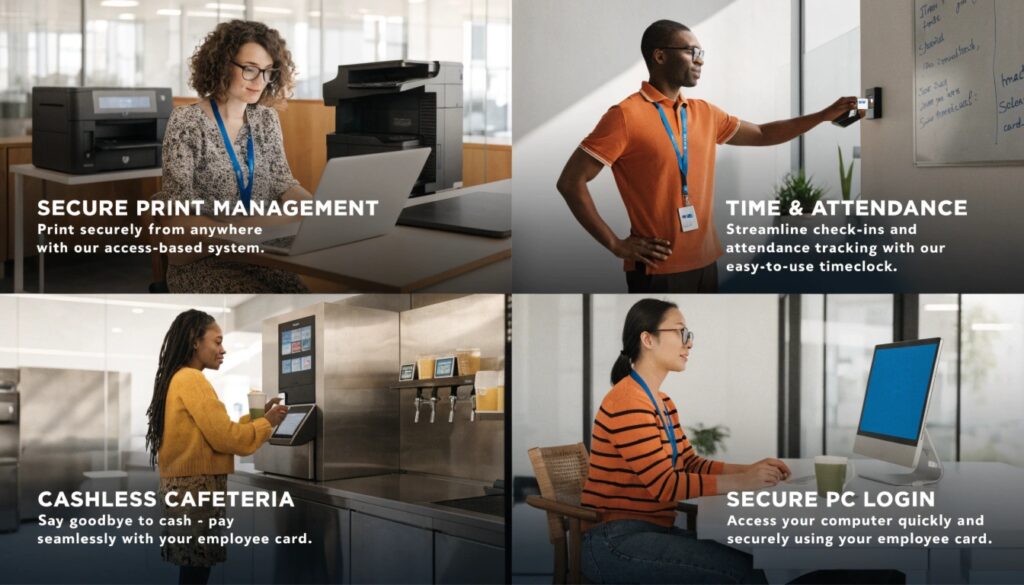
Modern enterprises want more than just a door opener. A well-configured HID smart card can handle:
- Secure print management.
- Time and attendance tracking.
- Cashless cafeteria payments.
- Secure PC login.
3. A Smooth Path to Mobile
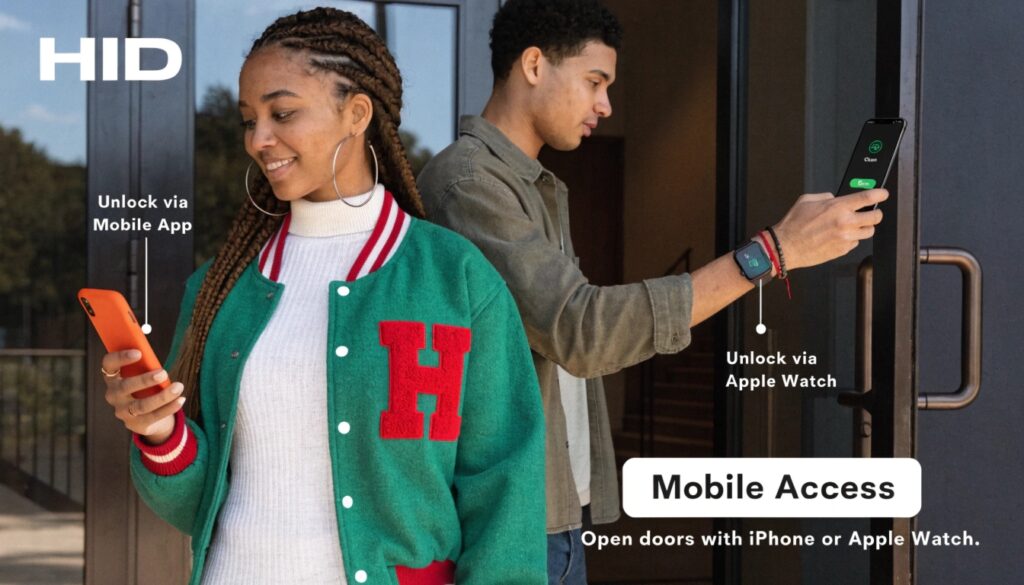
We live in a “phone-as-a-key” world. HID’s architecture supports Mobile Access, allowing your team to open doors with a smartphone or Apple Watch. No more “I forgot my badge” excuses.
Deep Dive: Which HID Credential Fits Your Business?
To make your decision easier, I’ve put together this comparison. As a procurement manager, you need to look at the logic behind the tech, not just the card surface.
| Feature | HID Prox (Legacy) | iCLASS SE (Standard) | HID Seos (Elite) |
| Frequency | 125 kHz | 13.56 MHz | 13.56 MHz |
| Security Level | Low (Clonable) | High (SIO Model) | Extremely High (Multi-layer) |
| Typical Use | Basic Entry | Enterprise Security | Global HQ / Finance |
| Mobile Support | No | Yes | Full Support |
Procurement Advice: Look Beyond the Unit Price
I’ve seen too many procurement heads try to save a few cents on unit price, only to spend thousands later fixing security breaches or replacing incompatible hardware.
Take it from me: If you are starting a new project, go straight to Seos.
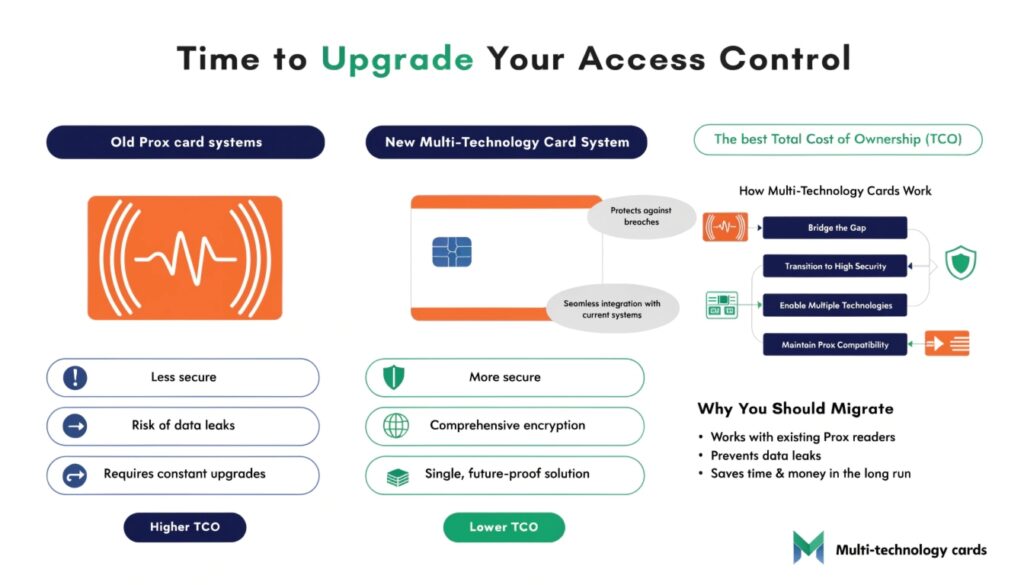
While the initial cost is slightly higher, it offers the best “Total Cost of Ownership” (TCO). It prevents data leaks and ensures you won’t need to overhaul your hardware in three years. If you’re stuck on an old Prox system, consider Multi-technology cards. They allow you to bridge the gap and migrate to high security at your own pace.
Expert Tip: Always check your reader compatibility. Not every legacy reader can “speak” the language of the latest encrypted cards. Before placing a bulk order, reach out to ourGenuine expertsfor a free compatibility audit.
Final Thoughts
Security isn’t a destination; it’s a journey. HID provides a very steady vehicle for that journey. Whether you need rugged plastic cards or flexible mobile credentials, the key is choosing a path that aligns with your company’s 5-year growth plan.
Have questions about a specific model number? Or want to see some physical samples? Drop me a line. After all, that’s what friends in the industry are for.