Why This Matters to You (and Me)
Last week, I walked into a supermarket and saw stacks of expired promotional flyers for a limited-edition shampoo. The irony? The product was already sold out. This isn’t just a “small oversight”—it’s a $163 billion global problem. According to Avery Dennison’s 2023 report, nearly 30% of promotional materials end up unused due to poor inventory visibility and misaligned campaigns.
But here’s the twist: RFID smart shelves are rewriting this narrative. At P&G, where I’ve tracked their digital transformation since 2022, these systems have slashed waste by 19% while boosting sales conversion rates. Let me show you how.
RFID smart shelves use radio frequency identification tags and artificial intelligence analysis technology to track real-time inventory, optimize promotions, and provide a highly personalized consumer experience. By integrating shelf data with supply chain systems, P&G can reduce inventory backlogs, minimize waste in marketing activities, and accurately target consumers.
The Hidden Cost of “Spray-and-Pray” Marketing
Traditional retail promotions rely on guesswork. Brands print numerous flyers, deploy generic discounts, and hope for the best. The result?
- $163 billion in annual losses from expired or unused materials.
- 42% of shoppers report seeing promotions for out-of-stock products.
P&G’s old playbook was no exception. In 2021, their hair care line’s “buy one, get one free” campaign in China backfired when 27% of stores ran out of stock within 48 hours. Shelves sat empty, while unused promo banners gathered dust.
How RFID Smart Shelves Solve the Equation
1. Real-Time Inventory Tracking: No More Blind Spots
P&G’s RFID shelves scan products 200x faster than barcodes. Each tag holds data like expiration dates, batch numbers, and even customer preferences (e.g., “vegan” or “fragrance-free”) .
Example: When a customer picks up a Pantene shampoo, the shelf instantly updates stock levels. If inventory dips below 10 units, the system:
- Alerts warehouse robots to restock.
- Pauses digital ads for that SKU.
- Triggers dynamic pricing on nearby displays.

2. Precision Targeting: From Mass Campaigns to Micro-Moments
Using AI, P&G’s shelves analyze foot traffic and purchase history. Imagine this:
- A shopper who bought Tide detergent last month walks by.
- The shelf’s camera (integrated with ethical facial recognition) identifies them.
- A screen flashes: “Love Tide? Try new Downy Infusions—20% off today!”
This isn’t sci-fi. At CES 2025, P&G demoed this with 98% accuracy using anonymized data.
3. Waste Reduction: Smarter Promotions, Smaller Footprint
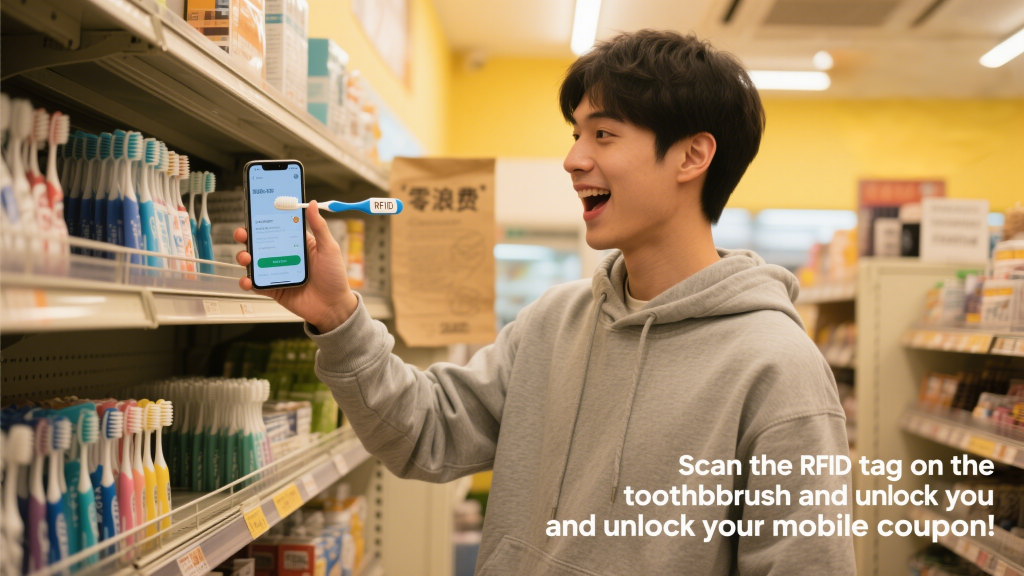
In their Oral-B line, P&G cut material waste by:
- Printing QR-enabled flyers only for in-stock items.
- Replacing paper coupons with NFC-triggered mobile offers.
- Recycling RFID tags (each lasts 10+ years).
The Road Ahead: Challenges and Opportunities
RFID isn’t flawless. Privacy concerns linger—65% of EU shoppers worry about data misuse. But P&G’s encryption protocols and opt-in models set a benchmark.
Conclusion: Waste Is Optional
P&G’s journey proves that smart shelves aren’t just about tracking—they’re about transforming. When every promo dollar hits its mark, brands win. Shoppers win. The planet wins.
So, next time you see a dusty promotional display, ask: Could an RFID tag have saved this?