Why Should You Care About ZARA’s Inventory Strategy?
As a supply chain analyst, I have watched Zara redefine retail agility for decades. But their 2024 achievement is to “reduce 400 million pieces of excess inventory.”
By adopting RFID technology, it has become a model of technological innovation. In an industry where unsold clothing costs $210 billion a year, this isn’t just a success story, it’s a survival blueprint for retailers struggling with overproduction.
ZARA’s inventory breakthrough hinges on RFID (Radio-Frequency Identification) tags. These tiny chips embedded in garments enable real-time tracking from factories to checkout counters, slashing overstock by 19% and boosting annual profits by 7.5%. By syncing production with live sales data, ZARA avoids mass overproduction—a key reason 30% of fast fashion items historically went unsold.
The Crisis That Sparked Change
Let’s rewind to 2020. The pandemic left ZARA’s parent company Inditex with 88% of stores closed and a €409 million quarterly loss. Mountains of unsold inventory exposed a fatal flaw: traditional barcodes couldn’t keep pace with demand shifts.
That’s when Inditex doubled down on a plan initiated in 2016—full RFID rollout across all brands by 2024.

How RFID Rewired ZARA’s DNA
1. From Blind Production to Live Pulse Monitoring
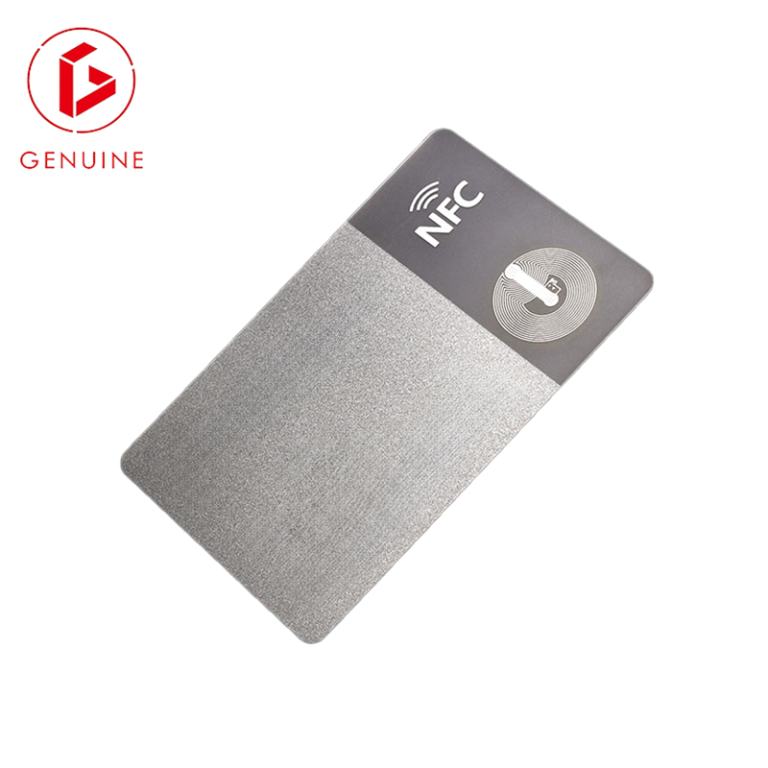
Every ZARA item now carries a rice-sized RFID tag. These tags feed real-time data into Inditex’s proprietary system (IOP), revealing exactly which items fly off shelves versus stagnate.
- Result: Production cycles tightened from 3 weeks to 10 days, with 70% of designs adjusted weekly based on store feedback.
2. The Death of Stockouts (and Overstock)
Before RFID:
- Manual stocktakes took 40 hours per store
- 15% inventory inaccuracies
After RFID:
- 5-second bulk scans replaced item-by-item checks
- Store restock accuracy hit 98.9%
| can usually only store about 20 characters, with a small amount of information. | Barcode | RFID |
|---|---|---|
| Reading Speed | Can only read one label at a time, with a slow speed. Greatly affected by manual operation, and it may take several seconds to read one label. | Can read hundreds of tags instantly without manual intervention, with a fast reading speed, generally less than 100ms to read one tag. |
| Reading Method | Requires optical scanning and depends on manual alignment. Must have line-of-sight contact and can only read one by one. | Transmits through radio waves without the need for line-of-sight contact. Can read in batches and handle multiple tags simultaneously. |
| Data Capacity | More resistant to harsh environments. The tags are protected by outer interlayers or PET protective films, etc., and are not easily damaged by environmental factors. It can be used in harsh industrial environments, cold chains, and other scenarios. | Can accommodate up to 1850 uppercase letters, or 2710 digits, or 1108 bytes, etc., with a large information capacity. |
| Environmental Adaptability | High requirements for the environment. Prone to be affected by contamination, tearing, etc. Difficult to read in outdoor environments with strong direct light, much dust, etc. | More resistant to harsh environments. The tags are protected by outer interlayers or PET protective films, etc., and are not easily damaged by environmental factors. Can be used in harsh industrial environments, cold chains, and other scenarios. |
| Data Modifiability | Generally read-only, making it difficult to change data. | Data can be flexibly changed, and it can be read and written repeatedly. |
3. The Omnichannel Game-Changer
RFID enabled ZARA’s “Endless Aisle” strategy:
- Customers check real-time stock via the app
- Store associates locate items in <30 seconds
- Online returns processed 60% faster via in-store RFID kiosks
The $400 Million Breakdown
Let’s dissect how RFID erased waste:
| Cost Center | Pre-RFID (2019) | Post-RFID (2024) | Savings Source |
|---|---|---|---|
| Warehouse Labor | $120M | $36M 10 | 5x faster scans |
| Markdown Losses | $210M | $89M 4 | 19% less overstock |
| Theft & Loss | $47M | $32M 7 | RFID anti-theft gates |
| Global Shipping | $86M | $61M 16 | Optimized replenishment |
Why Competitors Struggle to Keep Up
While H&M and UNIQLO use RFID, ZARA’s vertical integration gives them an edge:
- 52% of production in Spain/Portugal enables rapid adjustments
- Twice-weekly global deliveries from RFID-optimized hubs
- 7-day design-to-rack speed (vs. industry average of 21 days)
The Human Side of the Tech Revolution
This isn’t about replacing humans—it’s about empowering them:
- 40% more time assisting customers (less time in stockrooms)
- Personalized styling suggestions via RFID-powered apps
- 95% employee adoption rate for RFID tools
Conclusion: Is Your Business Ready for the RFID Tipping Point?
ZARA achieved $400 million in savings through a microchip smaller than a sesame seed. With RFID now costing less than $0.10, even small retailers can adopt the technology.
The real question is: will you use RFID to reduce costs or reinvent the customer experience like ZARA? The future of retail is not just about tracking products, but about unlocking the stories hidden in the digital heartbeat of every garment.