A 1.5% inventory error rate sounds trivial — until it is running across millions of transactions a year. At that scale, it is the difference between profit and loss. One of the clearest proofs came from DHL, which cut its warehouse error rate from 1.5% to 0.1% and saved roughly $12 million annually after deploying RFID. This guide breaks down what they did, what it cost, and — more importantly — how your operation can replicate the result without betting the whole budget on day one.
The DHL Case: From a 1.5% Error Rate to 0.1%
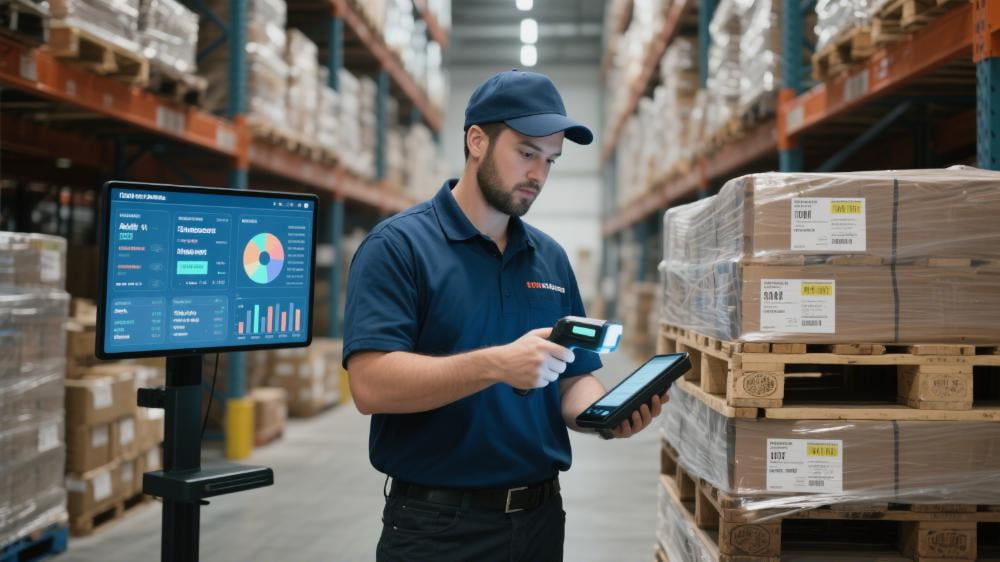
Before RFID, DHL’s warehouses ran on human-dependent processes: manual scans, temporary labor during peak season, and data that lagged reality by hours. The cost showed up as misplaced shipments, delayed orders, and more than $20M tied up in dead stock. After embedding RFID into every package, pallet, and high-value asset, the error rate fell to 0.1% and annual losses dropped by $12M through labor optimization, fewer stockouts, and faster turnover.
The takeaway for a buyer is not “buy RFID.” It is that real-time, automated data turns inventory from a guessing game into a controllable variable — and the payback is measured in reduced labor and freed-up working capital, not just faster scans.
Where the $12M Actually Came From
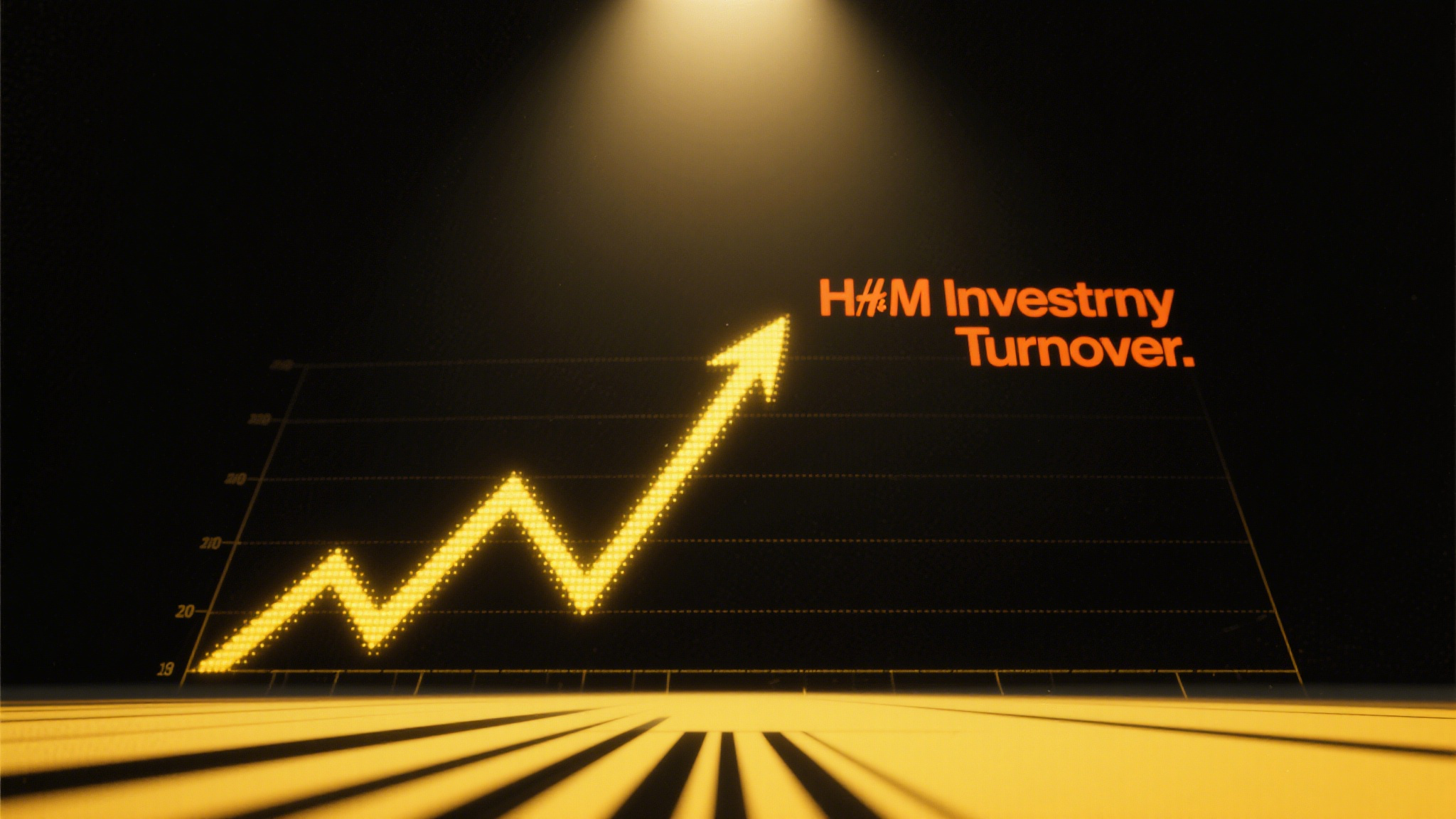
The savings were not a single line item — they were three reinforcing pillars. Understanding the split helps you build a realistic business case before talking to any supplier:
- Labor — about $3M/year: headcount per warehouse dropped from ~40 to ~16 as hands-free picking and automated cycle counts replaced manual checks.
- Inventory loss — about $6M/year: shrinkage, mispicks, and fraud fell sharply once every item was individually visible.
- Operational waste — about $3M/year: faster turnover unlocked capital trapped in slow-moving stock.
If you are scoping a pilot, model your own three buckets first. The number that matters is working capital released plus labor hours removed — that is what justifies the tag and reader spend.
What Actually Made It Work: Three Technical Pillars
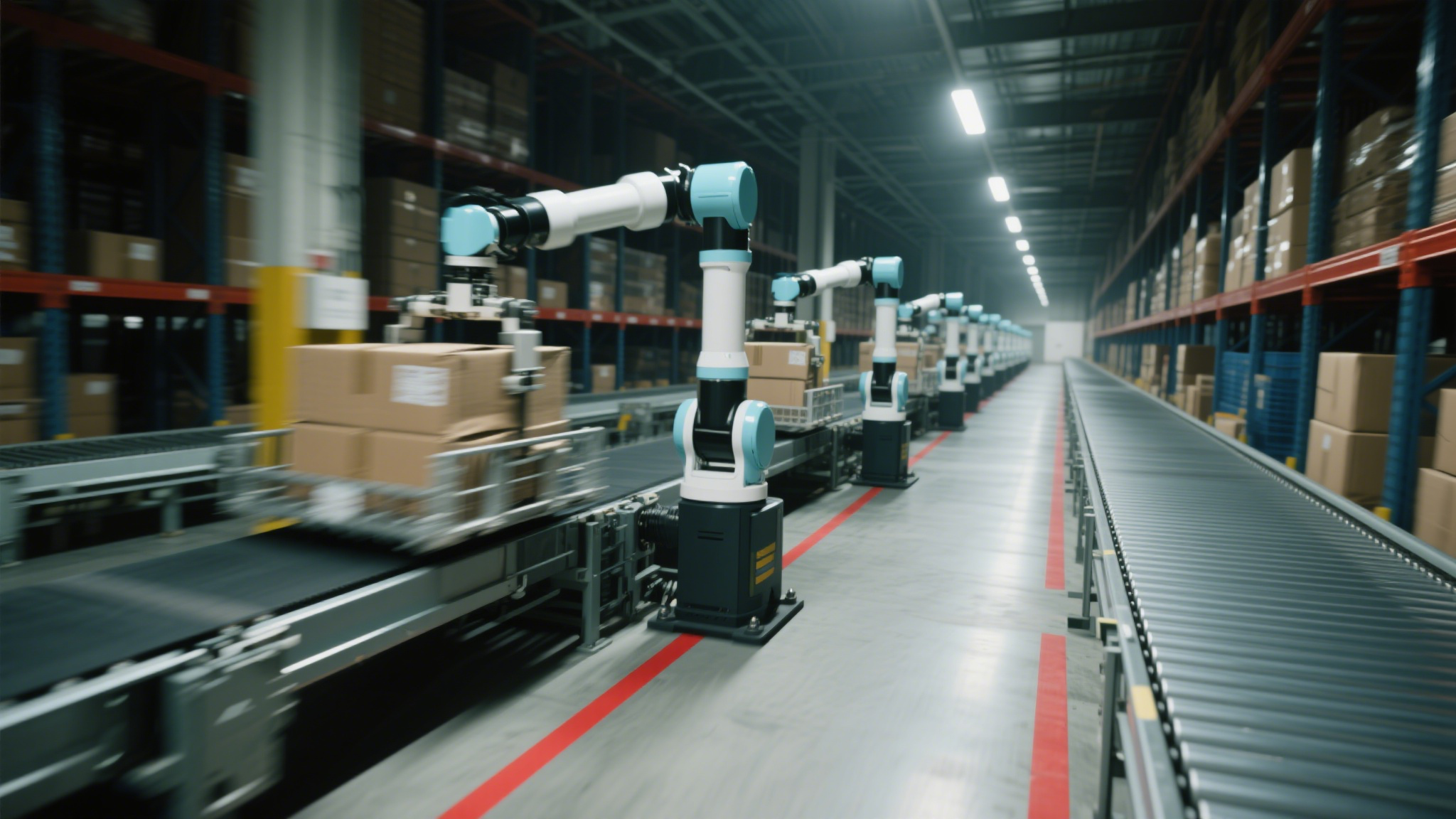
The result was not magic; it was three capabilities stacked together:
- Real-time visibility. UHF RFID tags on every item transmit to fixed and handheld readers, pinpointing location within ~0.5 meters and reading 1,000+ tags per second versus ~100 items/hour for manual barcode scans.
- Eliminated human error. Hands-free picking (e.g., smart-glasses guidance) cut mispicks by ~67%; automated audits removed 90% of manual counts and lifted accuracy to 99.7%.
- Process overhaul. RFID data triggered automatic restocking below threshold (stockouts down ~80%) and rerouted returns in minutes instead of days.
The standards behind this are worth knowing: RAIN RFID (UHF Gen2) is governed by the RAIN RFID Alliance and aligned with GS1 EPC/RFID numbering — which matters when you need tags from different suppliers to interoperate.
Can Your Warehouse Replicate This?
You do not need DHL’s scale to benefit. The same economics work for mid-size operators if you start deliberately:
- Tag high-value items first. Focus RFID where errors are most expensive, not everywhere at once.
- Use a hybrid (RFID + barcode) layer. This balances cost while you prove the workflow.
- Train for data literacy. RFID’s value lives in the analytics, not the scan — your team must act on the dashboards.
Still deciding between technologies? Our breakdown of RFID vs. barcodes in warehouse management shows exactly where each wins, and RFID tags in inventory management covers the accuracy and efficiency gains in practice.
How to Specify RFID for Your Operation
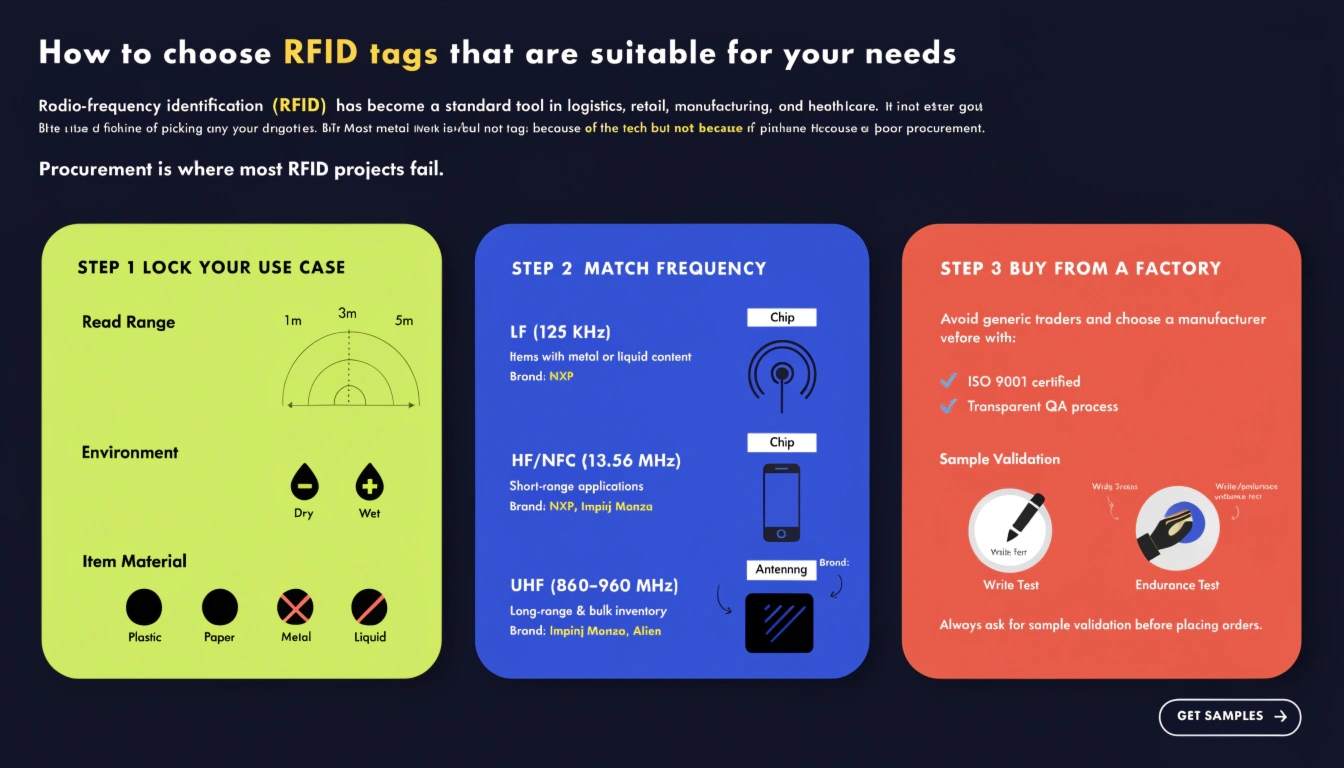
A good RFQ prevents costly rework. Specify at minimum:
- Frequency & standard: UHF (RAIN) for logistics range, or HF for short-range/access use; confirm ISO/IEC 18000 and EPC compliance.
- Form factor: label, hard tag, or embedded; match it to the item and surface (metal and liquid need anti-metal or on-metal tags).
- Read range & environment: warehouse aisle vs. dock door vs. handheld; temperature, moisture, and interference.
- Encoding & data: unique serial/EPC, print method, and any variable data or branding.
Avoid the classic traps we see in RFID tag procurement: 7 costly mistakes manufacturers make — most of them come from under-specifying the environment.
Choosing an RFID Tag & Label Supplier

Tag price ranges from cents to tens of dollars per unit depending on type — so supplier capability, not unit cost, drives total value. When you shortlist, check:
- Factory-direct sourcing to cut intermediaries — see why factory-direct RFID sourcing builds supply-chain resilience.
- Read-rate validation on your actual items (metal, liquid, mixed SKUs), not just a demo tag.
- Compliance & encoding to EPC/ISO so tags interoperate with your readers and software.
- Pilot-to-scale path with consistent quality across batches.
New to the terminology? Start with what is an RFID tag, in five minutes before you write the RFQ.
Frequently Asked Questions
Is 0.1% error rate realistic for a mid-size warehouse?
Yes, but only after the workflow — not just the tags — is automated. The 0.1% came from removing manual scanning and adding automated audits, so plan for process change, not just hardware.
What does RFID cost per item?
Passive UHF labels can be cents per unit in volume; durable hard tags run higher. The smarter question is total cost versus working capital released — that ratio is what DHL’s $12M case illustrates.
Do I need to replace my barcode system?
No. A hybrid RFID + barcode layer is the common entry point. It caps upfront risk while you prove accuracy and labor gains on high-value lines first.
Which standard should my tags follow?
For logistics, target RAIN UHF (Gen2) aligned with GS1 EPC and ISO/IEC 18000. That ensures tags from different suppliers read on your existing infrastructure.
Next Steps
You do not have to blueprint the whole network on day one. Pick one high-value line, define the three savings buckets, and run a 30–60 day pilot with validated read rates. When you are ready to source tags and labels built to your environment and standard, talk to our RFID team for a sample pack and a specification review — we will help you write the RFQ so the first order is also the right order.