Most large organizations already carry the symptom: an employee walks in with a proximity badge for the door, a separate smart card for PC logon, a wallet of payment or cafeteria cards, and maybe a transit pass. Each is a silo — a different vendor, a different key custodian, a different expiry. The promise of the multi-application smart card is simple to state and hard to deliver: put access, payment, and logical identity on one credential. This guide is written for the buyer who has to make that consolidation actually work — and avoid the hidden costs that sink it.

What “multi-application” actually means (and why it is not the same as dual-interface)
A multi-application smart card is defined by its operating system, not its connectors. The card runs a secure, applet-based OS — most commonly Java Card, with MULTOS as the other established option — that can host several independent applications side by side. A contactless payment applet, a physical-access applet, and a PKI/logon applet can all live on the same chip.
This is frequently confused with dual-interface design. A dual-interface card simply exposes one chip through two physical paths — a contact plate and a contactless antenna — so the same single application can be read by both a dipped reader and a tap reader. Multi-application is about running several applications; dual-interface is about one application being reachable two ways. You can — and often should — have both, but they solve different problems. (See our breakdown of dual-interface cards for the hardware side of the same decision.)
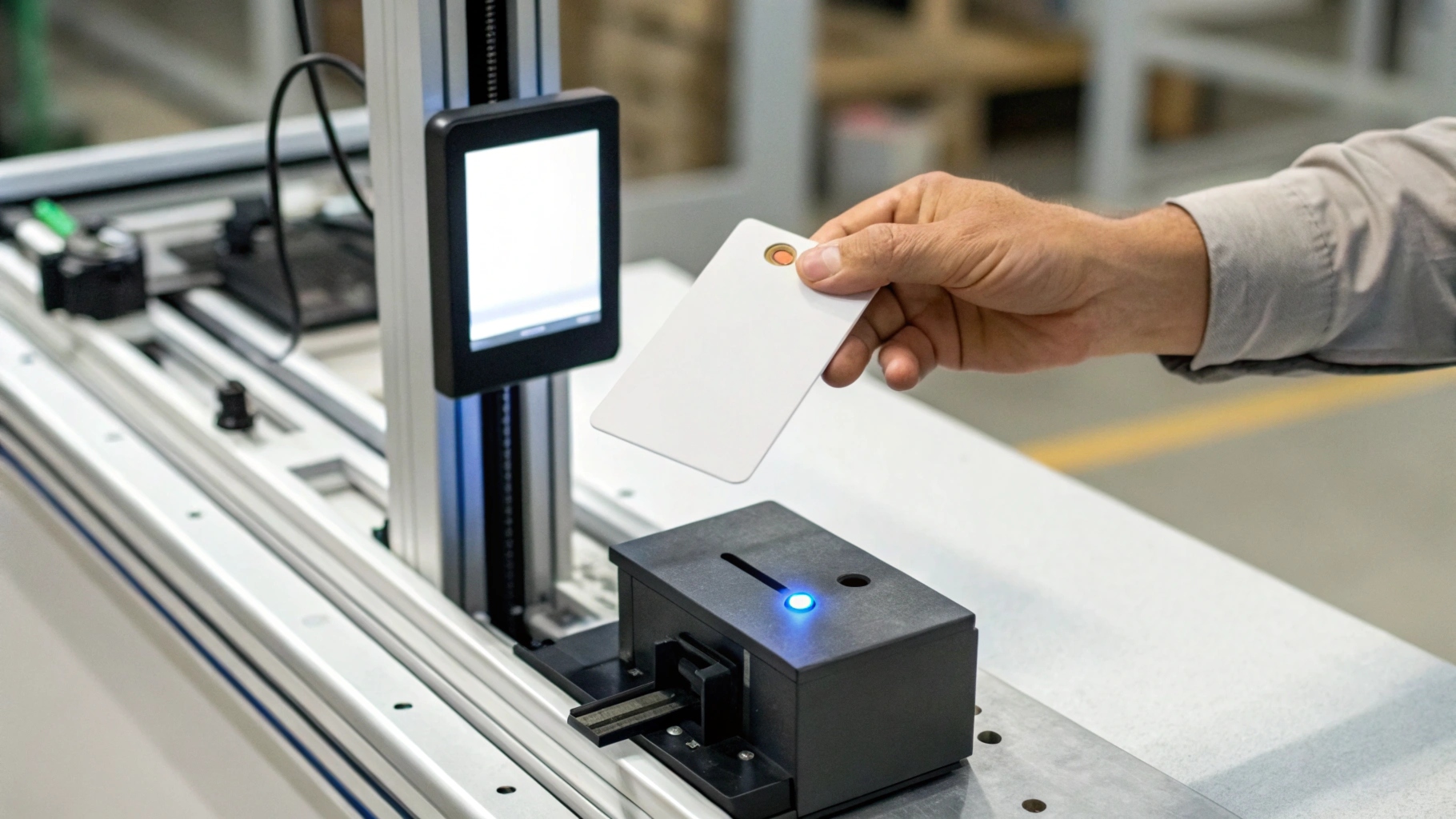
The use cases that justify one card
Consolidation earns its budget only when the roles are real and overlapping:
- Physical access — the card opens doors via 125 kHz proximity or 13.56 MHz contactless (ISO/IEC 14443).
- Contactless payment — a tokenised EMV applet for cafeteria, vending, or open-loop transit payment.
- Logical access / PC logon — a PKI credential (PIV, .NET, or enterprise CA) that replaces passwords for workstation and VPN unlock.
- Transit and print/copy — the same 13.56 MHz applet reused by existing readers.
The buyer value is not the novelty. It is one inventory, one revocation list, and one cardholder experience — fewer lost-card help-desk tickets, one expiry to track, and a single record to disable when someone leaves. If your access, payment, and IT teams each run their own card program today, that overlap is exactly where the savings come from.
How the card operating system keeps applications apart
The whole point of multiple applets is isolation. Under GlobalPlatform, each application lives in its own secure domain with its own keys, and the card enforces an applet firewall so that a flaw or compromise in one application cannot read the secrets of another. On-card verification and key diversification — where each card receives a unique derived key rather than a shared one — mean a single leaked key does not unravel the estate.
This is why the chip matters more than the plastic. A multi-application card is, in effect, a tiny hardened computer, and ISO/IEC 7816 defines the contact electrical and command interface that lets readers and applets talk safely. The security you are buying lives in the OS and the key scheme, not in the artwork. For the wireless side, our guide to RFID, NFC and BLE interfaces covers which radio fits each role.
The real cost and lifecycle trade-offs
Buyers often compare unit price and stop there. That is the wrong cut.
| Capability | Single-purpose card | Multi-application card |
|---|---|---|
| Unit cost | Lowest | Higher (OS licence + certification) |
| Total cost of ownership | Higher (many inventories) | Lower at scale |
| Key management | Per silo | Centralised, but heavier |
| Re-issuance | Per card type | One coordinated rollout |
| Add a use case later | New card | Post-issuance applet load* |
*A post-issuance applet load requires the card to support GlobalPlatform and your organisation to hold the issuer keys — a capability many buyers overlook until they need it.
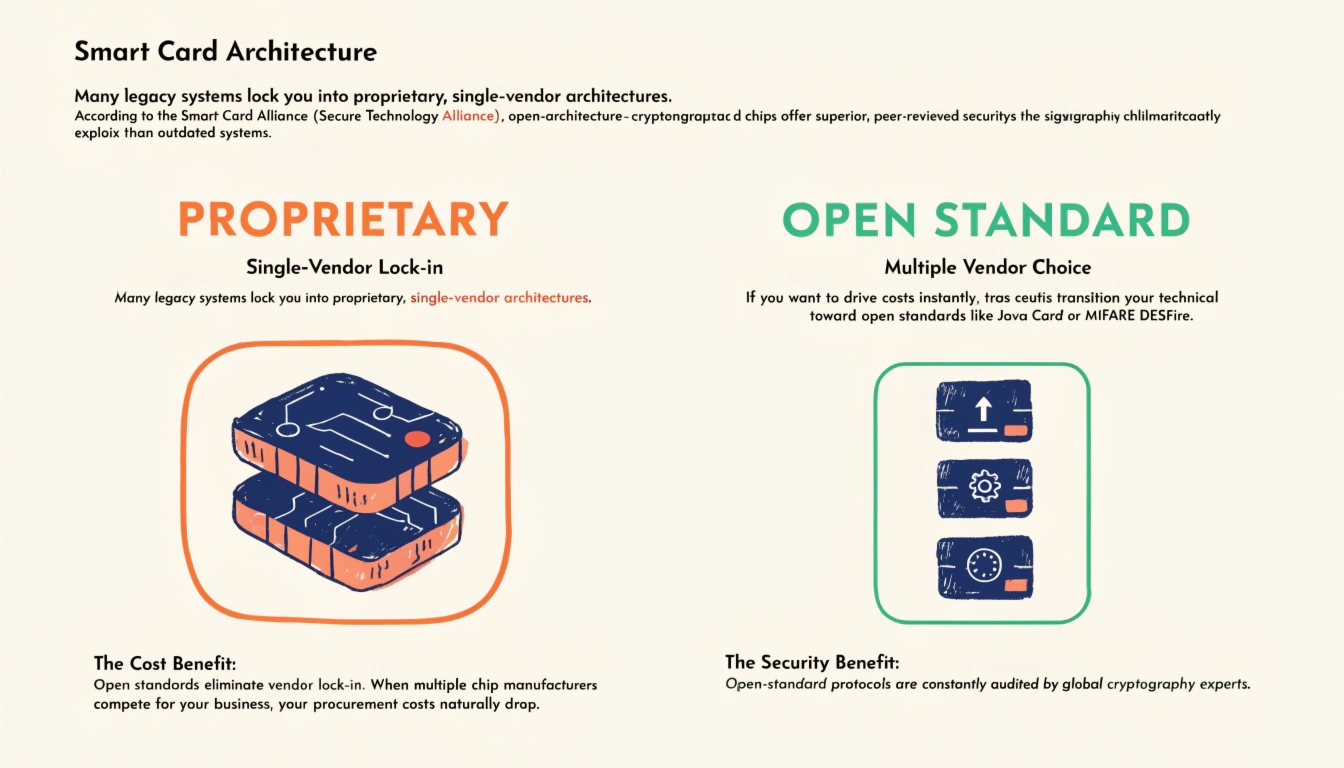
The honest trade: a multi-application card costs more per unit and demands a real key-management and revocation process, but it can cut total spend and operational friction across thousands of cardholders. If you cannot name the key custodian, you are not ready.
Standards and interoperability you must write into the RFQ
Vague specs like “smart card, multi-app” invite incompatible bids. Write the actual constraints:
- Card OS and version — Java Card 3.x / GlobalPlatform 2.2+ (or MULTOS), stated explicitly.
- ISO/IEC 7816 contact interface and ISO/IEC 14443 contactless, with the exact protocol your readers use.
- EMVCo approval if a payment applet is in scope — this is a certification, not a checkbox, and drives cost and lead time.
- NIST FIPS 201-3 (PIV) compliance if US federal or contractor logical access is in scope.
- A documented post-issuance loading path and who holds the issuer/issuer-domain keys.
Specifying the OS and the GP version — not just “a smart card” — is what lets you change vendors later without re-issuing every cardholder. Our card encoding spec guide shows how to fold the encoding details into the same RFQ.
A pre-consolidation checklist — when to do it, when not to
Consolidate when:
- You run a unified identity program (one IAM/security owner) across physical and logical access.
- Scale justifies the overhead — typically thousands of cardholders.
- You have, or will create, a named key custodian and a revocation runbook.
Hold off when:
- It is a small pilot with no shared identity backbone — a single-purpose card is cheaper and faster.
- Vendor lock-in risk is high and you have not secured an open, standards-based OS and post-issuance path.
- No one owns key lifecycle — unmanaged keys are a bigger risk than the silos you are replacing.
A staged rollout works best: start with access + logical logon on a standards-based Java Card / GlobalPlatform credential, prove the key-management process, then add payment once the certification and settlement path are ready. Tie it into a proper issuance program so enrolment, personalisation, and revocation stay in sync.

Frequently asked questions
Is a multi-application card the same as a dual-interface card?
No. Dual-interface is about physical connectors (contact + contactless) for one application; multi-application is about hosting several applications on one OS. They are independent choices and are often combined.
Can one applet fail without breaking the others?
Yes, if isolation is implemented correctly under GlobalPlatform secure domains. That isolation is a design requirement you must verify in the supplier’s certification, not assume.
How much more does a multi-application card cost?
Unit cost is higher — OS licensing and, for payment, EMVCo/PCI certification add real cost and lead time. At scale the lower total cost of ownership usually wins; below a few thousand cards it often does not.
Who manages the cryptographic keys?
You must. The issuer/issuer-domain keys for GlobalPlatform post-issuance loading and the key-diversification scheme are your organisation’s responsibility. Without a named custodian, consolidation increases risk.
Can we add an application after the cards are issued?
Only if the card and your organisation support GlobalPlatform post-issuance applet loading and you hold the issuer keys. If not, a new use case means a new card issuance.
One card, many roles, is achievable — but only with the OS, standards, and key-management discipline specified up front. If you are scoping a consolidation, send us your current card inventory and access requirements and we will return a standards-based multi-application spec and sample for review. Contact our card engineering team to start.