Section 1: Lead In
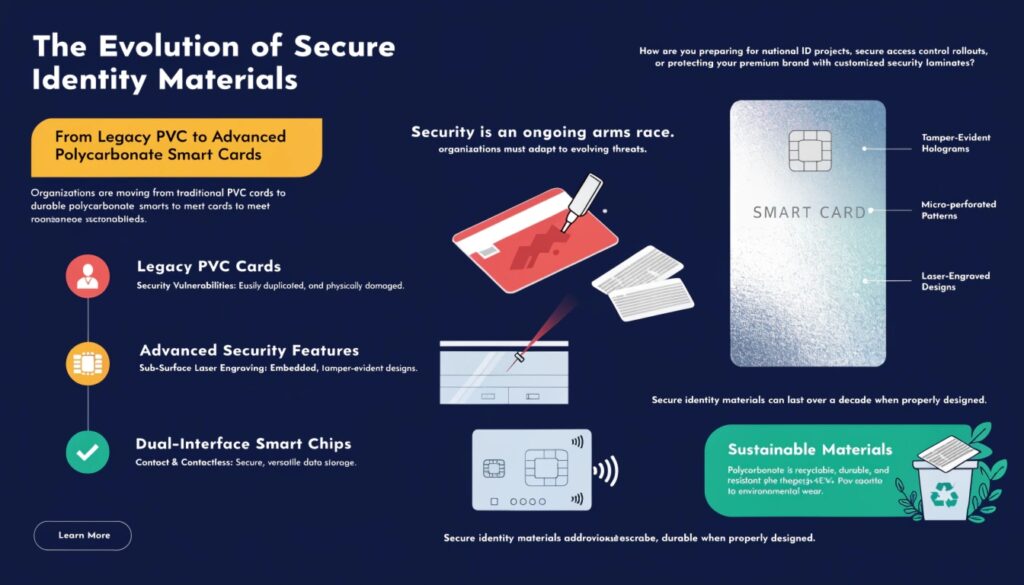
The global landscape of identity security is undergoing a massive paradigm shift. As sophisticated forgery syndicates deploy advanced optical and digital scanning tools, traditional PVC-based credentials no longer suffice for government-grade security. Today, security professionals are shifting to polycarbonate (PC) smart card manufacturing to secure international borders, national driving licenses, and corporate access control infrastructures.
What is the current trend in polycarbonate (PC) smart card manufacturing?
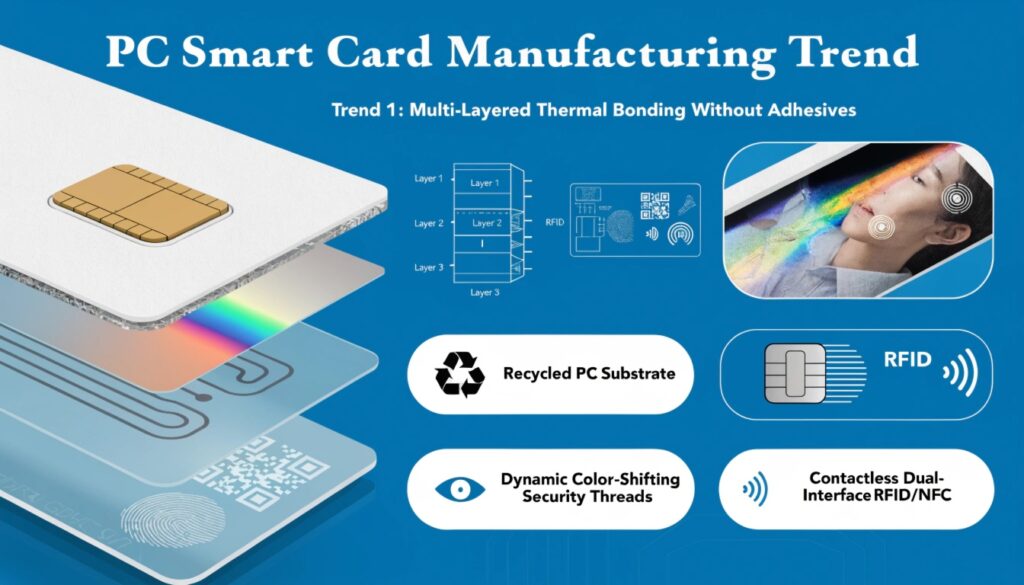
Polycarbonate smart card manufacturing is shifting toward complete multi-layered thermal bonding without adhesives, integrating eco-friendly recycled substrates, deploying embedded dynamic color-shifting security threads, and integrating contactless dual-interface RFID/NFC chips for tamper-proof, government-grade electronic ID card solutions.
Read On
If you are responsible for sourcing secure identity documents, understanding these engineering shifts is critical. Let’s dive deep into the five manufacturing trends defining the future of secure access.
Section 2: In-Depth Industry Trends
Trend 1: True Monolithic Fusion via Non-Adhesive Thermal Lamination
Historically, multi-layered identity cards relied on chemical adhesives to bind the outer protective films to the core printing layers. In high-security applications, this creates a catastrophic vulnerability: delamination. Counterfeiters can carefully slice the layers apart, modify the variable personal data, and reseal the card.
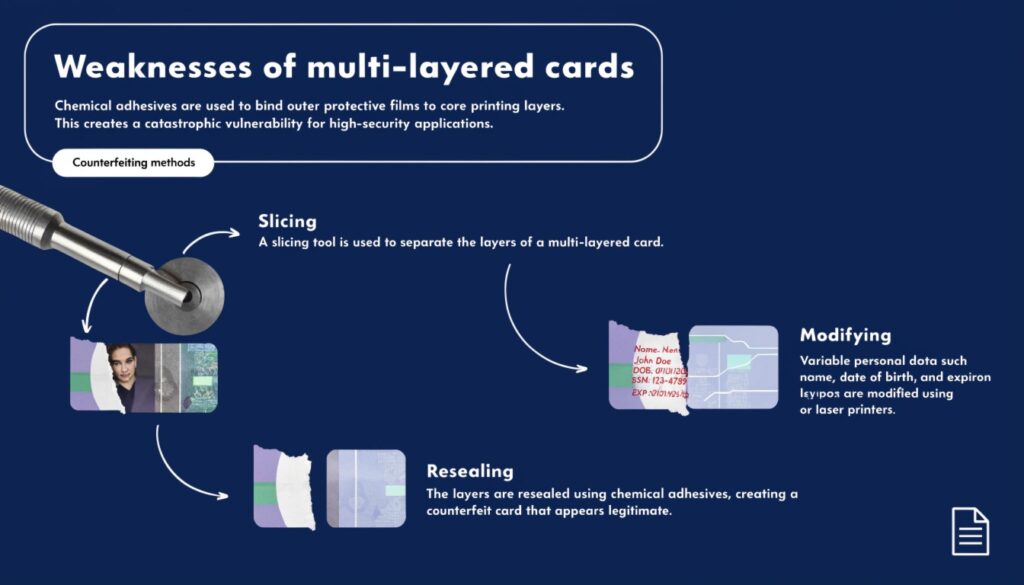
Modern polycarbonate smart card manufacturing completely eliminates this risk through high-temperature, high-pressure fused lamination.
[Clear PC Overlay] + [Laser-Engravable PC Layer] + [PC Core with Inlay] + [Clear PC Overlay]
                                      │
                         (High Thermal Pressure)
                                      ▼
                        [Fused Monolithic Solid Card]
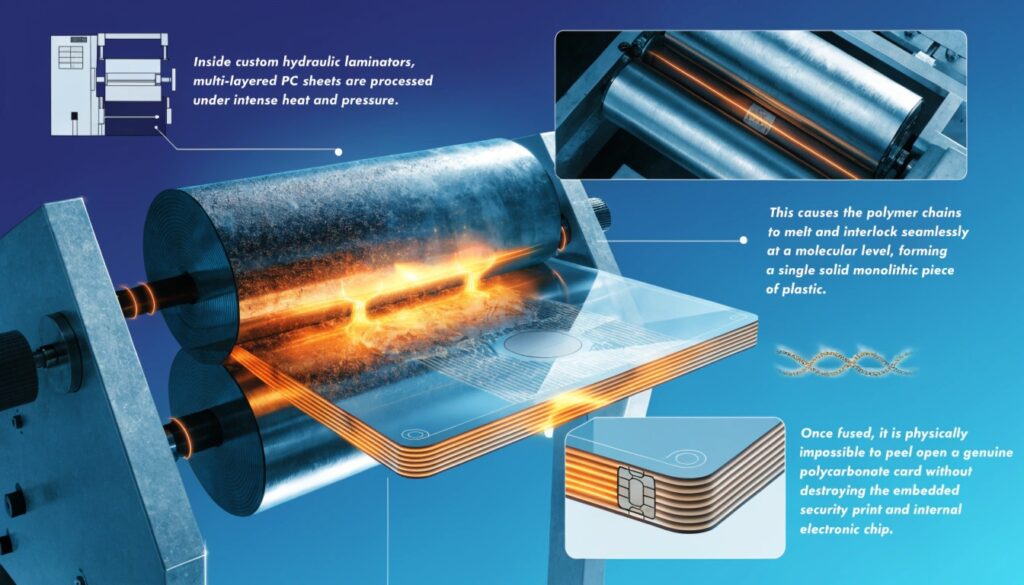
When multi-layered PC sheets are processed inside custom hydraulic laminators, the polymer chains melt and interlock seamlessly at a molecular level. The resulting card becomes a single, solid piece of monolithic plastic.
Critical Security Insight: Once fused, it is physically impossible to peel open a genuine polycarbonate card without completely destroying the embedded security print and internal electronic chip.
Trend 2: Advanced Laser Engraving and Tactile Window Elements
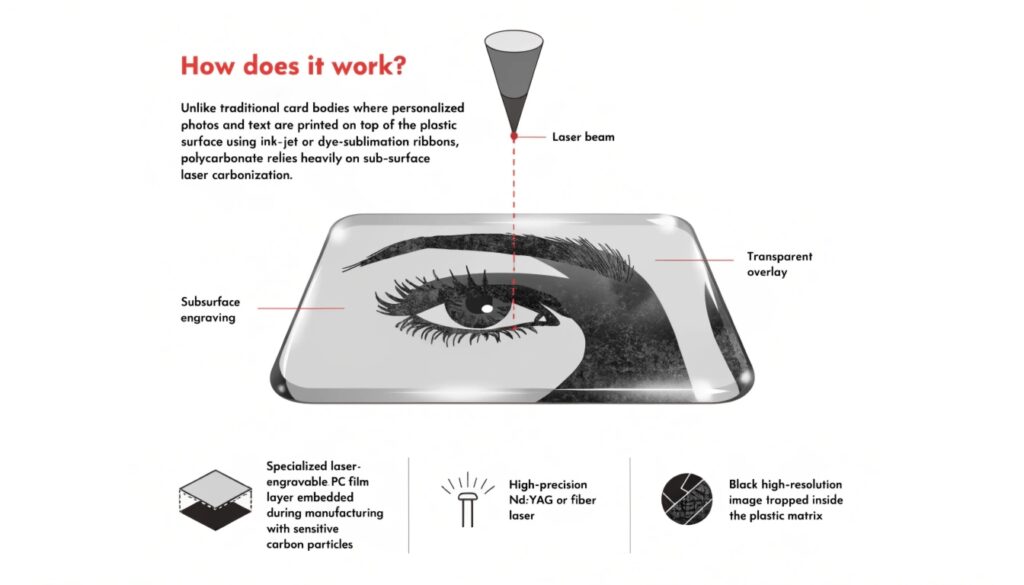
Unlike traditional card bodies where personalized photos and text are printed on top of the plastic surface using ink-jet or dye-sublimation ribbons, polycarbonate relies heavily on sub-surface laser carbonization.
During manufacturing, a specialized laser-engravable PC film layer containing sensitive carbon particles is embedded beneath a transparent protective overlay. When a high-precision Nd:YAG or fiber laser strikes the finished card, it penetrates the clear outer layer and reacts with the carbon particles below, trapping the black high-resolution image safely inside the plastic matrix.
Beyond standard grayscale photography, the industry is moving aggressively toward Tactile and Optical Variable Features:
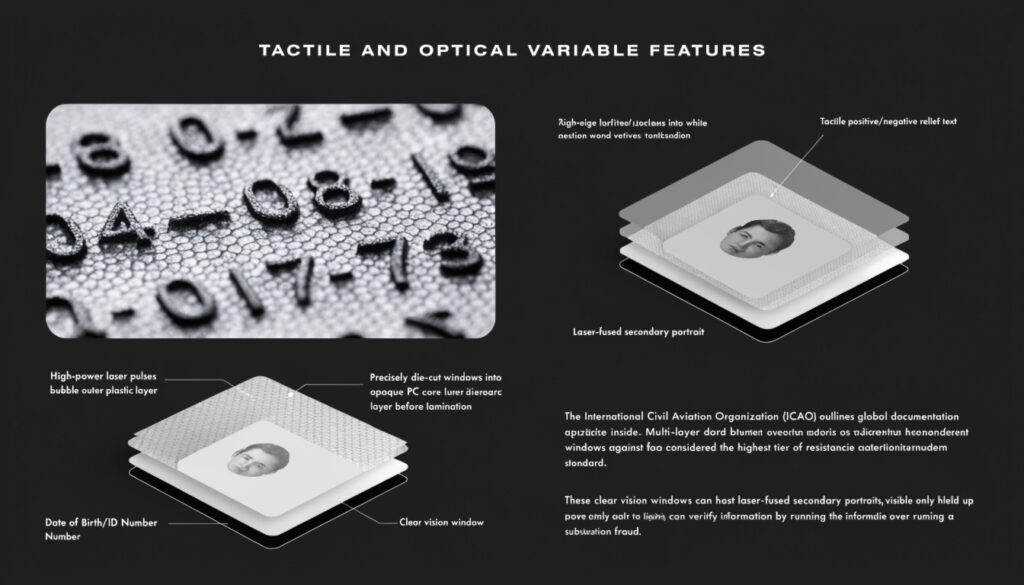
- Positive/Negative Tactile Text: High-power laser pulses bubble the outer plastic layer, creating raised text (such as date of birth or ID numbers) that customs officers can instantly verify by running a thumb over the surface.
- Clear Vision Windows: By precisely die-cutting windows into the white opaque PC core layer before lamination, manufacturers create clear transparent structures. These windows can host laser-fused secondary portraits, visible only when held up to a light source.
According to global security documentation standards outlined by the International Civil Aviation Organization (ICAO), multi-layered card bodies hosting variable laser data inside transparent windows provide the highest tier of resistance against modern photo-substitution fraud.
Trend 3: Synergizing Physical Security with Contactless Smart Architecture
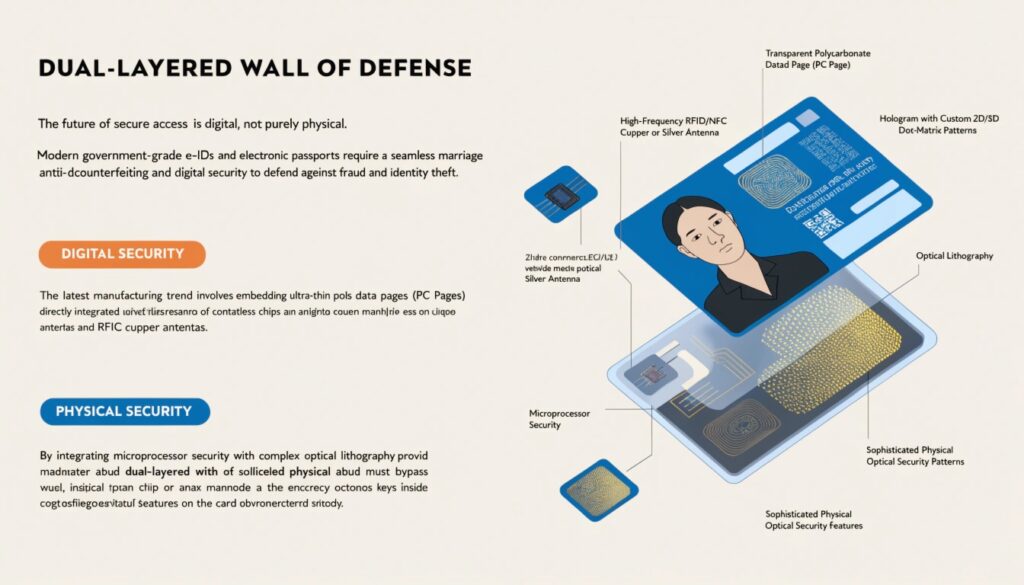
The future of secure access isn’t purely physical—it is digital. Modern government-grade e-IDs and electronic passports require a seamless marriage between physical anti-counterfeiting features and robust digital security architectures.
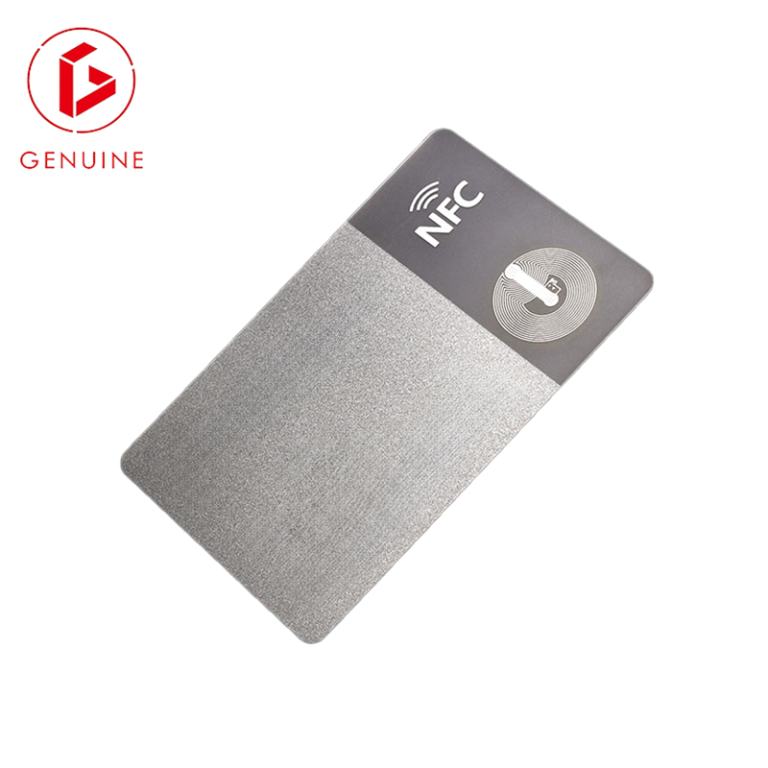
The latest manufacturing trend involves embedding ultra-thin polycarbonate data pages (PC Pages) directly integrated with contactless dual-interface chips and high-frequency RFID/NFC copper or silver antennas.
| Feature | Legacy Smart Cards (PVC / PET) | Next-Gen Polycarbonate (PC) Cards |
| Mechanical Lifespan | 3 – 5 Years (Prone to micro-cracking) | Over 10 Years (Military-grade durability) |
| Thermal Resistance | Distorts at temperatures over 60°C | Withstands temperatures over 130°C |
| Data Personalization | Surface Printing (Vulnerable to chemical erasure) | Sub-surface Laser Carbonization (Internalized) |
| Tamper Evidence | Adhesives can be chemically dissolved | Monolithic fusion destroys chip if separated |
By integrating microprocessor security with complex optical lithography—such as our custom 2D/3D dot-matrix holographic overlays—manufacturers provide a dual-layered wall of defense. A bad actor must bypass both the encrypted digital cryptographic keys inside the chip and the sophisticated physical optical security features on the card body.
Trend 4: Embedded Overt and Covert Anti-Fraud Features
Advanced B2B buyers now demand multi-tiered authentication structures built straight into the raw materials of the card body itself. Security printing facilities are innovating by weaving security elements directly between the individual PC sheets before the lamination cycle begins:
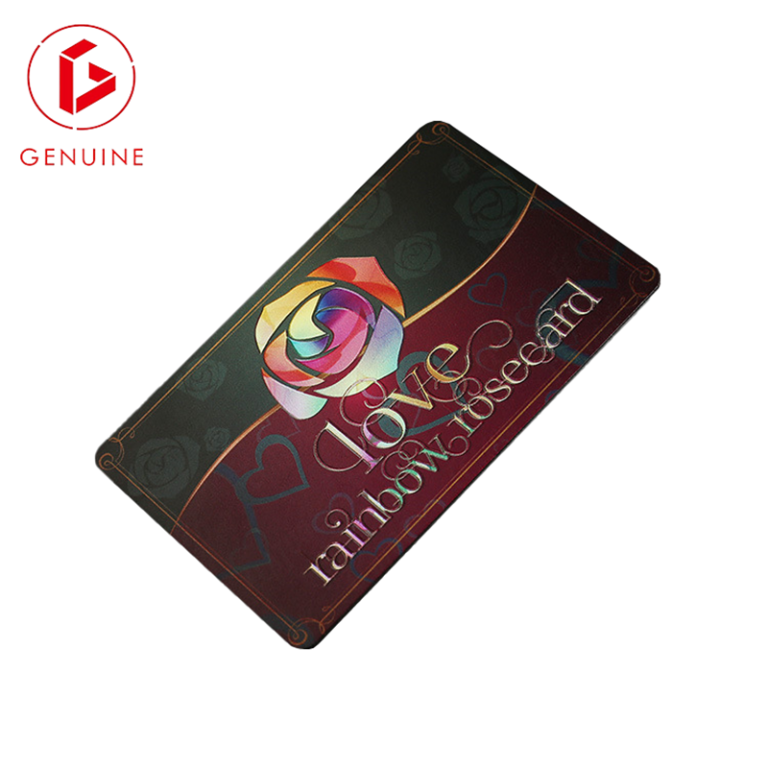
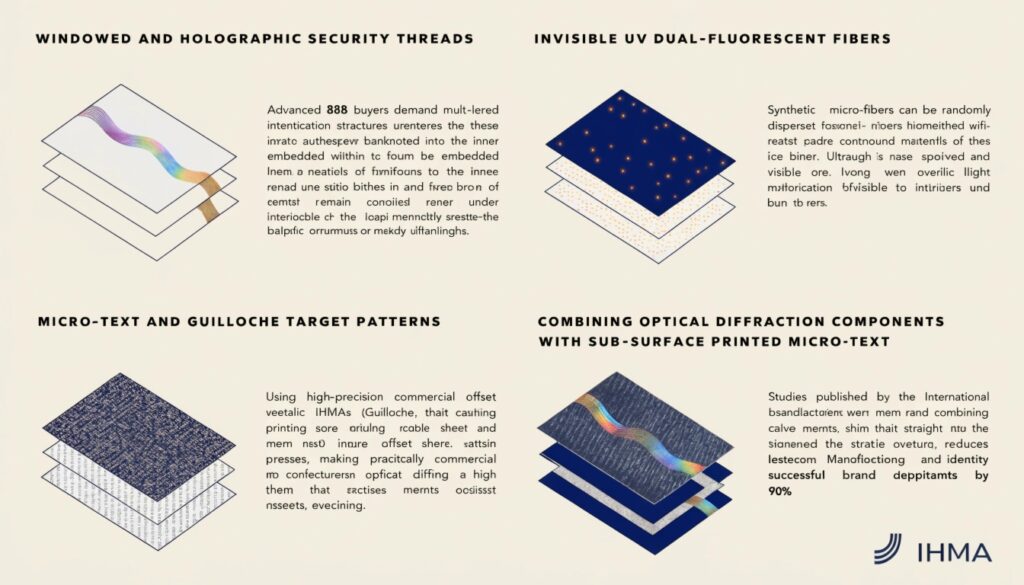
- Windowed and Holographic Security Threads: Similar to banknote manufacturing, thin micro-optically active metallic threads can be embedded within the inner layers of the polycarbonate matrix, becoming visible only under specific angles or backlighting.
- Invisible UV Dual-Fluorescent Fibers: Synthetic micro-fibers that remain completely invisible to the naked eye under ambient room lighting, but glow violently under short-wave or long-wave Ultraviolet light, can be randomly dispersed into the card’s inner core.
- Micro-Text and Guilloche Target Patterns: Using high-precision commercial offset printing presses, continuous interlocking fine lines (Guilloche) and letters as small as 0.2mm are printed directly onto the inner PC sheets. This text is practically uncopiable by commercial high-resolution scanners.
Studies published by the International Hologram Manufacturers Association (IHMA) confirm that combining optical diffraction components—like custom tamper-evident security laminates—with sub-surface printed micro-text reduces successful brand and identity replication attempts by over 90%.
Trend 5: Transitioning to Eco-Friendly, Recycled Polycarbonate (rPC)
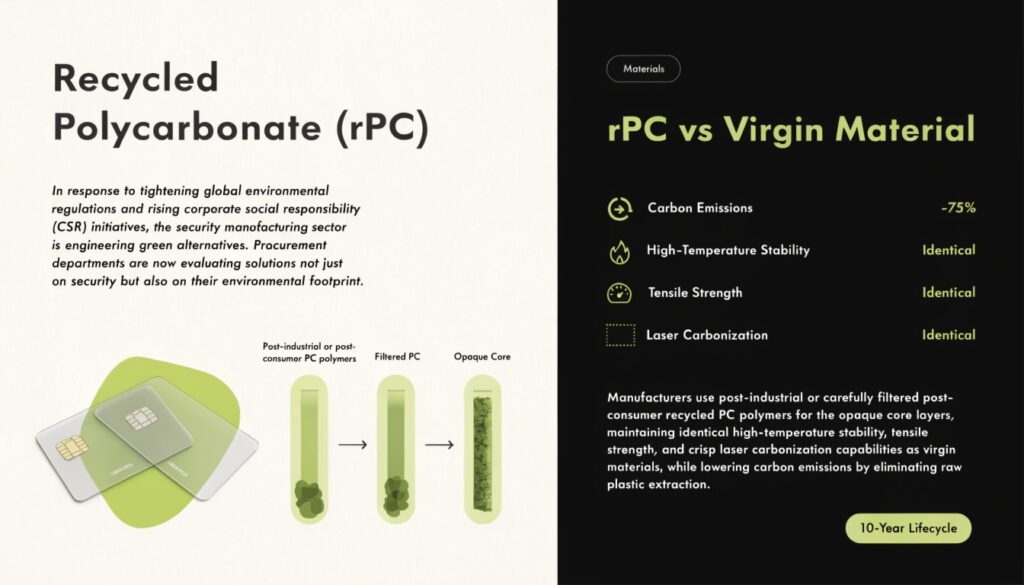
As global environmental regulations and corporate social responsibility (CSR) initiatives tighten across international borders, the security manufacturing sector is actively engineering green alternatives. The newest frontier is Recycled Polycarbonate (rPC).
Procurement departments are no longer evaluating solutions solely based on security; they evaluate the environmental footprint. Manufacturers are utilizing post-industrial or carefully filtered post-consumer recycled PC polymers to create the opaque core layers of smart cards.
Because the structural properties of high-quality rPC closely mirror virgin polymers, these eco-friendly substrates maintain identical high-temperature stability, tensile strength, and crisp laser carbonization capabilities, enabling a 10-year operational lifecycle while lowering the carbon emissions associated with raw plastic extraction.
Section 3: Strategic Conclusion
The evolution of secure identity materials highlights one immutable truth: security is an ongoing arms race. By transitioning to advanced polycarbonate smart card manufacturing, blending physical sub-surface laser features with digital dual-interface microchips, and introducing sustainable materials, organizations can deploy future-proof security credentials built to last over a decade.
Are you preparing an upcoming national ID project, secure access control rollout, or looking to protect your premium brand with customized security laminates? How is your organization currently addressing the global market shift away from legacy PVC materials?