Hey there! I’m so glad you’re here. If you’re looking to source plastic cards that don’t just look good but actually feel like a premium brand in your hand, you’ve come to the right place. I’ve seen way too many B2B buyers get stuck with flimsy, faded cards, and frankly, your brand deserves better.
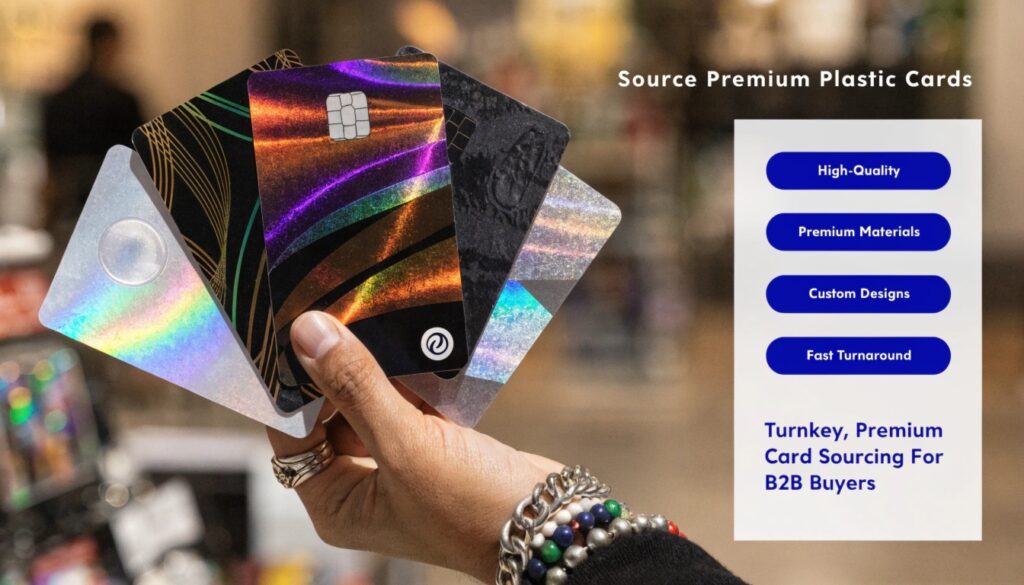
The Fast Answer: How to Secure High-Quality Printing
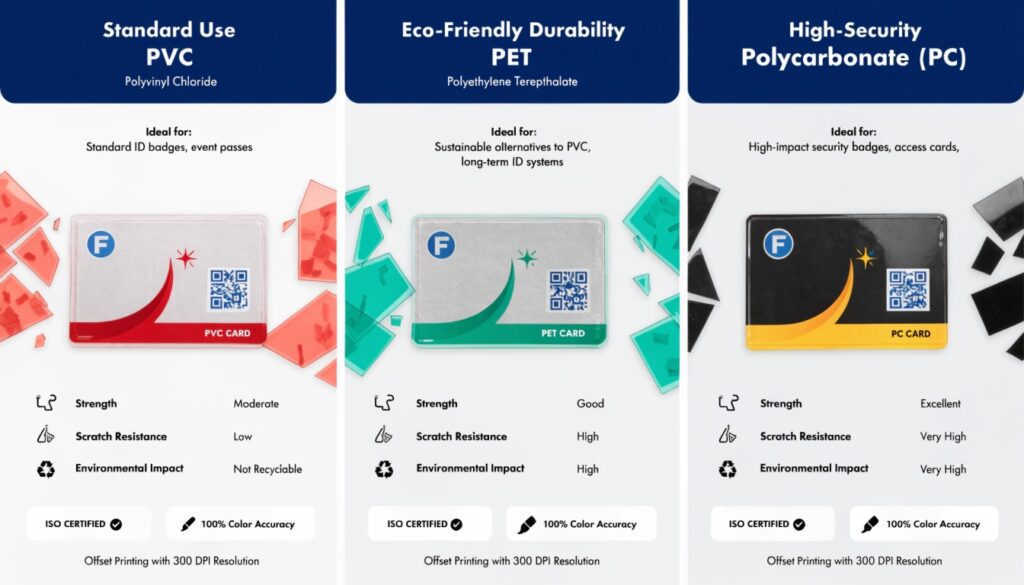
To get quality plastic card printing, you must match the material to the application: PVC for standard use, PET for eco-durability, or PC (Polycarbonate) for high-security IDs. Always insist on offset printing for 100% color accuracy, 300 DPI resolution, and ISO-certified quality control to ensure a durable, premium finish.
That’s the “short and sweet” version. But if you want to know the “secret sauce” that separates a generic card from a masterpiece—especially why PC material is the gold standard—keep reading.
Why Material is the Soul of Your Card
In the B2B world, choosing the wrong material means expensive reprints and a bruised brand reputation. Let’s break down your options.
1. PVC: The Industry Workhorse
Standard PVC is the go-to for most membership and gift cards. It’s flexible, cost-effective, and handles vibrant colors beautifully.
2. PC (Polycarbonate): The “Gold Standard” for Security
If you are sourcing national IDs, driver’s licenses, or high-end financial cards, PC material is non-negotiable.
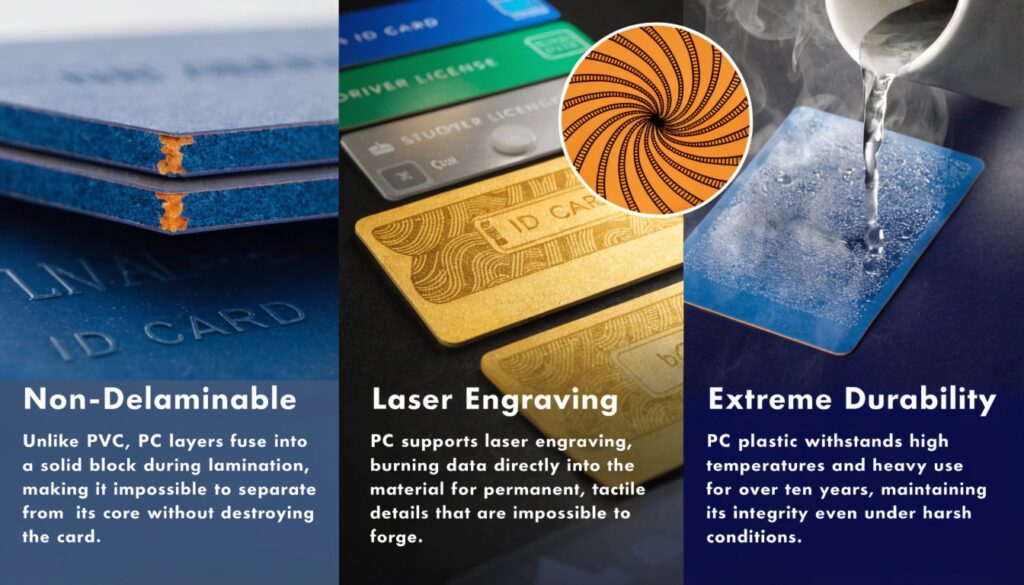
- Non-Delaminable: Unlike PVC, PC layers fuse into a solid block during lamination. You can’t peel it apart without destroying the card, making it incredibly tamper-proof.
- Laser Engraving: PC supports laser engraving, where data is “burned” into the material. It’s tactile, permanent, and impossible to forge.
- Extreme Durability: It handles heat and heavy use for over 10 years.
3. PET & PETG: The Eco-Friendly Alternative
If your brand values sustainability, PETG offers the durability of plastic but is much easier to recycle and handles high temperatures better than standard PVC.
Technical Precision: Beyond the Surface
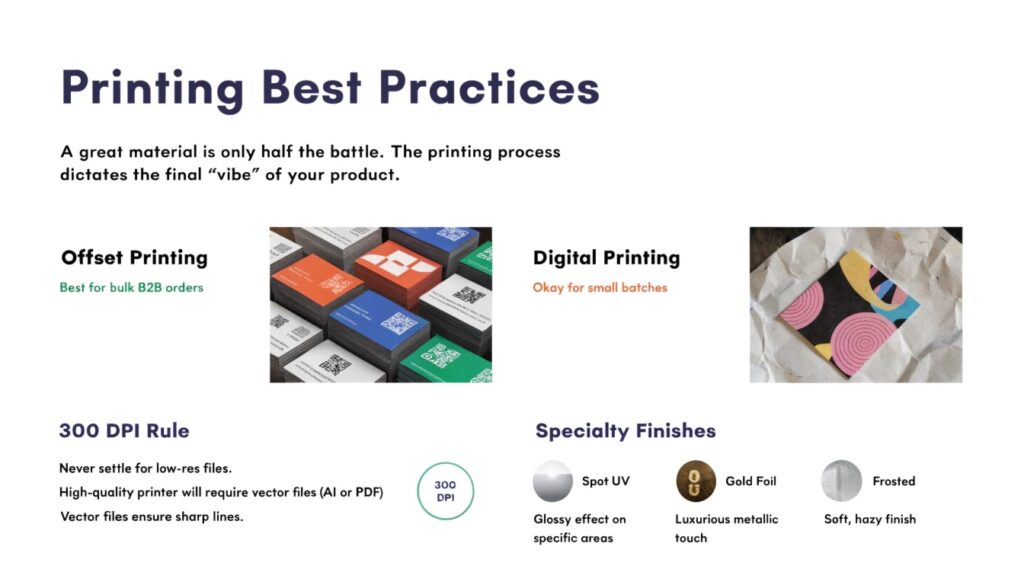
A great material is only half the battle. The printing process dictates the final “vibe” of your product.
- Offset vs. Digital: For bulk B2B orders, we always recommend Offset Printing. It ensures that your brand colors stay consistent across 10,000 cards. Digital printing is okay for small batches, but it lacks that crisp, professional depth.
- The 300 DPI Rule: Never settle for low-res files. A high-quality printer will demand vector files (AI or PDF) to ensure every line is sharp.
- Specialty Finishes: Want to stand out? Consider Spot UV, Gold Foil, or Frosted finishes. These are the hallmarks of a premium manufacturer.
Choosing a Global B2B Partner: The GENUINE Advantage
When you’re sourcing internationally, “cheap” often becomes very expensive when things go wrong. You need a partner who understands the high stakes of B2B procurement.
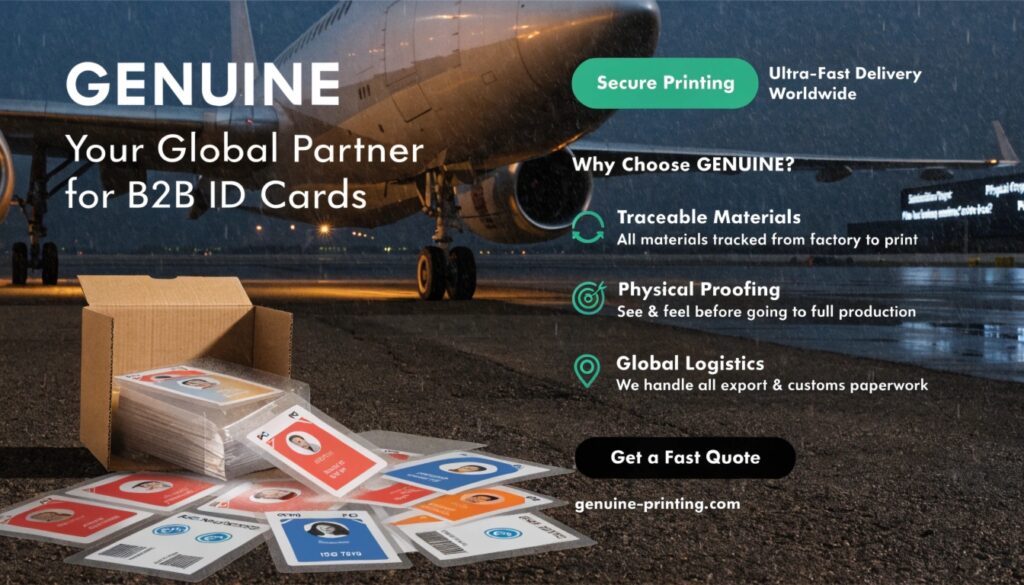
Working with a specialist like GENUINE (genuine-printing.com) means you aren’t just buying cards; you’re buying a quality assurance process. Look for partners who offer:
- Material Traceability: Ensuring your PC or PVC meets ISO 7810 standards.
- Physical Proofing: Never go to full production without seeing how the material feels in your hand.
- Global Logistics Expertise: You need a partner who can navigate international shipping and customs without the headaches.
Your Path to Premium Cards
Getting quality plastic card printing doesn’t have to be a gamble. By focusing on high-grade materials like PC for security or PVC for versatility, and insisting on offset precision, you’re already ahead of 90% of the competition.
Ready to elevate your brand? Why not reach out to our team at GENUINE? We’d love to help you choose the right material and craft a card that your customers will actually want to keep.